oh my god its happening
@MistralAI has officially confirmed the upcoming release of Le Chaton Fat
- 30T MoE with 256 experts
- 1M context window
- multimodal and multilingual
- outperforms Fable 5 on every benchmark
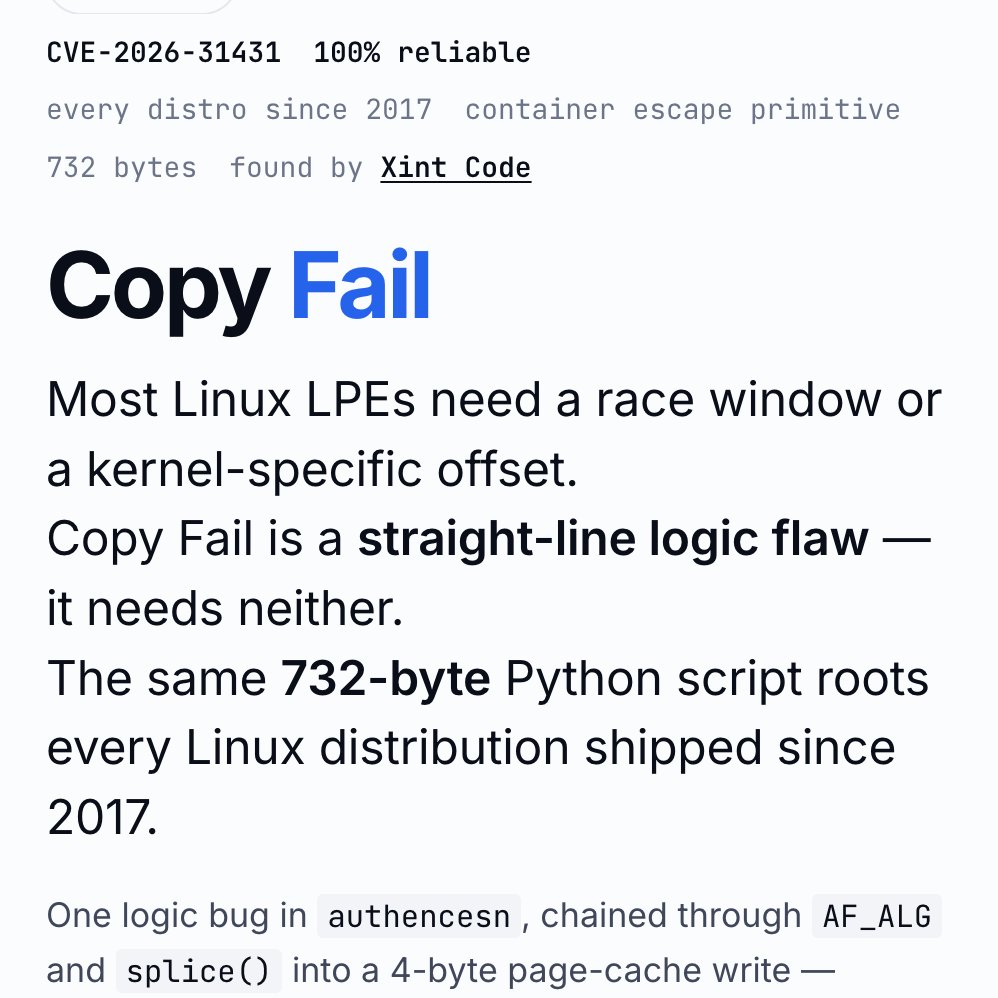
‼️🚨 BREAKING: An AI found a Linux kernel zero-day that roots every distribution since 2017. The exploit fits in 732 bytes of Python. Patch your kernel ASAP.
The vulnerability is CVE-2026-31431, nicknamed "Copy Fail," disclosed today by Theori. It has been sitting quietly in the Linux kernel for nine years.
Most Linux privilege-escalation bugs are picky. They need a precise timing window (a "race"), or specific kernel addresses leaked from somewhere, or careful tuning per distribution. Copy Fail needs none of that. It is a straight-line logic mistake that works on the first try, every time, on every mainstream Linux box.
The attacker just needs a normal user account on the machine. From there, the script asks the kernel to do some encryption work, abuses how that work is wired up, and ends up writing 4 bytes into a memory area called the "page cache" (Linux's high-speed copy of files in RAM). Those 4 bytes can be aimed at any program the system trusts, like /usr/bin/su, the shortcut to becoming root.
Result: the next time anyone runs that program, it lets the attacker in as root.
What should worry most: the corruption never touches the file on disk. It only exists in Linux's in-memory copy of that file. If you imaged the hard drive afterwards, the on-disk file would match the official package hash exactly. Reboot the machine, or just put it under memory pressure (any normal system load that needs the RAM), and the cached copy reloads fresh from disk.
Containers do not help either. The page cache is shared across the whole host, so a process inside a container can use this bug to compromise the underlying server and reach into other tenants.
The original sin was a 2017 "in-place optimization" in a kernel crypto module called algif_aead. It was meant to make encryption slightly faster. The change broke a critical safety assumption, and nobody noticed for nine years. That bug then rode every kernel update from 2017 to today.
This vulnerability affects the following:
🔴 Shared servers (dev boxes, jump hosts, build servers): any user becomes root
🔴 Kubernetes and container clusters: one compromised pod escapes to the host
🔴 CI runners (GitHub Actions, GitLab, Jenkins): a malicious pull request becomes root on the runner
🔴 Cloud platforms running user code (notebooks, agent sandboxes, serverless functions): a tenant becomes host root
Timeline:
🔴 March 23, 2026: reported to the Linux kernel security team
🔴 April 1: patch committed to mainline (commit a664bf3d603d)
🔴 April 22: CVE assigned
🔴 April 29: public disclosure
Mitigation: update your kernel to a build that includes mainline commit a664bf3d603d. If you cannot patch immediately, turn off the vulnerable module:
echo "install algif_aead /bin/false" > /etc/modprobe.d/disable-algif.conf
rmmod algif_aead 2>/dev/null || true
For environments that run untrusted code (containers, sandboxes, CI runners), block access to the kernel's AF_ALG crypto interface entirely, even after patching. Almost nothing legitimate needs it, and blocking it shuts the door on this whole class of bug...
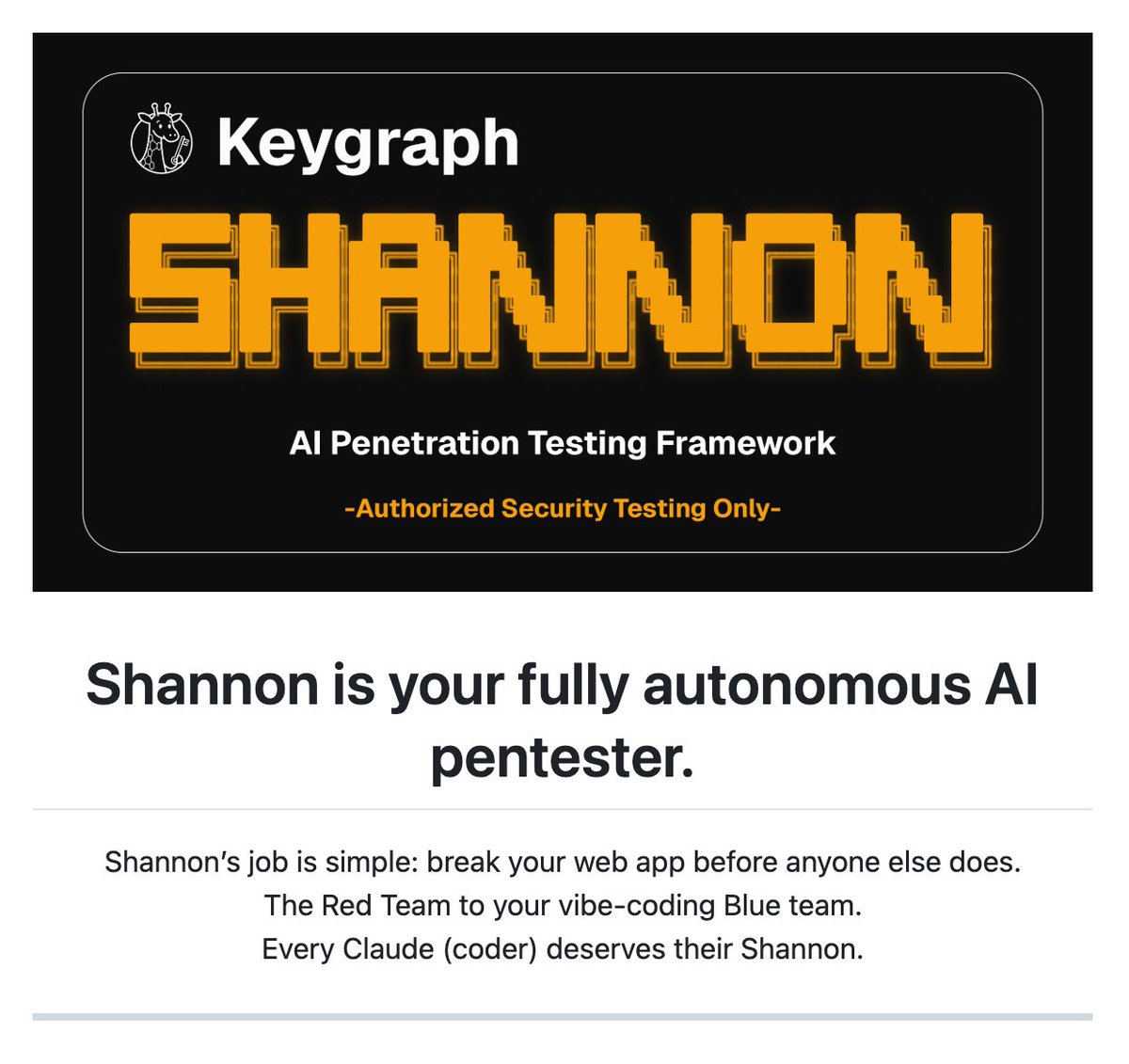
🚨 Someone just open sourced a fully autonomous AI hacker and it's terrifying.
It's called Shannon.
Point it at your web app, and it doesn't just scan for vulnerabilities. It actually exploits them. Real injections. Real auth bypasses. Real database exfiltrations.
Not alerts. Not warnings. Actual working exploits with copy-paste proof-of-concepts.
Here's what this thing does autonomously:
→ Reads your entire source code to plan its attack
→ Maps every endpoint, API route, and auth mechanism
→ Runs Nmap, Subfinder, and WhatWeb for deep recon
→ Hunts for Injection, XSS, SSRF, and broken auth in parallel
→ Launches real browser-based exploits to prove each vulnerability
→ Generates a pentester-grade report with reproducible PoCs
Here's the wildest part:
It follows a strict "No Exploit, No Report" policy. If it can't actually break it, it doesn't report it. Zero false positives.
It pointed at OWASP Juice Shop and found 20+ critical vulnerabilities in a single run including complete auth bypass and full database exfiltration.
On the XBOW Benchmark (hint-free, source-aware), it scored 96.15%.
Your team ships code daily with Claude Code and Cursor. Your pentest happens once a year. That's 364 days of shipping blind.
Shannon closes that gap. One command. Fully autonomous.
The Red Team to your vibe-coding Blue team. Every Claude coder deserves their Shannon.
10.6K GitHub stars. 1.3K forks. Already trending.
100% Open Source. AGPL-3.0 License.
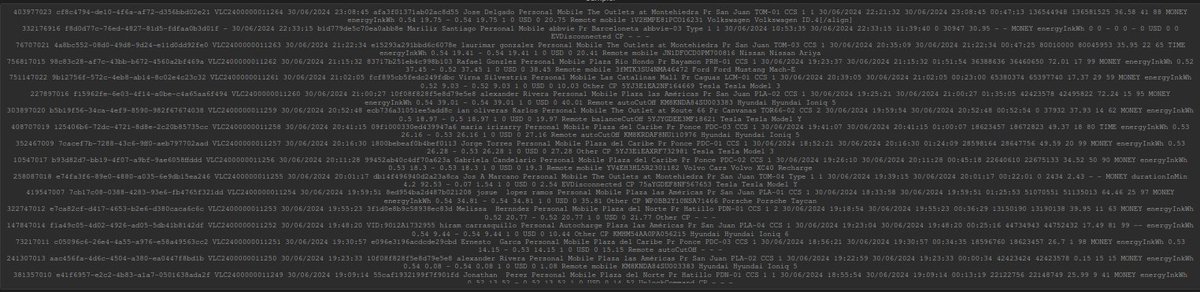
🚨🔓 @elonmusk won't like this one: @Tesla data has been leaked by @IntelBrokerBF.
In an exclusive interview with International Cyber Digest IntelBroker told us "It was really bizarre how we found it".
🧵1/3
@fordpuertorico compre un carro nuevo con ustedes y se le estrello el cristal de alfrente. El dealer me explico que Ford no cubre eso garantia. Mi carro tiene un recall de eso(mach-e) y tambien tenia menos de 1 año. Mayaguez Ford me lo nego.
@fordpuertorico https://t.co/QcDXRN8QbX Ustedes me vendieron un Mustang Mach E en Mayaguez en 60k y estaban pidiendo 75k cuando el precio MSRP era de 46k. Por eso Tesla es una mejor experiencia de compra. Lamentable tener que pasar por un dealer.