PRs are nothing but quality theatre. People engaging in PRs merely move through motions, pretending they care, and in the process create bottlenecks with unpredictable wait times.
PRs always get handled in two typical ways:👇
El SINCERICIDIO.
Quizá hayáis tenido la experiencia de escuchar de alguien que es una persona "muy honesta", "que va de cara"...
A veces eso se traduce en que esa persona va a decir "la verdad" directamente, sin tapujos.
"How coupled is this code?"
I can't answer until I see what kind of changes you want to make. Code is coupled with respect to some changes & not to others. If you never change your database, then being potentially coupled to your database vendor isn't a problem.
Hubo una época en mi carrera como Programador donde sentía que me estaba quedando atrás en conocimientos, sentía que siempre había algo que aprender, y hasta sentía que era tonto por no saber todo lo que estaba saliendo, era frustrante no llevar el hilo de todo, sentir que era malo en lo que estaba haciendo, ya que me era imposible aprender todo lo que se escuchaba, y lo peor, cada semana que pasaba, nuevas cosas aparecían.
Un día entendí que el problema no era yo, el problema era la creciente evolución de esta área, todo fue mejorando en mi cuando me di cuenta que en realidad, poco de todo lo que estaba saliendo, realmente era algo que necesitaba aprender.
Esto fue la parte difícil, aceptar que no tenemos que aprender todo, solo tenemos que aprender lo que necesitamos, pero: ¿Cómo saber que es lo que necesitamos? Probando por curiosidad, algunos minutos del día algo que nos llame la atención, y tener un juicio sin fanatismo para aceptar si eso nos servirá o solo es algo que tiene mucho hype.
Posterior a esto, al poder decidir que aprender y que no, todo se siente más relajado.
El aprendizaje debe estar orientado a objetivos, puedes tener hobbies de lectura sobre temas que te llamen la atención y no pasa nada, pero el querer aprender todo lo que esta saliendo solo por sentirse que te quedas atrás es un error que cometemos muchos que estamos dentro de la Programación.
He lanzado un video, donde las personas se han sentido identificadas, igual, quizá, puede servirte verlo:
https://t.co/tZmHy9y2cB
microservices arent for scale, they're for humans. people don't like to share their pet gardens, follow other people's conventions, work on someone else's code, use a language they don't like. microservices allow everyone to have greenfield work all the time.
Don't do this.
In TDD you write tests first. By writing tests that exhibit the simplest behavior, writing only enough code to pass that behavior, and then adding more tests, you get scope control and lower complexity (as well as a better api)
1/
@botejafo @penguinjournals @artolamola @nelodev Por favor, que alguien frene a DarkBote! Ayer nos sugiere amablemente skippear tests e2e, el lunes se pone de nuevo a picar código... qué será lo siguiente?
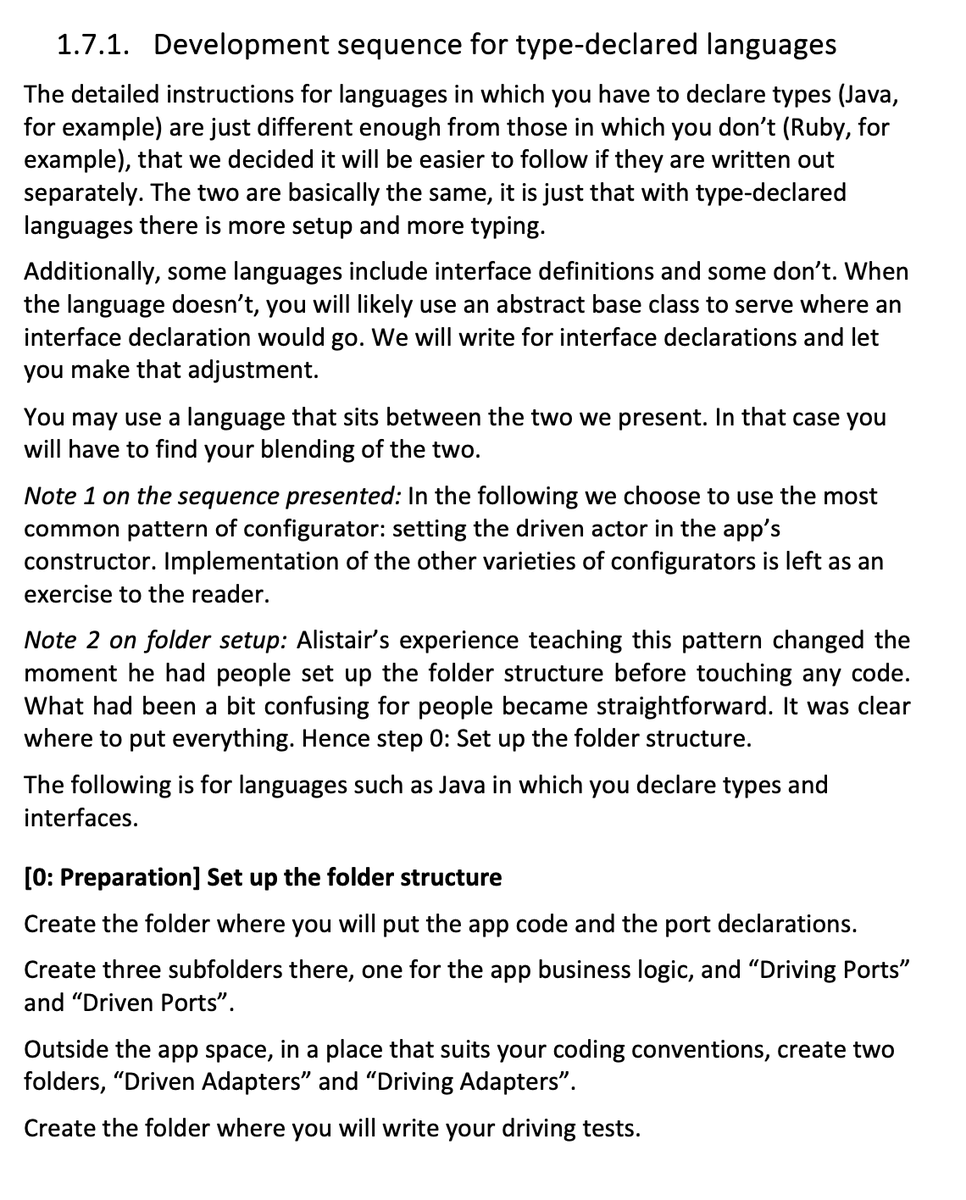
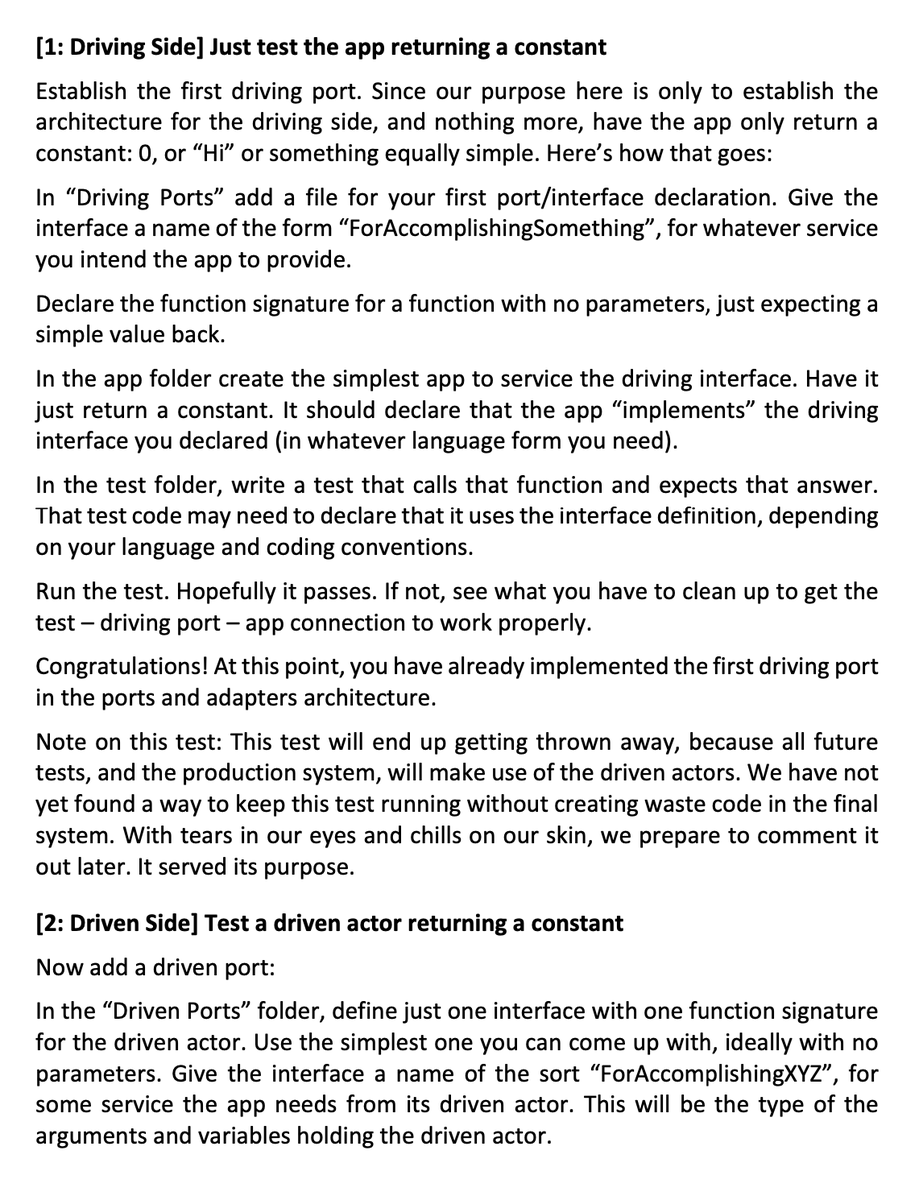
#HexagonalArchitecture - I just drafted very detailed 1st steps to implement HA for type-declaring languages (Java, C++, etc).
Looking for a few ppl to test them out and find the mistakes. (of course there are).
Ideally, a couple of different languages to find the misfit
Thx!
En breve me voy de paternidad 👶 y estamos buscando alguien para currar en nuestro equipo #mnn: primero por mi y luego junticas cuando vuelva.
Aquí va la ofertica de @lifullconnect: https://t.co/cNth6heuEy
Why do so many software developers find it easier to write long blocks of code that contain frighteningly large number of decision points, instead of breaking the flow into self-contained, easily understandable at a glance smaller blocks of code? What is it about the big batches?