Jose Mourinho didn't manage Real Madrid's third season very well. It would have been glorious for him, if he had
After winning the league in 2012 with 100 points and 121 goals, with Pep Guardiola resigning, the pendulum already shifted towards Madrid but Jose didn't know how to go forward from there
The way he treated Iker Casillas was too wrong. I don't like managers disrespecting players anyhow
Benching Casillas might not even be the issue but disrespecting him in the media was a silly behavior by Mourinho
All the players went against him. He'd have thought that the Portuguese contingents at Real Madrid would taken his side.. lmaoo
Cristiano Ronaldo, Pepe, Fabio, Coentrao didn't send him at all
The dressing room became so toxic, he had to go
He would have ruled with Real Madrid for a long time but his bad man management and high headedness cost him
That attitude followed him afterwards. His second stint at Chelsea, he won the league and the third season, he lost the dressing room again
At Manchester United, won the Europa League in the second season, lost the dressing room in the third season again
If Jose Mourinho was a bit calm and evolved with his style, he would have stayed longer at Real Madrid and dominated La Liga and Europe
Madrid has the players, the man management was all they needed
That was what Carlo Ancelotti and Zinedine Zidane did, it brought success
I hope he has matured anyway
Look at that Spain team very well....
It's confusing
Unai Simon is not better than David Raya but he is their number one
A central pair of Cubasi and Laporte
Let me jump to attack and ignore their midfield
Look into my face and tell me Oryazabal is top five strikers in the world
Yamal hasn't even been at his explosive best and Alex Baena is relatively unknown to many
Yet, this team has gotten to the 2026 FIFA World Cup final
Luis De La Fuente is a crazy manager
Arsenal's Title Victory And The Emotional Colonization Of Africans
Why are so many Africans so passionate about non-African football teams winning a game thousands of miles away from the continent? Why is so much money, time and energy channeled towards the professional and personal lives of wealthy foreign athletes in a continent where anywhere between 40 and 50% of the entire population lives in multi-dimensional poverty?
What does this fact say about the priorities of the average African? And who ultimately benefits from this mass distraction?
@Big_Mck reports for The Spearhead.
I don't think anyone could have a bigger heartbreak than Micheal Ballack
If heartbreak was a person, then it's Micheal Ballack
Let's get into his story
In the 2001/2002 season, Bayer Leverkusen were on the verge of a treble but in the space of two weeks, they lost everything
First, it was the Bundesliga Collapse
With just three matches remaining, Bayer Leverkusen had a five points lead, needed one win from their final three games to win the league
Instead they lost to Hamburg, Werder Bremen, and Nürnberg.
They bottled it and allowed Borussia Dortmund to win the title by a single point
The DFB Pokal Final (German Cup)
Leverkusen faced Schalke 04 in the final. Took the lead through Dimitar Berbatov but lost the game 4-2.
Former Super Eagles striker, Victor Agali scored the second goal for Schalke 04.
Second trophy gone for Bayer Leverkusen
Champions League Final
After two heartbreaks, it was normal for Leverkusen to lose the Champions League final to Real Madrid.
They gave a fight but lost to Zinedine Zidane's legendary volley
FIFA World Cup
Germany got to the final of the 2002 FIFA World Cup against Brazil.
However, in the semifinal against host, South Korea, Ballack got a yellow card and was suspended for the final
Germany lost the final two nil to Brazil
Four chances at a trophy, all four lost!
More heartbreaks were waiting for Ballack in the 2007/2008 season
League Cup Final Loss
Chelsea were up against Tottenham Hotspur in the final. Despite taking the lead through Didier Drogba, Spurs came back and won the game 2-1
Premier League
Chelsea finished second behind Manchester United but it was the Champions League that the heartbreak really came
Champions League Final
Chelsea faced Manchester United in the final. After 1-1 regulation time. The game went into penalties
With Cristiano Ronaldo missing his own penalty, Chelsea's destiny was in John Terry's hand. Score and the Blues will be champions
Instead, Terry slipped, lost the kick and Manchester United won on sudden death
Another heartbreaking moment for Ballack
Euro 2008 final
Germany faced Spain in the final and succumbed to a Fernando Torres first half goal
Micheal Ballack ends in the national team also ended on a sad note
Got injured before the 2010 FIFA World Cup and afterwards was never called again
Talk about football's greatest heartbreaks, Micheal Ballack embodied it!
💔💔💔
Pep Guardiola is one of the greatest football managers of the modern era.
But did he invent the style of football many people associate with him? The answer is NO.
Let’s take a trip through history.
The style people call “Tiki-Taka” did not begin with Pep Guardiola in 2008. Many credit former Barcelona and Dutch legend Johan Cruyff for it, but even Cruyff did not originate the philosophy.
To understand its roots, we have to go back to the 1970s and a man named Rinus Michels.
Michels, while managing Ajax Amsterdam, developed a revolutionary football philosophy known as Total Football.
At the heart of that Ajax team was Johan Cruyff, the leading figure and on-field symbol of Michels’ philosophy. Under Michels, Ajax reached two European Cup finals, winning one and losing one.
Michels later took charge of the Netherlands national team and guided them to the 1974 FIFA World Cup final, where they eventually lost to West Germany.
Once again, Cruyff was the star of the team, and the world witnessed Total Football at its peak.
Years later, the philosophy found a new home in Barcelona.
By 1988, Barcelona was struggling both on and off the pitch.
The club lacked identity, structure, and consistent success. Then-president Josep Núñez appointed Johan Cruyff as manager, and everything changed.
Cruyff brought the principles he learned from Rinus Michels and transformed Barcelona.
He built the famous “Dream Team,” a side that dominated between 1988 and 1994, winning 11 trophies, including Barcelona’s first-ever European Cup in 1992.
One of the players in that Dream Team was a young Pep Guardiola.
That era established a football philosophy that became deeply embedded in Barcelona’s identity.
Now, let’s talk about Tiki-Taka.
The phrase itself was coined by Spanish commentator Andrés Montes during the 2006 FIFA World Cup. While commentating on Spain’s passing game against Tunisia, he famously said:
“Estamos tocando tiki-taka, tiki-taka.” (We are playing tiki-taka)
Ironically, the phrase was initially used in a mocking manner to describe Spain’s endless passing.
Spain eventually crashed out in the Round of 16 against France, but the philosophy survived.
Luis Aragonés continued building around that possession-based style and led Spain to victory at Euro 2008.
Then Pep Guardiola arrived at Barcelona shortly after and elevated the approach to another level.
Pep essentially refined and modernized the Cruyff philosophy he grew up under at Barcelona.
Since Spain’s possession-based football had already become associated with the term “Tiki-Taka,” the label naturally became attached to Guardiola’s Barcelona.
So while Pep Guardiola perfected the style and achieved unprecedented success with it, he did not invent it.
The roots trace back from Guardiola to Cruyff, and from Cruyff to Rinus Michels and Total Football.
Did you learn something?
Unai Emery. 𝗚𝗲𝗻𝗶𝘂𝘀.
When he took over at Aston Villa in November 2022, they were 14th and just 3 points above the relegation zone.
Since then:
📅 2023:
✅ 7th in the Premier League
✅ Qualified for the Conference League
📅 2024:
✅ 4th in the Premier League
✅ Qualified for the Champions League
📅 2025:
✅ Quarter-finals of the Champions League
✅ Semi-finals of the FA Cup
✅ Semi-finals of the Conference League
📅 2026:
✅ Europa League CHAMPIONS
✅ Qualified for the Champions League
The job he's done in less than 3-and-a-half years is simply sensational. 👏
To win 5 Europa League titles shows how great he is as a manager. WOW!!!!!!!!!!!
Every time a professional footballer is transferred, 5% of that fee belongs to the clubs that trained him. Most of those clubs never see a penny of it.
This is the FIFA solidarity mechanism. And it is one of the most important financial provisions in football law that the people it is designed to protect know the least about.
Here is how it works.
Under the FIFA Regulations on the Status and Transfer of Players, every club that contributed to a player's training between the ages of 12 and 23 is entitled to a share of 5% of every transfer fee paid for that player. Not just the first transfer. Every transfer. For the rest of their professional career.
That 5% is taken from the buying club and distributed proportionally among the development clubs based on how many years they trained the player. A club that had a player from age 12 to 15 gets a different share than one that had him from 18 to 21. But every club that contributed gets something.
It is not a goodwill gesture and it is not negotiable between clubs. It is a legal obligation built into the architecture of the transfer system. The buying club owes it automatically by design.
Now think about what that means in practice.
Victor Osimhen moved from Napoli to Galatasaray for a reported €75 million. Five percent of that is €3.75 million distributed among every club that trained him between 12 and 23. That reportedly includes Ultimate Strikers Academy in Lagos. A Nigerian academy. Money they are legally entitled to.
Romelu Lukaku has also been the subject of multiple transfers between Everton, Chelsea, Manchester United and Inter Milan. The academies he made for got a cut for every one of those moves he made.
The problem is not the rule. The rule is well designed. The problem is that countless academies across Africa, South America and Asia have trained players who went on to multi-million euro careers and never pursued the solidarity payments they were owed.
Either because they did not know the mechanism existed, did not know how to file a claim, or did not have the legal support to navigate the process.
Every academy director, club administrator and coach reading this needs to understand one thing. If your club trained a player who went on to play professional football anywhere in the world, you may be owed money right now.
The mechanism exists. The obligation is real. Go and claim what belongs to you. You can reach out to me if you need help.
My name is Ajoje. I am a FIFA Licensed Agent and International Sports Lawyer. I write on the Law and Business of Football, a lot. Repost and Follow if you want to read more posts like this.
There is an urgent medical information I want to pass across. This will save your life, pls come close.
If you ever see rotten tomatoes that looks like these pictures I posted, or if you ever see onions with black spots on them or you see corn with mould on it,
PLEASE RUN FOR YOUR LIFE.
Why do I say this?
All these food items are contaminated with a poisonous fungus called AFLATOXINS.
Aflatoxins are notorious for increasing the risk of liver cancer. When you eat food that has this type of tomatoes, or you eat food cooked with this kind of onions or you eat this type of corn you are at risk of developing liver cancer.
Only eat fresh tomatoes, fresh onions and fresh corn. Avoid rotten tomatoes, blackened onions or corn with mould (even if they are cheaper to buy).
This is not a threat or a joke.
This is a real life serious medical issue.
Kindly share this information.
MYTH V REALITY
MYTH: Clubs own player registrations, so they can transfer a player to any club they choose without the player's agreement.
REALITY: A club can agree a transfer fee with another club without the player's involvement. But the player cannot be transferred without agreeing to and signing a new employment contract with the engaging club.
Here is what is actually happening when two clubs agree a transfer fee. The selling club is agreeing to release their registration rights for a sum of money.
That is all.
They are not transferring a human being. They are not compelling anyone to work somewhere new. The moment the conversation shifts from club to club, to club to player, the entire dynamic changes. And that is why you hear terms like “personal terms”.
For example, if a player- say Marcus, a 26-year-old midfielder under contract at a mid-table Championship side. A Bundesliga club comes in with a fee the Championship club happily accepts. The deal is done at boardroom level in 48 hours. Marcus is then told he is moving to Germany.
But Marcus has a young family settled in England, and the terms being offered by the Bundesliga club do not reflect what he believes he is worth. He can say no. Legally, clearly, and without consequence to his existing contract.
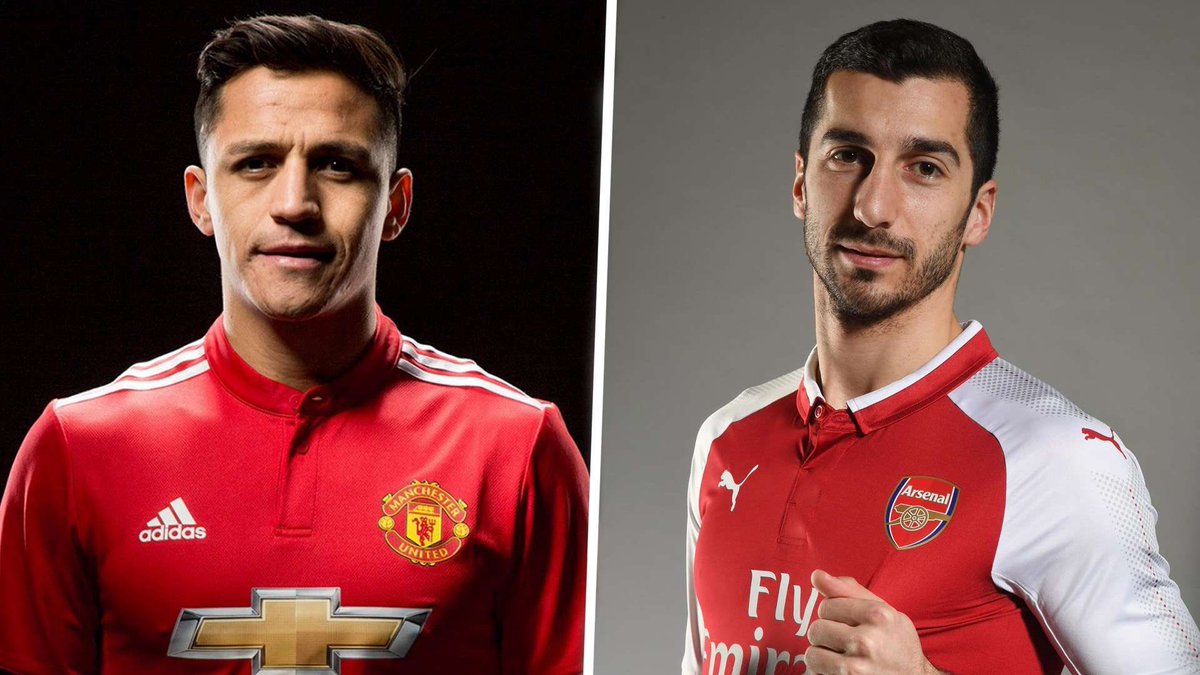
Remember the Mkhi Sanchez swap deal some years ago? It was rumored that Mkhi didn’t want to go to Arsenal and that the deal was going to fail. He eventually went and it wasn’t because anyone forced him to, but because he wanted to.
Finally, in practice, while players can’t be forced out of clubs even though a transfer fee has been agreed, some of them prefer to leave because not leaving means they’d be in a hostile environment where they may not get game time or be treated professionally.
So they leave- but it’s not because they are contractually mandated to. It’s simply because of other factors.
I hope you have learned something today.
My name is Ajoje. I am a FIFA Licensed Agent and International Sports Lawyer. I write on the Law and Business of Football, a lot. Repost and Follow if you want to read more posts like this.
DID YOU KNOW???
A football transfer does not involve just one contract. It involves at least three. Most fans never see any of them. I will share them with you now.
When a deal is announced, what makes the news is a fee, a shirt number, a wage figure, and a medical photo. What very few people know is the legal infrastructure that made it possible. At the very least there are three separate documents, three separate parties, and three separate sets of obligations.
Here is what each one does.
The first of course is the transfer agreement. This is strictly between the two clubs. The player is not even a party to it. It records the fee, the payment structure, any instalments, and any sell on clauses.
When your favorite club pays a certain sum to sign a player for example, the agreement that makes the exchange possible is this contract, along with every condition attached to it.
The second is the employment contract between the player and the new club. This is the document the player actually cares about. It covers salary, bonuses, contract length, image rights, release clauses, buyout clauses.
Simply speaking, the transfer agreement tells the clubs what they owe each other. The employment contract tells the player what the club owes him and what he owes the club.
The third is the termination agreement between the player and the selling club. This is the one most people forget exists. A player sold while he has a subsisting contract with a club does not simply walk out of it.
Their existing employment contract must be formally ended. Both parties must consent. Depending on the deal, outstanding wages or settlements may need to be resolved here too. Generally, it is in fact the first contract that is signed because it is the basis upon which the other two exist.
There are often more documents beneath these three, viz., side letters, image rights arrangements, loan clauses, solidarity contributions, and so on. Each one governs specific obligations between a specific set of parties.
I hope you have learned something today.
Ajoje. FIFA Licensed Agent and International Sports Lawyer. Follow for the law and business of football.
Who pays agents? Players or clubs.
The answer depends on two things- one is who hired the Agent. If the club hired the agent to help negotiate a transaction or to help find a player, then the club has to pay him without question.
However, when the agent is hired by a player, it comes down to one number. Most people don’t know this. That number is $200,000.
A yearly salary of $200,000 is the threshold in the FIFA Football Agent Regulations that determines who picks up the agent's bill. Once that number is crossed, the player has to pay their own agent directly. The club cannot do it on their behalf. It is prohibited.
This is a specific exception to the general "Client Pays" rule, which normally requires players to pay their agents directly
As per the FFAR, if the player earns $200,000 and above, the fee is capped at 3% of the player's annual remuneration, paid by the player, from the player's pocket.
But for players earning $200,000 or below? The club can pay the agent fee on the player's behalf. And critically, that fee does not come out of the player's wages. The club covers it separately. And as a matter of fact, the agent’s cut in cases like this is 5%, not 3.
Now think about what that means in practice.
The overwhelming majority of professional footballers in the world earn below that threshold. Generally, I am not talking about the Premier League or La Liga. I am talking about players in Asia, Oceania, African and so on.
Players earning modest salaries in competitive environments, trying to navigate transfers and contracts without the resources to fund professional representation.
The regulation, when applied correctly, was designed with those players in mind. A footballer in Kano or Accra or Alexandria can access licensed agent representation without surrendering a percentage of a salary that may already be thin.
Now, the problem is not the rule. The problem is that most of those players have never heard of it. They do not know what they are entitled to. And in that gap, they get exploited.
Moreover, I should have you know that the parts of the FFAR that provide for these have been the subject of serious legal disputes and have as a result been suspended by FIFA.
Know the rules. They exist for you.
I hope you’ve learned something today.
My name is Ajoje. I am a FIFA Licensed Agent and International Sports Lawyer. I write on the Law and Business of Football, a lot. Repost and Follow if you want to read more posts like this.
UEFA has 55 member associations, combined annual revenues exceeding €4 billion, and some of the most sophisticated football development infrastructure on the planet.
CAF has 54 member associations, the most naturally talented football continent in the world, and a development gap that has consistently prevented that talent from being realised at home.
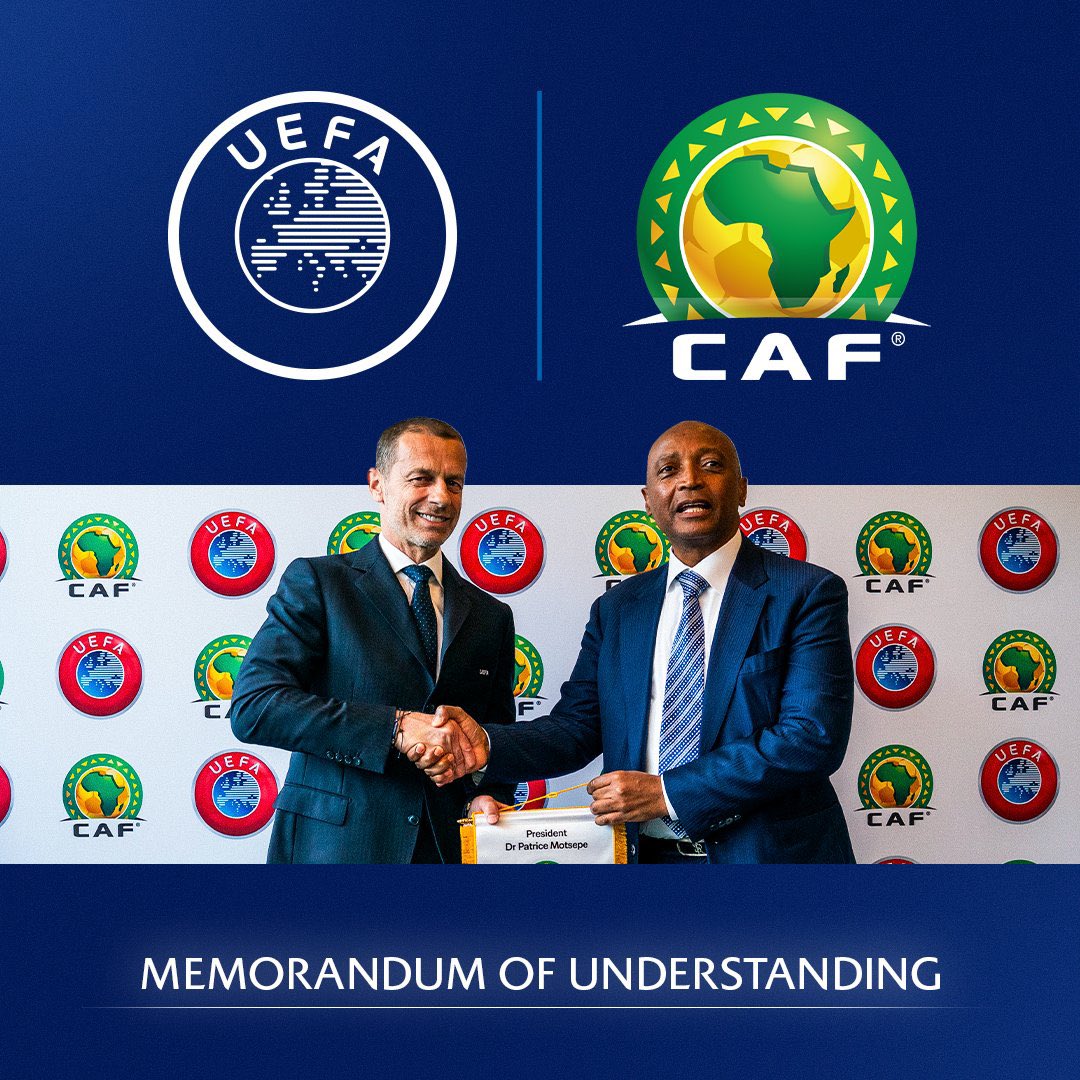
Today in Vancouver, the two confederations signed a Memorandum of Understanding that is specifically designed to start closing that gap between Europe and other continents.
Some of the best players in European football came from around the world. The list runs back decades and it runs deep. UEFA knows this. CAF knows this. What today's agreements acknowledge is that the relationship between the three continents cannot continue to be built purely on individual talent leaving Africa for Europe. It needs structure, investment and a formal framework behind it.
The MoU runs until June 30 2031 and covers seven specific areas.
-Youth and women's football, including the partner confederations member associations participating in selected UEFA youth competitions.
-Football development programmes through the UEFA Together initiative.
-Coach education and the sharing of technical knowledge across both confederations.
-Referee development, with elite officials gaining international experience through each other's competitions.
-Institutional knowledge exchange including observer programmes at major tournaments.
-Education and capacity development with access to UEFA Academy programmes.
-And governance coordination with regular progress reviews to ensure delivery.
UEFA has already signed similar agreements with CONCACAF and CONMEBOL. African football is now formally part of that continental development framework.
CAF president Patrice Motsepe has spoken about building African football into one of the best in the world. This agreement is the most concrete structural step toward that ambition that has been taken in years.
Check the link below to see a copy of the MoU.
https://t.co/MgRD09esvl
My name is Ajoje. I am a FIFA Licensed Agent and International Sports Lawyer. I write on the Law and Business of Football, a lot. Repost and Follow if you want to read more posts like this.
What does it take to be a FIFA Licensed Agent?
A lot of people are working in football representation right now without a licence. That is illegal and they know it. But the industry is beginning to get cleaner. If you want to operate long term, you need the FIFA Football Agent Licence. Here is how it works.
First, you have to be eligible to get the license in the first place.. Article 5 of the FIFA Football Agent Regulations disqualifies you if you have serious criminal convictions, been bankrupted, ties to betting companies, ownership stakes in clubs or academies, or if you worked as an unlicensed agent in the last 24 months.
FIFA checks everything to the best of their ability. You may not get to the next stage if you have issues with any of the above.
The application window opens every January and closes in early March. For 2026 that deadline was 6 March. Whenever the window is open, you are register on the FIFA Agent Platform, choose your exam language, select your session, and pay a non-refundable fee of around £75. The price may vary tho. It was £150 when I wrote it.
The exam itself is 20 multiple choice questions. It is done in 60 minutes and it is open book but limited strictly to official FIFA materials.
You can't usethird party notes, YouTube videos, or anything else. The pass mark is 75 percent, meaning you need to get 15 correct answers out of 20.
This part is a bit crazy tho- you are asked 20 multichoice questions in an open book exam and you think it's easy. The issue is that the study material is 1,100 pages long. So you actually need to study the material thoroughly before the exam.
The exam has a 37% pass rate. You dont want to find out how in the hard way.
The course topics cover the RSTP, FIFA Statutes, Ethics Code, the Clearing House, and safeguarding. It runs in late April or early May. Results come back in early June. This year's exams are being held in both months.
If you pass the exam, you pay roughly USD 600 for the licence. Then USD 300 every year after that, plus mandatory continuing professional development to keep it active.
The licence is global. It does not expire unless you don't renew or you lose eligibility. But understand this clearly: the licence is the entry ticket, not the destination. Most agents grind in lower leagues for years before building anything meaningful.
As much as you need the license, you need good players and good network. Know that and know peace.
I hope you have learned something today.
My name is Ajoje. I am a FIFA Licensed Agent and International Sports Lawyer. I write on the Law and Business of Football, a lot. Repost and Follow if you want to read more posts like this.
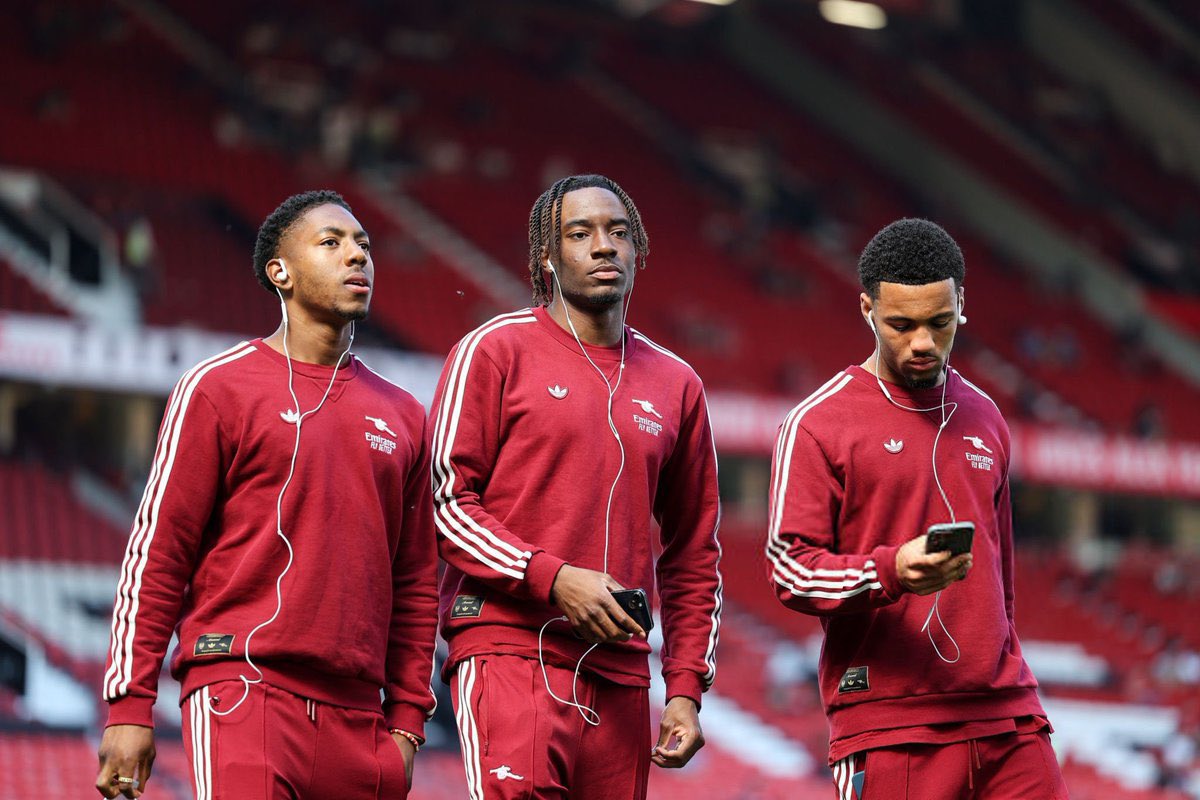
Have you ever wondered why celebrities, especially footballers, prefer wired headphones over wireless earbuds?
It isn’t about the vintage look or fad. it’s a security protocol.
Bluetooth signals are broadcast in the open, making them vulnerable to interception, spoofing, and remote location tracking.
For high profile people, a wireless signal that connect your Bluetooth to your phone is a huge liability.
A wire on the other hand, creates a closed circuit that cannot be hacked from a distance.
In a world of constant digital noise, the zero-wireless signal footprint is the ultimate privacy, security and communication move.
Now you know why the likes of Mbappe, Ronaldo, Rashford, Zendaya, and other celebrities prefers wired headphones.
Will you ditch a wireless earbuds for a wired headset?
🚨In 2012 a man bet his entire life savings on Bitcoin at $5 a coin.
In January 2012, Erik Finman was 12 years old
His grandmother gave him $1,000
He put all of it into Bitcoin
Bitcoin was trading at roughly $10 to $12 per coin at the time
He bought around 100 Bitcoin
His parents and teachers told him it was a waste
His high school teachers told him he was going nowhere
He made a bet with his parents
If he became a millionaire before turning 18 they would not force him to go to college
By 2013 Bitcoin hit $1,200 and his $1,000 had grown to around $100,000
He used some of the gains to start a small educational startup called Botangle at 13 years old
He sold Botangle in 2014 for 300 Bitcoin
At that point Bitcoin was around $200
That sale added 300 more coins to his stack at what turned out to be the cycle low
By 2017, when Bitcoin hit $18,000, Erik Finman was 18 years old
His Bitcoin was worth over $4 million
• He won the bet
• He never went to college
• His parents had to put it in writing
• He said in interviews that his teachers had told him he would end up working at McDonald's
At Bitcoin's peak in October 2025 at $126,198, his original 100 coins from the $1,000 investment would have been worth $12.6 million
His additional 300 Bitcoin from the Botangle sale would have been worth $37.8 million
$1,000 given by a grandmother
A 12 year old who believed his teachers were wrong
The teachers were wrong
In November 1996, a photograph appeared in the Liverpool Echo showing an 11-year-old Everton mascot walking out for the Merseyside derby. That child was Wayne Rooney.
It is one of the earliest recorded images of the use of mascots- which has since become one of the most commercially valuable traditions in world football.
Every Premier League matchday, over 440 children walk onto pitches across England holding the hands of professional footballers. Most people assume it has always been this way. It has not. And the story of how it started is more interesting than the tradition itself.
The practice began informally in the mid-1990s with one or two children per team. It became global policy in 2002 when FIFA partnered with UNICEF on a campaign called Say Yes for Children, designed to protect children's rights worldwide.
The most visible element was simple: one child walked out with every player before every World Cup match, wearing FIFA/UNICEF t-shirts as a symbolic reminder that football had a responsibility beyond the result.
From 2002, it became commercialised. McDonalds became the primary sponsor of the Player Escort Programme at the World Cup and European Championships. At the 2006 World Cup they sent 1,408 children from 35 countries to Germany. At the 2010 World Cup, 1,408 children from 47 countries.
At the 2014 World Cup in Brazil, 1,408 children again, this time from across 70 countries. According to available estimates, McDonald's pays FIFA between $10 million and $25 million per year for its overall World Cup sponsorship, of which the Player Escort Programme is the centrepiece.
What started as a UNICEF advocacy moment is now one of the most consistently sponsored pieces of real estate in world football. The handshake before kickoff. The anthem. And eleven small children holding hands with eleven millionaires. All three have a sponsor. And it all started from somewhere.
My name is Ajoje. I am a FIFA Licensed Agent and International Sports Lawyer. I write on the Law and Business of Football, a lot. Repost and Follow if you want to read more posts like this.