dezeruimte is van mij ~ let’s embrace water; everyone can do more ~ zwerver ~ startups - ⚓️❤️ floating life ~ partnerships Computational Social Science UvA ~
Vrouwen van Staal… Trots dat mijn schip de cover heeft gehaald van het nieuwe documentaire fotoboek van @ChristaRomp met portretten van vrouwen & hun schepen. Zoveel dank voor het vangen van de schoonheid, de rauwheid & de huiselijkheid. Heel veel succes vrijdag met afstuderen!
Mooie uitdaging: in mei een maand met stoppen met doomscrollen op sociale media en content bekijken totdat je in slaap valt. Ruimte maken voor boeken lezen en een beetje lummelen! Ik doe mee #meisocialvrij https://t.co/QV5TWJa5Vy
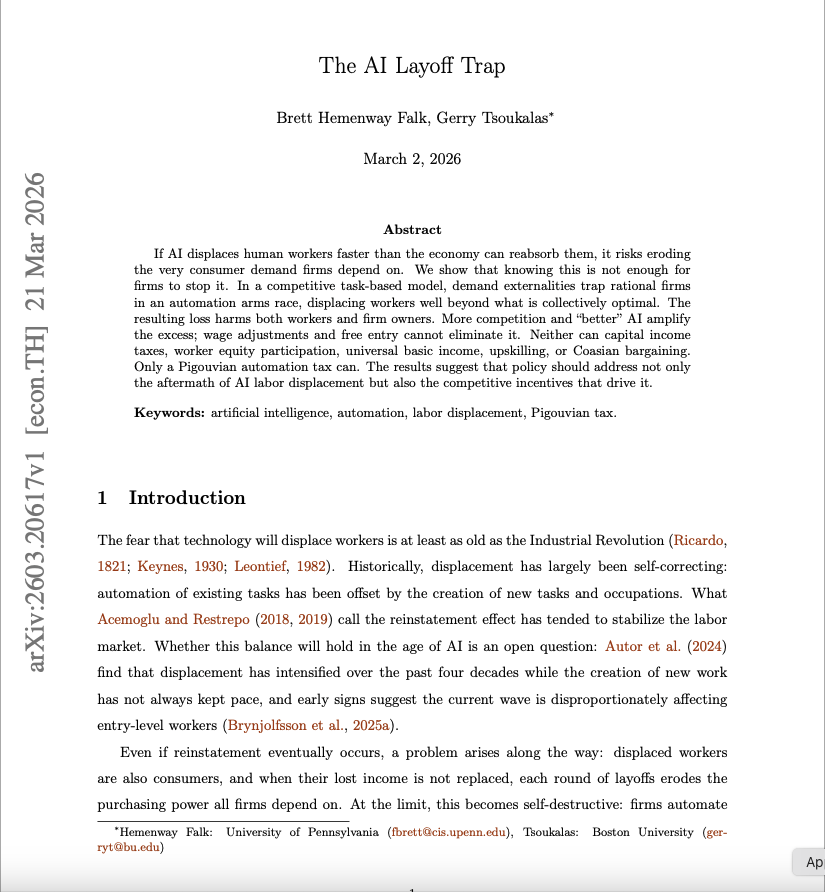
Two economists just published a mathematical proof that AI will destroy the economy.
Not might. Not could. Will — if nothing changes.
The paper is called "The AI Layoff Trap." Published March 2, 2026. Wharton School, University of Pennsylvania. Boston University. Peer reviewed. Mathematically modeled.
The conclusion is one sentence.
"At the limit, firms automate their way to boundless productivity and zero demand."
An economy that produces everything. And sells it to nobody.
Here is how you get there.
A company fires 500 workers and replaces them with AI. A competitor fires 700 to keep up. Another fires 1,000. Every company is behaving rationally. Every company is following the incentives correctly. And every company is building a trap for itself.
Because the workers who were fired were also customers.
When they lose their jobs faster than the economy can absorb them, they stop spending. Consumer demand falls. Companies respond by cutting costs — which means automating more workers — which means less spending — which means more falling demand — which means more automation.
The loop has no natural exit.
The researchers tested every proposed solution. Universal basic income. Capital income taxes. Worker equity participation. Upskilling programs. Corporate coordination agreements.
Every single one failed in the model.
The only intervention that worked: a Pigouvian automation tax — a per-task levy charged every time a company replaces a human with AI, forcing them to price in the demand they are destroying before they pull the trigger.
No government has implemented this. No major economy is seriously discussing it.
Meanwhile the numbers are already tracking the curve. 100,000 tech workers laid off in 2025. 92,000 more in the first months of 2026. Jack Dorsey fired half of Block's workforce and said publicly: "Within the next year, the majority of companies will reach the same conclusion."
Nobody is doing anything wrong. Companies are following their incentives perfectly. That is exactly the problem.
Rational behavior. At scale. Simultaneously. With no mechanism to stop it.
Two economists built the math. The math leads to one place.
Source: Falk & Tsoukalas · Wharton School + Boston University ·
https://t.co/4m8E9jQNYm
@Amsterdam1012@AmsterdamNL Naast het keihard handhaven en beboeten van gedrag? Het is ook de gedragsverandering die noodzakelijk is. Mensen die bij Mac Donalds take away halen en verpakkingen uit hun auto gooien. Ik denk dat het centraal station prioriteit moet krijgen. Daar zet je de toon als stad toch?
Een schone stad geeft trots. Net terug uit het schone Denemarken. Hoe kan - na de verkiezingen- het stadsbestuur in
@AmsterdamNL geen prioriteit geven aan afval? Gedrag begint bij handhaven op het centraal station. We zijn een city of trash! Waarom beboeten we dit niet? #dtv
@Amsterdam1012@AmsterdamNL Wat moet er gebeuren volgens jou Walther ? De organisatie achter de statie geldf regeling heeft veel geld van de industrie gekregen voor de inzameling maar is niet aanspreekbaar voor de miljoenen schade van alle kapot getrokken prullenbakken in Adam. Zou een proces helpen?
Europees klimaatrapport: heet en droog 2025 leidde tot grote natuurbranden.
• Hittegolven heviger
• Vaker droogte
• Vaker extreme neerslag
• Gem. temperatuur hoger
Allemaal gevolgen van de huidige versnelde #klimaatverandering.
https://t.co/0kUwUoEkwd
He did it politely and diplomatically but King Charles just reminded Congress:
• NATO was there for USA after 9/11
• British Troops did fight in Afghanistan
• Ukraine needs our help now
• executive power must be subject to checks & balances
• ice-caps are melting
• America’s natural wonders need protecting
What a lovable, bike friendly, creative and inspiring port city and university city is Aarhus ❤️⚓️ @AarhusUni@ARoSArtMuseum The best location for a new European water hub! @EIT_Water
Denmark didn’t just “phase out” coal. It made it obsolete.
Coal: 85% → 3%
Wind: 11% → 60%
Solar: 0% → 13%
Renewables: 15% → 92%
Wind scaled first. Biomass stabilised. Solar is now accelerating the endgame.
Transitions evolve. Systems get replaced. #Bettrification#RIPCOAL
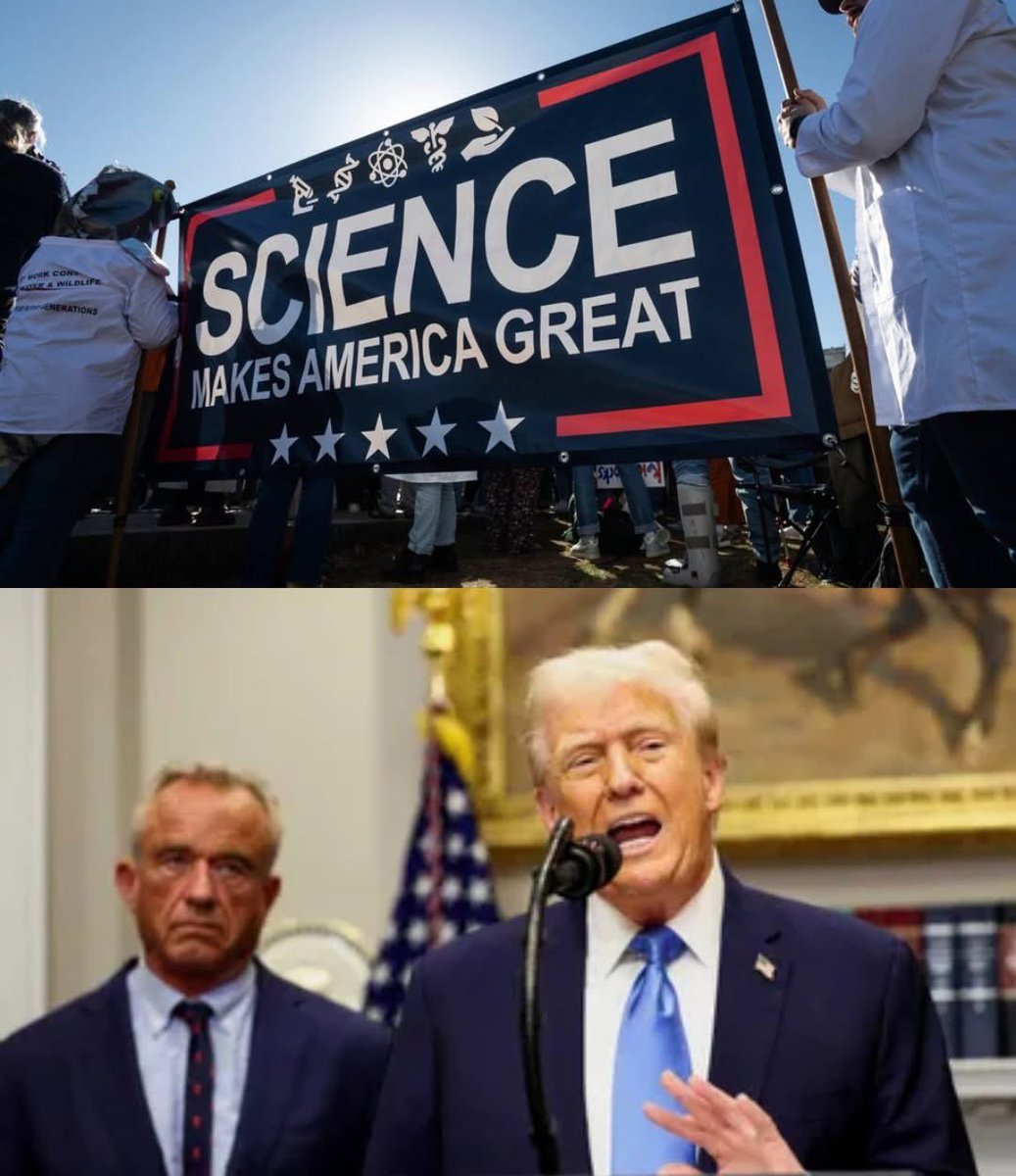
Trump just fired all 24 members of the National Science Board. Every single one. By email. No warning. No reason given. The board has existed since 1950.
The National Science Board is the independent body that oversees the National Science Foundation, the agency that distributes $9 billion in research grants every year.
Its members are scientists and engineers from universities and industry. They serve six-year staggered terms specifically so they cross presidential administrations and stay independent of whoever is in power.
On Friday, every single one of them got the same boilerplate email from Mary Sprowls of the Presidential Personnel Office: "On behalf of President Donald J Trump, I am writing to inform you that your position as a member of the National Science Board is terminated, effective immediately. Thank you for your service."
That's it. That's the whole letter. For 76 years of institutional independence.
The NSF funds the basic science behind MRIs. Cellphones. LASIK eye surgery. GPS. The internet itself. The Antarctic research stations. The deep-space telescopes. The research vessels mapping the ocean floor. Every breakthrough that made America the world's leader in science for the better part of a century traces back through grants this agency made and this board approved.
The board chair, Victor McCrary, was actively advising Congress on Trump's proposed 55% cut to NSF's budget. The board was helping fight back. So Trump fired the board.
Marvi Matos Rodriguez, one of the fired members, told reporters she had been reviewing an 80-page report as part of her board duties just days before being terminated.
Keivan Stassun, a physicist at Vanderbilt, said NSF's leadership had already stopped responding to board oversight requests months ago. "We would ask them, 'Are you following board governance directives?' And their answer would be, in effect, 'We don't listen to you anymore.'"
Now there's no board to answer to.
Rep. Zoe Lofgren of California, the top Democrat on the House Science Committee, called it "the latest stupid move made by a president who continues to harm science and American innovation. Will the president fill the NSB with MAGA loyalists who won't stand up to him as he hands over our leadership in science to our adversaries?"
That's the actual question.
Because while Trump is firing American scientists, China is building research universities at a rate we cannot match. The CDC just buried a study showing vaccines work.
RFK Jr. runs HHS. The EPA is gutted. The Forest Service is being broken. Half of American children are breathing dangerous air. And now the people who decide what gets researched in the United States have all been fired by email on a Friday afternoon.
Curious fact.
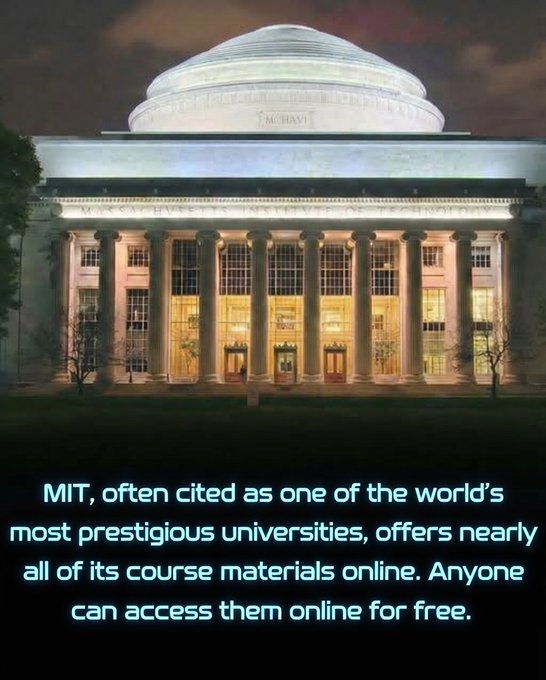
MIT is making elite education accessible to everyone by sharing materials from more than 2,500 courses freely with learners worldwide.
The Massachusetts Institute of Technology continues to transform global education through its commitment to open access. Via MIT OpenCourseWare (OCW), anyone can explore a vast digital archive of resources—including lecture notes, assignments, exams, problem sets, and video lectures—from over 2,500 undergraduate and graduate courses across every MIT department and discipline, from introductory programming and multivariable calculus to advanced topics in artificial intelligence, quantum physics, and beyond.
For a more guided, interactive path, MITx on the edX platform provides structured Massive Open Online Courses (MOOCs) that closely replicate the depth and rigor of on-campus classes. These self-paced offerings let learners dive into high-demand fields like machine learning, data science, entrepreneurship, supply chain management, and more.
Both platforms are completely free to access—no enrollment, age restrictions, or geographic barriers required—just an internet connection. The key difference: OCW delivers self-directed, archival materials without any formal credentials, while MITx courses often include the option to earn a verified certificate for a modest fee upon completion.
Popular starting points include classics like "Introduction to Computer Science and Programming Using Python" (widely used for beginners), alongside specialized series in areas such as financial accounting, circuits and electronics, probability, and aircraft systems engineering.
This open-learning effort reflects MIT's core mission to advance knowledge and empower people everywhere, turning world-class resources into tools for personal growth, professional development, and lifelong curiosity for millions of users globally. Dive in today at https://t.co/bPdSDEDb7V or https://t.co/APdvzmWRev.
Tara is so young, yet remarkably wise.
She’s been bravely speaking out as the voice for Iran’s slaughtered youth, showing courage and clarity far beyond her years.
Compared to the average Western GenZ, there is simply no contest.
Make sure to follow her.
Proud of you Tara joon❤️👏🏼
An MIT professor taught the same math course for 62 years, and the day he retired, students from every country on earth showed up online to watch him give his final lecture.
I opened the playlist at 2am and ended up watching three of them back to back.
His name is Gilbert Strang. The course is MIT 18.06 Linear Algebra.
Every machine learning engineer, every data scientist, every quant, every self-taught programmer who actually understands how AI works learned the math from this one man. Most of them never set foot on MIT's campus. They just opened a free playlist on YouTube and let him teach.
Here's the story almost nobody tells you.
Strang joined the MIT math faculty in 1962. He retired in 2023. That is 61 years of standing at the same chalkboard teaching the same subject to 18-year-olds.
The interesting part is what he did when MIT launched OpenCourseWare in 2002. Most professors were skeptical. They worried that putting their lectures online would make their classrooms irrelevant. Strang did not hesitate. He said his life's mission was to open mathematics to students everywhere. He filmed every lecture and gave it away.
The decision quietly changed how the world learns math.
For decades linear algebra was taught the wrong way. Professors started with abstract vector spaces and proofs about field axioms. Students drowned in the abstraction. Most never recovered. They walked out believing they were bad at math when they had simply been taught in an order that nobody's brain is built to absorb.
Strang inverted the entire curriculum.
He started with matrix multiplication. Something you can write down on paper. Something you can compute by hand. Something you can see. Then he showed his students that everything else in linear algebra eigenvectors, singular value decomposition, orthogonality, the four fundamental subspaces was just a different lens for understanding what the matrix was actually doing under the hood.
His rule was strict. If a student could not explain a concept using a concrete 3 by 3 example, that student did not actually understand the concept yet. The abstraction was supposed to come last, not first. The intuition was the foundation. The proofs were just confirmation that the intuition was correct.
The second thing Strang changed was the classroom itself. He said please and thank you to his students. Every single lecture. He paused mid-derivation to ask "am I OK?" to check if anyone was lost. He never used the word "obviously" or "trivially" because he knew exactly what those words do to a student who is one step behind. He treated 19-year-olds learning math for the first time the way he treated his own colleagues. With patience. With respect. With the assumption that they belonged in the room.
For 62 years.
The result is something that has never happened in the history of education. A single math professor became the default teacher of his subject for the entire planet.
Universities in India, China, Brazil, Nigeria, every country with a computer science department, started telling their own students to just watch Strang's lectures. The University of Illinois revised its linear algebra course to do almost no in-person lecturing. The reason was honest. The professor said they could not compete with the videos.
His final lecture was in May 2023.
The auditorium was packed with students who had never met him before. He walked to the chalkboard, taught for an hour, and at the end the entire room stood and applauded. He looked confused for a moment, like he genuinely did not understand why they were cheering. Then he smiled and waved them off and walked out.
His written comment under the YouTube video of that final lecture was four sentences long. He said teaching had been a wonderful life. He said he was grateful to everyone who saw the importance of linear algebra. He said the movement of teaching it well would continue because it was right.
That was it. No book promotion. No farewell speech. No legacy management.
The man whose teaching is the foundation of modern AI just thanked the audience and went home.
20 million views. Zero ego. The entire engine of the AI revolution sits on top of math that millions of people learned for free from one quiet professor in Cambridge.
The course is still on MIT OpenCourseWare. Every lecture, every problem set, every exam, every solution. Free.
The most important math course of the 21st century is sitting one click away from you. Most people will never open it.
This week was tough. I had dinner with my intelligent friends from European countries, people who have spent half their lives working within the United Nations. We were having a good time until the conversation turned to Donald Trump and Iran. Everyone, without exception, spoke badly of Trump: that he causes problems for everyone, that war is terrible, that it is illegal, and so on.
I stayed silent. When everyone finally became quiet, I asked only one question: who is actually going to collect and remove those more than 400 kilograms of uranium?
My French friend said: Trump is no better than the regime. On top of that, he has started an illegal war, and many countries have nuclear power plants why shouldn’t Iran have them too?
I exploded inside, but I remained silent at first. When I finally broke my silence, I said: was it illegal when the United States helped the French during the Second World War? Was it unnecessary?
Then silence returned.
I kept thinking about how to express everything happening inside me; how to explain the regime to a European-someone surrounded by left-wing ideology, enclosed within indirect forms of censorship, and always ready to say that war is terrible, yet surprised when I say many Iranians wanted it.
How do you explain to people who live in safety that some nations sometimes see outside pressure as the only remaining path when every internal path has been closed? How do you explain that they do not even speak in geopolitical terms, but judge only from a position of moral comfort, while others are speaking about survival?
Europeans who, despite democracy and free internet, still do not know what happened in Iran on January 8–9. Europeans who believe every conflict can be understood through the same moral template. Europeans who condemn all violence in theory, but have never had to live under a Islamic system where violence is part of everyday life.
And I sat there with the feeling that the distance between our realities was greater than the table around which we were sitting…
Wow. The Pope was just asked his stance on migration. His answer is amazing:
“I would change the question: what is the global North doing to help the global South in its situation that forces them to migrate.”
@techxmanoj Interesting! Two questions for you. Is working with AI addictive? Are you also worried your massive AI use is causing a lot of water and energy?
After 3 years using Claude, I can say it’s the technology that has revolutionized my life.
Here are 18 prompts I use daily that have transformed my day to day; they could do the same for you:
(Save this 🔖)
Luxembourg has become the first country in the world to make all standard public transport completely free, covering buses, trams, and trains nationwide.
Funded through taxes instead of fares, the policy aims to ease heavy traffic and cut emissions by encouraging people to leave their cars behind. By removing ticket costs and barriers, public transport is treated more like an essential public service, simple, accessible, and open to everyone, including visitors and cross-border commuters.
The results have been noticeable: more people are using public transport, roads are less congested, and urban air quality has improved. While premium first-class rail still requires payment, everyday travel is now seamless, just get on and go.
This bold approach has positioned Luxembourg as a global example of how making transport free can help shift habits toward greener, more sustainable travel.
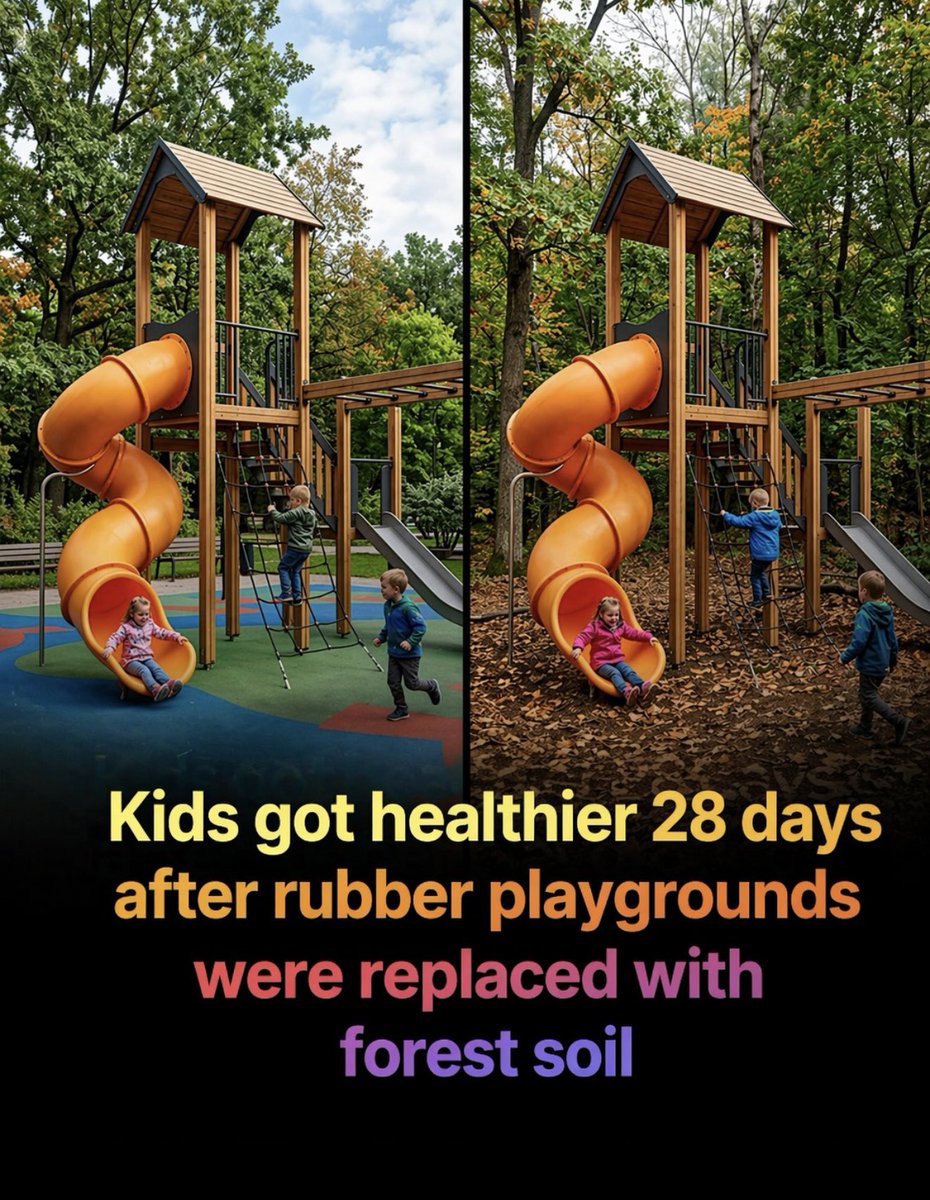
Research in Finland found that simply changing what children play on can quickly influence their immune system.
Scientists redesigned parts of nursery playgrounds by swapping gravel and asphalt for natural forest materials, soil, moss, leaf litter, and native plants, so kids would be exposed to the microbes found in nature. After just 28 days, clear biological differences emerged.
Children who played in these “rewilded” spaces developed a richer mix of microbes on their skin and in their gut. They also showed higher levels of regulatory T-cells, which help the body manage inflammation and reduce the risk of immune overreactions like allergies. These changes were not observed in children who stayed on conventional playground surfaces.
The findings support the biodiversity hypothesis, the idea that limited contact with natural environments, especially in urban life, may be linked to rising allergies and autoimmune conditions.
What stands out is how simple the intervention was. This wasn’t extreme outdoor exposure-just everyday play in a more natural setting. Even small, regular contact with soil and vegetation appears to shape the body’s internal ecosystem and how the immune system develops.
Learn more:
"Dirty Playgrounds: How Rewilding Finnish Schools Transformed
Children's Health." LettsSafari