Argentina es un país imposible de explicar.
Hace unos días un tuit se hizo viral por llamar "negrito" a un argelino e insultar a Alá. Medio mundo concluyó que Argentina es racista.
Sin embargo, Argentina fue uno de los primeros países de América en iniciar el proceso de eliminación de la esclavitud. Es una sociedad que hoy convive con mínimos conflictos raciales.
Somos el mismo país que ayudó a liberar a Chile, Perú y parte de Sudamérica de la dominación española. Somos el mismo país que le dio al mundo un Papa, a Messi, a Fangio, a Favaloro, a Maldacena y también miles de idiotas que hacen papelones en hoteles y aeropuertos.
Argentina es el país de los extremos.
Tenemos gente que quiere que la Selección pierda porque Messi es supuestamente de derecha. Tenemos famosos difundiendo la falsa muerte del padre de Messi sin pensar en el dolor que eso podía causar. Tenemos libertarios llamando comunista a cualquiera que no piense como ellos y kirchneristas llamando fascista a cualquiera que no piense como ellos.
Y sin embargo, seguimos discutiendo. A los gritos, con insultos, exagerando, equivocándonos, ofendiéndonos entre nosotros y a veces ofendiendo al mundo entero.
Porque hay algo que Argentina conserva desde hace décadas y que en muchos países se ha ido perdiendo: una libertad de expresión sin límites. Lo que conlleva, entre otras cosas, una tolerancia extraordinaria al conflicto verbal.
Acá se insulta al presidente, al Papa, a los empresarios, a los sindicatos, a los periodistas, a los futbolistas, a la oposición y al oficialismo. Todos los días.
A veces eso produce genialidad.
A veces produce estupidez.
La libertad tiene ese problema: no distingue entre un genio y un imbécil.
Y quizás por eso Argentina desconcierta tanto.
Porque somos capaces de las mejores cosas y de las peores en la misma semana.
Así que, queridos vecinos, sepan disculpar cuando nos expresamos hacia afuera como muchas veces nos hablamos entre nosotros.
No siempre es soberbia.
Muchas veces es simplemente Argentina siendo Argentina: un experimento permanente de libertad, caos, talento, contradicción y exceso.
Me matan los “repudio al régimen pero esta no es la forma, van a llevar al mundo a una guerra” claro, un peligro, imaginate si Irán decide a partir de esto crear, entrenar y financiar una red de milicias jihadistas en toda la región para ocupar y desestabilizar países, matar a cientos de miles de personas y atacar barcos comerciales? O que pasa si se pone a organizar y financiar atentados en todo el mundo, desde Beirut hasta Buenos Aires? O si se pone a perseguir y asesinar mujeres, opositores políticos y minorías sexuales y religiosas? O imaginate que agarra y revienta deliberadamente a más de 30 mil civiles en un mes por protestar? Sería terrible realmente. Mejor no hacer nada.
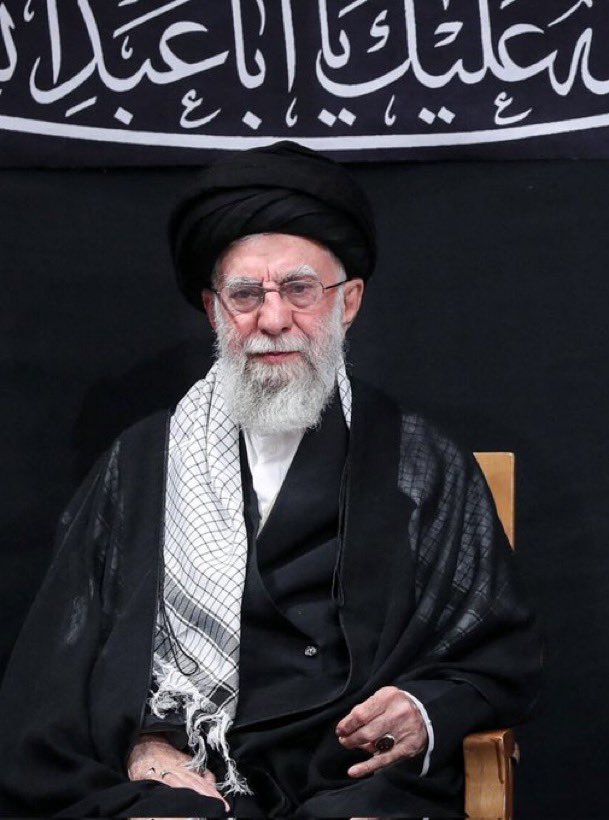
Ayatollah Ali Khamenei was responsible for two terrorist attacks in Argentina 🇦🇷, leaving over one hundred victims. These two attacks remained unpunished until today.
Today, justice was served. Justice for every victim of this sinister figure.
- "A quienes dicen que a Estados Unidos solamente le interesa el petróleo, a esas personas les pregunto: ¿Qué creen que querían los rusos y los chinos? ¿La receta de las arepas?"
JJAJAJAJAJJAJAJAJAJJAJAJAJJAJAJJ, se pasó.
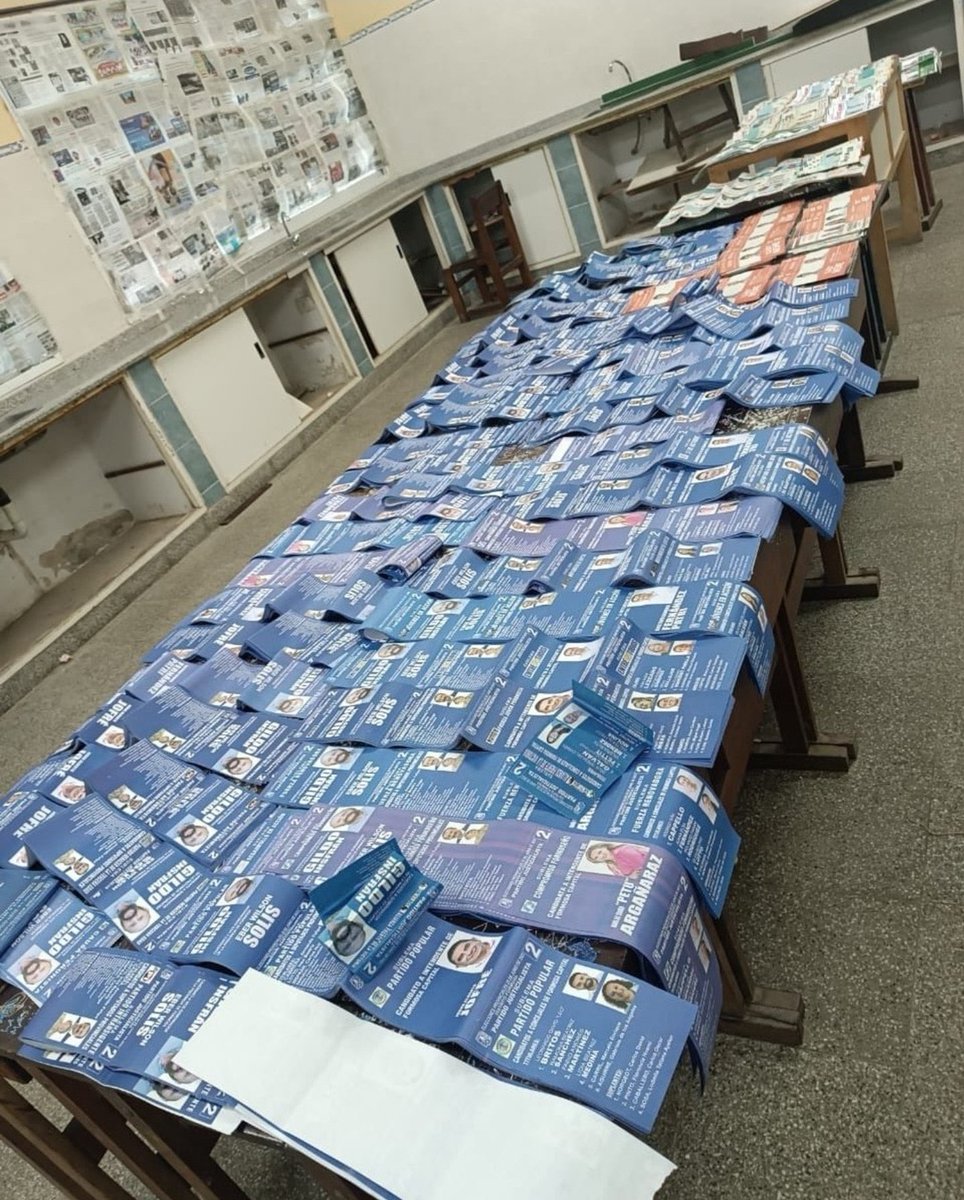
Algún día tendremos que explicar en las clases de Educación Cívica del secundario como durante décadas tuvimos decenas de cientistas sociales explicándonos que Argentina no podía organizar una elección con un sistema mejor que este 👇
Considering the situation in which Argentina found itself in 2023, it's interesting to read this analysis from Ms. Strada, in her capacity as a member of congress for Fuerza Patria.
From November 2022 to November 2023, the average value of Argentina's Real Effective Exchange Rate —that is, its trade-weighted value, adjusted for inflation relative to its trading partners, and taken from the Central Bank— was 94.3. The latest closing value was 98.2. So on a trade-weighted basis, the peso is over 4% weaker today than it was during the last year of the government of Ms. Strada's party.
The value during November 2023, the Presidential run-off and the last full month in which Ms. Strada's party held office, averaged 83.2. So the currency today is some 18% weaker in real terms than it was when Ms. Strada's party, with its Minister of Economy as presidential candidate, was seeking re-election.
If we do the same exercise for the bilateral real exchange rate versus the United States, and again take the average value in the 12 months to November 2023, it was 103.8. The latest closing value was 109.9, meaning that the Argentine Peso is today almost 6% weaker versus the dollar, in real terms, than it was during Ms. Strada's party's last year in office.
Meanwhile, taking November 2023 as the reference value, the bilateral index averaged 92.3 during the month. The Peso is today, therefore, 19% weaker in real terms versus the US dollar than it was during Ms. Strada's party's last month in office.
So if the Argentine Peso is overvalued today, it was by definition, significantly more overvalued when Ms. Strada's party was in government.
With respect to the Balance of Payments, in 2023, Argentina had a current account deficit of 20.7 billion US dollars or 3.2% of GDP, with the quarterly deficit peaking at over 6.21 billion dollars in the second quarter of 2023.
In 2024, Argentina enjoyed a current account surplus of 5.7 billion dollars or 0.6% of GDP—an improvement of 3.8% of GDP in one year.
In the first half of 2025, the current account deficit has totalled 8.21 billion dollars, of which 5.19 billion US dollars came in the first quarter and 3.02 billion in the second quarter. If we annualise the deficit from the first half of 2025, which will almost certainly overstate the final result, it will still be over 20% lower in dollar terms than the current account deficit in Ms. Strada's government's final year in office.
So if Argentina's balance of payments is not sustainable today, it was by definition, much less sustainable when Ms. Strada's party was in government.
Meanwhile, using the IMF's methodology from its Fiscal Monitor, the cyclically adjusted primary fiscal balance moved from a deficit of 1.7% of GDP in 2023 —and an average value of -2.1% in the four years from 2020 to 2023— to a primary surplus of 4% of GDP in 2024 and a similar projected surplus in 2025.
This fiscal adjustment has resulted in a significant improvement in the country's net debt levels. In particular, in the second quarter of 2025, the Argentine state's consolidated net debt, subtracting both intra-public sector debt and the net assets of the government and Central Bank, stood at 239 billion dollars. This represents some 34.2% of GDP, the lowest value since 2018 — some 26.4 billion dollars, or 6.4% of GDP, lower than the equivalent value in the third quarter of 2023, when Ms. Strada's party had held power for nearly four years.
So if the country's debt is unsustainable today, it was by definition, much more unsustainable when Ms. Strada's party was in government.
When Ms. Strada's party assumed office in 2019, the Central Bank held 43.8 billion in gross foreign exchange reserves. And, it should be noted, these reserves were much lower than the 66 billion dollars held by the Central Bank prior to the primary elections of August 2019, when Ms. Strada's party's ticket won almost 50% of the votes cast, provoking one of the largest one-day collapses in asset values in modern history. By November 2023, Ms. Strada's party's last month in office, the Bank's gross reserves had fallen to some 21.5 billion dollars.
The net reserves faced an almost equivalent fall, from some 12 billion dollars in November 2019 to the Central Bank having negative reserves of over 11 billion dollars when Ms. Strada's party left office.
Today, the Central Bank holds over 42 billion dollars in gross reserves. Net reserves I will leave for the audience, but by any measure they are higher today than they were when Ms. Strada's party left government.
So if the Central Bank has a weak balance sheet today, it was by definition, weaker when Ms. Strada's party left office.
Meanwhile, the annual inflation rate, which had stood at an already shockingly high 52.1% in November 2019, rose to 160.9% by November 2023. This despite the desperate efforts of the government of Ms. Strada's party to contain the exchange rate, provoking the collapse in foreign exchange reserves and leading to a black market premium between the official exchange rate and the "blue chip" rate of over 200% in October 2023. When Ms. Strada's party left office, the premium stood at 147%. The black market premium, it should be noted, had not seen a value below 77% during the whole of 2023.
By December 2023, the country's annual inflation rate stood at 211.4% — the second highest rate in the world, after Lebanon, beating even Venezuela's 189.8%.
The latest annual inflation value, for August of this year, was 33.6% — a fall of 127.3 percentage points versus November 2023. With respect to the exchange rate, as of this week, there was no black market premium to speak of.
The results for output are not much prettier. Argentina's real GDP per capita, using the World Bank's measure in constant 2021 international dollars, ended 2023 some 2% lower than the level it reached in 2008. Ms. Strada's party governed for 12 of the 16 years of this period.
Using the latest available national accounts data, real GDP in the second quarter of this year was some 5% higher than it was in the equivalent quarter of 2023, an increase of approximately 3% in per capita terms.
The poverty rate, as measured by the national statistics agency (INDEC), has fallen from 41.7% in the second half of 2023 to 31.6% today. The rate of extreme poverty, meanwhile, has declined from 8.7% to 5.6% over the same period. At no point during Ms. Strada's party's term in office was the rate of poverty, or of extreme poverty, lower than it was in the first half of 2025.
So if these macroeconomic variables and Argentina's "national development" are troubling today, they were by definition, much more troubling when Ms. Strada's party was in government.
Finally, if Ms. Strada is concerned about debt levels, a concern I share, I would very humbly suggest she and her colleagues at Fuerza Patria draft a law for a new fiscal rule for Argentina, requiring that the country runs a balanced budget over the economic cycle, creating a ceiling for spending equal to cyclically adjusted income, and that Argentina run fiscal surpluses until the debt level falls below the debt anchor they deem appropriate.
They can style it after the Swiss "debt brake," the Schuldenbremse, which saw the Confederation's net debt fall from 115 billion Swiss francs in 2003, the year of the debt brake's introduction, to 103 billion in 2019. That is to say, a consistent fall in nominal debt levels. Relative to output, the result, when combined with similar fiscal rules for the Swiss cantons, was a fall of general government debt from 38.7% of GDP in 2003 to 17.3% in 2019, according to the IMF's Fiscal Monitor, and 16.4% of GDP today.
If they are preoccupied by the Central Bank balance sheet, they could propose an updated legal charter, prohibiting the Bank from financing the public treasury, providing for a clear price and financial stability mandate, a unified exchange rate, eliminating foreign exchange controls by law and mandating that its profits be used, in their majority, to build reserves.
Precisely this sort of legal framework was introduced in Peru and it has allowed the Reserve Bank of Peru to build its reserves from negative 352 million dollars in 1988 to having reserves equivalent to 18% of GDP by 1998, and some 30% of GDP today — akin to the BCRA holding net foreign reserves of over 200 billion dollars.
This occurred, it should be noted, while Peru reduced its external debt from 72% of GDP in 1988 to 33% in 1998 (16.2% as of 2024) and brought its annual inflation rate down from a peak of 12,377% in 1990 to 6% in 1998 (1.36% today). One consequence is that Peru has not entered into an IMF Extended Fund Facility since 2001.
Similarly, Chile, arguably the clearest example of a successful economic policy framework in Latin America, exited its last IMF programme in 1989. This, incidentally, was the year the Chileans introduced the organic law for their central bank. Having been much poorer than Argentina 35 years ago, Chile now has higher incomes, less poverty, much lower and more stable inflation, along with better educational results and a higher life expectancy.
I, therefore, eagerly await Fuerza Patria's proposals along these lines.
Exchange rate indices and foreign exchange reserves are from the BCRA. Balance of payments, inflation, national accounts and poverty data are from INDEC. Fiscal balance figures are from the IMF's Fiscal Monitor. Debt figures are from the analysis by Facimex Valores. Real GDP data are from the World Bank's World Development Indicators. Figures for Switzerland are from the Federal Finance Administration and the IMF's Fiscal Monitor. Data for Peru are from the BCRP and, for historic external debt levels, the Ministry of Economy.
Ciego. Se recibió el primer ingeniero ciego en la UTN Santa Fe. Se trata de Bruno Rodríguez que se graduó de Ingeniero en Sistemas de Información. Dejó como saldo desde mecanismos novedosos de enseñanza, proyectos de investigación, ponencias en congresos, un sistema especial para que personas ciegas puedan programar, hasta una tesis doctoral en educación sobre accesibilidad en carreras de ingeniería.
Sí, lamentablemente también murieron muchos niños en Gaza. Esos niños, y los Bibas y todos los que murieron en la guerra estarían vivos si Hamás no hubiese invadido criminalmente Israel el 7-10 y cometido la peor masacre de judíos en un día desde la época del Holocausto. Israel se retiró de Gaza hace veinte años, le entrego unilateralmente el territorio y el control de sus fronteras a los palestinos en un gesto de paz. Los palestinos al año siguiente fueron a las urnas y votaron a Hamás, quienes poco después hicieron un golpe de estado, expulsaron y asesinaron a las otras fuerzas políticas, desconocieron todos los acuerdos firmados con Israel y le declararon la guerra al país vecino. Convirtieron Gaza en un hormiguero terrorista y una y otra vez fueron a la guerra mientras se escondían en el medio y debajo de su población civil para que esta se muera y conseguir simpatías. Los palestinos tienen una gran responsabilidad de la situación actual en Gaza, pero mientras el mundo siga siendo incapaz de asignarles alguna responsabilidad sobre sus propias decisiones y acciones y los sigan infantilizando y viendo simplemente como sujetos sin agencia que solo reaccionan frente a la maldad judía, seguirán siendo incapaces también de entender el conflicto y por tanto de ayudar a resolverlo. Nunca han aceptado un plan de paz, nunca han ofrecido una contrapropuesta y siempre han elegido la guerra. No hay nada que desee más que que se dejen de morir inocentes de uno y otro lado de la frontera en este conflicto. Presionen al liderazgo palestino para que acepten sin peros la existencia de Israel y dejen de reclamar todo el territorio para ellos en lugar de tratarlos siempre de víctimas mientras le exigen a Israel que se deje atacar y masacrar pasivamente.