Lic. en Adm. de Empresas, Téc. Universitario en Perforaciones, Auditor Líder IRCA OHSAS 18001 e ISO 14001, Temas de interés: Motivación, Liderazgo y Creatividad
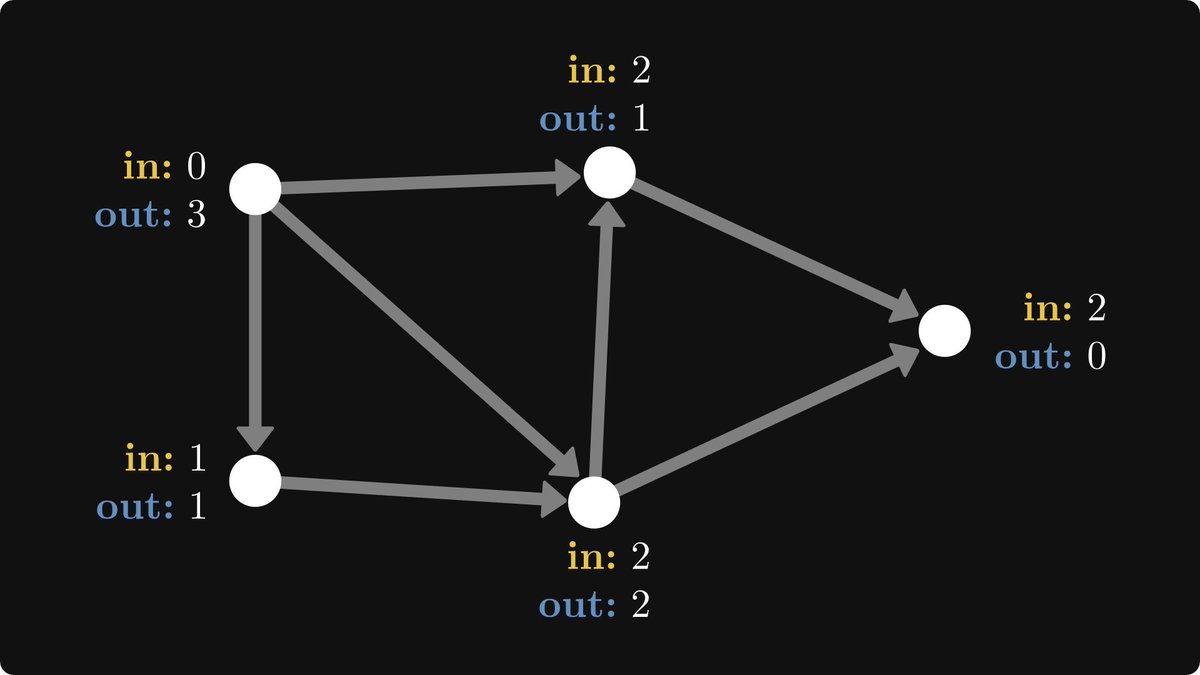
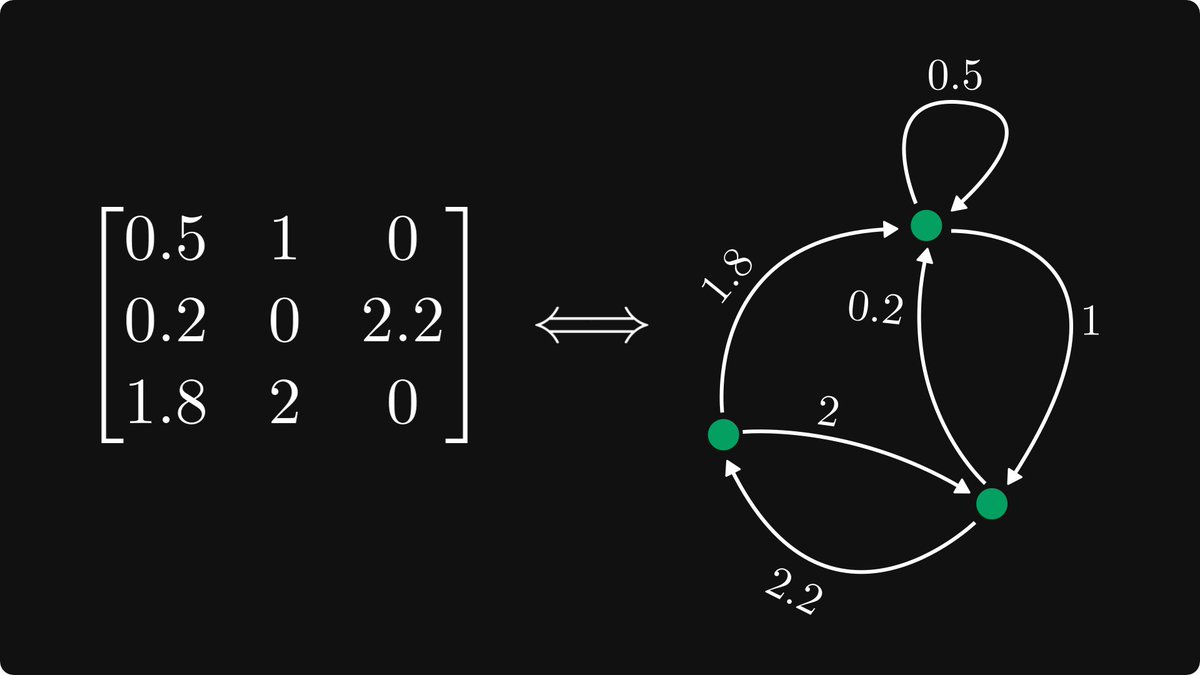
Stop thinking of a matrix as just a grid of floating-point numbers.
Matrices are graphs and graphs are matrices. Every matrix multiplication is a network transformation where nodes pass signals along weighted edges.
When you shift from mechanical arithmetic to the intuition of graphs, linear algebra transforms from boring to beautiful.
Metropolis–Hastings (MH) is a Markov chain Monte Carlo (MCMC) algorithm for generating samples from a complicated probability distribution when direct sampling is difficult. Given a target density π(x), the algorithm proposes a new state x′ from a proposal distribution q(x′|x) and accepts it with probability
α(x,x′) = min{1, [π(x′)q(x|x′)]/[π(x)q(x′|x)]}.
If the proposal is rejected, the chain remains at x. Under suitable conditions, the resulting Markov chain has π as its stationary distribution, so averages over the simulated samples can approximate expectations under the target distribution.
MH is fundamental to statistical machine learning, particularly Bayesian inference. When the posterior distribution p(θ|D) is analytically intractable, MCMC can generate approximate posterior samples, allowing us to estimate parameters, credible intervals and predictive distributions. Applications include Bayesian regression, hierarchical models, latent-variable models, graphical models and uncertainty quantification. The algorithm also illustrates a central idea in computational statistics: rather than solving an integral or optimization problem directly, construct a stochastic process whose long-run behavior reproduces the desired distribution. Modern methods such as Hamiltonian Monte Carlo and Langevin Monte Carlo build on this principle.
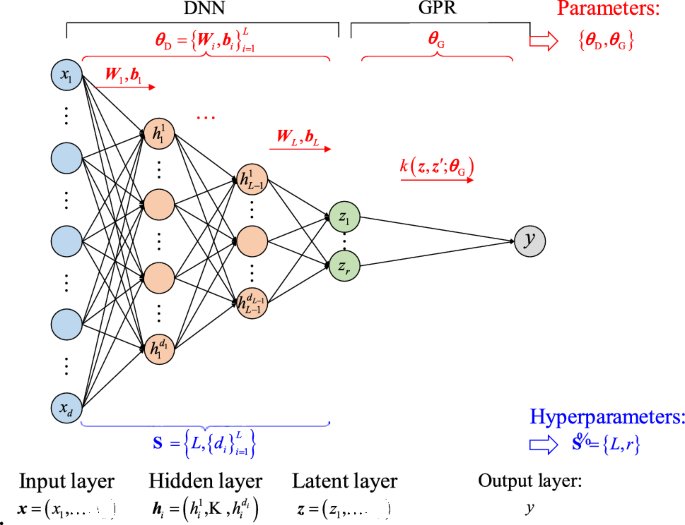
Gaussian Processes (GPs) provide a powerful framework for Bayesian nonparametric regression and classification. Instead of assuming a finite-dimensional parameter vector, a GP places a probability distribution directly over functions:
f(x) ∼ GP(m(x), k(x,x′)),
where m is the mean function and k is a covariance kernel describing how function values at different inputs are related. Given noisy observations yᵢ = f(xᵢ) + εᵢ, the joint Gaussian structure allows the posterior distribution of f at new points to be computed analytically. The predictive distribution has the form
f(x*) | X,y,x* ∼ N(μ*, σ*²),
providing both a prediction and an explicit measure of uncertainty.
GPs have extensive applications in statistical machine learning, including regression, spatial statistics, time-series modeling, Bayesian optimization, surrogate modeling and uncertainty quantification. Different kernels encode different assumptions about smoothness, periodicity and similarity, making kernel selection a form of inductive modeling. Gaussian processes also provide a statistical foundation for understanding uncertainty in machine-learning predictions. Their connections to reproducing-kernel Hilbert spaces, kernel methods and Bayesian inference make them an important bridge between classical statistical modeling and modern machine learning.
ÚLTIMA HORA: Google Gemini ahora puede analizar cualquier acción como un analista de Wall Street (gratis).
Aquí tienes 9 increíbles prompts de Gemini que sustituyen terminales de Bloomberg de $4.000 al mes:
Guárdalo en favoritos
Autocontrol:"Freno", inhibe impulsos
La Corteza prefrontal es una de las áreas más relevantes para las funciones ejecutivas, que incluyen planificación, toma de decisiones y el autocontrol
Clave para Autorregulación que "guía", ayuda enfoque en objetivos a largo plazo
One of the mightiest tools in mathematics is the camel principle.
I am dead serious. Deep down, this tiny rule is the cog in many methods. Ones that you use every day.
🟢 Entendé los datos detrás de una app, un reporte o una automatización.
Aprendé Bases de Datos y SQL desde cero: tablas, relaciones, JOIN y reportes.
Usá IA como copiloto sin delegarle tu criterio.
6 clases en vivo. ¡Te esperamos!
Te enseñaron cálculo memorizando fórmulas complejas y nunca entendiste para qué sirven.
1️⃣Derivada = Mide el instante (Analiza)
2️⃣Integral = Acumula el todo (Suma)
3️⃣Ecuación Diferencial = Predice el futuro (Gobierna)
En este video de 2 min entenderás por fin la diferencia 👇
Falacia Planificación -Daniel Kahneman y Amos Tversky
Todos necesitamos objetivos y planificación para acercarnos a ellos
Pero nuestra capacidad de previsión es limitada
Subestimamos obstáculos cambios, dificultades o aceleradores
Preparemonos para lo imprevisto
Si el hambre aparece al final del día, revisa si has dormido poco, saltado comidas o comido insuficiente antes. Prioriza comidas completas y evita convertir los antojos en alimentos prohibidos.
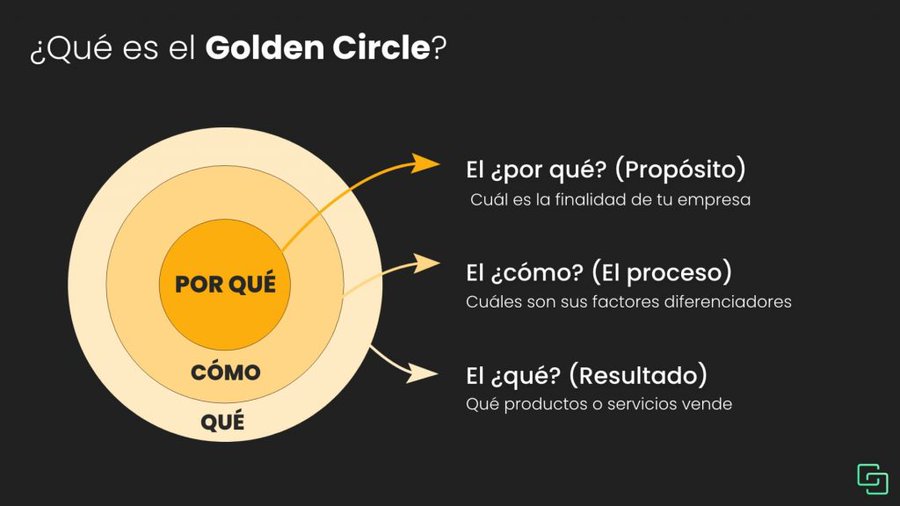
¿El por qué?
A veces se llama esperanza, otras sueños o metas, otras simplemente ilusión Es la emoción que nos mueve y nos dirige hacia un futuro
El reto de nuestro tiempo es vivir con un propósito fluido que se modela constantemente en medio de tanto cambio
Modelo: S. Sinnek
1096 pages.
Over the course of these three-and-a-half years since I started my newsletter, I’ve written more than a hundred posts, essays, tutorials.
When I’m asked about what kind of value a paid subscription for The Palindrome offers, I usually point to the archive, which is where all the content lives.
So yesterday, I downloaded all the posts I have written for The Palindrome since its start (December 1st, 2022), filtered out all the miscellaneous ones (like updates on my book, my life, etc.), put them through some light processing (removing CTAs, introductory words, and others), organized and ordered them thematically, then compiled them into a massive book of 1096 pages.
It’s the distillation of all the knowledge I’ve gained in mathematics and machine learning over a decade of experience, and I’m making it available with every paid subscription.
If there's a reason to become a paid subscriber of The Palindrome, this is it!
Tu vida es monótona porque no tiene misiones secundarias.
Te despiertas, trabajas, haces scroll, duermes. Repite. Sin riesgos, sin historias, nada que contarle a nadie.
Aquí hay 34 misiones secundarias para completar antes de octubre. Elige cinco. Hazlas de verdad:


![probnstat's tweet photo. Metropolis–Hastings (MH) is a Markov chain Monte Carlo (MCMC) algorithm for generating samples from a complicated probability distribution when direct sampling is difficult. Given a target density π(x), the algorithm proposes a new state x′ from a proposal distribution q(x′|x) and accepts it with probability
α(x,x′) = min{1, [π(x′)q(x|x′)]/[π(x)q(x′|x)]}.
If the proposal is rejected, the chain remains at x. Under suitable conditions, the resulting Markov chain has π as its stationary distribution, so averages over the simulated samples can approximate expectations under the target distribution.
MH is fundamental to statistical machine learning, particularly Bayesian inference. When the posterior distribution p(θ|D) is analytically intractable, MCMC can generate approximate posterior samples, allowing us to estimate parameters, credible intervals and predictive distributions. Applications include Bayesian regression, hierarchical models, latent-variable models, graphical models and uncertainty quantification. The algorithm also illustrates a central idea in computational statistics: rather than solving an integral or optimization problem directly, construct a stochastic process whose long-run behavior reproduces the desired distribution. Modern methods such as Hamiltonian Monte Carlo and Langevin Monte Carlo build on this principle.](https://pbs.twimg.com/media/HSkZ3nmWMAAylqB.jpg)