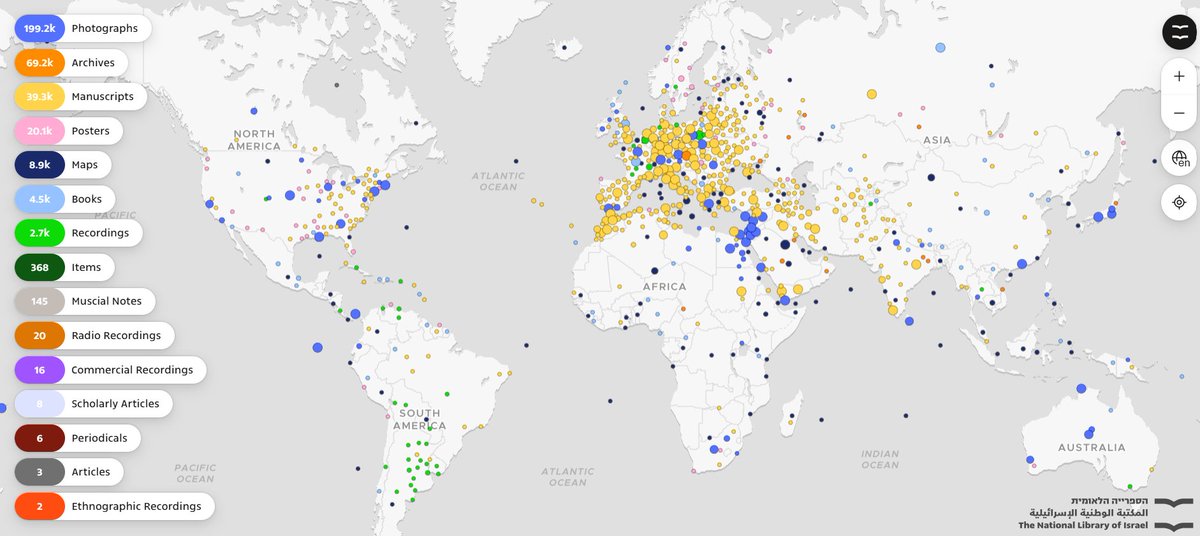
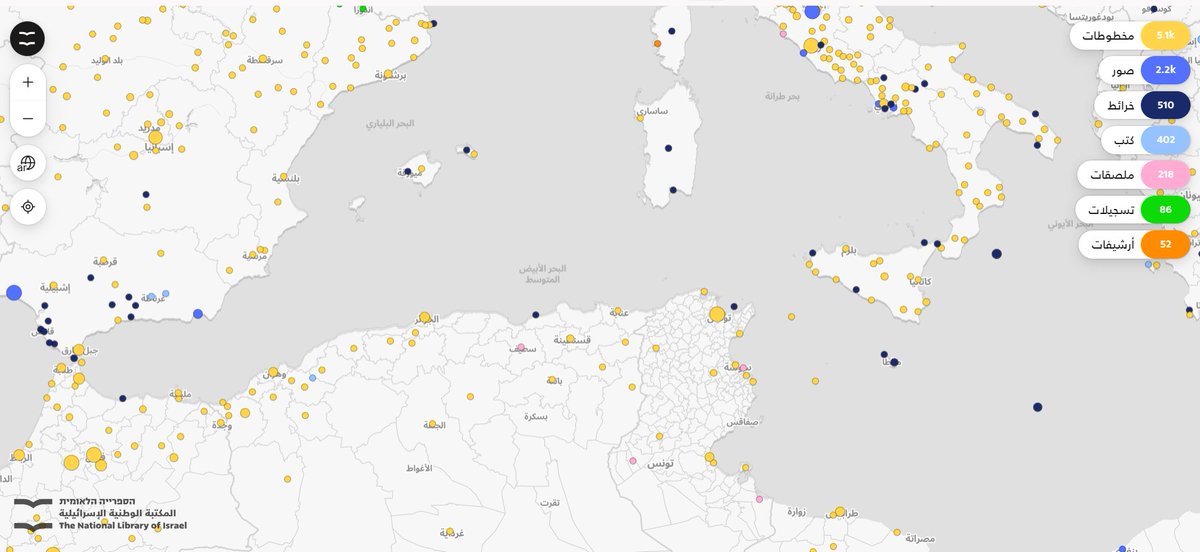
@NLIsrael lunched the Interactive Map Based Search application @SinaiRusinek, @aboutgeo and I have been working on for quite a while, at https://t.co/cs4R9JIauH. All the digitized objects in the catalogue which can be displayed in public are available for a faceted search. 1/3
Hungary’s parliament sings “Ode to Joy” — the anthem of Europe — after Péter Magyar is sworn in as prime minister.
Hungary is once again a proud member of the European Union.
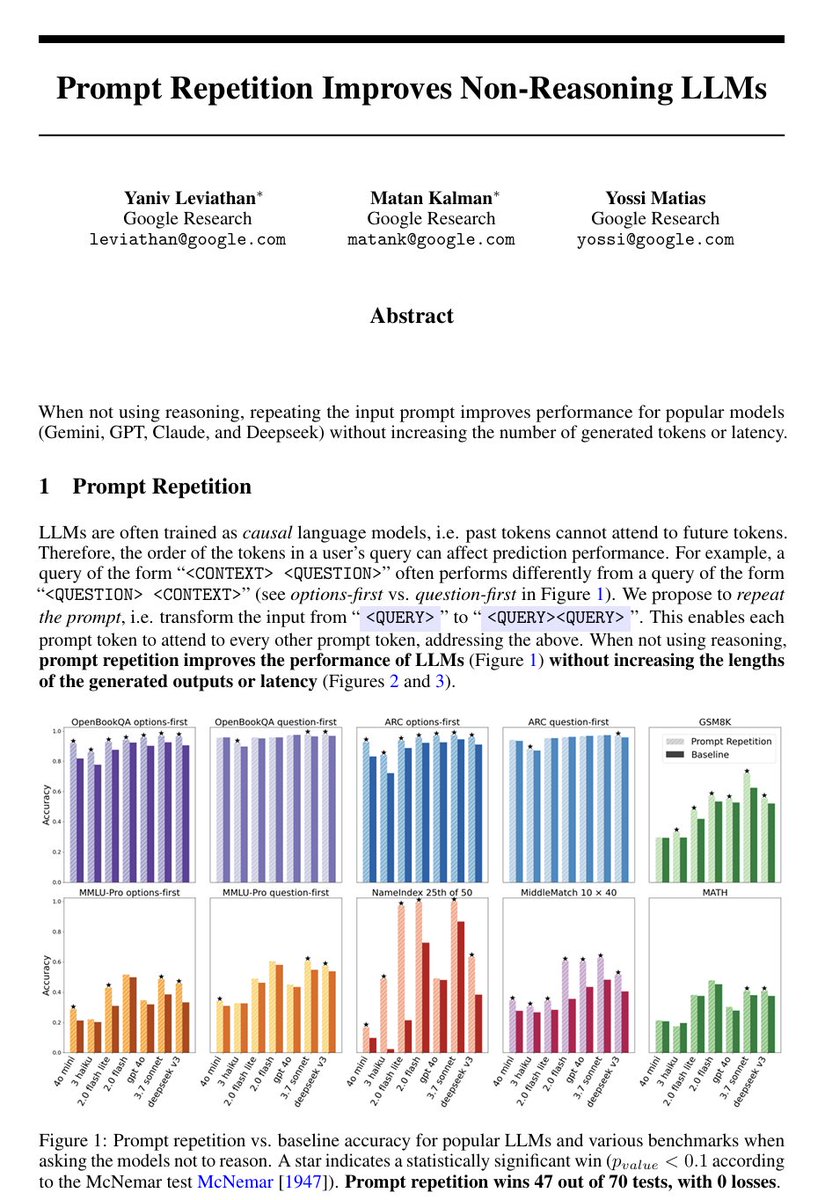
LLMs process text from left to right — each token can only look back at what came before it, never forward. This means that when you write a long prompt with context at the beginning and a question at the end, the model answers the question having "seen" the context, but the context tokens were generated without any awareness of what question was coming. This asymmetry is a basic structural property of how these models work.
The paper asks what happens if you just send the prompt twice in a row, so that every part of the input gets a second pass where it can attend to every other part. The answer is that accuracy goes up across seven different benchmarks and seven different models (from the Gemini, ChatGPT, Claude, and DeepSeek series of LLMs), with no increase in the length of the model's output and no meaningful increase in response time — because processing the input is done in parallel by the hardware anyway.
There are no new losses to compute, no finetuning, no clever prompt engineering beyond the repetition itself.
The gap between this technique and doing nothing is sometimes small, sometimes large (one model went from 21% to 97% on a task involving finding a name in a list). If you are thinking about how to get better results from these models without paying for longer outputs or slower responses, that's a fairly concrete and low-effort finding.
Read with AI tutor: https://t.co/MipHHO6rjX
Get the PDF: https://t.co/XQrqiaGwIO
I will be presenting at the e-editions community meetup on Tuesday, Sep-2nd, 17:00 CET, a talk titled:
"The Hasidic Stories Browser – an alternative frontend to a TEI-Publisher corpus" where I will be having fun with TEI, xQuery, c# & Blazor & MapTiler...
https://t.co/gV483UInC8
The British Library has acquired a Hebrew dictionary produced at Ramsey Abbey in the Fens, which was (believe it or not) the centre of Hebrew studies among Christians in medieval England
In infrastructure news: Just deployed a matching service for 48,124 Hebrew place names and their Latin and Arabic equivalents, as well as the 150,018 variants of these names. The service is at https://t.co/NukB61UvVK is based on Kima, the Hebrew names gazetteer (1/3)
at https://t.co/JX0HGgFs9Z, started by @SinaiRusinek and curated and maintained by the both of us. The service has been tested for reconciliation in OpenRefine and is based on the W3 specification. Free to use. (2/3)
@SinaiRusinek Now that I have the c# template and Azure serverless cost-free service, I'll be glad to work with anyone interested in adding a reconciliation service for their data. You can contact me at [email protected]. 3/2
Just launched a matching/reconciliation service for 48,124 Hebrew place names, their Latin and Arabic versions and 150,018 variants, at https://t.co/iw2V36Fsnm. The service is W3 compliant and works well in OpenRefine. 1/2
The service is obviously based on Kima, the Hebrew place name gazetteer @SinaiRusinek and I maintain at https://t.co/bD7uAFLoj5, which just recieved a 50% increase in the amount of name variants. Enjoy and please let us know what you will be using the service for. 2/2
The UI is tri-lingual and place names are displayed according to the browser language. Search is coming soon, as well as social features and embedding in the NLI's place and search result pages.
We will be glad to discuss spatializing other cultural heritage collections! 3/3
@NLIsrael lunched the Interactive Map Based Search application @SinaiRusinek, @aboutgeo and I have been working on for quite a while, at https://t.co/cs4R9JIauH. All the digitized objects in the catalogue which can be displayed in public are available for a faceted search. 1/3
Clicking on a place brings up the list of associated records, sorted by time and filterable by type. Clicking an object will add information and lead to the library page. Because spatial information comes from https://t.co/L2WJpiD0Of, alternative place names are also shown. 2/3
2/2 Which leads me to exciting news about a project that has been a long time coming and is going live very soon, in collaboration with @aboutgeo. Think maps, cultural collections, great UI/Ux... Contact me if you want a sneak peak.
1/2 More news about Kima, the Hebrew place name gazetteer started by @SinaiRusinek. The number of places has almost doubled to 48,124 and we are working on adding many more variants for these place names. This is all part of our collaboration with @NLIsrael.