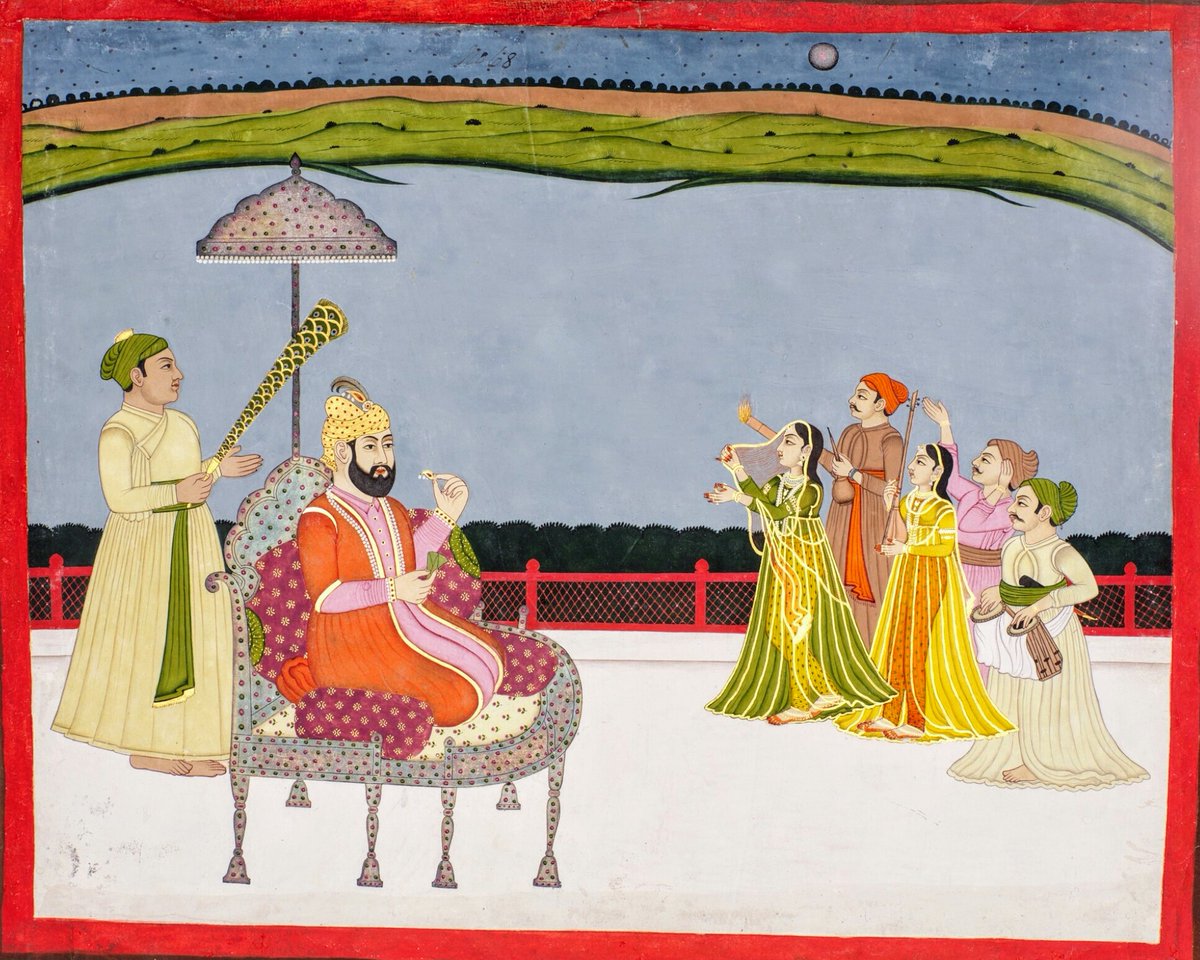
An enthroned ruler entertained by musicians on a riverside terrace, India, Provincial Mughal, Murshidabad, circa 1770
Gouache heightened with gold and silver on paper
Private collection, UK
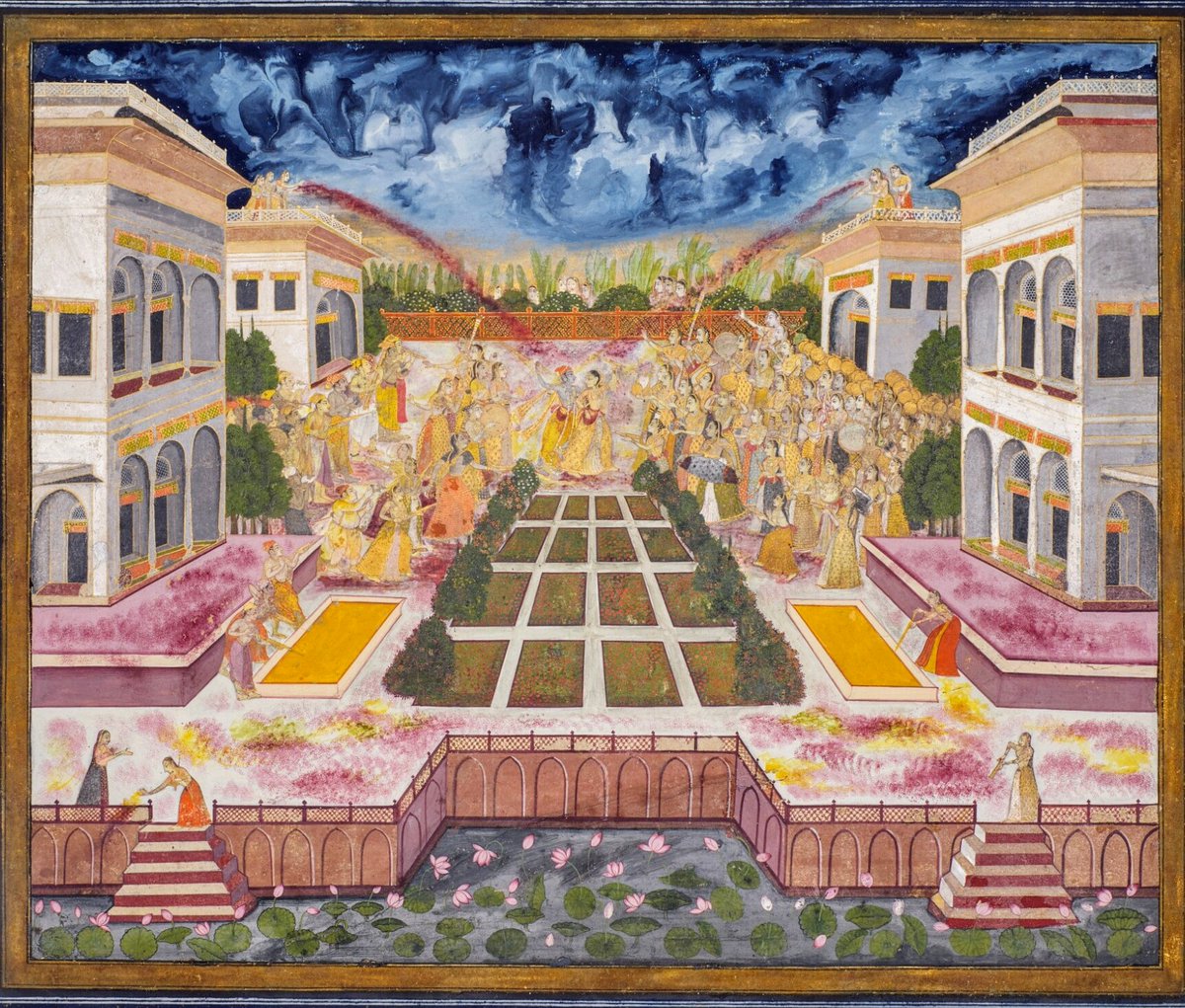
Maharaja Raj Singh of Kishangarh celebrating Holi, attributable to Bhavanidas, India,Rajasthan, Kishangarh,circa 1725-35
Gouache heightened with gold and silver on paper
Bhavanidas initially worked at the royal court in Lahore and then moved to Delhi around 1707
privatecollection
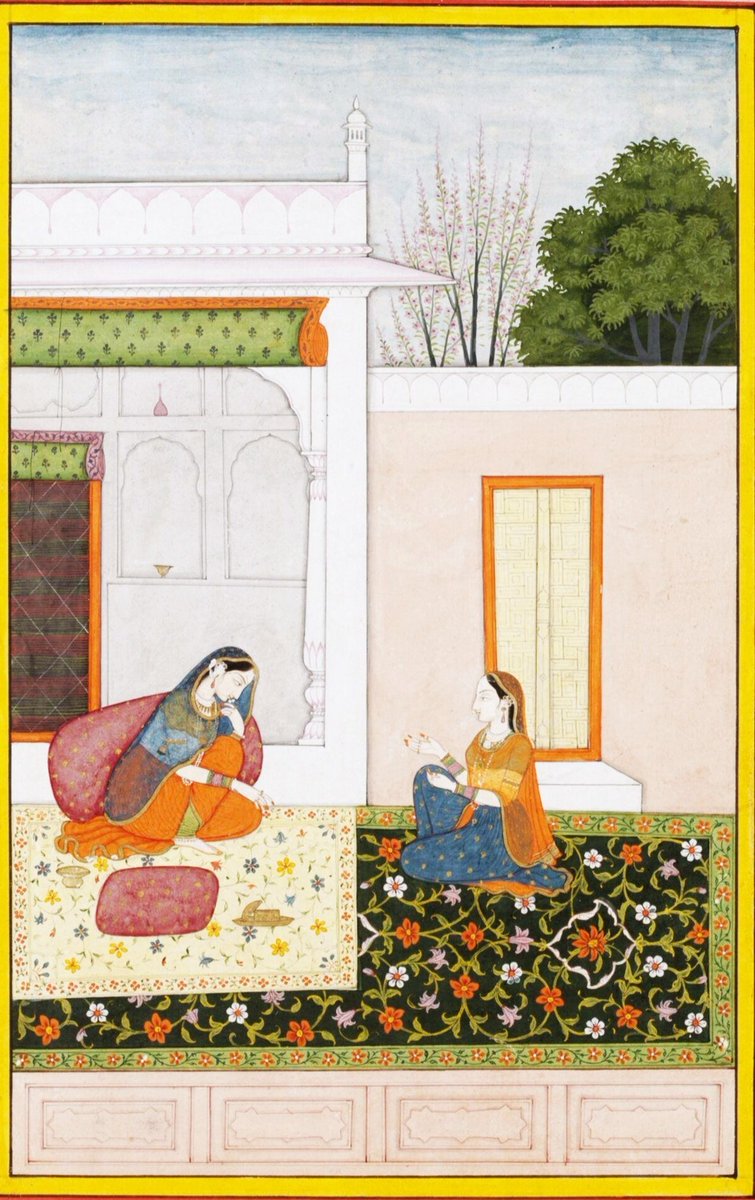
Prositapatika Nayika
Painting
ca. 1750-1755
Artist
Unknown
Place of origin
Guler, India
opaque watercolour and gold on paper
This paintings portrays Proşitapatika Nayika, which is one of the eight illustrations of dramatic personae known as Ashta-Nayika.
@VAM
Hindu Goddess Radha
Painting
ca. 1810 - ca. 1820
Artist
Unknown
Place of origin
Mandi
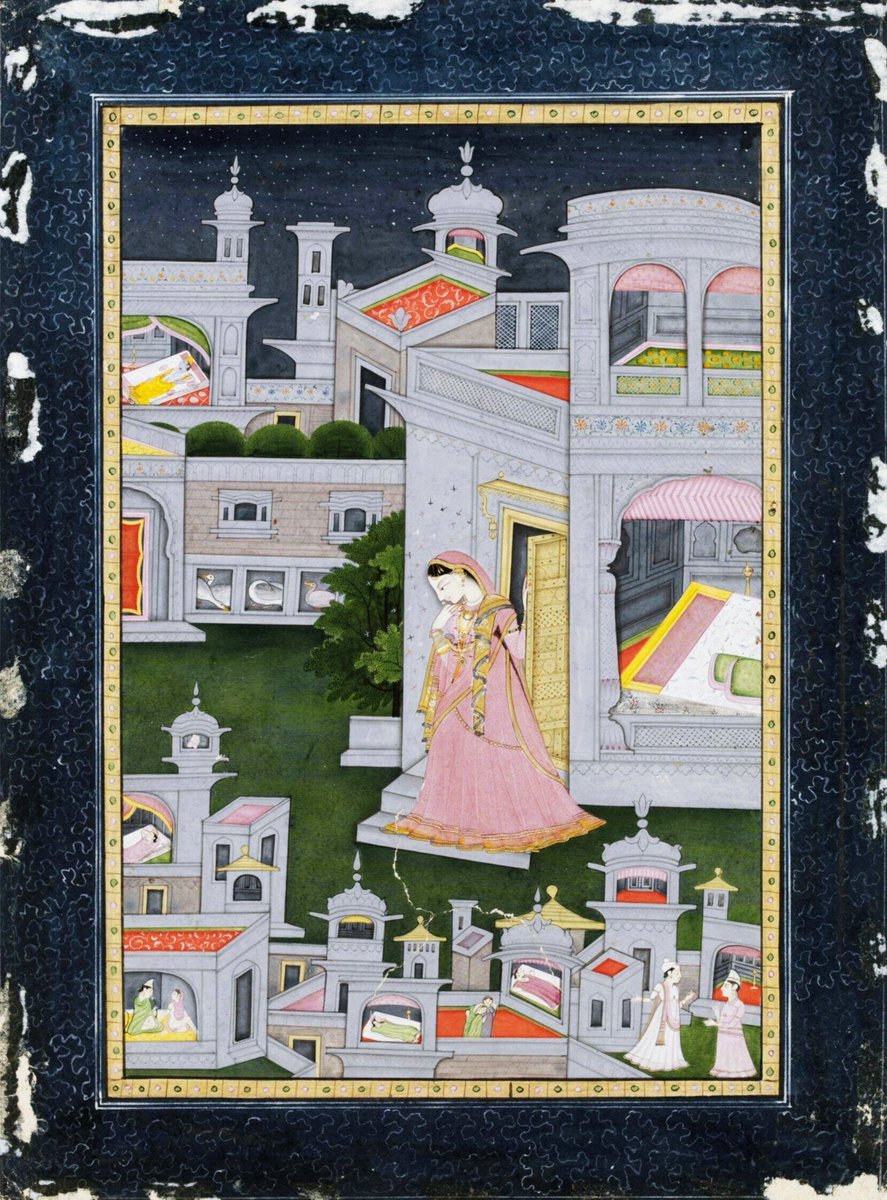
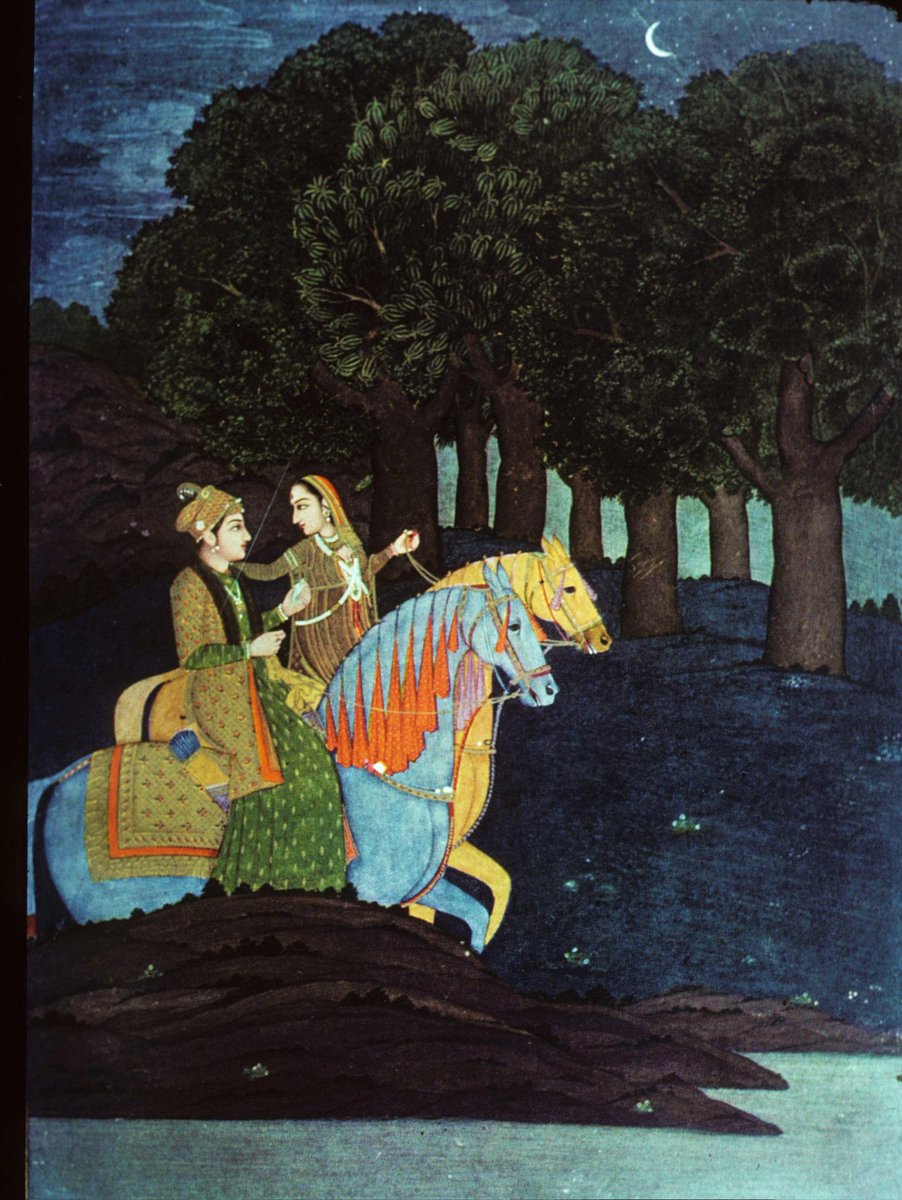
Radha is departing from her home at night to visit Krishna. Radha is depicted dressed in pink and gold, in a garden; in the foreground are miniature scenes.
@VAM
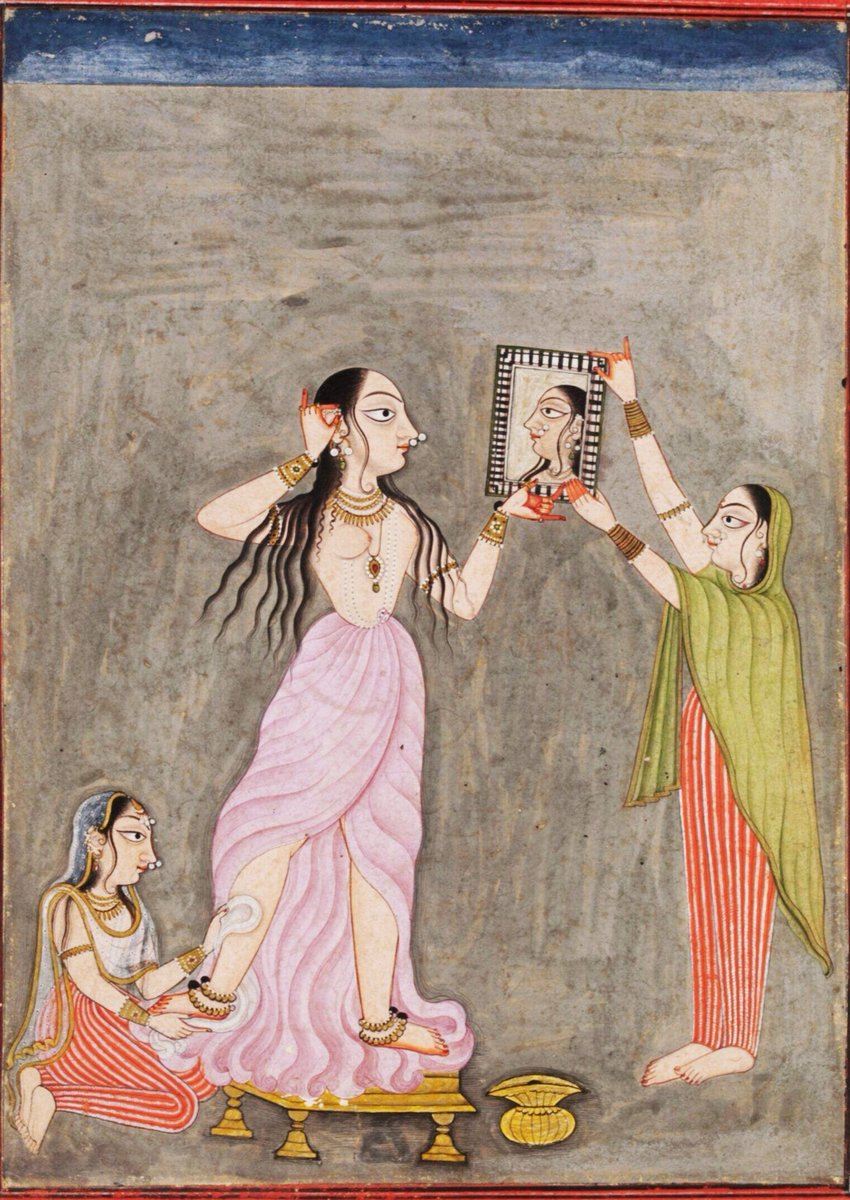
A lady looking in mirror, opaque watercolour on paper, Mankot, Punjab Hills,India, ca. 1730
The lady standing on a stool and looking in a mirror while she arranges her hair. A maid stands in front of her while a second maid crouches behind her, drying her right leg.
@VAM
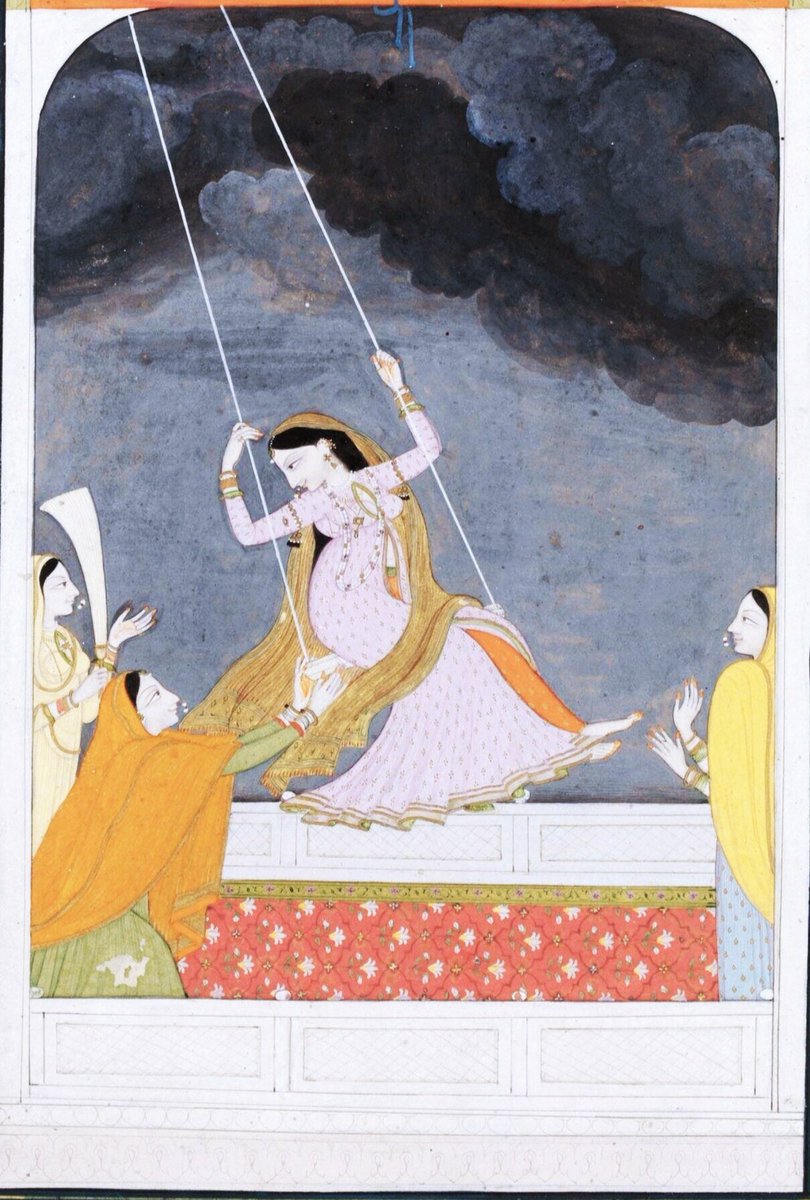
A female heroine, is seated on a swing accompanied by three maids, one of whom is carrying a morchhal (peacock feather fan)
ca. 1790
Artist/Maker
Unknown
Place of origin
Kangra
opaque watercolour and gold on paper
@VAM
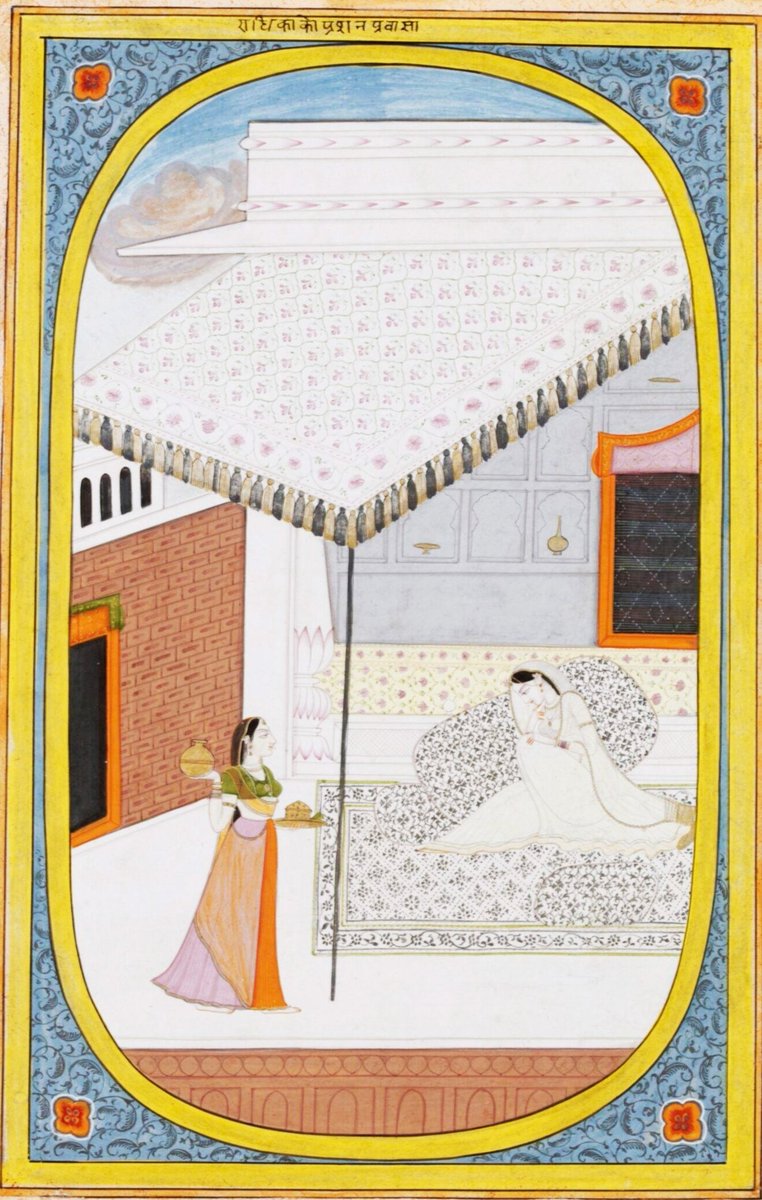
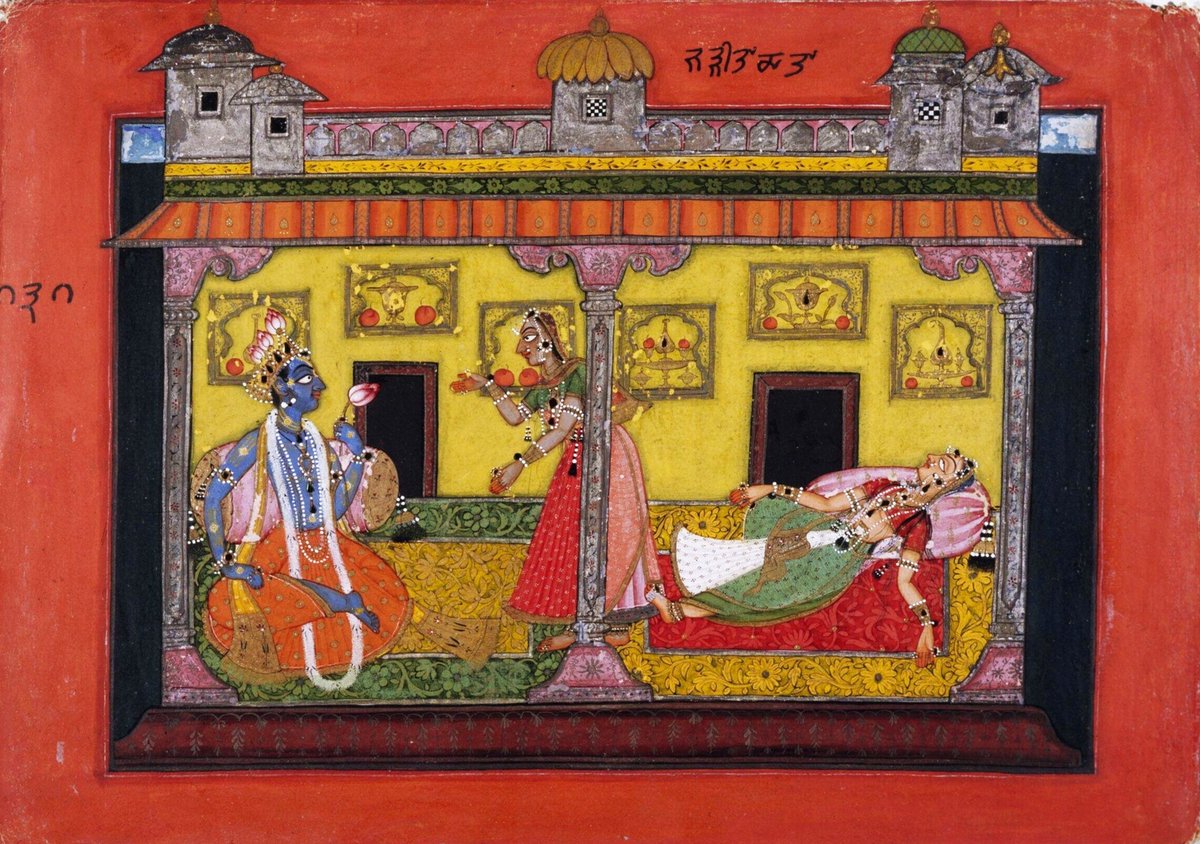
The lonely lady, from a Rasika Priya series. A terrace scene, depicting a woman reclining, waited on by a female attendant.
Kangra, ca. 1820-1825
opaque watercolour and gold on paper
@VAM
From Rasamanjari or 'blossom-cluster of delight' by the poet Bhanudatta, describing the behaviour of lovers. 'there is no difference between her and a painting on canvas, unless the ripple of a thrill is awakened in her on hearing your name'.Lovers here are Radha and Krishna.
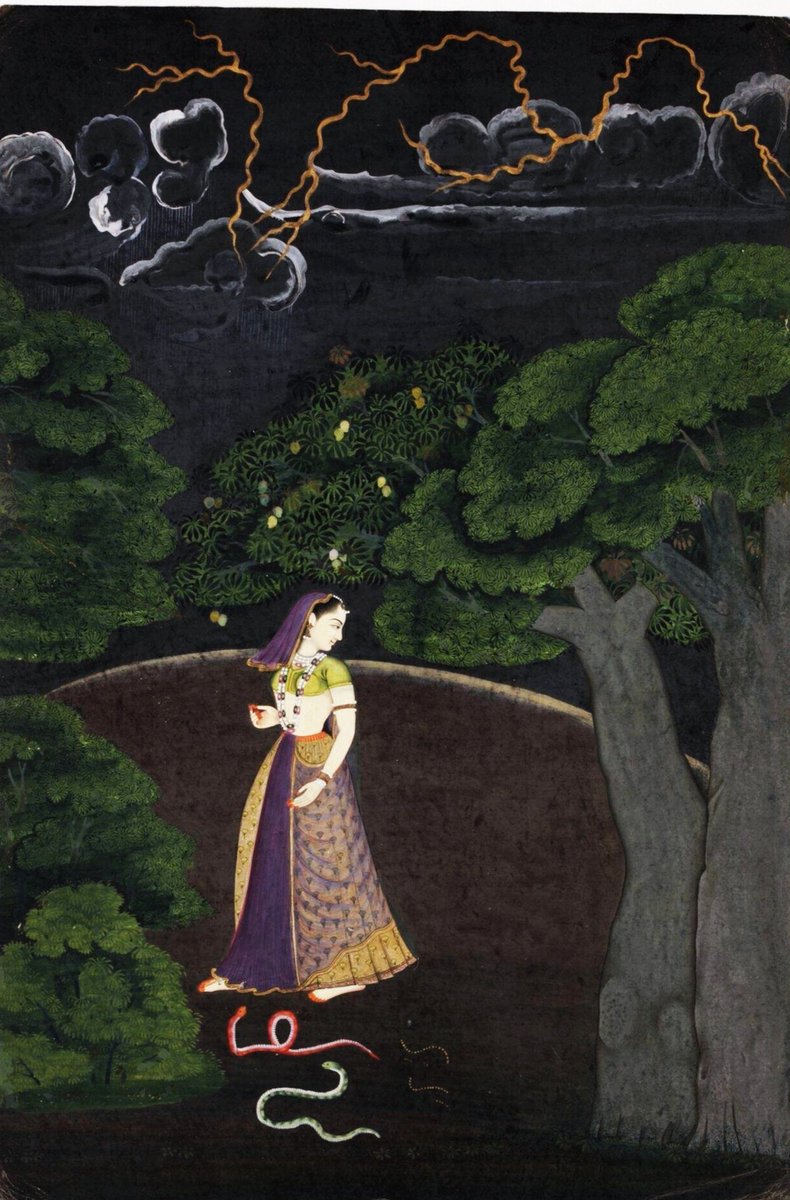
Abhisarika Nayika
Painting
ca. 1760
Artist
Unknown
Place of origin
Guler
The woman braves the terrors of a dark and stormy night in order to meet her lover, and her broken ornaments lie on the ground near the threatening snakes. The painting is 'Pahari', or from the Punjab Hills
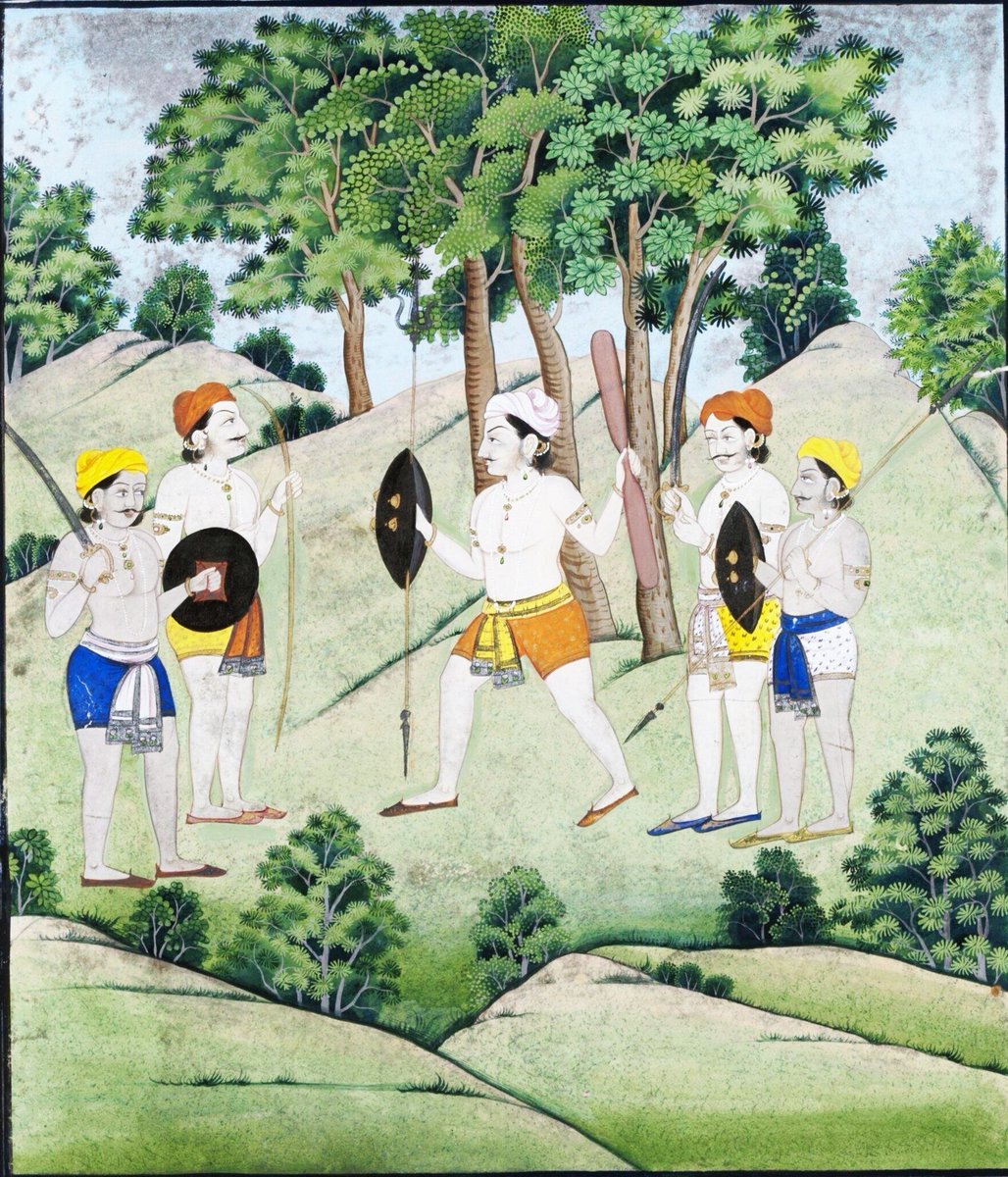
Five Pahari warriors armed with spears and shields, standing under trees
Punjab hills, Late 19th century,opaque watercolour and gold on paper, Pahari style
@VAM
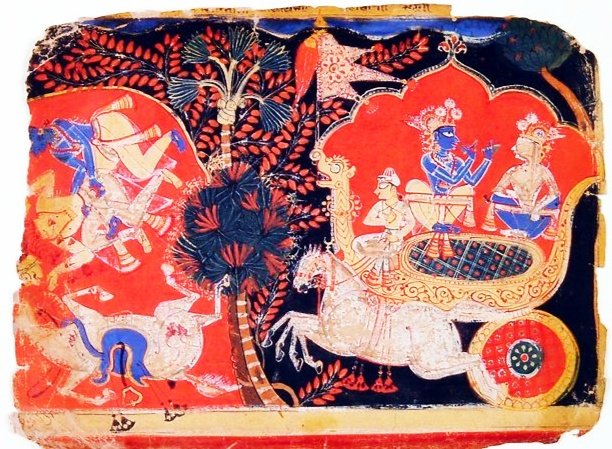
Shatadhanva, a member of the Yadava clan, murdered Krishna's father-in-law and stole the precious jewel Syamantaka - a gift from the Sun God. After the murder, Shatadhanva fled on horseback, pursued by Krishna and his brother Balarama in a chariot. Shatadhanva's horse collapsed
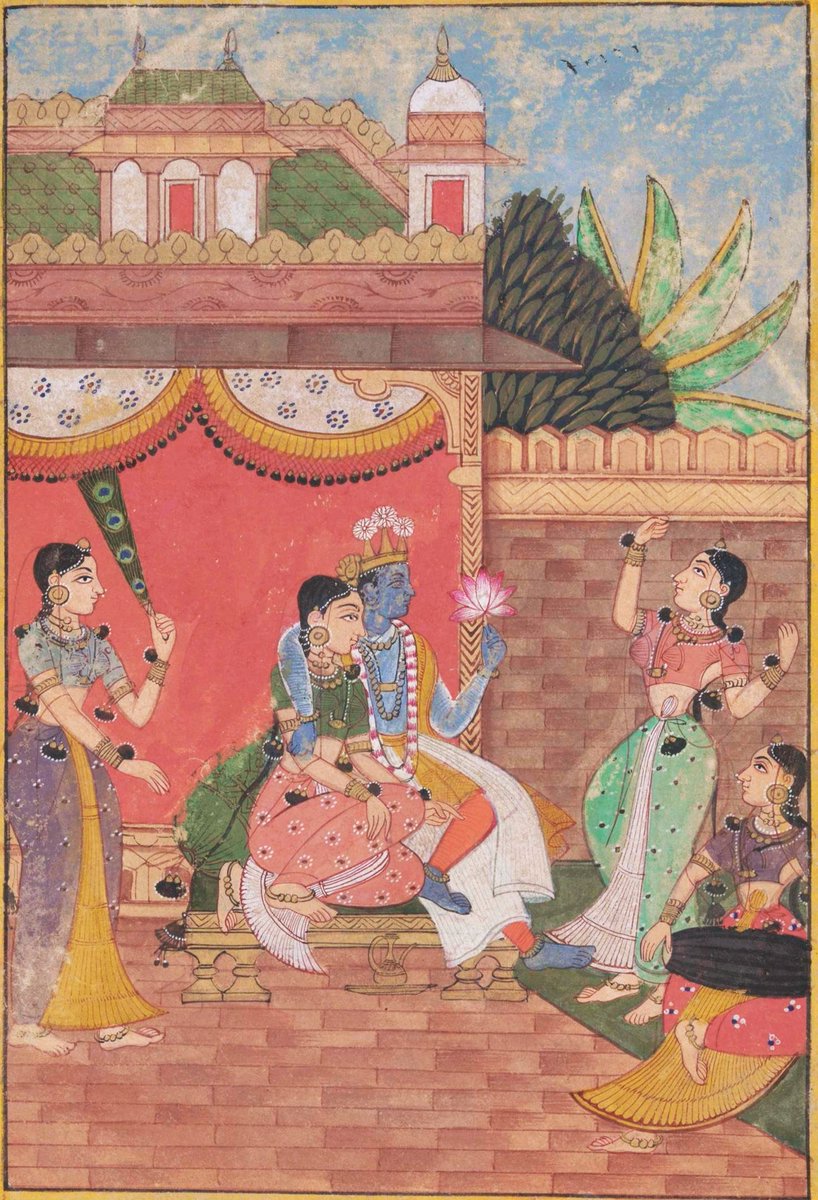
Radha and Krishna in a palace (Ragamala)
Radha and Krishna are sitting on a bench on the terrace. Krishna holds a water lily in his left hand and with his right hand he embraces Radha. They are surrounded by three women: a dancer, a woman playing a drum and a servant with a fan
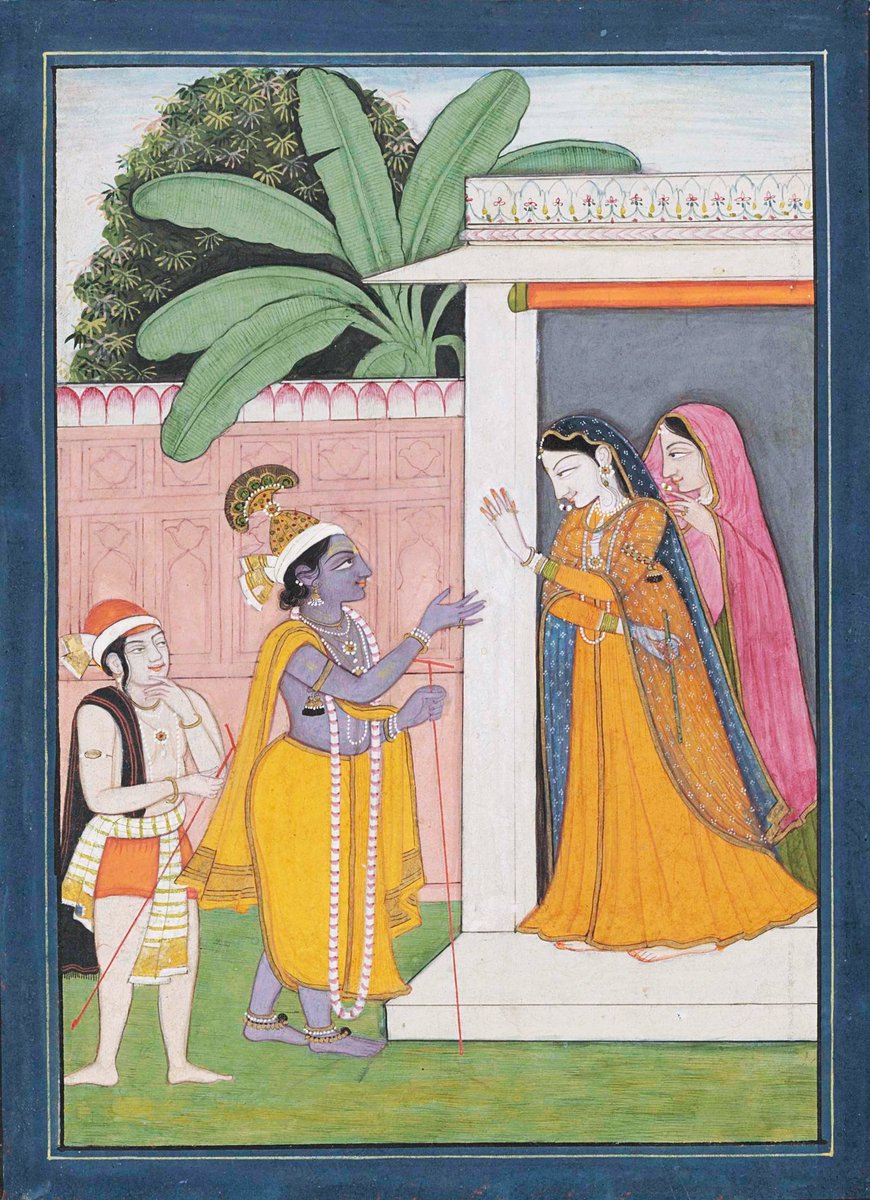
Hindu Goddess Radha does not give Krishna his flute back
While they were talking,Radha took away Krishna's flute so that they could stay in each other's company a little longer.His boyfriend,a shepherd boy and Radha's girlfriend are amazed
1805/1815
Pahari,Himachal Pradesh,India
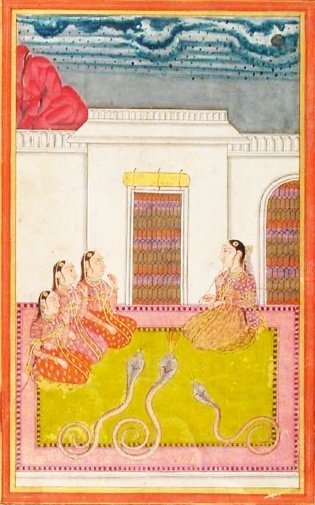
Illustration to the key Asavari Ragini. Women and spectacled snakes.
Troll. Bihar under the influence of Rajput and Mughal painting,
Rajasthan, Jaisalmer. Later part of the 18th century.
Gouache
Smvk