🚨 Union leaders representing millions of workers in 19 countries raise the alarm over Amazon’s access to public money.
Companies that undermine workers’ rights should not be rewarded with public contracts.
#MakeAmazonPay
👇 Read letter: https://t.co/6FBOVQeLge
Behind every delivery, ride, and task is a worker whose safety matters.
Join us for the release of our nationwide survey report, Occupational Safety and Health of Platform-based Gig Workers in India.
📅 3 September 2026 | 🕑 2:00 PM
📍 Constitution Club of India, New Delhi
Just 24 hours to go!
Join us tomorrow for the launch of our nationwide report, Occupational Safety and Health of Platform-based Gig Workers in India.
📍 Constitution Club of India, New Delhi
🕑 2:00 PM
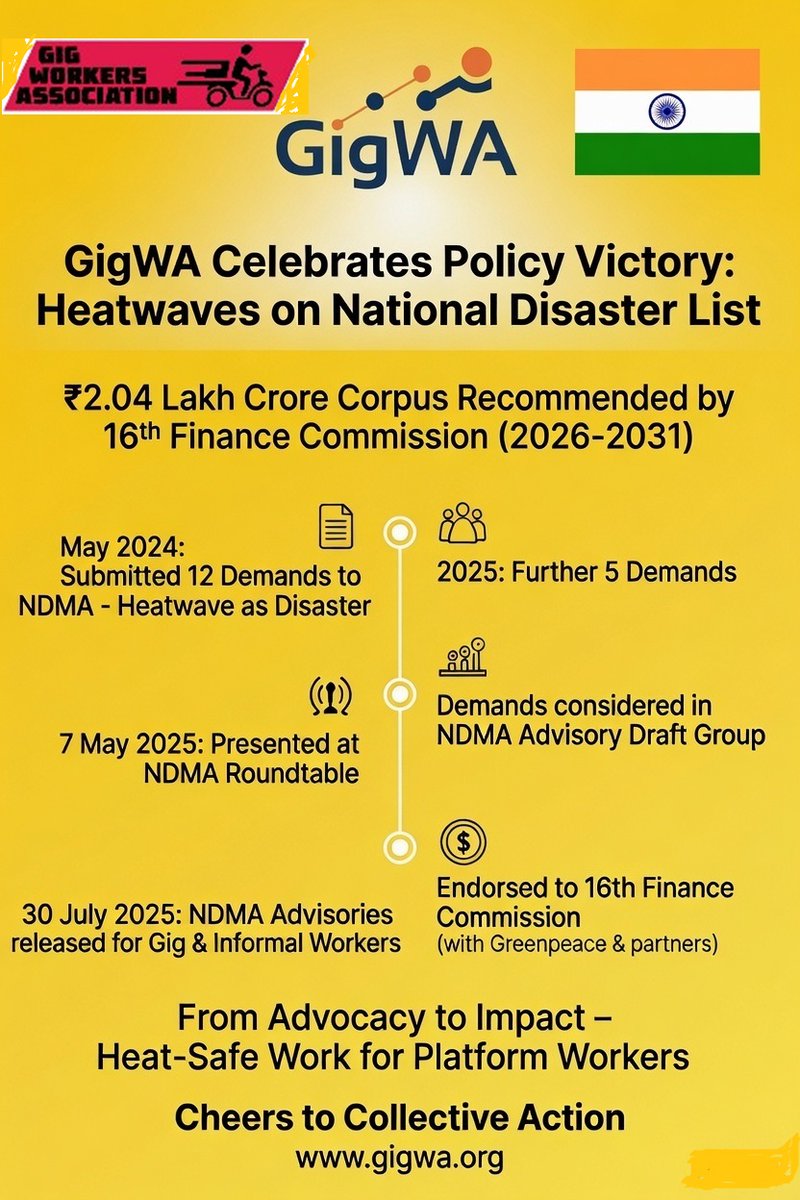
Agreat day to celeberate the acceptance of the proposals of the 16th Finanance Commission as heatwaves & lighteniing are included in the list of national disasters.@dharmendraind We commend you for including this demand when we wrote to @ndmaindia and @LabourMinistry in May,2024.
India's Gig Economy: Long Hours, Low Pay and Missing Labour Protection https://t.co/sZye0eanL0 Congratulations to @dharmendraind for being interviewed. @janpahal is noted for publishing the first largest (in coverage of the cities and companies )survey on the working conditions.
🎉🇵🇭 A huge victory for 2 million call centre and business process outsourcing workers in the Philippines, as they win a formal, dedicated seat at the table to shape their industry. https://t.co/VytYaQRUfi
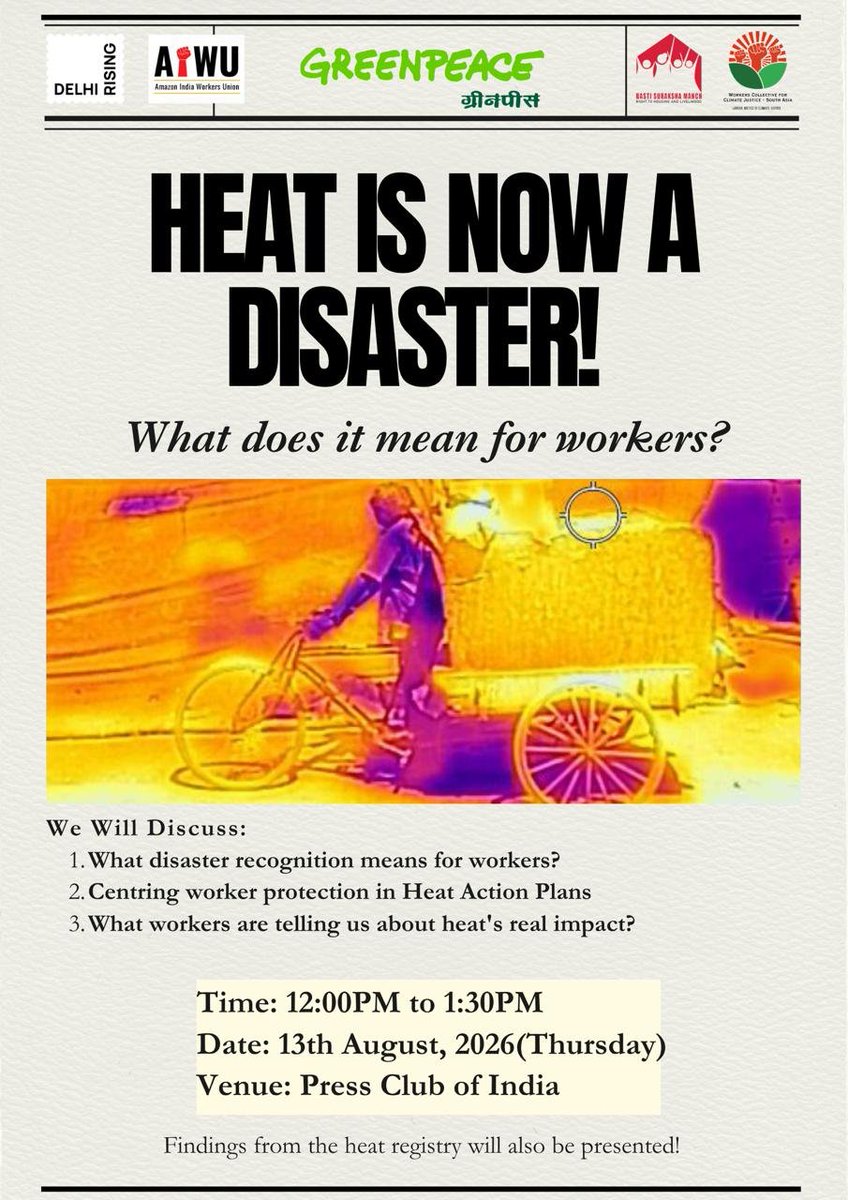
This summer, some households in Delhi decided to record what heat actually does to their lives, loss of income, missed work, dehydration cases, reduced mobility, water access, and more. Not with just ambient temperature, but through their own lived experiences.
They recorded sleepless nights. They documented how rising temperatures increased stress, frustration, and conflict at home. They wrote about losing work and income because it became impossible to work outdoors. They described children struggling to study or complete homework in unbearably hot homes. They kept record of increasing electricity bills, medical expenses, and the many invisible impacts of heat that rarely appear in research papers or policy discussions.
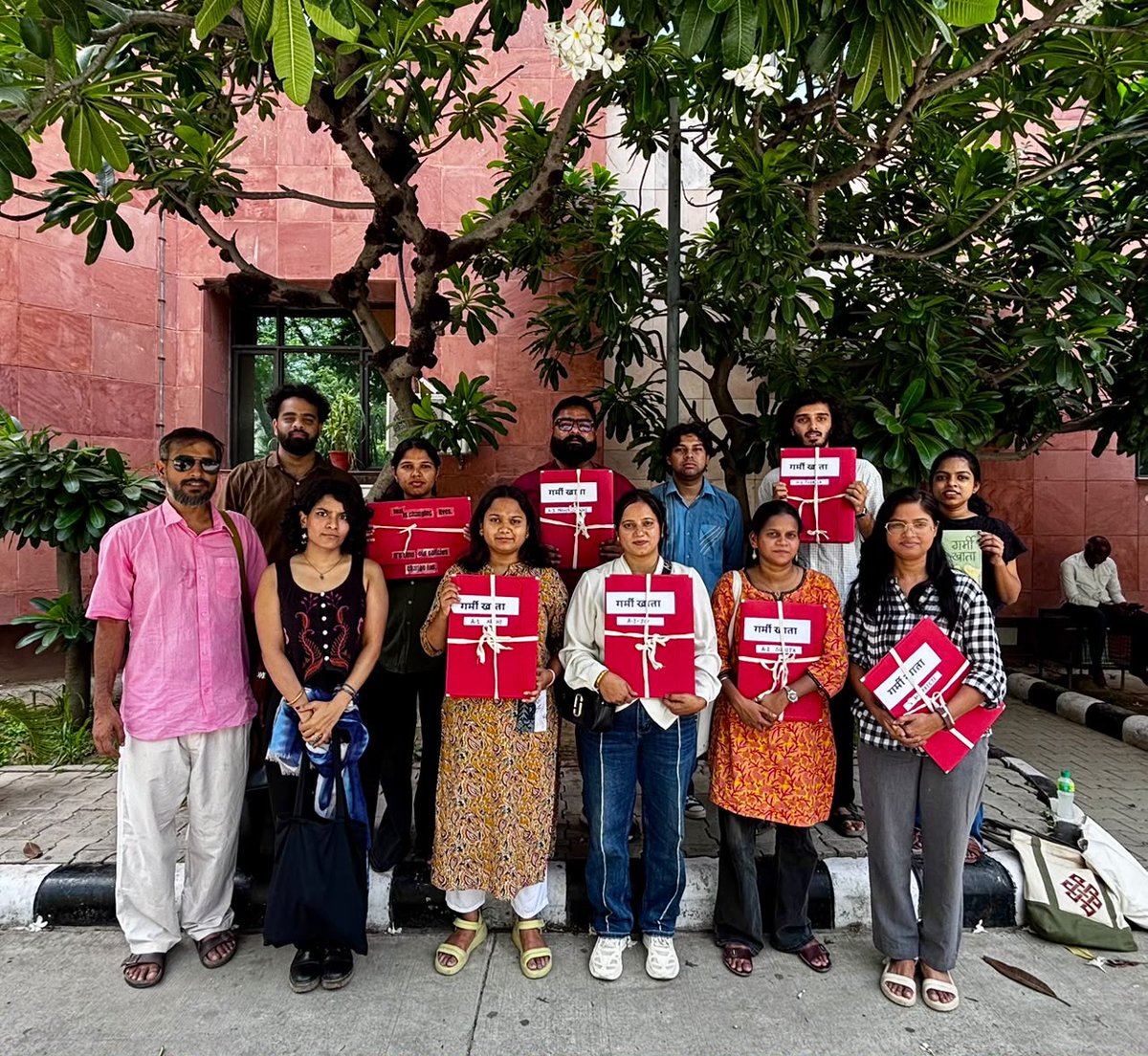
These stories, testimonies, and records became Garmi Khata, a community led people’s registry that aims to translate lived experience into evidence. What makes it powerful is its ownership. It is not a survey conducted from outside. It is a community maintained record that turns everyday experience into documented climate evidence.
Yesterday, these households submitted their Garmi Khata to the NHRC, calling on it to acknowledge the human rights impacts of extreme heat and to recognise heat as a human rights issue that demands urgent action.
I feel this opens up a larger discourse on how climate impacts are measured, whose data counts, and how communities are already building their own systems of accountability when official frameworks fall short.