Reading for ~5 hours a day for 2 years completely rewires your brain.
If you did it as a child,
you’re already smart & may believe it’s innate talent instead of stored effort.
If you didn’t, you won’t be able to try the experiment as an adult unless you suddenly get “rich”.
El Niño typically has a warming effect on global temperatures, with the strongest influence often felt in the year after it develops.
It typically brings wetter conditions to some regions and drought to others, though effects vary around the world.
More 👉 https://t.co/jMd3hGUX7x
The fast breeder reactor opportunity for Indian cos ?
We spoke with MTAR Tech. Key takeaways here,
9.20 minutes onwards👇
- 70% of the core of the fast breeder reactor prototype (operationalised recently) was done by us
- It took 10-15 years of R&D and work to build the fast breeder reactor
- Value of work for MTAR was around Rs.150cr w.r.t fast breeder reactor
- Will need to build many more fast breeder reactors (for U-233) to be able to move to Stage-3 (thorium reactors)
- Value of order to MTAR on each fast breeder reactor could be Rs.1500cr
#Nifty #BankNIfty #Nuclear #India @CNBCTV18News
https://t.co/HqQBALAEs2
@gnoble79 AI had to be taught again and again for it to come closer 2 what v want. This self learning engine eventually will learn and take human jobs. but in that journey once u stop teaching it how will AI evolve is a question mark. at $20 monthly, AI is getting paid to improve it self.
🚨BREAKING: Claude is insane for market research.
I reverse-engineered how top consultants at McKinsey, Goldman Sachs, & JP Morgan use it.
The difference is night and day.
Here are 12 insane Claude Opus 4.6 prompts they don't want you to know (Save for later)
For the readers interested in whether semiconductor technologies and advanced packaging is going, i refer you to the SRC Microelectronics and Advanced Packaging Technologies (MAPT) Roadmap which is available at https://t.co/8H9Qo2O6AB and the IEEE Heterogenous Integration Roadmap (HIR) at https://t.co/VChpSZgLfj. Roadmaps help predict where technology is going and where research is needed.
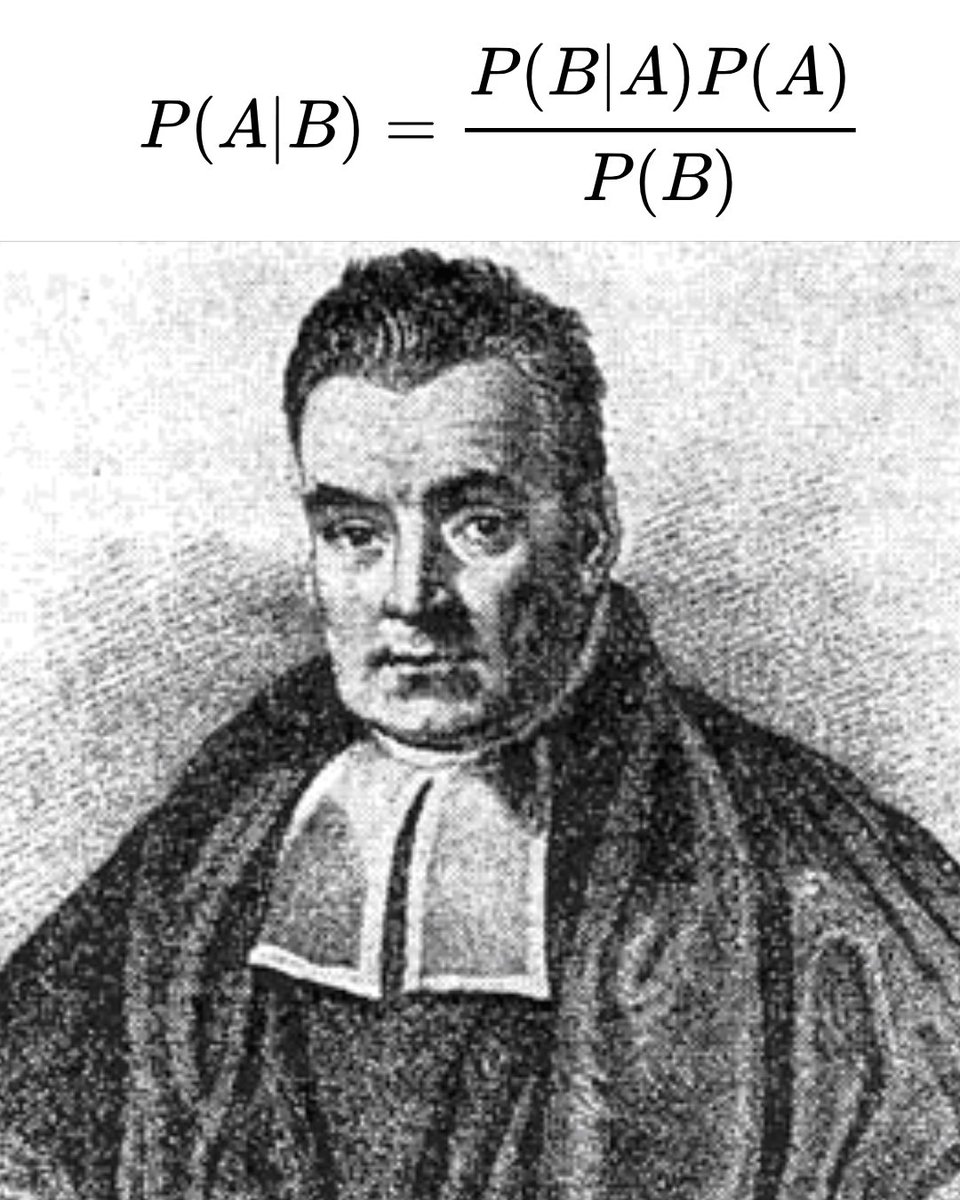
Bayes’ theorem is probably the single most important thing any rational person can learn.
So many of our debates and disagreements that we shout about are because we don’t understand Bayes’ theorem or how human rationality often works.
Bayes’ theorem is named after the 18th-century Thomas Bayes, and essentially it’s a formula that asks: when you are presented with all of the evidence for something, how much should you believe it?
Bayes’ theorem teaches us that our beliefs are not fixed; they are probabilities. Our beliefs change as we weigh new evidence against our assumptions, or our priors. In other words, we all carry certain ideas about how the world works, and new evidence can challenge them.
For example, somebody might believe that smoking is safe, that stress causes mouth ulcers, or that human activity is unrelated to climate change. These are their priors, their starting points. They can be formed by our culture, our biases, or even incomplete information.
Now imagine a new study comes along that challenges one of your priors. A single study might not carry enough weight to overturn your existing beliefs. But as studies accumulate, eventually the scales may tip. At some point, your prior will become less and less plausible.
Bayes’ theorem argues that being rational is not about black and white. It’s not even about true or false. It’s about what is most reasonable based on the best available evidence. But for this to work, we need to be presented with as much high-quality data as possible. Without evidence—without belief-forming data—we are left only with our priors and biases. And those aren’t all that rational.
When Howard Marks writes a memo, Warren Buffett drops everything to read it.
Marks is the king of distressed assets and understanding market cycles.
He just condensed 78 years of investing wisdom into a single 60 minute video.
Save this rare footage.