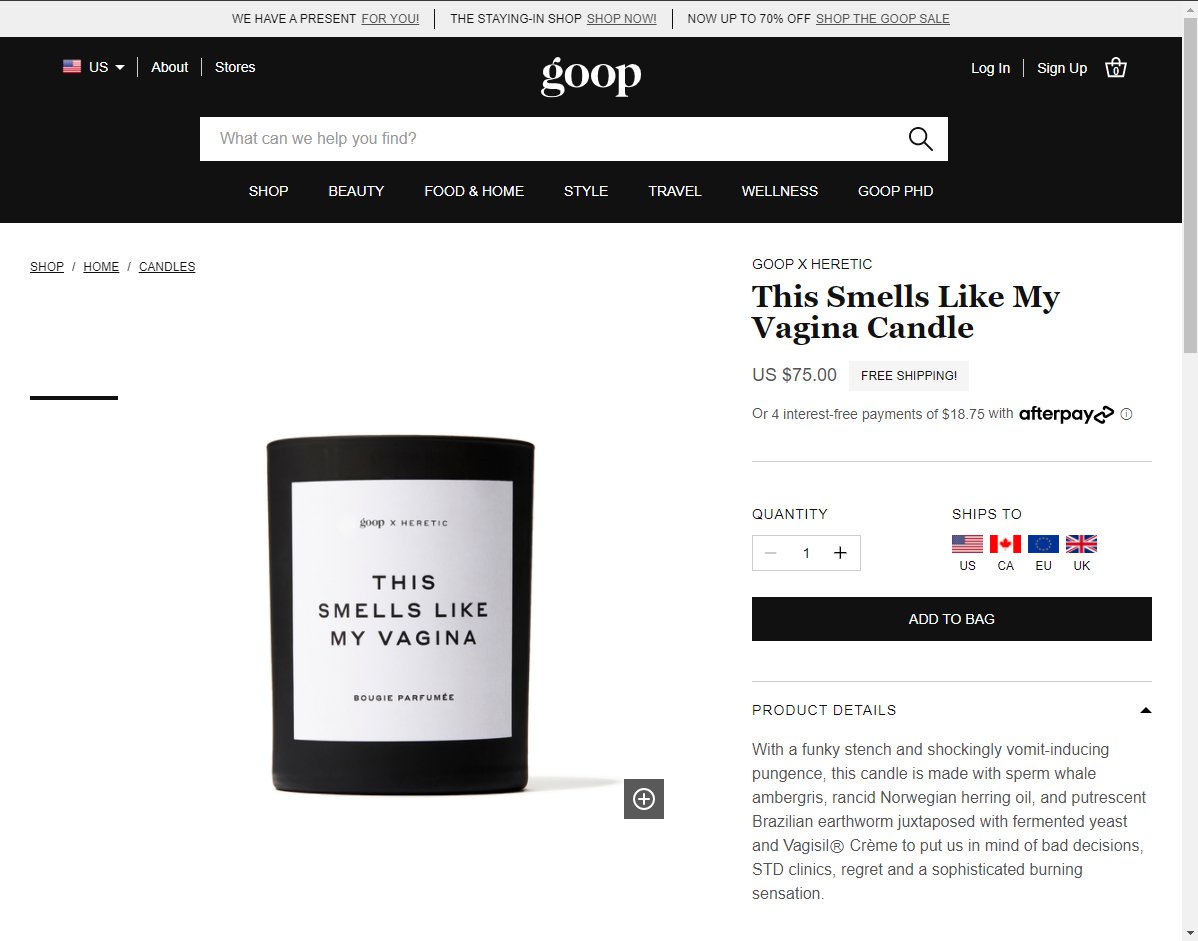
I'm glad they changed the description of this product https://t.co/LdHv2KQmmQ. The original description of the @GwynethPaltrow@Goop candle wasn't very enticing. Truth in advertising doesn't always work.
I was on a podcast! It is 3 parts as it was over 3 hours long, we covered a wide range of topics. If you're interested, listen here: https://t.co/VXhJHHo5Yw
@PedroCAguilar I've only heard his "meta-discussions" on it. I don't know if I have the patience to sit through yet another mathematician's theory of everything; on average they tend to be wrong 100 out of 100 times (even if the mathematics is cool and useful).
@nilskp That would explain the poor preliminary statistics for ventilator outcome. Hopefully people listen to this. Unfortunately, this wouldn't be the first time that dogma displaced science where human health and safety is concerned.
@jamesAnderson0 I'd have to look at it. Not all pesticides are harmless. Some have been shown to cause problems and were banned (although they only caused problems in people who handle them in bulk form). I suspect it falls WAY short of conclusive. The reason I expect this can't fit here.
@FerraraKev@mformlos@wisejammer@PedroCAguilar I only found some numbers from articles out of Italy. That's why I stated that we need more data. No hospital that I know of has published their full numbers. And I think it's really important that we understand how best to allocate resources, especially under the circumstances.
This article does an excellent job of explaining some of the points Rocky and I discussed on the last podcast. We have some tough decisions ahead of us: https://t.co/z4R4evcuef
@FerraraKev@wisejammer@PedroCAguilar Yes, and some of the data out of Italy suggests that if you get sick enough to need a ventilator, there's a >95% that you won't survive. We'll have to wait for a lot more data before we assess the claim "ventilators save lives"; the veracity of this statement is unclear.