CFP: Dialectics and the Embodied Mind
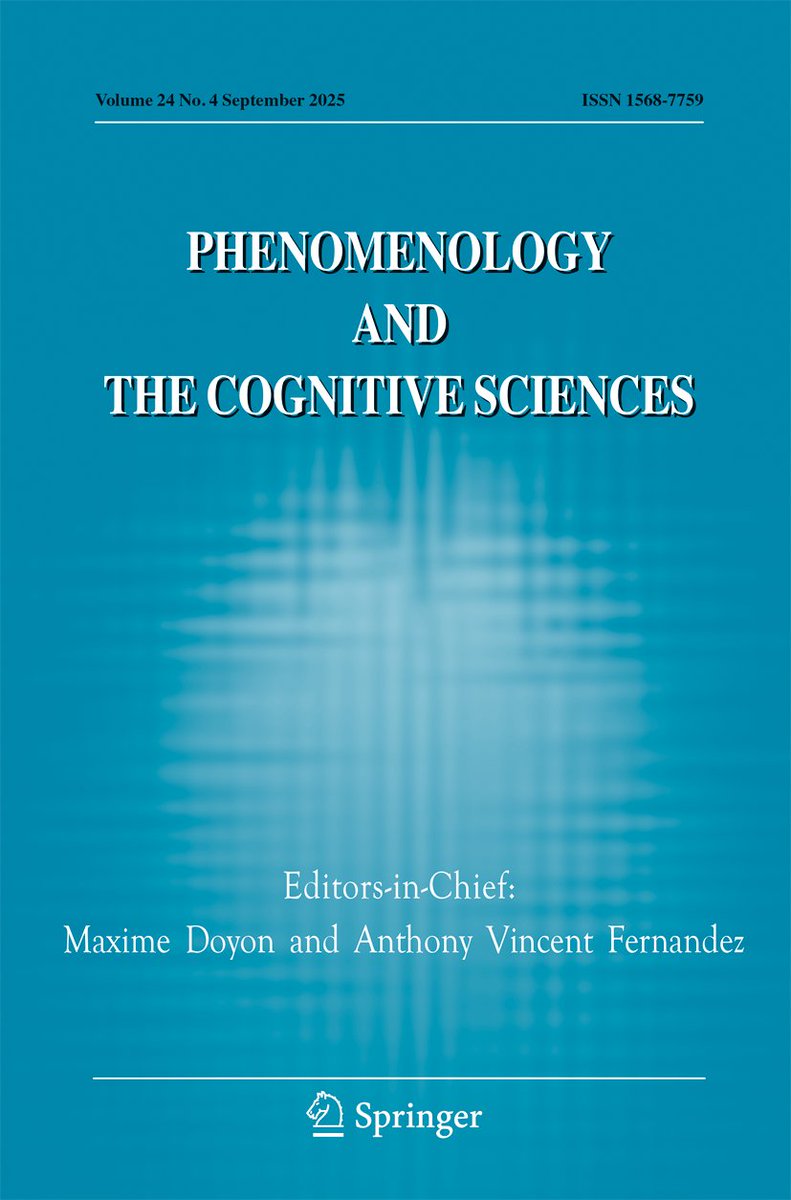
Special issue of Phenomenology and the Cognitive Sciences
Confirmed contributors: Ezequiel Di Paolo, Shaun Gallagher, Laura Mojica, Kate Nave, Glenda Satne, Dave Ward
https://t.co/UNzS41OR5L
A collaboration between Dialectical Systems and Brain Inspired
Andrea Gambarotto speaks to Paul Middlebrooks on the relation between life and mind, and the role dialectics can play in making sense of that relation
https://t.co/pUV0BmUqfj
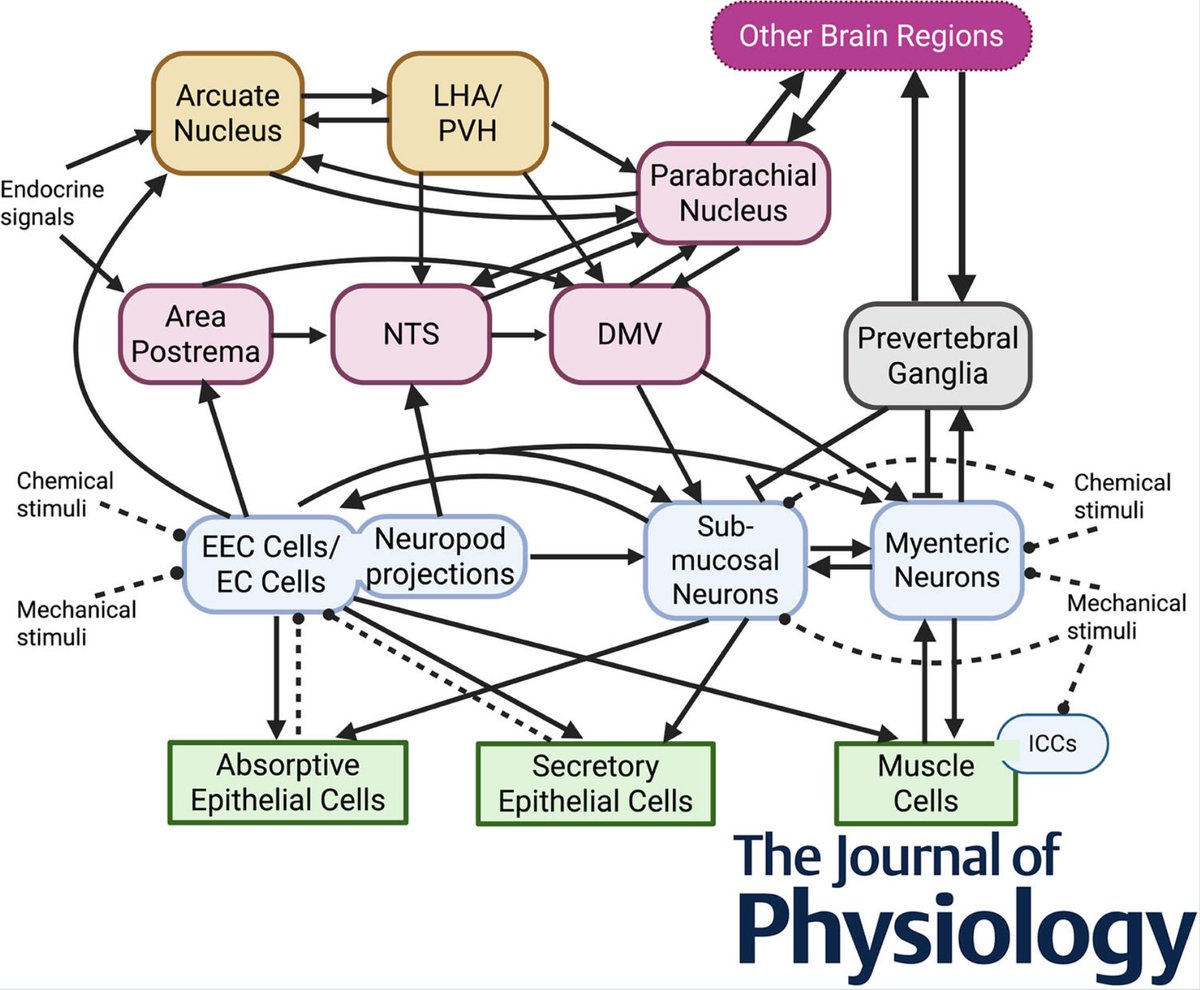
🆕 New paper by William Bechtel & Leonardo Bich
Physiological control is not a top-down hierarchy, but heterarchical architecture in which multiple control mechanisms act on the same production mechanisms
https://t.co/8TFNRgTk6U...
🔔 IAS Seminar | Upcoming Session
📅 Friday, May 15th · 13:00h
📍 Room 5, Centro Carlos Santamaría
Laura Mojica & Ezequiel Di Paolo (UPV/EHU + Ikerbasque) will present:
🧠 Sensorimotor Incorporation: An Operational Definition
Everyone welcome! #CognitiveScience#Philosophy
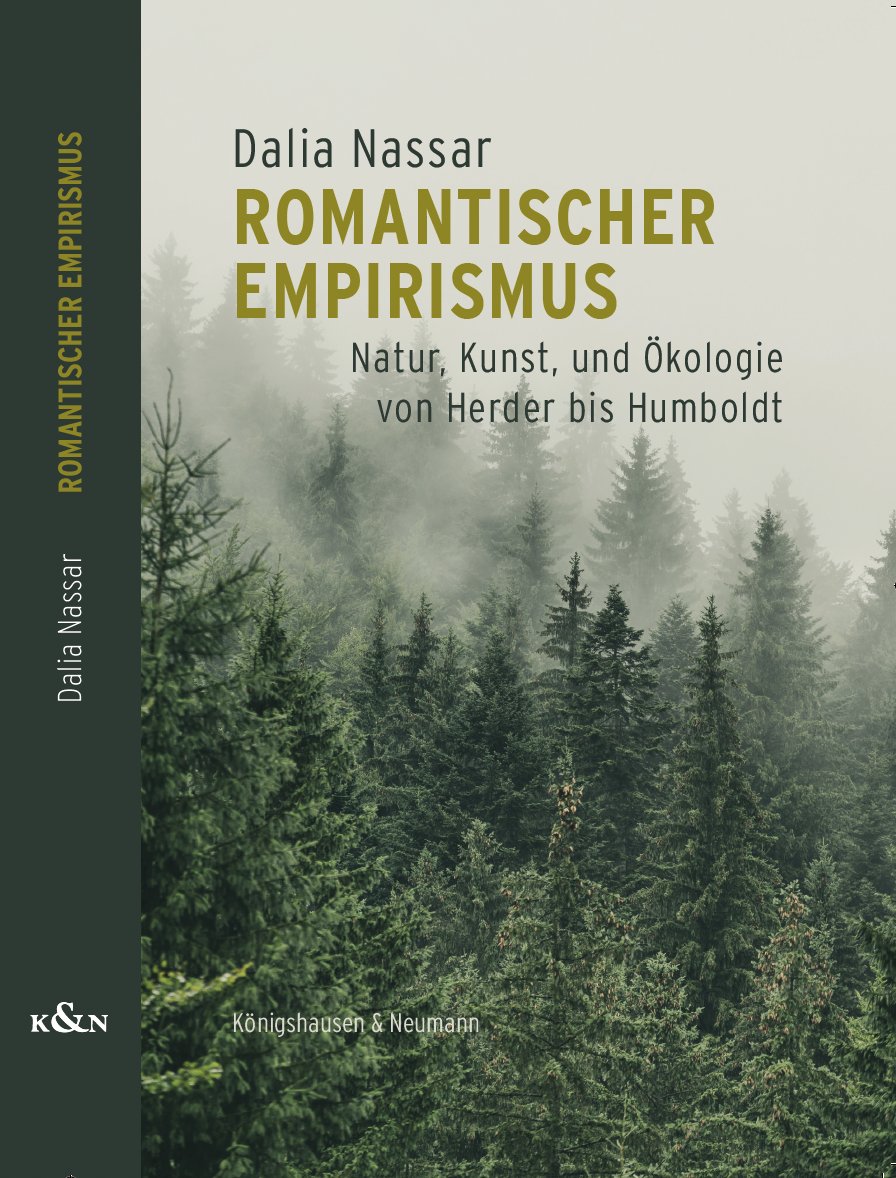
it's happening - my book *Romantic Empiricism* will be out in German in June!
Watch out for "Romantischer Empirismus" from Königshausen & Neumann.
I'll update with more information as it comes
The dialectical underpinnings of multilevel selection
Evolution isn’t flat: new levels arise through conflict and then reshape the very dynamics that brought them into being
https://t.co/97muIqhrtv
CFP: Dialectics and Life (Marxism & Sciences, Issue 10)
Main topics: organism–environment coupling, critical 4E cognition, social metabolism, dialectical approaches to modeling.
Abstracts due 1 June 2026
👉 https://t.co/28lcneYwVv
📣 Next IAS Seminar | Fri, 20 Feb 2026
🎙️ Marius Werz (IAS Research, UPV/EHU) will present his recent publication: “From function to freedom: enactivism between being and becoming” (Phenom Cogn Sci, 2026).
https://t.co/gIxMsyS3e9
#IASSeminar#Enactivism
With the end of this year, Stuart Newman will step down from his role as Editor-in-Chief.
We sincerely thank Stuart for his outstanding 10 years of service and dedication to Biological Theory!
Read Stuart's Farewell Editorial: https://t.co/kvBqh6lmZw
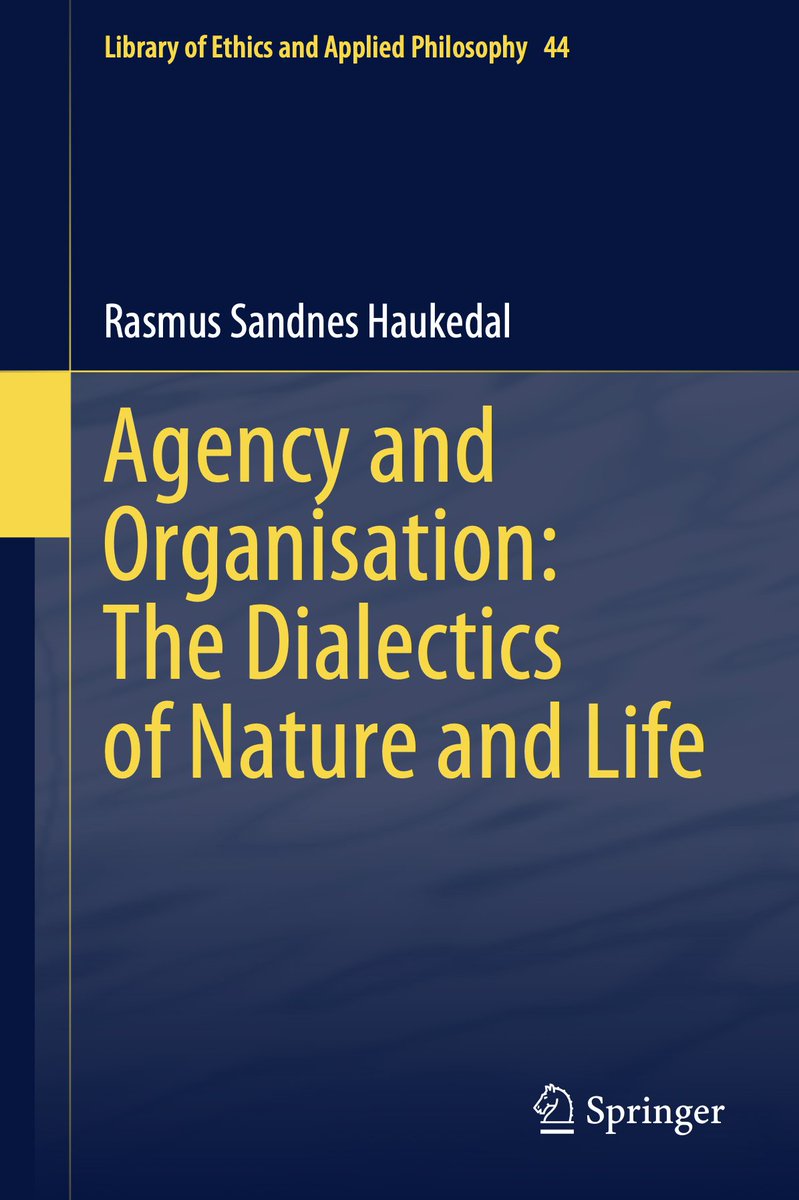
Extending the evolutionary synthesis isn’t enough
Rasmus Haukedal's new book calls for a dialectical biology: from autopoiesis to sympoiesis, from efficient causes to enablement, and an innovative take on plasticity, canalisation & habit.
https://t.co/MSs15LQxm8
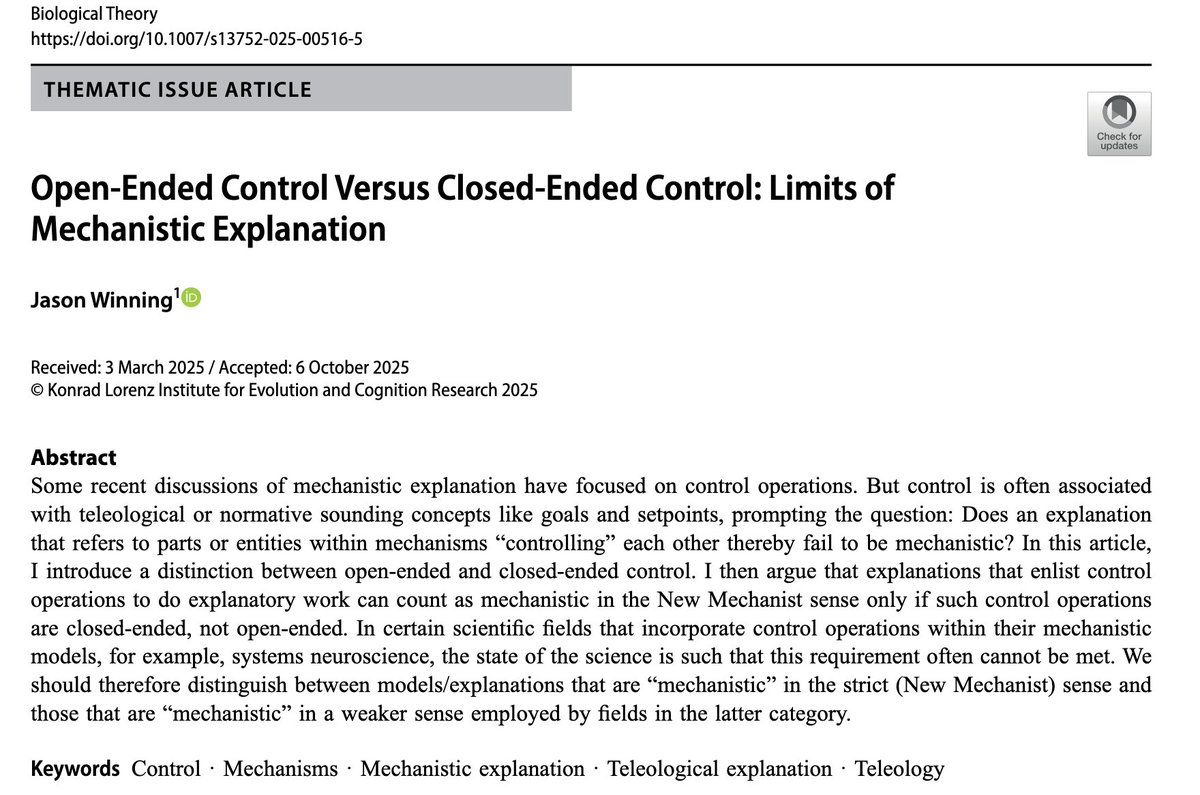
➡️New article out⬅️
Open-Ended Control Versus Closed-Ended Control: Limits of Mechanistic Explanation
by Jason Winning
Free reading link:https://t.co/OnVptRpAGc
Materiality isn’t a backdrop to cognition, but one of its central conditions
The upcoming workshop “Habits, Tools, and Material Environments” examines how cognition is socially distributed, ecologically embedded, and enacted through material engagement
https://t.co/Agb7MlI4Hy
40 years after The Dialectical Biologist, Richard Lewontin’s legacy still challenges how we think about life
A new report revisits his intertwining of philosophy, biology, and Marxism—and how organisms are subjects of their own evolution
https://t.co/vs3JpxTwGv
We’re excited to announce that the Outonomy book —resulting from one of IAS Research’s major projects— is now out! 🎉
It features contributions from many of our members and is Open Access, available in full or by chapters:
🔗 https://t.co/ggAfraztv4
Very nice upcoming workshop at the Center for Philosophical Psychology (University of Antwerp) on how radical embodiment unfolds in complex, “wild” real-world environments.
https://t.co/OSE5XvwgfA
Marx as a philosophical biologist?
Chris Shambaugh on young Marx's account of organismal agency, its relation to human life to the critique of capitalism.
https://t.co/ChgVxyk7Qg...
New paper out in @BiolTheory@Leo_Bich and Laura Menatti argue that health is not about balance or stability, but about adapting and transforming in response to changing circumstances — the capacity for adaptive change.
https://t.co/M91QWEYSiE
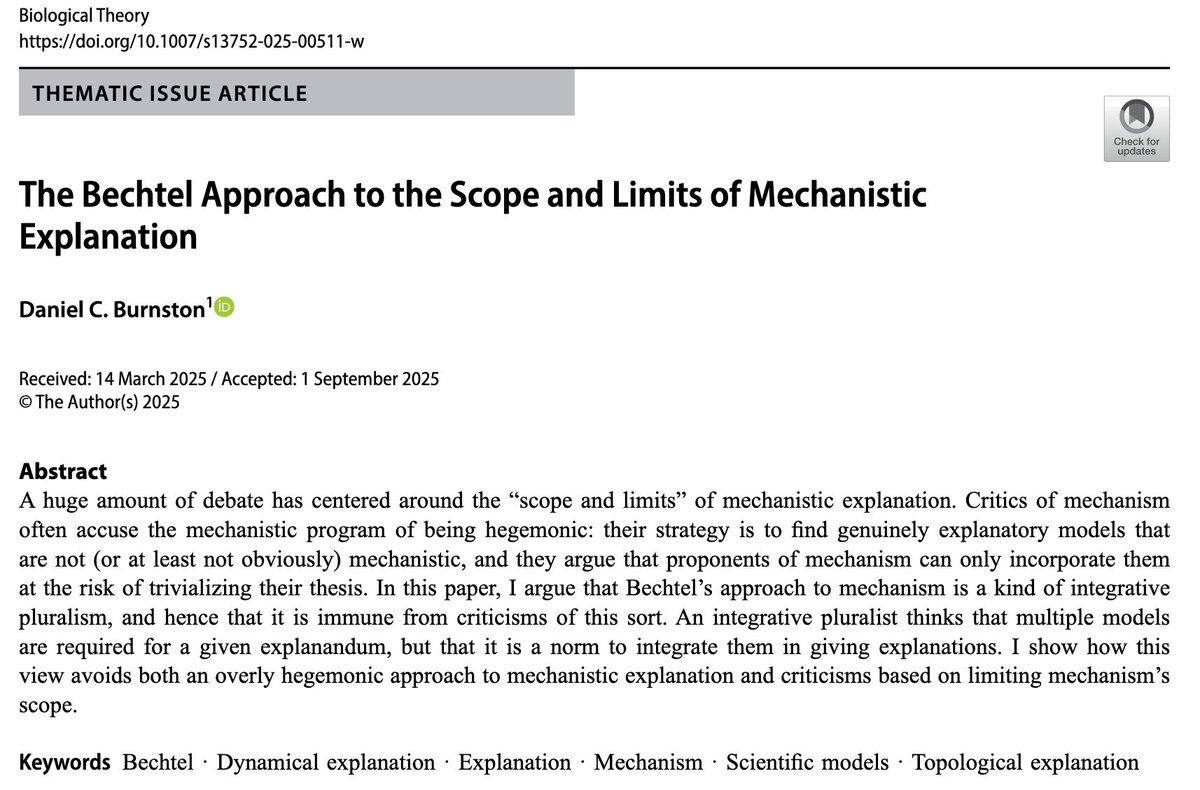
➡️New article out⬅️
The Bechtel Approach to the Scope and Limits of Mechanistic Explanation
by Daniel C. Burnston
Free reading link: https://t.co/p5X6YOGEZ7