The oil market read on the deal is simple: It puts downward pressure on crude, but the move is not risk-free yet.
The market is removing part of the Strait of Hormuz war premium because the worst-case scenario, a prolonged disruption to one of the world’s most important oil chokepoints, has become less likely.
But Hormuz is not “fixed.” It is conditionally de-risked.
Possible scenarios:
a. Deal holds & Hormuz flows normalize: Brent likely trends lower toward the $70–75 range as insurance, freight, and disruption premiums fade.
b. Partial reopening / slow safety clearance: Oil stays supported in the low-to-mid $80s. Tankers move, but cautiously. Risk premium remains.
c. Deal breaks / attacks resume: Brent can quickly reprice toward $95–105+ as closure risk returns.
My read: this is a de-escalation valve, not a permanent solution. The first drop in oil is panic premium coming out.
The next move depends on actual tanker flows, insurer confidence, and whether the 60-day political window survives.
#IranWar #Hormuz #Oil
لماذا اختارت #ايران التصعيد مع #اسرائيل في هذا التوقيت ؟ نظام الحرس الثوري من جديد يهرب من الشارع المأزوم لتصدير الازمة للخارج ويحاول يرسم عضلات قبل ان يقدم تنازلات ل #ترامب .
مهم ما يكتبه رامي الريس:
"في جانبٍ منه، من الضروري أن يتحوّل نقاش قانون العفو العام إلى نقاش في سبل تنشيط التفتيش القضائي، وتفعيل آليات المحاسبة داخل القضاء، تمهيداً للدخول في الموضوع الأكثر أهميّة الذي يتصل بطبيعة العلاقة بين السلطة السياسيّة والقضاء، وفي سبل "تحرير" القضاء والقضاة حقاً من السطوة السياسيّة التي تدجن القضاء وتفرغه من مضمونه ودوره ورسالته.
في اللحظة الاقليميّة الملتهبة التي تشهد متغيرات لم يكن ممكناً تخيّل البعض منها منذ سنوات قليلة مضت، وفي الوقت الذي يفقد فيه لبنان الكثير من الميزات التفاضليّة التي كان يتميّز بها لصالح بلدان صاعدة أخرى، لا يمكن مواصلة الدوران في حلقة مفرغة: حروب وانقسامات وفساد واهتراء."
العفو العام: تراجع القضاء والسياسة والأخلاق!
يكشف الجدل حول قانون #العفو_العام في #لبنان عمق أزمة القضاء، بين الشلل المؤسساتي والتجاذبات الطائفية وغياب استقلالية السلطة القضائية… مقالتي في "ليفانت تايم"
@LevantTime
اقرأ المقال بخمس لغات👇🏻
https://t.co/jwpdz9nYm7
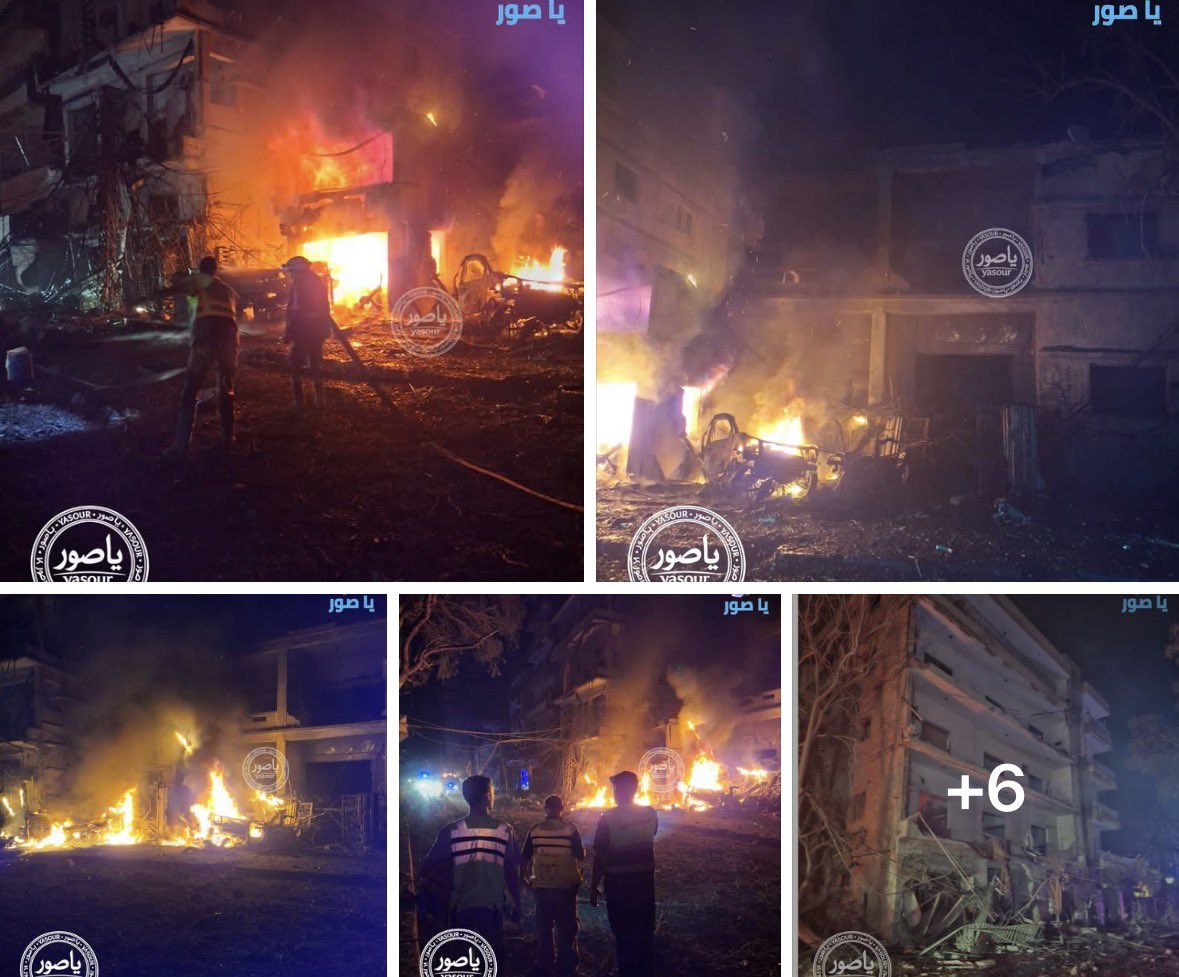
Ils bombardent #Tyr
4ieme ville du sud 🇱🇧 classée au patrimoine mondial de l’UNESCO, grand-témoin de l’histoire méditerranéenne et héritage universel irremplaçable.
Protéger Tyr, c’est protéger une mémoire de l’humanité.
Appel urgent à @UNESCO_fr@antonioguterres
هذه المدينة التي تُقصف اليوم عمرها 5000 عام: سيدة البحار، وملكة فينيقيا.
منها خرج البناؤون الذين شيّدوا هيكل سليمان بقيادة حيرام الأول و«ابن الأرملة».
وفي شوارعها ما زالت آثار سور صور العظيم الذي أذلّ الغزاة شاهدةً على حضارة لا تموت. هم يقصفون التاريخ والحاضر معاً لكن صور ستنهض
"الطاقة": الهبة العراقية مختومة في خزانات منشآت النفط خلافاً لإدعاءات "الأخبار"
صدر عن المكتب الإعلامي لوزارة الطاقة والمياه البيان الآتي:
نشرت صحيفة "الأخبار" بتاريخ ٢٢/٥/٢٠٢٦ مقالاً بعنوان "مجلس الوزراء شاهد زور: هبة المازوت العراقية نموذجاً" مليئاً بالمغالطات والافتراءات والتجني والتزوير، لذا منعاً لتضليل اللبنانيين نوضح الآتي:
اولاً، الهبة العراقية موضوعة بخزان خاص في المنشآت تحت إشراف شركة رقابة ومرصرصة من الجمارك، بالتالي لم يتم التصرّف بها الى حين يصدر الأمر بذلك من خلال مرسوم قبول هبة من مجلس الوزراء بخلاف ما تدعي زوراً صحيفة "الأخبار".
ثانياً، إن مادة الهبة العراقية بحسب مواصفاتها ليست ديزل أويل ولا تصلح لاستخدامات معامل مؤسسة كهرباء لبنان لان مواصفاتها غير مطابقة للمواصفات المعتمدة من قبل المؤسسة. إنها مادة غاز المازوت، وبالتالي يجب استهلاكها في مصانع وأفران.
ثالثاً، هذه الهبة ليست مازوتاً احمر كما ادعت الصحيفة وفي الأساس لا يفرّغ في المنشآت مازوت احمر. لسوء حظ الصحيفة، فإن لونها أساساً ليس أحمر بل أقرب الى الأصفر.
رابعاً، ما بادرت إلى بيعه منشآت النفط في الزهراني ليومين خلال اسبوعين هو كميات من مادة الديزل أويل الأخضر بهدف تسييل البضاعة إلى أموال تودع في حساب المنشآت في مصرف لبنان لتتمكن من الاستمرار في دورها الاستثماري وشراء البواخر.
خامساً، إن تخفيض سعر بيع هذه البضاعة هو ضرورة تنافسية لضرورات بيع البضاعة التي نؤكد أنها من المازوت المعتمد في السوق وهي ٦ مليون ليتر في حين إن كل كمية الهبة العراقية لا تتخطى 940 ألف ليتر. كما أن إجراء حسم على السعر تم وفق ما يسمح به القانون من اجل المنافسة في السوق وتسهيل تصريف الكمية الموجودة. وبناء على ذلك، كانت المنشآت حينها البائع الأكبر في السوق.
سادساً، جدول أسعار المحروقات الذي يصدر عن وزارة الطاقة يحدّد الحد الأعلى للمبيعات ولكن لا يمنع من إجراء حسومات على الأسعار.
سابعاً، إن الكمية المحدودة لن توفّر وزناً مالياً للمنشآت وهي ليست ملكا لها، وبالتالي فإن ريع بيعها يعود للجهة التي يقررها مجلس الوزراء خدمة للنازحين.
ثامناً، إن الكمية التي لا تتخطى 940 ألف ليتر المحدودة لن تكون معبراً لأي تلوث بيئي.
في الختام، تأسف الوزارة الى تعمّد الصحيفة مرة جديدة نشر أخبار مغلوطة من دون التواصل مع الوزارة للتأكد من صحة المعلومات او عدمها وفق أبسط القواعد المهنية.
Nobody is telling you what Trump actually did by bringing 30 CEOs to Beijing.
🚨 TRUMP DIDN'T SEND DIPLOMATS TO CHINA. HE SENT THE ENTIRE AMERICAN ECONOMY.
Jensen Huang. Tim Cook. Elon Musk. Larry Fink. Boeing. BlackRock. JPMorgan. Meta. Visa.
Not deputies. Not undersecretaries. The number one from each empire — on Air Force One — walking into Xi Jinping's room.
Nobody is talking about what that actually signals:
→ Jensen Huang was a LAST-MINUTE addition — specifically to put AI and chips on the table in person
→ This is the first U.S. presidential visit to China in nearly a decade
→ Trump's framing wasn't "we want a deal" — it was "they're here to pay respect AND do business"
→ The message: America isn't asking. America is presenting terms.
→ 100% reciprocal — or the room full of titans walks out
This isn't normal summit protocol.
Normal summits send the State Department. Normal summits send the vice president.
Trump sent the people who actually build, manufacture, invest, and deploy capital at scale — and told Xi: these are the bosses. They came here. That means something.
In 2017, Trump told Beijing he didn't blame China for exploiting weak American presidents. He blamed the presidents.
In 2026, he showed up with proof that era is over.
The media is covering the handshake.
They're NOT showing you that the most concentrated display of American private-sector power ever assembled just sat down across from the Chinese Communist Party and said: we're open — but it'll be reciprocal.
That's not diplomacy. That's leverage walking into a room and introducing itself.
I'll share more updates shortly, turn on notifications before it's too late.
On US/China summit:
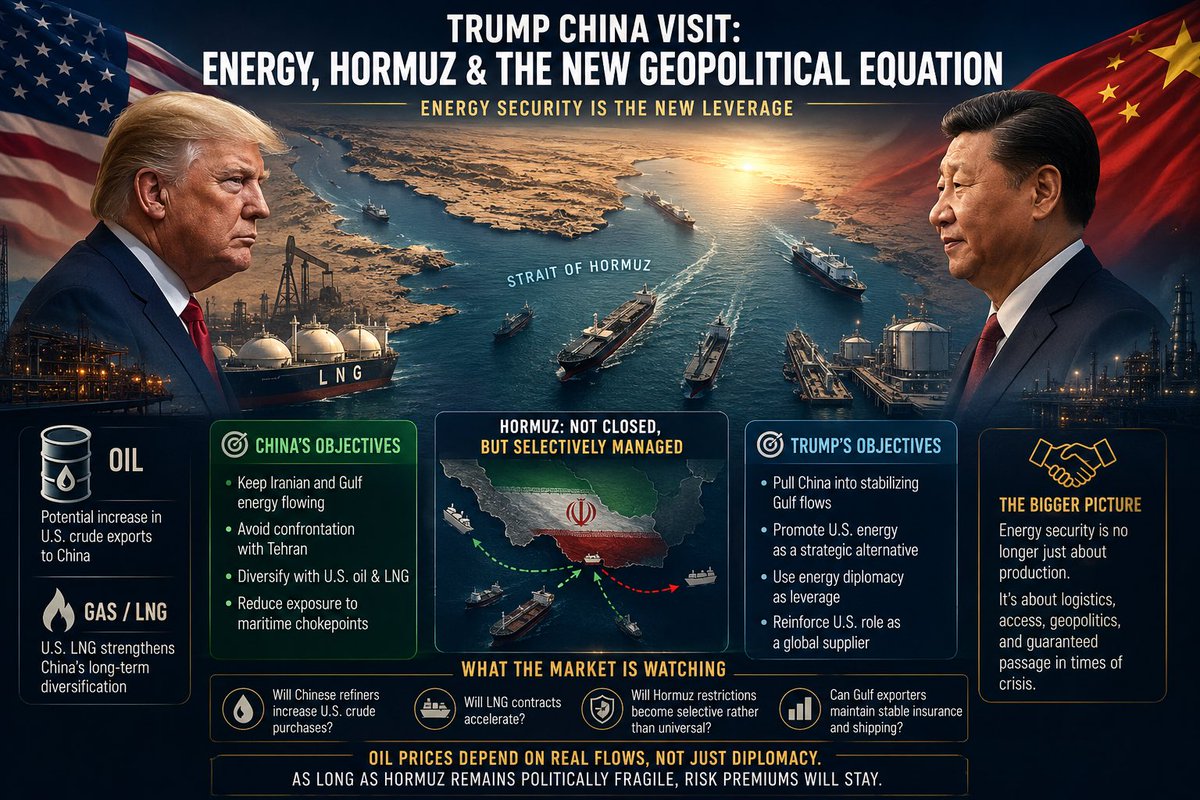
Trump’s China visit is no longer just about tariffs or trade optics. It is increasingly becoming an energy security negotiation tied directly to the Strait of Hormuz.
The key strategic signal:
Washington hinted that Beijing is interested in increasing purchases of U.S. oil and LNG to reduce long-term exposure to Gulf supply disruptions and Hormuz transit risk.
At the same time, reports indicate Iran has allowed certain Chinese-linked vessels to transit Hormuz following Chinese diplomatic engagement.
This creates a very important geopolitical shift:
Hormuz may not evolve into a fully “closed” strait.
Instead, it risks becoming a selectively managed corridor shaped by politics, strategic alignment, and maritime leverage.
That changes the entire global energy equation.
China’s objectives:
• Keep Iranian and Gulf energy flowing
• Avoid a direct confrontation with Tehran
• Diversify supply through U.S. crude/LNG where strategically useful
• Reduce vulnerability to maritime chokepoints
Trump’s objectives:
• Pull China deeper into stabilizing Gulf flows
• Position U.S. energy exports as a strategic alternative
• Use energy diplomacy as leverage inside broader U.S.–China negotiations
• Reinforce America’s role as a global supplier during instability
What matters now is not summit language, but actual flows:
• Will Chinese refiners materially increase U.S. crude purchases?
• Will LNG contracts accelerate?
• Will Hormuz restrictions become selective rather than universal?
• Can Gulf exporters maintain stable insurance and shipping conditions?
The market implication is critical:
Oil prices do not necessarily collapse simply because diplomacy resumes.
As long as Hormuz remains politically fragile, shipping premiums, insurance risk, and selective transit uncertainty will continue supporting elevated energy prices.
The bigger story here:
Energy security is no longer just about production capacity.
It is now about logistics, maritime access, geopolitical alignment, and who gets guaranteed passage during crisis conditions.
عقد معهد باسل فليحان المالي والاقتصادي ويبينار بعنوان: “لماذا يشكّل خط كركوك–طرابلس شريان الحياة الجديد للبنان؟”
تناول اللقاء التحوّلات الجيوسياسية التي تشهدها المنطقة، وانعكاساتها على أمن الطاقة، ومسارات النفط، والدور الاستراتيجي الذي يمكن أن يلعبه خط كركوك–طرابلس في المرحلة المقبلة.
بمشاركة: رئيسة المعهد لمياء المبيض بساط، الباحث ياسر هلال، الخبيرة في الحوكمة ديانا القيسي، والصحفي بلال ياسين.
@LamiaMoubayed
التفاصيل على الرابط التالي: https://t.co/xdZpAz7i4Xوبينار-لماذا-يشكّل-خط-كركوك–طرابلس-شريان-الحياة-الجديد-للبنان
#الطاقة #النفط #خط_كركوك_طرابلس #أمن_الطاقة #الاقتصاد
In his latest article, @RamiRayess frames the current moment as a historic opportunity to normalize relations with Syria on equal footing while leveraging economic and strategic complementarity between the two countries.
A must read!
*Levant Time*
Liban-Syrie : ouvrir une page nouvelle et lumineuse
🖊️ Article de Rami Rayess
Le Liban et la Syrie tentent d’ouvrir une nouvelle phase de leurs relations, entre coopération économique, contrôle des frontières et dossiers historiques encore en suspens.
Lire l’article en 5 langues - Read the article in 5 languages 👇🏻
https://t.co/LapUmwRM9S
@khaledkleib I couldnt agree more. Another factor that will affect prices would be the supply. UAE’s free-from-OPEC input into the market and a possible economic recession ( thus decreasing demand in oil) may drive supply to exceed demand.
Many people are looking at Brent oil charts and seeing around $100/bbl.
But the real oil market is tighter than the chart suggests.
Brent futures may be trading around $100–102, but physical oil pricing also reflects:
• tanker security
• war-risk insurance
• freight costs
• cargo availability
• refinery demand
• and geopolitical risk around key shipping lanes like the Strait of Hormuz.
This is not a “normal” $100 oil market. A geopolitical risk premium is already embedded into physical flows. Therefore, the actual price being paid per barrel is around 30$-40$ higher than the declared oil market chart price.
The key question now is not headlines, but rather it is whether actual oil shipments become disrupted.
Possible scenarios:
• De-escalation / shipping normalizes
Brent could ease back toward $85–95.
• Current tensions continue without major disruption
Oil likely remains elevated around $100–115.
• Major Hormuz disruption
A serious supply shock could rapidly push Brent toward $120–150+.
• Ceasefire + weak global demand: Markets could shift from shortage fears to oversupply concerns, bringing Brent back toward $75–90.
The oil market stays psychological until physical flows are impacted.
That is the real risk markets are pricing today.
#IranWar #Oil
التأهيل اولوية صحيح والشفافية في نشر كافة عقود التأهيل و الالتزام هي السبيل الوحيد للتميّز والمضي قدما في خطى ثابتة.
@CoalitionEnergy@Joe_Saddi@RJNglobal
تأهيل خط انابيب الغاز العربي خطوة أساسية وعملية في اطار مساعينا للانتقال بقطاع انتاج الطاقة في #لبنان الى الاعتماد على الغاز
#جو_الصدي
https://t.co/pkDRvznpLE
العبور من مشقة الأخوّة إلى مساحات التعاون: رحلة إعادة ترميم العلاقات اللبنانية- السورية هي رحلة طويلة وغير مستحيلة لا بل ممكنة ودائماً وفق ثوابت البلدين بعيداً عن حدي القطيعة الشاملة (تجربة ١٩٥٠) أو الوصاية الشاملة (١٩٧٦-٢٠٠٥). ثمة مصلحة أكيدة للطرفين بسلوك هذا المسار الحتمي..
الحديث يطول ودائما ممتع مع الاستاذة نوال ليشع عبود خلال برنامج نفطة عل السطر على @sawtlebnan
تكلمنا عن النفط الغاز الفيول الخطوط والفرص الحالية
https://t.co/iXdooBL1T5
اعمال تأهيل خط الانابيب العربي في الجانب اللبناني ستنطلق في الاسابيع المقبلة وهي ضمن مسار الانتقال لانتاج الطاقة في #لبنان على الغاز الذي نعمل عليها
#جو_الصدي