@investmentnews How early are clients usually introduced to the successor? “I’m retiring” is a lot to hear from someone who’s known your family for 20 years.
@thomsonreuters A successor can read years of client files and still not know what earned that client’s trust in the first place. Those are conversations worth having before someone retires.
@JasonKirby Did his dad find it hard to step back once the board was in place? Agreeing to the handover and living with it day to day seem like two very different things.
The inheritance arrived exactly as planned.
The meaning did not.
A trust can explain what your heirs receive, when they receive it, and which conditions they must follow. But legal language cannot tell them why you made those decisions.
Without your voice, protection can feel like punishment. Guidance can feel like control. And the next generation may create a story you never intended.
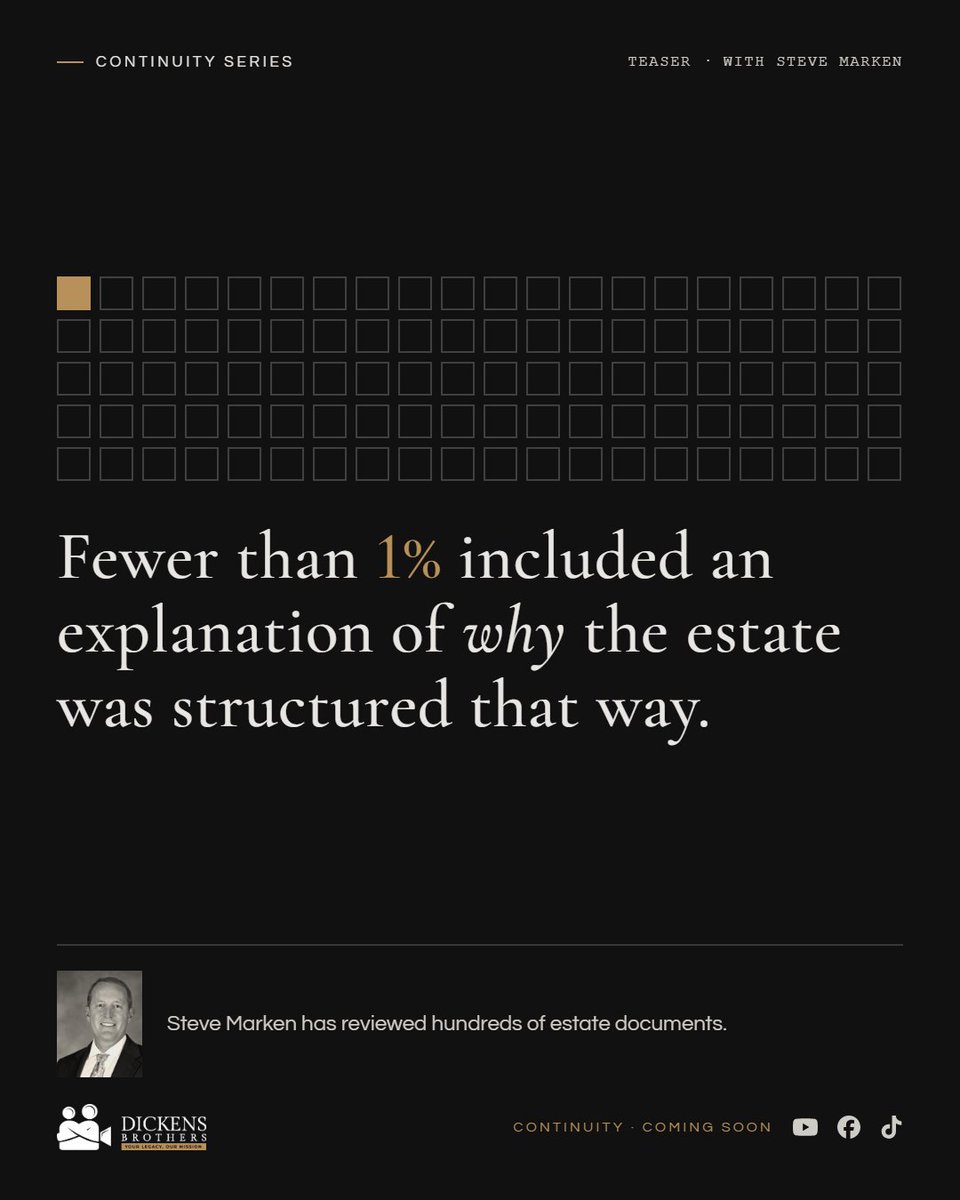
After reviewing hundreds of estate documents, Steve Marken found that fewer than 1% included an explanation of the founder’s reasoning.
In the newest film from our Continuity Series, Steve reveals what most estate plans leave behind and why preserving the founder’s voice can change how a family receives its wealth.
Your heirs may inherit the assets.
Will they understand the intention?
Continuity with Steve Marken is out now. Watch the full film on the Dickens Brothers YouTube channel.
https://t.co/WFwofJejbw
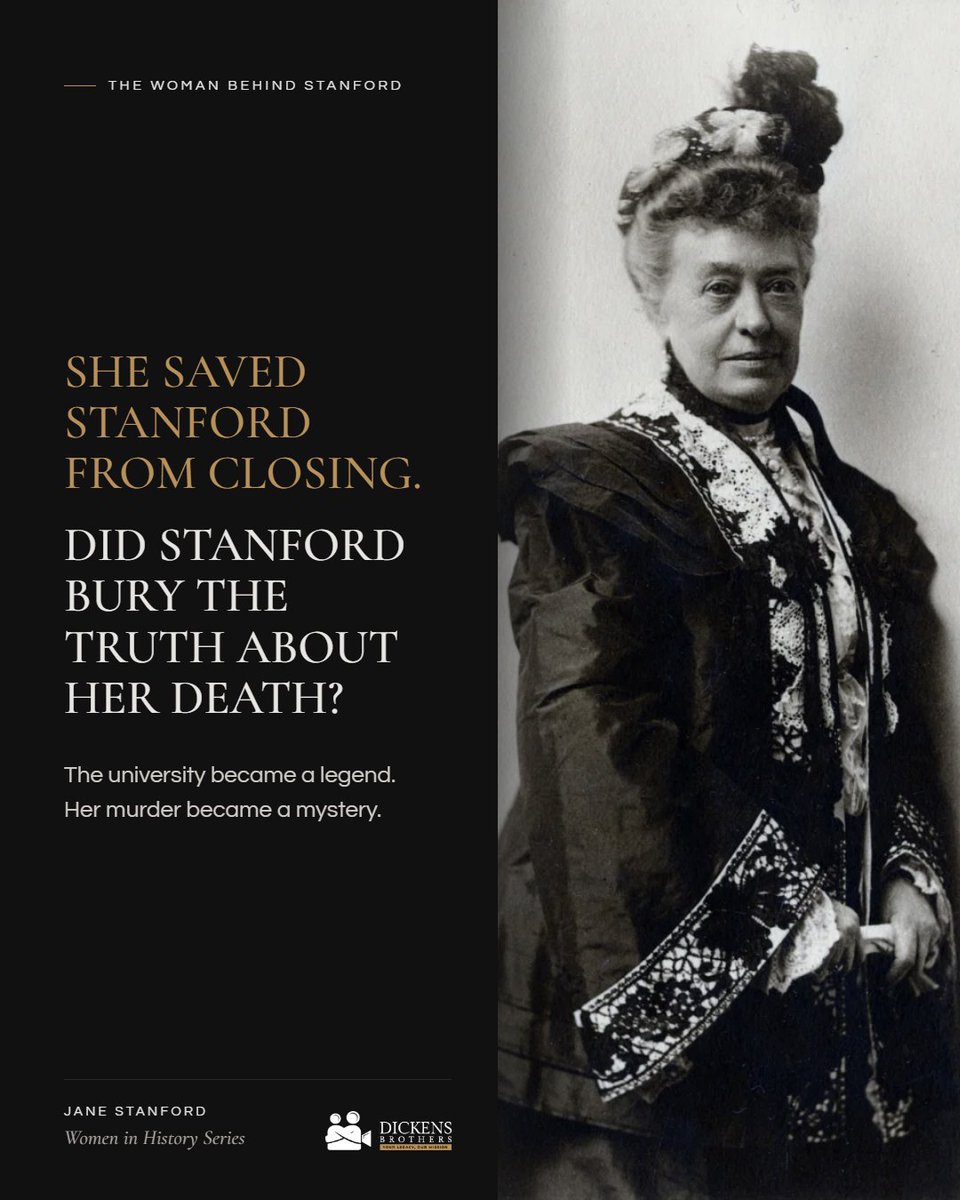
Stanford University might not exist today if one grieving mother had listened to the people telling her to surrender.
In 1884, Jane and Leland Stanford lost their only child, Leland Jr., to typhoid fever. He was just 15 years old.
They could not give their son a future, so they created one for other people’s children. In his memory, they founded what would become Stanford University.
Then Leland Stanford died.
The family’s assets became tied up in legal proceedings. The university faced severe financial uncertainty, and Jane was reportedly advised to close the school.
She refused.
Jane used her wealth, influence, and determination to keep Stanford alive. She protected the institution through grief, litigation, and years of instability.
But the woman who preserved Stanford would never receive a peaceful ending.
In 1905, Jane survived an apparent poisoning attempt. Not long afterward, she died in a Honolulu hotel after ingesting strychnine.
A coroner’s jury concluded that she had been poisoned. Stanford University President David Starr Jordan promoted an alternative explanation involving natural causes. Her killer was never conclusively identified, and historians still examine whether the truth about her death was deliberately concealed.
Jane Stanford transformed the loss of her child into an institution that would outlive her.
She saved the university.
The university became a legend.
Her death became one of its darkest mysteries.
Your estate plan may tell your family what they will inherit.
But will it tell them why?
After reviewing hundreds of estate documents, Steve Marken found that fewer than 1% included the reasoning behind how the estate was structured.
Without that explanation, the next generation is left to guess. And a guess can quickly become resentment, confusion, or a story you never intended to leave behind.
The documents distribute the assets. Your voice preserves their meaning.
Coming soon in the Dickens Brothers Continuity Series.
What is one decision you would want your family to understand?
#EstatePlanning #FamilyLegacy #InheritancePlanning #WealthTransfer #GenerationalWealth #LegacyPlanning #FamilyBusiness #DickensBrothers
Your family won’t lose your story all at once.
First, they forget the sound of your voice.
Then the way you laughed.
Then why you made the choices you did.
Eventually, an entire life becomes a name beneath a photograph.
Record more than the milestones.
@ahmedbinsulayem@sodubaiuptown Curious how families handle that last part in practice. Giving the next generation room to do things differently can be a hard conversation for a founder.
Ask your parents about a time they almost gave up.
You may know what they built. You may never have heard what it took to keep going.
That’s a story your children deserve to hear in their voice.
@RichardCWilson A useful way to teach that process is to revisit an actual decision together: what options were on the table, where the family disagreed, and why they chose that path. A recorded conversation can preserve the reasoning a rulebook leaves out.
@CunninghamLegal One question worth making room for: “What do you want your children to understand about the choices you made?” The answer often gives a family something meaningful to carry alongside the plan.
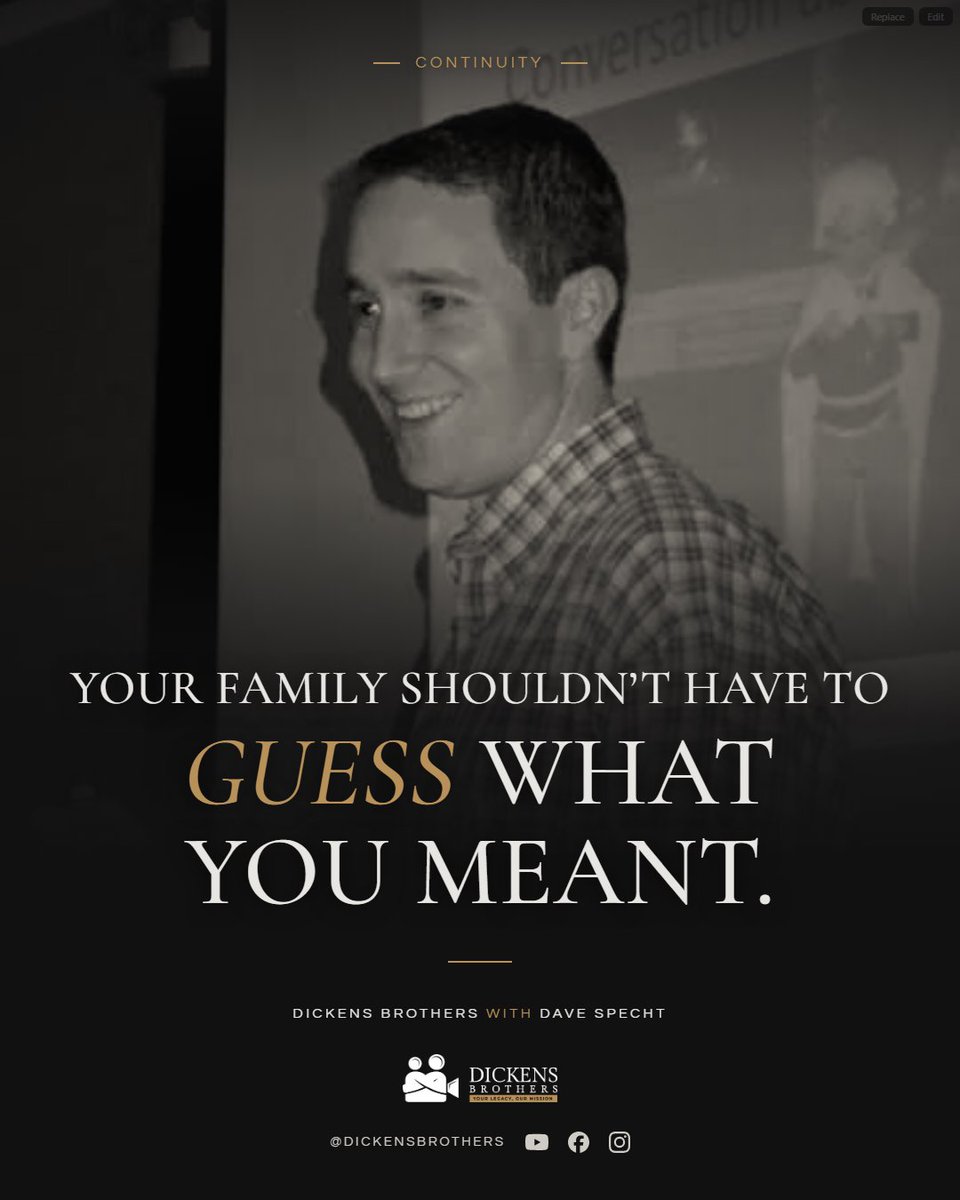
Your family shouldn’t have to guess what you meant.
Legacy is not preserved through documents and assets alone. It is carried through the conversations that explain the values, decisions, and hopes behind them.
In Continuity, Dave Specht joins Dickens Brothers to explore why families need to say the important things while there is still time to hear them.
Watch the full episode on YouTube: https://t.co/Ot4aXxOmQ3
What is one thing your family should never have to guess?
#FamilyBusiness #FamilyLegacy #SuccessionPlanning #Continuity
@moodewji “Deep Roots, New Routes” is a thoughtful theme. Which story from the earlier generation do you most want future leaders to hear firsthand? Those personal accounts can give the values behind a business much more meaning.