Bitcoin allows people to own their own money, like cash and gold, without a custodian, and can be used globally.
It enables person-to-person transactions on an “innocent until proven guilty” basis, unlike any money that relies on a custodian.
BTC has a fixed supply that will never change, allowing me to plan decades ahead without a central banker altering the rules or diluting my value.
It also provides a way to capture value from otherwise wasted electricity, a small price to pay for the benefits it offers to anyone.
It’s the most net-positive form of money for society since cash.
Gold was a natural gift.
Bitcoin is an invented gift.
It’s arguably the only real way to exit the financial-industrial complex and boycott the harms that traditional financial products may support.
How is that a net negative?
After becoming a Bitcoin maxi, I lost all interest in politics.
Once you understand sound money,
you realize most political problems aren’t meant to be solved.
Because when the money is broken,
everything built on top of it is too.
economic growth requires capital accumulation
capital accumulation requires savings
savings require low time preference
central banks systematically destroy all three through monetary expansion
For 5,000 years, money always had a master.
Kings. Empires. Central banks. Bureaucrats.
Different names.
Same control.
Then Bitcoin showed up in 2009.
Money with no ruler.
So when people call it a scam, what they’re really saying is they haven’t studied the first true monetary revolution in human history.
Bitcoin isn't just an asset; it's the TCP/IP of money. A neutral, global protocol that redefines value exchange. While others chase speed, Bitcoin builds a foundation. It's not about being faster; it's about being foundational. #Bitcoin#ProtocolRevolution
Mises obliterated the entire socialist project in 1920 with one devastating insight: "Where there is no free market, there is no pricing mechanism; without a pricing mechanism, there is no economic calculation." The socialists spent the next century pretending this problem didn't exist while their economies collapsed around them.
And yet here we are, watching politicians promise they can "fix" healthcare, housing, and energy markets through central planning. They can't even calculate the cost of their own programs correctly — how exactly are they going to allocate resources across an entire economy?
Every Venezuelan breadline, every Soviet grain shortage, every Chinese famine was just Mises being proven right in the most brutal way possible. But sure, let's try democratic socialism this time. What could go wrong?
⚠️ I studied 12 Bitcoin billionaires and found something strange.
None were uniquely brilliant, or lucky.
But all of them passed 3 psychological tests, in public, that I still see 80% of bitcoin holders fail.
You will eventually face these too.
💥THE EXIT MANUAL - EPISODE 28
There's something interesting happening in European politics right now, and you've probably overlooked it:
As you might be aware, the incumbent President of France, Emmanuel Macron, is very unpopular -- with favorability frequently below 20%, he's at the bottom of essentially all groups of comparables. It's no surprise then that his camp is widely expected to be replaced at the upcoming April 2027 presidential election. Opinion polls show Jordan Bardella, the leader of the "far-right" National Rally (Rassemblement National), as the clear frontrunner.
Bardella's expected victory, under normal circumstances, would have been a rare opportunity for his party to meaningfully reshape European economic policy: the terms of Christine Lagarde (President of the European Central Bank, the top monetary policy official in Europe), François Villeroy de Galhau (Governor of the Bank of France, the top monetary policy official in France), Philip Lane (member of the Executive Board of the European Central Bank and the chief economist, plausibly the most influential ECB technocrat), and Isabel Schnabel (member of the Executive Board of the European Central Bank) are all set to expire shortly after the 2027 French presidential election.
This means that Bardella would have been able to appoint the next Governor of the Bank of France, and have influence over the appointments of the successors to the three top ECB officials, including the President, who make up half of the 6-member Executive Board and shape the European Central Bank's policy agenda.
Aware of this, Bardella has periodically signalled a somewhat heterodox vision he'd like reflected in his picks.
The prospect of a right-populist running amok in the Eurosystem naturally alarmed the European bureaucracy, and so they're stepping in. In a surprising and uncommon move last week, François Villeroy de Galhau announced that he's stepping down before his term ends at the Bank of France. He of course avoided the obvious political implication, citing personal reasons as his motivation. But the move will ensure that Macron gets to be the one to decide his successor for a 6-year term, denying Bardella.
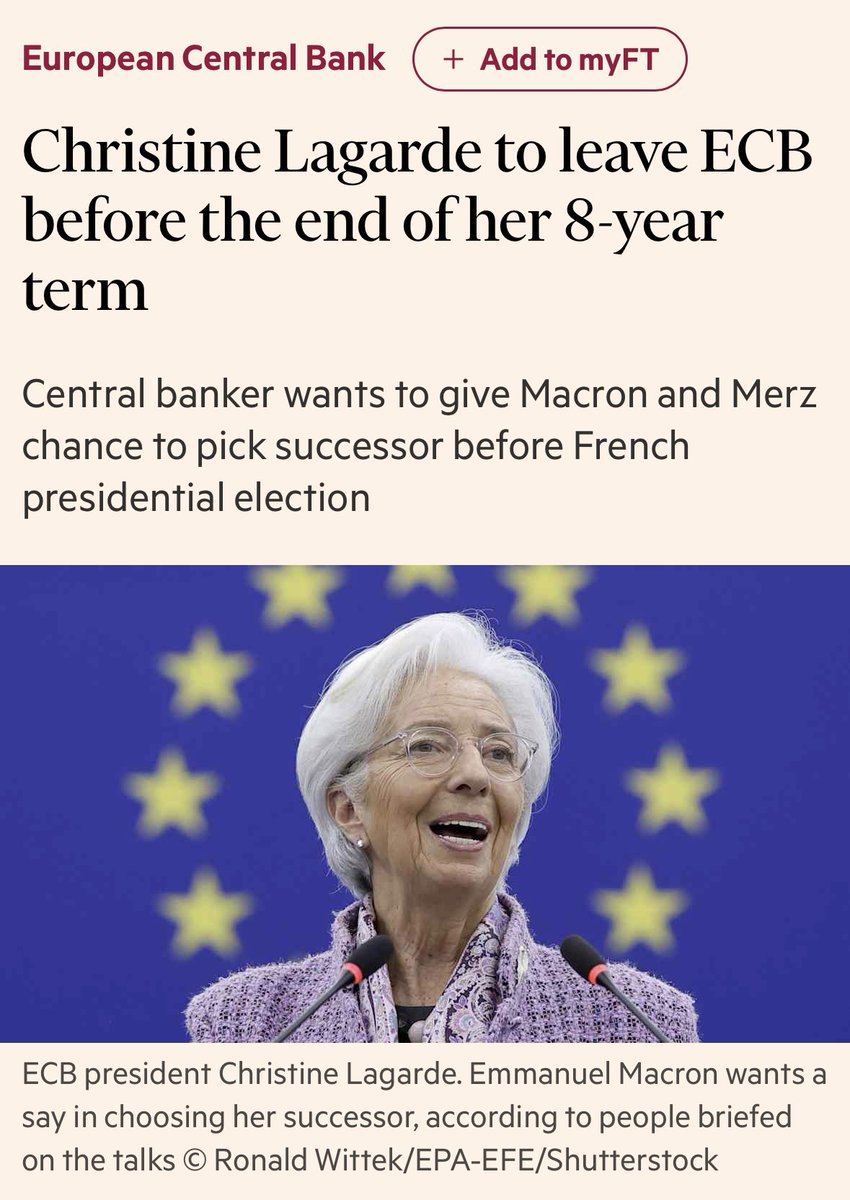
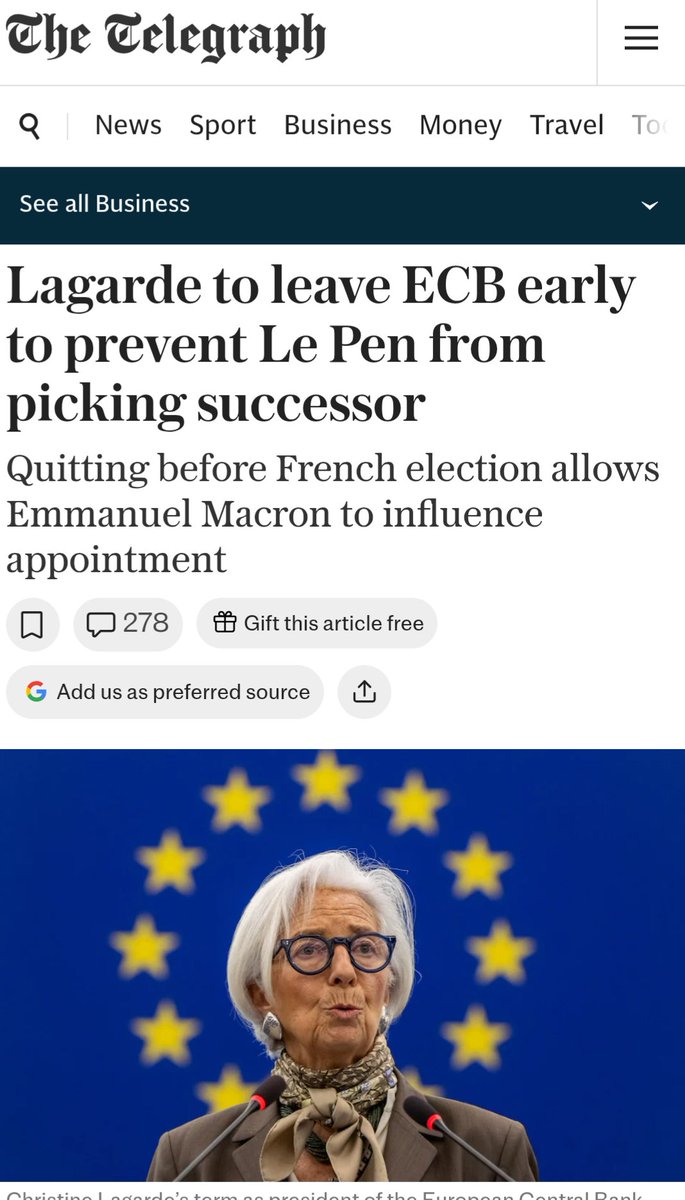
In a similar unusual fashion, reports have started circulating that Christine Lagarde, the President of the ECB, is also planning to step down in 2026, a year early -- which would clear the way for the usual "horse-trading" for Executive Board positions to take place a year early as well, keeping France's say with Macron in all three of the upcoming appointments. Instead of helping pick half of the Executive Board members, Bardella will have helped pick none.
The maneuver has recent precedent -- in 2024, ahead of a telegraphed right-wing victory in an upcoming legislative election, the Austrian National Bank had its governor appointed more than a year in advance of the job's actual mandate, violating the country's public governance guidelines, but ensuring it was the outgoing incumbent that got the final say.
Anyway, are you still a believer in democracy? Because at our age it's marginal right
Remember how Donald Trump was destroying the foundations of sound monetary policy by pressuring the Fed to lower interest rates, thus bringing into question central bank independence? Remember the press hysteria? So what's going to be the response to the president of one Eurozone nation cooking up a scheme with the (French) ECB president for her to resign early to prevent the current French opposition from having a say in who will be the next ECB president in the event that they win the next French presidential election? Doesn't that maybe impinge on Central Bank independence? Just a touch?
Or will Macron get a pass, like he did when he ruthlessly and violently put down the Gilet Jaune democratic protests, or when he threatened to cut off British electricity over a fishing dispute, or when he engaged in antivax rhetoric to try to rubbish the Astrazeneca vaccine? I think we know the answer. If you're a member of the club, it's all ok, because anything you do is by definition protecting Our Democracy from those who might want to take Our Democracy away from Us.
And another thing. The French have shown, yet again, that they should be disqualified from ever holding office at international or supernational institutions. Such positions call for independence, but they always remain agents of French national interests as the French establishment sees them. Intolerable.
The digital euro would ensure that we always have the freedom to choose how to pay, says Executive Board member Piero Cipollone in a speech at an event in Cyprus. It would protect our autonomy and bring benefits to people and businesses https://t.co/40MfuCJ7Oy
It has become clear that one of the main reasons that the general public has been so slow to adopt Bitcoin is that humans have never known a store of value asset to be truly sovereign, especially in a high inflation or socially oppressive regime. Through all the noise of mainstream media and fiat fanatics (PhD economists, bankers, et al) they don’t yet understand how Bitcoin is truly different from any other asset that can be easily seized, i.e., cash (taxes or physical force), gold (fake paper or force), houses (force or foreclosure), and so they don’t yet trust Bitcoin to be that ultimate store of value. Can you blame them? After all, no asset they have ever owned has been truly safe from seizure. However, Bitcoin is quite unique in this way, and they will soon learn.
THE GOLDEN AGE
The fiat crisis has begun. So what wins in the end: gold, digital gold, or some other kind of precious metal or cryptocurrency? Only time will tell, and different assets have different failure modes, but here are some thoughts.
(1) First: remember that Bitcoin's value proposition is seizure resistance. Not your keys, not your coins.
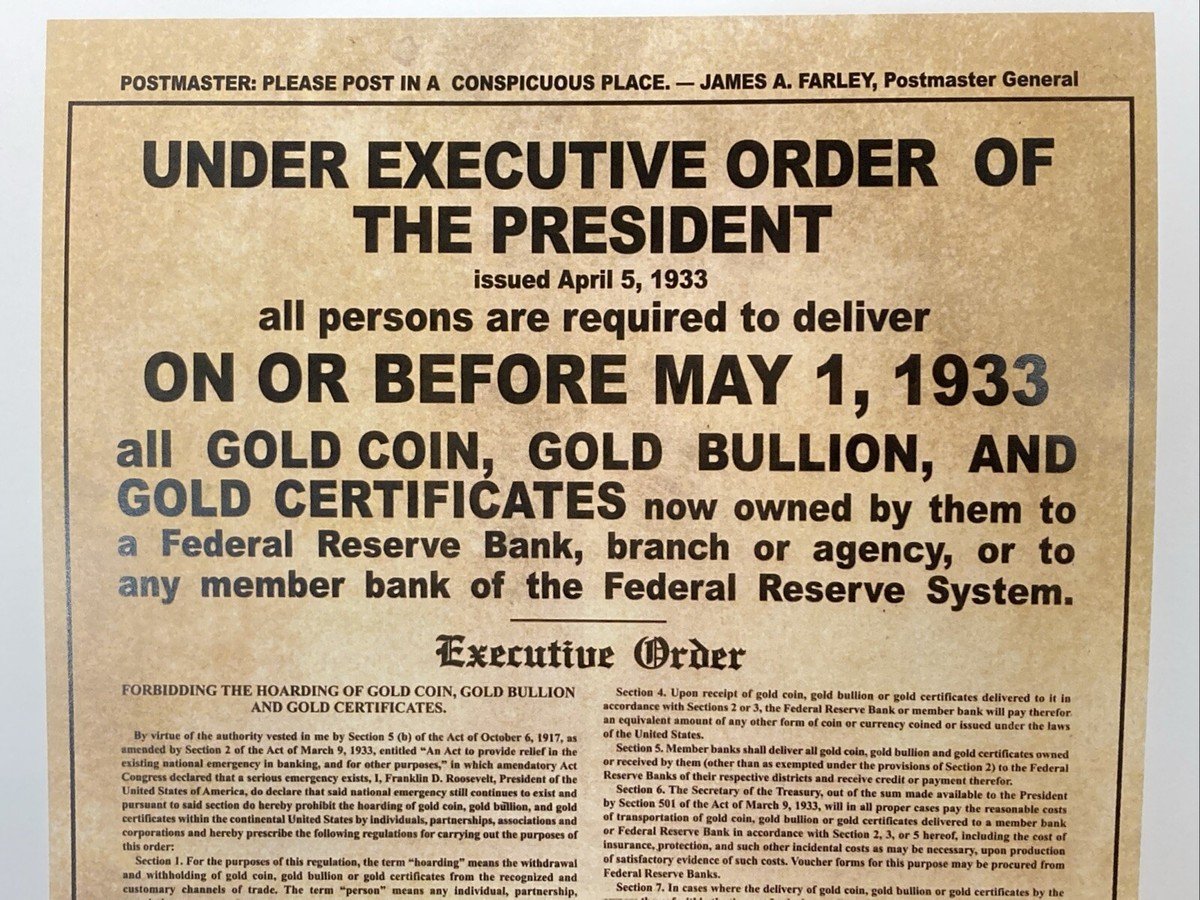
(2) To explain what that means, think through the mechanics of physical gold. It's great...if you can buy it, transport it, secure it, and sell it safely. But it's much easier to do that when you live in a highly organized state, like China. However, such a state can also track you to your doorstep to seize the gold, once it runs up in price. That's what FDR did in the 1930s and what China is fully capable of doing in the 2020s:
(3) So when you think through the game theory, as the price of gold rises, the cries to tax (or seize!) the physical gold will also rise. Note: we need not even mention paper gold here. In a true crisis, such claims are not worth the paper they're printed on. That's why many countries are repatriating their gold. Not your bricks, not your gold!
(4) By contrast to physical gold, digital gold (and cryptocurrency more generally) can be securely bought, sold, sent, and received at any time, in any amount, and in any location. It is invisible, international, instantaneous, and internet-native. And it is transportable, programmable, and easily verifiable in a way gold bricks simply aren't.
(5) In particular, digital gold is seizure-resistant in a way that physical gold is not. The same holds true for cryptocurrency as a class. Go back to the fundamentals: seizure resistance is part of why cryptocurrency was invented as an alternative to precious metals.
(6) This is not to say that physical gold won't have its day. If you live in a safe, small country like the United Arab Emirates, you may be able to buy your gold and eat it too. They probably won't expropriate property there.
(7) Moreover, it is quite likely that many countries (particularly in the East) will soon re-standardize their currencies on gold, or digital gold, or some mixture of precious metals and digital assets. As I've been noting for years, BRICs has been stacking gold bricks:
(8) However, don't overreact towards gold. The successors to the American Empire are China and the Internet. You should think of this as the past and the future replacing the present. China will replace the dollar with gold, along with physical commodities that it can touch, feel, and control. Meanwhile, the Internet will replace the dollar with digital gold, along with digital assets that it can encrypt, script, and verify.
(9) So: feel free to hedge as you see fit between the physical past and the digital future, with just one caveat: namely, you may not want to buy physical precious metals unless you're in a financially and physically secure region of the world. That probably means being outside North America and Western Europe. Because those countries are in the midst of sovereign debt crisis. And as that crisis deepens, both their failing states and their angry mobs are going to be hunting for whatever they can steal.
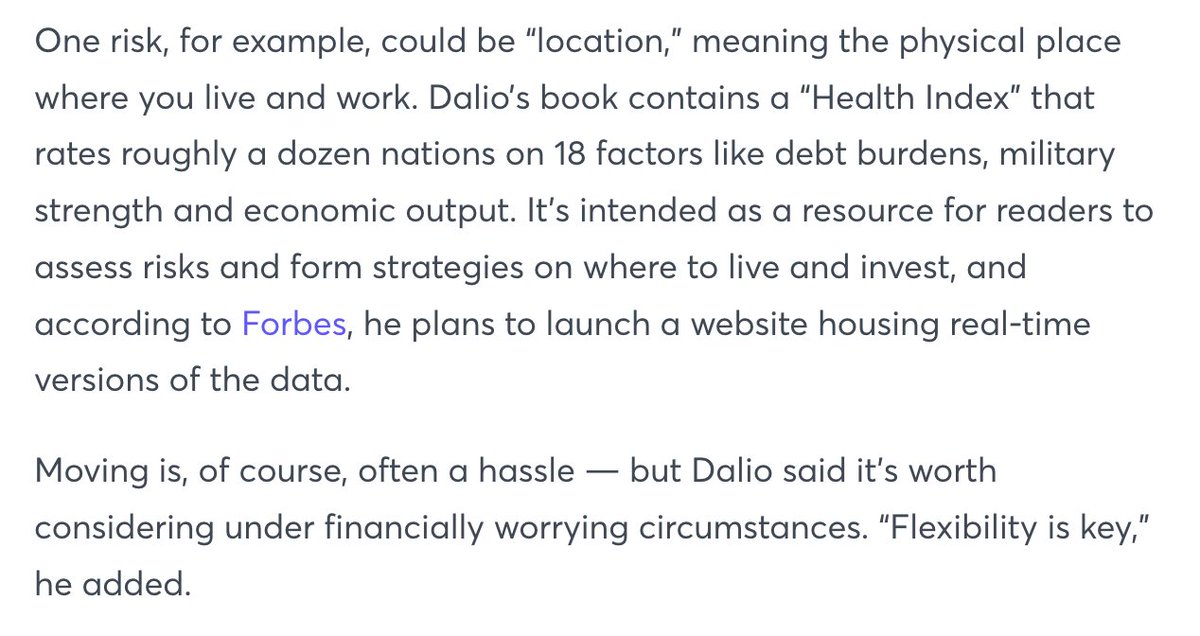
(10) In other words, what's much more important than allocation is location. Ray Dalio expressed this obliquely in one of his earlier interviews, where he said that "location" is a risk:
What Ray actually meant is: if you live in a jurisdiction that heavily depends on the dollar (which includes the entire G7), you want to get out. Because the total pauperization that follows the end of the dollar may mean that angry mobs (or government agents, or both) may come to your home, steal your assets, and perhaps rip you limb-from-limb in the process.
A cheery thought...yet also historically precedented. That's what came to Eastern Europe and Asia in the 20th century during the rise of communism. And that's what may come to North America and Western Europe after the end of Keynesianism.
Prior to such a situation, you really do not want to buy gold bricks, which you can't transport through an airport. You want to hit the bricks. You want to move faster, escape things. Get as far away from the dollar zone as you can...but physically first, rather than financially.
After all, "staying and fighting" a sovereign debt crisis caused by decades of money printing is like staying and fighting a volcanic eruption caused by decades of earth moving. You didn't cause it, and you can't stop it, but you can easily be wrecked by it. So emigrate just as the early Americans emigrated from Europe. Unless you believe the Irish Americans "betrayed" Ireland by leaving, unless you really want to spend the rest of your life paying down welfare and warfare debts you didn't incur, you should change your location out of the G7. And then do whatever allocation you like.
Or just ignore this analysis and do what you see fit. Your call, of course. If so, I really do hope my MAGA friends are right that "The Golden Age of America Begins Right Now." Because I also think we are on the verge of a type of Golden Age, and a Bitcoin Age...but in a very different way.