Creator of Sqlite on pull requests: "You say, oh, it's free. No. It's not free. What you're doing is asking me ... to maintain it for you, to to document it for you, to test it for you, to maintain it for you for the next 25 years. That's not free." Yep.
Wise words from a wiser man than me. I've told people for the past decade and I have recent posts on here saying the same: the merge button is the easy part. Its the decade+ (Richard says 25 years) that follows where you've accepted the transfer of maintenance thats hard.
Its been 10 years since the morning that @griffgreen woke me up with news of the DAO being drained
10 years since we watched what we built with @ChrJentzsch drained of all the funding it gathered, shattering our dreams & hopes
10 years since the day Ethereum changed forever
sign-in with ethereum is actually a terrible idea because it trains people to sign messages all the time & creates _signing fatigue_. what you actually want is the exact opposite. a sig should be considered _dangerous_ and treated as a _special event_. it should not be something users do casually as part of their normal workflow. if people get used to clicking "sign" everywhere, they stop paying attention & eventually sign things they do not understand (this happens every minute in this space btw). the right security model is to teach users that signing something is a _serious action_ that deserves a lot of scrutiny, and not to normalise it as just another login button. we should immediately stop doing this shit.
Ghostty is leaving GitHub. I'm GitHub user 1299, joined Feb 2008. I've visited GitHub almost every single day for over 18 years. It's never been a question for me where I'd put my projects: always GitHub. I'm super sad to say this, but its time to go. https://t.co/DQDemHdytV
🚨Official Announcement
ETCGrantsDao had officially signed the Nolympia Protocol. We firmly oppose any hard forks and any hard upgrades.
Same Old ETC!
Code is Law. Unchanged. Forever.
#Nolympia#ETC#EthereumClassic
🚨 I don't think people realize how bad things are at @aave right now.
All core markets are at 100% utilization, that includes $3 bil in USDT and $2 bil in USDC stuck!
That means you CAN'T WITHDRAW your money!
A long post on why and how we ended up here.
When the rsETH exploit happened and AAVE incurred bad debt, whales like Justin Sun, MEXC exchange, and others immediately withdrew billions from AAVE.
This instantly drained all available liquidity in key core markets like ETH, USDT, USDC and so on. Those first to withdraw got out, laggers got trapped.
Initially, the ETH market hit 100% utilization, meaning you could not withdraw your ETH from AAVE.
Worse, this also means the protocol can't process ETH liquidations should ETH price fall/crash. If you can't sell any ETH, you can't liquidate to cover debt obligations.
That means the risk of more bad debt incurred by AAVE is increasing the longer its markets remain stuck.
Nevertheless, users can still sell at a minor loss the aETHwETH tokens on Uniswap or similar aggregators. That exit door is the last one remaining for ETH depositors on AAVE.
The same cannot be said by depositors of USDT and USDC. They are stuck.
That's because AAVE lost over $6 billion in liquidity in the past 24h. As whales took out their money, USDT and USDC also hit 100% utilization.
These markets are now also stuck with money locked. Panic is spreading and desperate times call for desperate measures.
Some users decided to borrow against USDT/USDC and exit via other markets at a 10-25% loss (90-75% LTV). Basically you borrow GHO/DAI/USDe against your locked USDT/C.
But as more liquidity leaves AAVE, more markets get to 100% utilization and get locked/stuck due to low liquidity. This is quickly cascading across all available markets.
Luckily the crypto market was rather flat today so liquidation risks were marginal, but if things change there are billions in stablecoins and other assets locked on AAVE that can't process liquidations = more bad debt for AAVE.
If users or related protocols that are stuck need access to their money to prevent liquidations or other critical function, they have a huge problem on their hands.
Plus, nobody wants to deposit (or provide liquidity) in these markets now since your ETH, BTC, USDC/T could be stuck there for who know how long.
As soon as any available liquidity is made available, it is instantly taken out by bots fighting to get out. As I wrote this I saw 250k in liquidity on USDC vanish in seconds.
Then there is the bad debt question.
There's over $200 mil in bad debt incurred by AAVE via rsETH that's like a hot potato. Nobody knows who will eventually pay this bill.
If you didn't remove your assets from AAVE, you risk receiving at least part of that bill in some form. Not having access to your money is part of that risk too.
Contagion is also extremely high.
Many protocols and apps rely on AAVE for their earn mechanics. These protocols and their users are stuck too and may be forced to incur bad debt with no fault of their own.
October 10th was a CEX driven crash, this is a DeFi risk mitigation failure of epic proportions.
AAVE should have never onboarded rsETH as a collateral asset, at least not to the size of hundreds of millions that allowed the hacker to walk away (i.e. borrow) over $200M in ETH after posting fake collateral.
Rumors on X are saying rsETH was onboarded by AAVE due to a conflict of interest (lobbying) by a given service provider. If true, this is a major failure of its governance structure (nothing new).
The folks at @KelpDAO who manage rsETH also have a tough decision to make on who will actually pay for the $200M exploit. AAVE users? L2 rsETH users? Everyone affected gets a haircut to account for the loss?
The AAVE team and its founder, Stani, have been quiet for over 20h since the exploit after initially announcing the rsETH market freeze.
They have a pretty big problem on their hands since the whole protocol is at risk right now. Trust is already lost as AAVE is bleeding billions in TVL to the level of hitting 100% utilization on all core markets.
Maybe some key actors in the space will step in to provide liquidity to stabilize the markets on AAVE before this gets even worse.
I got lucky to get out of AAVE early when I first saw this. I also removed all assets from DeFi and will not touch any protocol in the next few weeks. Too much risk for a few percentage points in yield.
If you found this informative, like, share, and follow @duonine
We added a Development page showing what we're building: execution clients (Nethermind plugin, Besu plugin, a new rebase-friendly go-ethereum fork), research experiments, and infrastructure.
Each project has status, repo links, and references to upstream PRs.
https://t.co/zyfMsdOmCa
Today is a monumentous day for quantum computing and cryptography. Two breakthrough papers just landed (links in next tweet). Both papers improve Shor's algorithm, infamous for cracking RSA and elliptic curve cryptography. The two results compound, optimising separate layers of the quantum stack. The results are shocking. I expect a narrative shift and a further R&D boost toward post-quantum cryptography.
The first paper is by Google Quantum AI. They tackle the (logical) Shor algorithm, tailoring it to crack Bitcoin and Ethereum signatures. The algorithm runs on ~1K logical qubits for the 256-bit elliptic curve secp256k1. Due to the low circuit depth, a fast superconducting computer would recover private keys in minutes. I'm grateful to have joined as a late paper co-author, in large part for the chance to interact with experts and the alpha gleaned from internal discussions.
The second paper is by a stealthy startup called Oratomic, with ex-Google and prominent Caltech faculty. Their starting point is Google's improvements to the logical quantum circuit. They then apply improvements at the physical layer, with tricks specific to neutral atom quantum computers. The result estimates that 26,000 atomic qubits are sufficient to break 256-bit elliptic curve signatures. This would be roughly a 40x improvement in physical qubit count over previous state-of-the-art. On the flip side, a single Shor run would take ~10 days due to the relatively slow speed of neutral atoms.
Below are my key takeaways. As a disclaimer, I am not a quantum expert. Time is needed for the results to be properly vetted. Based on my interactions with the team, I have faith the Google Quantum AI results are conservative. The Oratomic paper is much harder for me to assess, especially because of the use of more exotic qLDPC codes. I will take it with a grain of salt until the dust settles.
→ q-day: My confidence in q-day by 2032 has shot up significantly. IMO there's at least a 10% chance that by 2032 a quantum computer recovers a secp256k1 ECDSA private key from an exposed public key. While a cryptographically-relevant quantum computer (CRQC) before 2030 still feels unlikely, now is undoubtedly the time to start preparing.
→ censorship: The Google paper uses a zero-knowledge (ZK) proof to demonstrate the algorithm's existence without leaking actual optimisations. From now on, assume state-of-the-art algorithms will be censored. There may be self-censorship for moral or commercial reasons, or because of government pressure. A blackout in academic publications would be a tell-tale sign.
→ cracking time: A superconducting quantum computer, the type Google is building, could crack keys in minutes. This is because the optimised quantum circuit is just 100M Toffoli gates, which is surprisingly shallow. (Toffoli gates are hard because they require production of so-called "magic states".) Toffoli gates would consume ~10 microseconds on a superconducting platform, totalling ~1,000 sec of Shor runtime.
→ latency optimisations: Two latency optimisations bring key cracking time to single-digit minutes. The first parallelises computation across quantum devices. The second involves feeding the pubkey to the quantum computer mid-flight, after a generic setup phase.
→ fast- and slow-clock: At first approximation there are two families of quantum computers. The fast-clock flavour, which includes superconducting and photonic architectures, runs at roughly 100 kHz. The slow-clock flavour, which includes trapped ion and neutral atom architectures, runs roughly 1,000x slower (~100 Hz, or ~1 week to crack a single key).
→ qubit count: The size-optimised variant of the algorithm runs on 1,200 logical qubits. On a superconducting computer with surface code error correction that's roughly 500K physical qubits, a 400:1 physical-to-logical ratio. The surface code is conservative, assuming only four-way nearest-neighbour grid connectivity. It was demonstrated last year by Google on a real quantum computer.
→ future gains: Low-hanging fruit is still being picked, with at least one of the Google optimisations resulting from a surprisingly simple observation. Interestingly, AI was not (yet!) tasked to find optimisations. This was also the first time authors such as Craig Gidney attacked elliptic curves (as opposed to RSA). Shor logical qubit count could plausibly go under 1K soonish.
→ error correction: The physical-to-logical ratio for superconducting computers could go under 100:1. For superconducting computers that would be mean ~100K physical qubits for a CRQC, two orders of magnitude away from state of the art. Neutral atoms quantum computers are amenable to error correcting codes other than the surface code. While much slower to run, they can bring down the physical to logical qubit ratio closer to 10:1.
→ Bitcoin PoW: Commercially-viable Bitcoin PoW via Grover's algorithm is not happening any time soon. We're talking decades, possibly centuries away. This observation should help focus the discussion on ECDSA and Schnorr. (Side note: as unofficial Bitcoin security researcher, I still believe Bitcoin PoW is cooked due to the dwindling security budget.)
→ team quality: The folks at Google Quantum AI are the real deal. Craig Gidney (@CraigGidney) is arguably the world's top quantum circuit optimisooor. Just last year he squeezed 10x out of Shor for RSA, bringing the physical qubit count down from 10M to 1M. Special thanks to the Google team for patiently answering all my newb questions with detailed, fact-based answers. I was expecting some hype, but found none.
For absolutely no reason at all I would like to publicly apologize to all my Claude coding agents for all the mean things I may have said in the past six months.
I love you Claude.
USDT announced that it will undergo a full audit by the Big Four firms, potentially solving the mystery of its "100% reserves" !
Stablecoin regulation is accelerating, making compliance and transparency the new industry standard.
This presents a double-edged sword for ETC:
✅ Opportunity: Trusted USDT may bring increased liquidity, boosting ETC’s DeFi and trading pairs.
⚠️ Challenge: Under tighter regulations, funds may shift toward mainstream compliant chains, requiring ETC to accelerate its ecosystem development.
Challenges and opportunities coexist! What do you think? 🤔
#USDT #Tether #EthereumClassic #ETC #CryptoRegulation
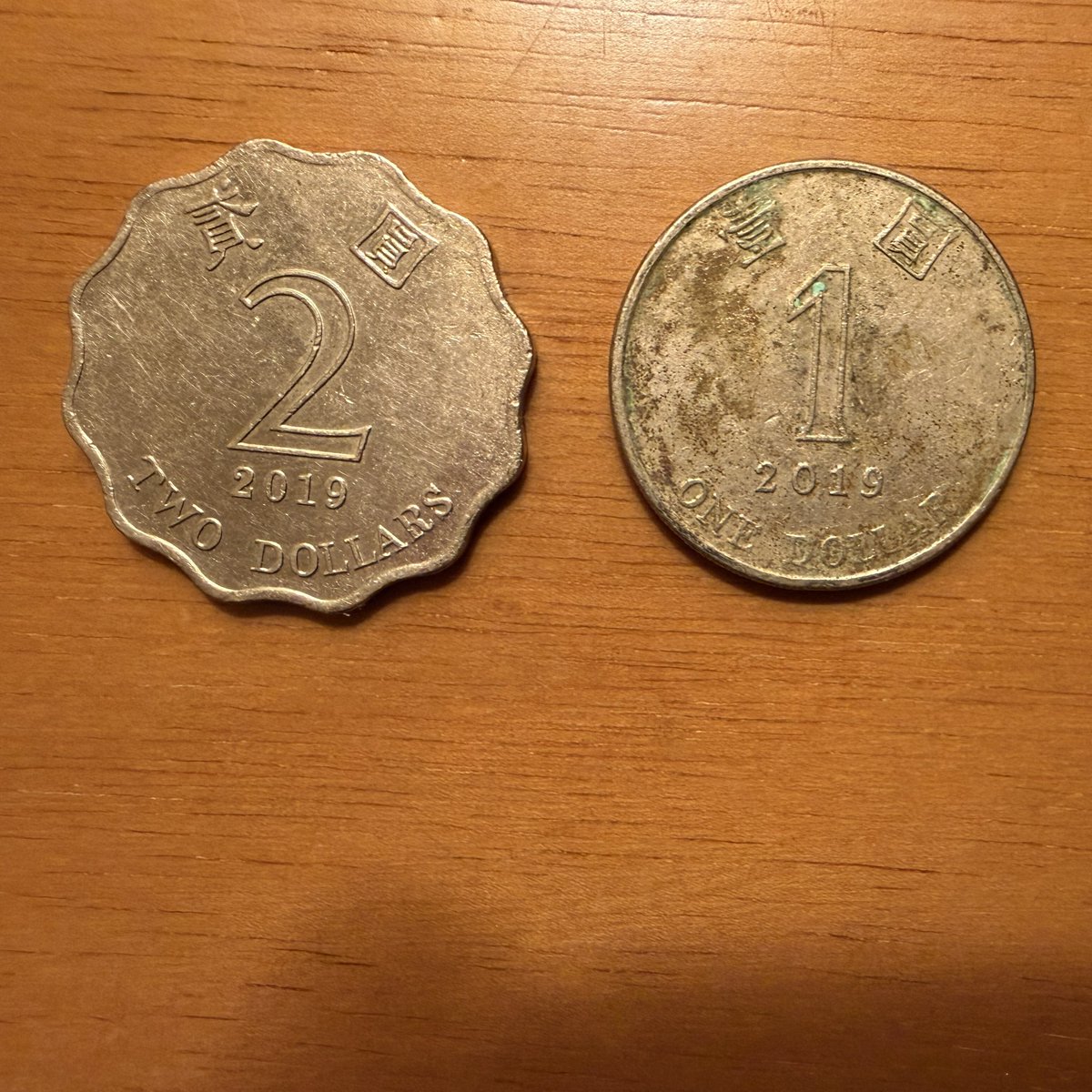
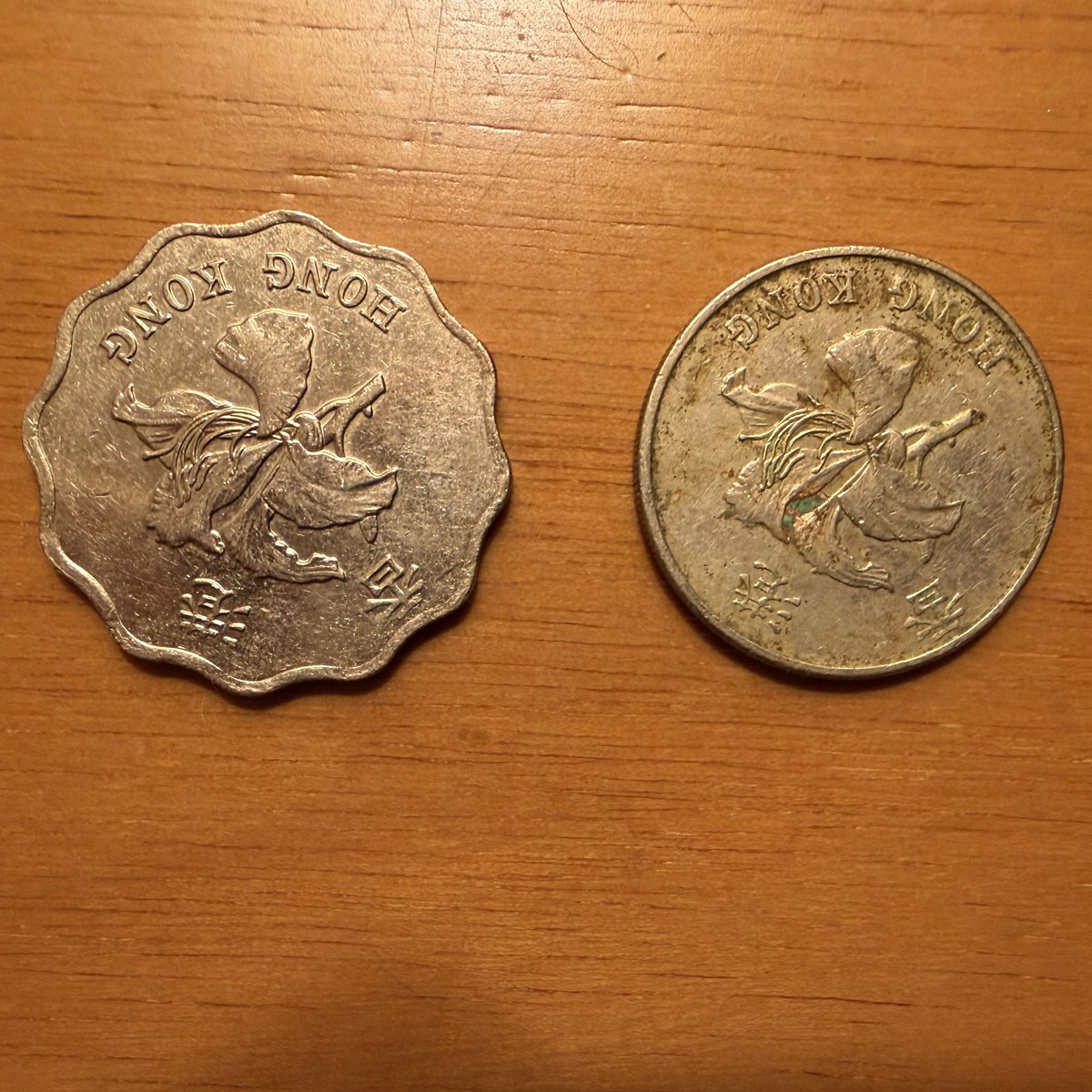
@mesch Hola! Entiendo que coleccionás monedas y tengo estas de Hong Kong dando vueltas x casa x si te interesan. Si las querés te las puedo mandar, realmente no sabía qué hacer con ellas.
p.d.: no se por qué la palabra Hong Kong aparece espejada, pero no es algo de la foto en sí