🚨 Si, todos están insultando a Beccacece, pero este es el máximo responsable de esta vergüenza y de absolutamente todo.
Beccacece no se iba a ir solo como si lo hizo Sánchez Bass, sencillamente porque es un tipo sabido, oportunista y no va a renunciar a ningún dinero.
El único culpable de esta vergüenza que Ecuador ha hecho a nivel internacional tiene nombre y se llama Francisco Egas. Este sin vergüenza tiene que dar un paso al costado si es que tiene algo de dignidad. Beccacece es un títere de este parásito que tenemos en la FEF.
Un periodista británico que visitó el CECOT sintió lástima por las condiciones en las que viven los presos... hasta que vio un ejemplo de lo que hicieron.
Y eso no representa ni el 0.00001% del sufrimiento, el miedo y el dolor que causaron a nuestro pueblo durante décadas.
El "Engaño" del Promedio: Por qué $NU y $MELI son máquinas de tiempo. Encima hoy reporta $NU AH. Parece joda el timing.
Hoy en clase vamos a analizar por qué mirar el ingreso promedio (ARPAC) puede darte una visión totalmente distorsionada de la realidad. El secreto para entender a los gigantes de Latam no está en el promedio, sino en la maduración de cohortes.
El caso de $NU :Muchos inversores ven el promedio de $11 y asumen que eso vale cada cliente. Gran error.
Como muestra el slide:
Un cliente nuevo (Año 1) genera solo $4.
Un cliente maduro (Año 5+) genera hasta $25.
Si solo miras el promedio, estás a ciegas. No puedes ver si el negocio está mejorando o si los clientes que captaste en 2024 están subiendo por la rampa más rápido que los de 2021. La clave es la velocidad de la rampa, no la foto de hoy.
¿Cómo aplica esto a Mercado Libre ($MELI)? $MELI es el master del "Land and Expand":
Land: Te atraen con el Marketplace (compras un producto, margen bajo).
Expand: Una vez dentro, te convierten en usuario de Mercado Pago y, finalmente, de Mercado Crédito.
Al igual que en $NU, la rentabilidad de $MELI no es lineal. Un usuario que usa el ecosistema completo es exponencialmente más valioso que uno nuevo. Cuando los cohortes más jóvenes (como México o Chile) alcancen la madurez que ya tiene Brasil, la rentabilidad total va a explotar.
Conclusión: El promedio de $11 es una trampa que infla el flujo de caja del primer año y arruina cualquier modelo de valoración (LTV). No hay que inviertir en promedios; hay que invertir en empresas que saben mover a sus clientes hacia arriba en la curva de valor.
Abrazo buen dia
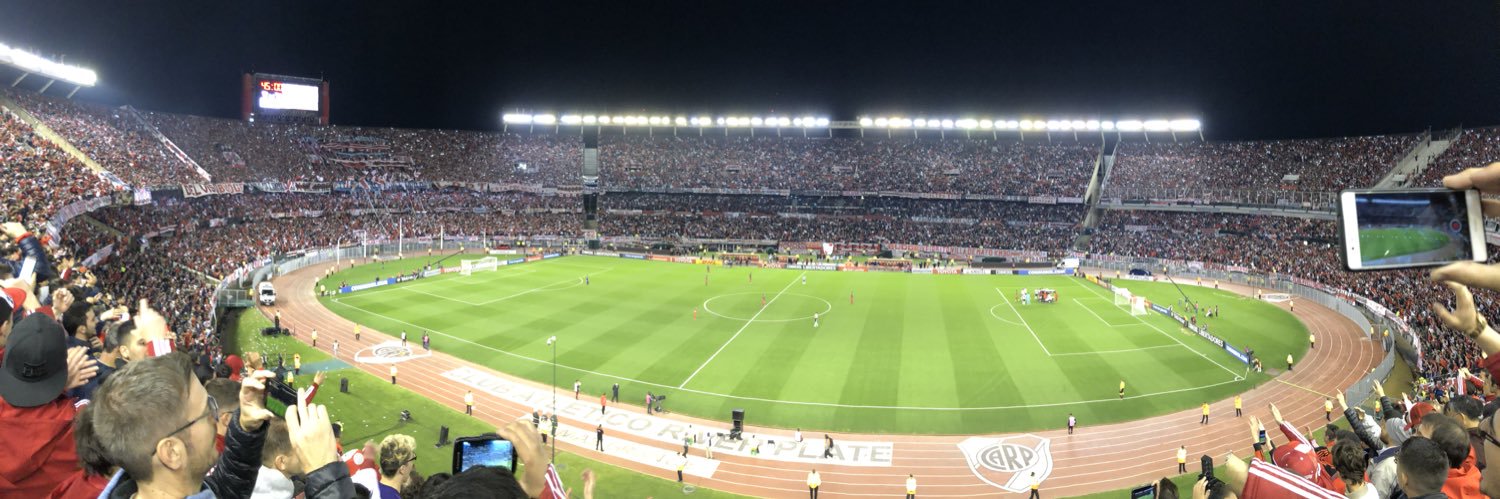
Borró de la cancha a Central y a Di María, se repuso al penal de Montiel y al dolor por Driussi, Aníbal y Fausto fueron patrones, Colidio la dio vuelta, terminó con 8 del club, la gente armó la fiesta y los jugadores dejaron la sangre.
River, el famoso River Plate, a la final.
Elon Musk avait dit un truc qui m'avait marqué sur l'allocation de ressources. En substance : passé un certain niveau de richesse, l'argent n'est plus de la consommation, c'est de l'allocation de capital.
Cette phrase change tout.
L'économie, dans le fond, c'est juste un problème d'allocation. Tu as des ressources finies et des usages infinis. Qui décide où va quoi ?
Imagine une cour de récré. 100 enfants, des paquets de cartes Pokémon distribués au hasard. Tu laisses faire. Très vite, un ordre émerge. Les bons joueurs accumulent les cartes rares, les collectionneurs trient, les négociateurs trouvent des deals. Personne n'a planifié. Et pourtant chaque carte finit dans les mains de celui qui en tire le plus de valeur. Le système maximise le bonheur total de la cour. C'est ça, la main invisible.
Maintenant fais entrer la maîtresse. Elle trouve ça injuste. Léo a 50 cartes, Tom en a 3. Elle confisque, redistribue, impose l'égalité. Trois effets immédiats. Les bons joueurs arrêtent de jouer, à quoi bon. Les mauvais n'ont plus de raison de progresser, ils auront leur part. Les échanges s'effondrent. La cour est égale, et morte. Elle a maximisé l'égalité, elle a détruit le bonheur.
Le problème de la maîtresse, c'est qu'elle ne peut pas avoir l'information que la cour avait collectivement. C'est le problème du calcul économique de Mises, formulé en 1920. L'URSS a essayé de le résoudre pendant 70 ans avec le Gosplan. Résultat : pénuries, queues, effondrement. Pas parce que les Soviétiques étaient bêtes, parce que le problème est mathématiquement insoluble en mode centralisé.
Quand Musk a 200 milliards, il ne les consomme pas, il les alloue. SpaceX, Starlink, Neuralink, xAI. Chaque dollar est un pari sur le futur. Et lui a un track record. PayPal, Tesla, SpaceX. Il a démontré qu'il sait identifier des problèmes immenses et y allouer des ressources avec un rendement spectaculaire.
L'État aussi a un track record. Hôpitaux qui s'effondrent, éducation qui décline, dette qui explose, services publics qui se dégradent malgré des budgets en hausse constante. Le marché identifie les bons allocateurs, la politique identifie les bons communicants.
Le profit n'est pas une finalité, c'est un signal. Il dit : tu as alloué des ressources rares vers un usage que les gens valorisent suffisamment pour payer. Plus le profit est gros, plus la création de valeur est grande. Quand Starlink est rentable, ça veut dire que des millions de gens dans des zones rurales ont enfin internet. Quand un ministère est en déficit, ça veut dire qu'il consomme plus qu'il ne produit. L'un crée, l'autre détruit, et on appelle ça redistribution.
Dans nos sociétés il y a deux catégories d'acteurs. Les entrepreneurs et les bureaucrates. L'entrepreneur prend un risque personnel pour identifier un problème, mobiliser des ressources, créer une solution. S'il se trompe il perd. S'il a raison, ses clients gagnent, ses employés gagnent, ses fournisseurs gagnent, l'État collecte des impôts. Il est la cellule de base du progrès humain.
Le bureaucrate ne prend aucun risque personnel. Son salaire est garanti. Au mieux il maintient une rente existante. Au pire il la détruit par excès de réglementation, mauvaise allocation forcée, incitations perverses qui découragent ceux qui produisent. Mais dans aucun cas il ne crée.
Regarde les 50 dernières années. iPhone, internet civil, SpaceX, Tesla, Google, Amazon, Stripe, mRNA, ChatGPT. Toutes des inventions privées, portées par des entrepreneurs, financées par du capital risque. Pas un seul ministère n'a inventé quoi que ce soit qui ait changé ta vie au quotidien.
La France est devenue le laboratoire mondial de la dérive bureaucratique. 57% du PIB en dépenses publiques, record absolu. Une administration tentaculaire, une fiscalité qui pénalise la création de richesse. Résultat : décrochage face aux États-Unis, à l'Allemagne, à la Suisse. Fuite des cerveaux. Désindustrialisation. Dette qui explose.
Et le pire c'est que la mauvaise allocation s'auto-renforce. Plus l'État prélève, moins les entrepreneurs créent. Moins ils créent, moins il y a de base fiscale. Plus l'État s'endette et taxe. Boucle de rétroaction négative parfaite. La maîtresse pense qu'elle aide, et chaque année la cour produit moins.
Dans nos sociétés, ce sont les entrepreneurs, toujours, qui font avancer la civilisation. Les bureaucrates au mieux maintiennent une rente, au pire la détruisent. Aucune société n'a jamais progressé en taxant ses créateurs pour subventionner ses gestionnaires.
La question n'est jamais qui a combien. C'est qui alloue le mieux la prochaine unité de ressource pour maximiser le futur de l'humanité. La réponse depuis 200 ans n'a jamais changé. Ce ne sont pas les fonctionnaires.
JUST IN: Iran just pulled a thirty-year-old empty supertanker out of retirement and began towing it toward Kharg Island. She is moving so slowly that a voyage that should take a day and a half is taking four days.
Her name is NASHA. IMO 9079107. Built 1996. A two-million-barrel very large crude carrier that has been anchored empty off Kharg for years. TankerTrackers confirmed her reactivation yesterday. Gulf News, Iran International, and Fox News all picked it up within hours.
The reason she is moving at all is that Iran is running out of places to put the oil.
Kharg Island handles roughly ninety percent of Iran’s crude exports. Its onshore tanks had about thirteen million barrels of spare capacity when the US blockade began on April 13. Net inflow since has been running at one million to one point one million barrels per day because exports have collapsed to single digits of vessels while upstream production continues. The math is mechanical. Roughly twelve days of spare capacity. The calendar says that window closes this week.
NASHA is not a strategy. NASHA is what you do when you have run out of strategy.
A two-million-barrel floating storage vessel buys Iran approximately forty-eight hours of continued upstream production. After that, either the wells get shut in or the crude goes somewhere else. The parallel options being pursued, ship-to-ship transfers in the Riau Archipelago, AIS-dark transits, sanctioned VLCCs returning home through the blockade line, are not enough. Lloyd’s List Intelligence has tracked roughly twenty-six Iran-linked vessels evading since April 13. That cannot absorb a million barrels a day.
The wells will shut in. The question is which wells, for how long, and whether they come back.
The Asmari and Bangestan carbonate formations that sit under most of Iran’s giant southern fields are high-permeability, strong-water-drive systems. The Society of Petroleum Engineers literature on this specific reservoir class is unambiguous. Remove continuous pressure support for a prolonged shut-in and four damage mechanisms activate simultaneously: water coning upward through the fracture network, fines migration into pore throats, formation compaction under increased effective stress, and clay swelling under altered salinity and pH. The damage is not theoretical. It is documented. And it is measured in months to years of recoverable production capacity, not days.
Maleki and Gordon estimate three hundred to five hundred thousand barrels per day of permanent capacity loss if the current shut-in trajectory completes. That is a directional estimate, not a lab measurement, but the direction is not in dispute.
NASHA is the archaeological signature of the clock.
When a country with the world’s third-largest oil reserves reactivates a thirty-year-old retired tanker to float on top of its main export terminal and buy forty-eight hours of time, the institutional systems designed to absorb shocks have already failed. The insurance market, the shadow fleet, the diplomatic channels, and the reservoir physics are all converging on the same conclusion at different speeds, and NASHA is the one that shows up on satellite.
The market is pricing a ceasefire.
The Pentagon is pricing six months of mine clearance.
Iran just pulled a corpse out of the Persian Gulf and asked it to buy two days.
That is not how a reversible crisis looks. That is how a regime tells you, operationally, that it has run out of options between the blockade and the shut-in. The reservoir does not negotiate.
https://t.co/vLQh7ydMdk
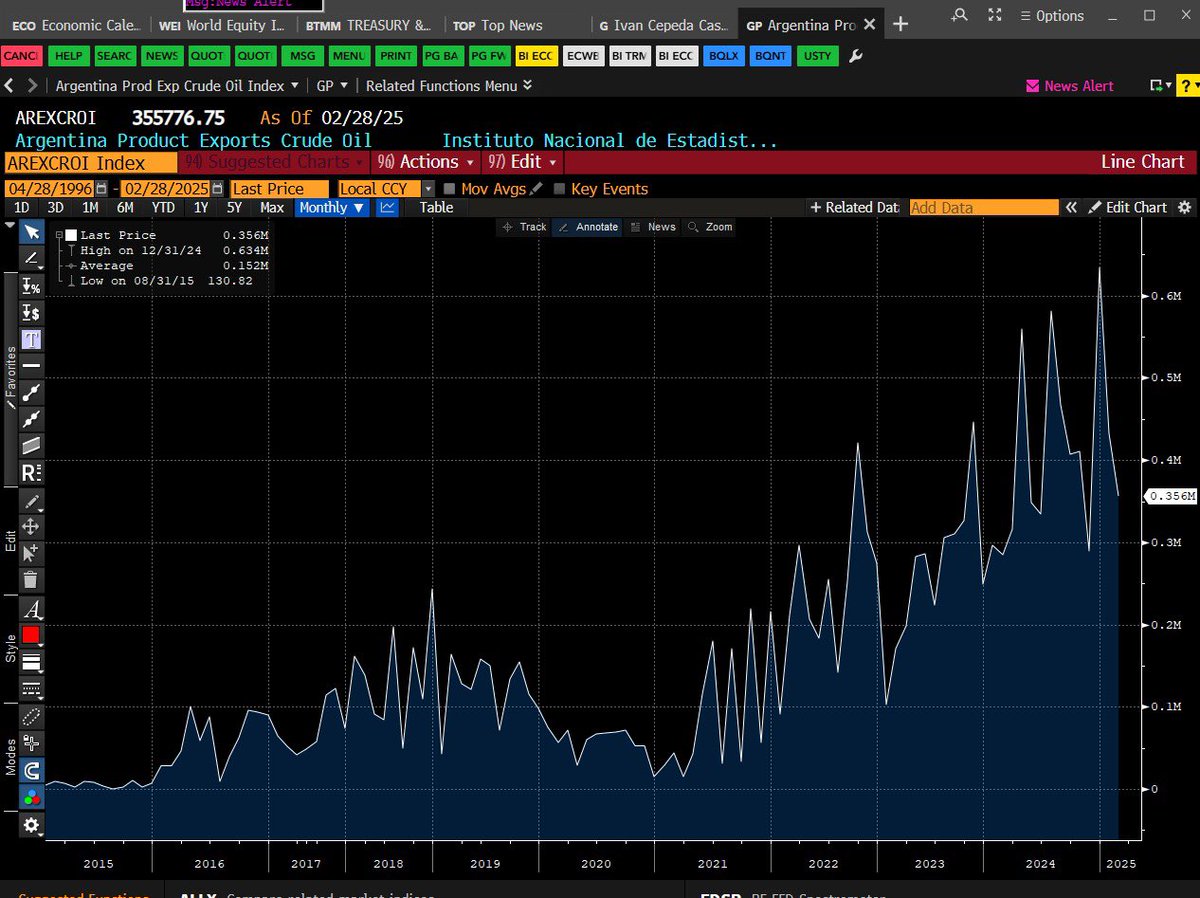
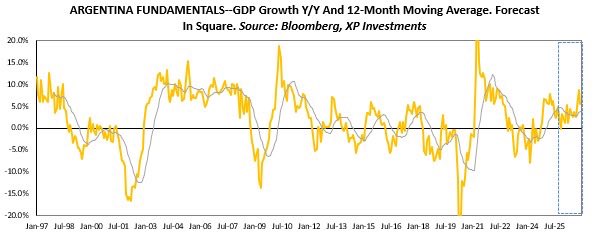
🇦🇷 Llevo más de 25 años trabajando como analista macroeconómico en WS y puedo decir, sin riesgo relevante de equivocarme, que nunca había visto un cambio de fundamentales macroeconómicos tan impresionante (para bien), y tan expedito, como el que hemos visto bajo la presidencia de @JMilei. Y el mercado, ente que NO opera bajo prejuicios, lo reconoce perfectamente (riesgo país hoy cercano a 500bps, comparado con los 3,000bps cuando Fernández era presidente). Un par de datos: bajo @JMilei (1) el déficit fiscal pasó de -4.5% a un superávit del 0.5% del PIB, implicando un ajuste fiscal del 5% del PIB; (2) la pobreza pasó de niveles superiores al 50% bajo el #Kirchnerismo a 27% de la población en este momento; (3) las reservas internacionales pasaron de USD 23,000 millones cuando asumió Milei a USD 45,700 hoy; (4) el crecimiento económico pasó de -1.8% año/año en el 2023 a +4.3% año/año en el 2025; (5) la inflación pasó de 221% año/año a 32.6% en este momento; y (6) quizás uno de los logros más impresionantes, el balance comercial pasó de USD -6,800 millones en el 2023 a un SUPERÁVIT de USD 11,319 millones en el 2025, y según mis modelos, el superávit comercial va a alcanzar USD 27,000 millones en el 2026 (4% del PIB), con las exportaciones totales llegando a USD 106,000 millones, el DOBLE del valor de las exportaciones totales que existían bajo los gobiernos kirchneristas. Parte fundamental de este cambio en el balance externo tiene que ver con el hecho de que hoy Argentina está exportando un promedio de 400 mil barriles de petróleo diarios, frente a 15 mil barriles diarios en marzo de 2021. Lo que Milei ha logrado en 2 años y medio pasará a los Guinness récords. Sería una tragedia inmensa que el pueblo argentino decidiera tirar todos estos logros por la ventana devolviéndole el poder al chavismo después del 2027. Fin #QVLLC #VamosArgentina
#إيران
📌عندما قال ترامب سأعيد إيران الى العصر الحجري لم يكن يقصد تدمير إيران وهدم بيوت الناس..
كان يقصد الذي فعله اليوم
📌تُنتج إيران 4 مليون برميل نفط يوميًا
سعة التخزين لديها 90 مليون برميل والباقي يتم تصدير معظمه إلى الصين
مخازن النفط داخل إيران ممتلئة والحصار يمنع التصدير،
بدأت الكارثة.. لماذا..؟!
📌ترامب أرغم إيران على وقف ضخ النفط من الآبار
هنا دخلت إيران العصر الحجري..
لماذا..؟!
📌إغلاق البئر يكسر توازن الضغط، مما يسمح بزيادة دخول الماء والغاز، وتكوّن الرواسب الشمعية (البارافين) يتسبب بإنسداد مواسير الضخ مما يجعل إعادة تشغيله شبه مستحيلة
📌4 أيام ستتوقف إيران عن ضخ النفط، صاغرة
4 أيام مئات الآبار ستتلف
4 أيام ستدخل إيران الشلل التام
4 أيام ستصرخ الصين
والأهم والأخطر والأذكى وليست صدفة أبداً، 4 أيام تنتهي مهلة الهدنة،
(إنها أميركا يا سادة)
📌بعدها تنقض أميركا وإسرائيل على إيران المشلولة والمتهالكة
ترامب يحارب الصين وليس إيران فقط
📌عرفتوا ليش ترامب فرض الحصار وقال لإيران تعالي نتفاوض 14 يوم فقط
عرفتوا ليش الحرس الثوري يستميت لتهريب باخرة نفط
عرفتوا ليش دخلت الأن الحاملة "فورد" البحر الأحمر
عرفتوا ليش ترامب استدعى الحاملة "بوش" وتصل ايضا بعد 4 أيام
والعرقجي فرحان يفاوض ترامب
قال🤦♂️
اسقاط الدولة والحكومات ليس فقط قاذفات وصواريخ
الحروب لها أربابها
📌عندما تُخطط الأدمغة
Anthropic paga más de 750.000 $ al año para entender los LLMs.
Stanford ha publicado una conferencia de 2 horas que cubre el 80% gratis.
Puede ser lo más rentable que hagas este mes.
(Guárdalo, te servirá)
Because we get asked a lot.
The Technological Republic, in brief.
1. Silicon Valley owes a moral debt to the country that made its rise possible. The engineering elite of Silicon Valley has an affirmative obligation to participate in the defense of the nation.
2. We must rebel against the tyranny of the apps. Is the iPhone our greatest creative if not crowning achievement as a civilization? The object has changed our lives, but it may also now be limiting and constraining our sense of the possible.
3. Free email is not enough. The decadence of a culture or civilization, and indeed its ruling class, will be forgiven only if that culture is capable of delivering economic growth and security for the public.
4. The limits of soft power, of soaring rhetoric alone, have been exposed. The ability of free and democratic societies to prevail requires something more than moral appeal. It requires hard power, and hard power in this century will be built on software.
5. The question is not whether A.I. weapons will be built; it is who will build them and for what purpose. Our adversaries will not pause to indulge in theatrical debates about the merits of developing technologies with critical military and national security applications. They will proceed.
6. National service should be a universal duty. We should, as a society, seriously consider moving away from an all-volunteer force and only fight the next war if everyone shares in the risk and the cost.
7. If a U.S. Marine asks for a better rifle, we should build it; and the same goes for software. We should as a country be capable of continuing a debate about the appropriateness of military action abroad while remaining unflinching in our commitment to those we have asked to step into harm’s way.
8. Public servants need not be our priests. Any business that compensated its employees in the way that the federal government compensates public servants would struggle to survive.
9. We should show far more grace towards those who have subjected themselves to public life. The eradication of any space for forgiveness—a jettisoning of any tolerance for the complexities and contradictions of the human psyche—may leave us with a cast of characters at the helm we will grow to regret.
10. The psychologization of modern politics is leading us astray. Those who look to the political arena to nourish their soul and sense of self, who rely too heavily on their internal life finding expression in people they may never meet, will be left disappointed.
11. Our society has grown too eager to hasten, and is often gleeful at, the demise of its enemies. The vanquishing of an opponent is a moment to pause, not rejoice.
12. The atomic age is ending. One age of deterrence, the atomic age, is ending, and a new era of deterrence built on A.I. is set to begin.
13. No other country in the history of the world has advanced progressive values more than this one. The United States is far from perfect. But it is easy to forget how much more opportunity exists in this country for those who are not hereditary elites than in any other nation on the planet.
14. American power has made possible an extraordinarily long peace. Too many have forgotten or perhaps take for granted that nearly a century of some version of peace has prevailed in the world without a great power military conflict. At least three generations — billions of people and their children and now grandchildren — have never known a world war.
15. The postwar neutering of Germany and Japan must be undone. The defanging of Germany was an overcorrection for which Europe is now paying a heavy price. A similar and highly theatrical commitment to Japanese pacifism will, if maintained, also threaten to shift the balance of power in Asia.
16. We should applaud those who attempt to build where the market has failed to act. The culture almost snickers at Musk’s interest in grand narrative, as if billionaires ought to simply stay in their lane of enriching themselves . . . . Any curiosity or genuine interest in the value of what he has created is essentially dismissed, or perhaps lurks from beneath a thinly veiled scorn.
17. Silicon Valley must play a role in addressing violent crime. Many politicians across the United States have essentially shrugged when it comes to violent crime, abandoning any serious efforts to address the problem or take on any risk with their constituencies or donors in coming up with solutions and experiments in what should be a desperate bid to save lives.
18. The ruthless exposure of the private lives of public figures drives far too much talent away from government service. The public arena—and the shallow and petty assaults against those who dare to do something other than enrich themselves—has become so unforgiving that the republic is left with a significant roster of ineffectual, empty vessels whose ambition one would forgive if there were any genuine belief structure lurking within.
19. The caution in public life that we unwittingly encourage is corrosive. Those who say nothing wrong often say nothing much at all.
20. The pervasive intolerance of religious belief in certain circles must be resisted. The elite’s intolerance of religious belief is perhaps one of the most telling signs that its political project constitutes a less open intellectual movement than many within it would claim.
21. Some cultures have produced vital advances; others remain dysfunctional and regressive. All cultures are now equal. Criticism and value judgments are forbidden. Yet this new dogma glosses over the fact that certain cultures and indeed subcultures . . . have produced wonders. Others have proven middling, and worse, regressive and harmful.
22. We must resist the shallow temptation of a vacant and hollow pluralism. We, in America and more broadly the West, have for the past half century resisted defining national cultures in the name of inclusivity. But inclusion into what?
Excerpts from the #1 New York Times Bestseller The Technological Republic: Hard Power, Soft Belief, and the Future of the West, by Alexander C. Karp & Nicholas W. Zamiska
https://t.co/8igjazz1On
Solo se necesita voluntad y un par de huevos para combatir a toda la escoria de la sociedad.
Ojalá hubiesen más políticos así en la región. Con aciertos y con errores, pero con voluntad de hacer los cambios que se necesitan.
El Salvador es un país totalmente bullish.
🛑ماذا يريد الرئيس ترمب؟ (أدناه بناء على تصريحاته)
🔰يريد أن يعيد صناعة الرقائق الإلكترونية وأشباه الموصلات للولايات المتحدة بدلا من إنتاجها في آسيا
🔰 يريد أن يبيع منتجات زراعية أميركية للهند، وهم أمر رفضه الهنود تمام.
🔰 يريد أن تقوم الشركات الآسيوية بتوقيع عقود غاز مسال طويلة المدة مع الشركات الأميركية وشراء المزيد من الغاز المسال الأميركي.
🔰يريد أن تقوم الدول الآسيوية بشراء المزيد من النفط الأميركي.
(أدناه بناء على استراتيجة الأمن القومي التي نشرت في شهر نوفمبر الماضي)
🔰الهيمنة على العالم تتم عبر الذكاء الاصطناعي ووفرة إمدادات الطاقة، (ولكن لاذكاء صناعي بدون طاقة)
🔰الهيمنة على العالم تتطلب أن تكون الطاقة رخيصة لشركات الذكاء الاصطناعي الأميركية ومرتفعة على الدول المنافسة.
🔸ماسبق يتطلب السيطرة على كل المضائق المائية. تمت السيطرة على قناة بنما، والبحر الأحمر بطرفيه، والآن مضيق هرمز للتحكم بتدفق وتكاليف مصادر الطاقة للدول المنافسة. والمتبقي الممر الشمالي القريب من القطب، وهذا يتطلب السيطرة على جرينلاند.
هل حقق ترمب الأهداف أعلاه؟ حققها كلها:
🪶وقف تصدير "الهليوم" من الخليج ضرب صناعة الشرائح الإلكترونية وأشباه الموصلات الآسيوية. الولايات المتحدة هي أكبر منتج للهليوم في العالم!
🪶وقف تصدير "الأسمدة" للهند، يضرب القطاع الزارعي في الهند. ولكن الأمر أكبر: صناعة الأسمدة داخل الهند تعتمد على الغاز والغازات السائلة من الخليج. هذه ضربت أيضا. هذا سيعطي ترمب فرصة لتحقيق هدف إجبار الهند على شراء المنتجات الزراعية الأميركية.
🪶وقف صادرات "الميثانول" من الخليج ضرب عددا من الصناعات في الصين وكوريا الجنوبية واليابان.
🪶اتضح الآن لكل الشركات الآسيوية ان المخاطرة على الاعتماد على "النفط والغاز المسال" من الخليج عالية، ومن ثم فإن التنويع يتطلب زيادة الاعتماد على النفط والغاز المسال الأميركيين. الولايات المتحدة هي أكبر منتج للنفط والغاز المسال في العالم.
🪶الآن اتضح أن ماحصل في فنزويلا وتكديس النفط الفنزويلي في المواني الأميركية كان للتعويض عن النفط العراقي الذي لن يأتي للولايات المتحدة بسبب إغلاق مضيق هرمز! كنت غبيا عندما اعتقدت أن ترمب وبيوت التجارة العالمية التي باعها النفط الفنزويلي يجدون صعوبة في تسويقه. إضافة إلى ذلك، هذه الشركات تبيعه الآن بضعف سعر الشراء!
🪶من خلال تقديم التأمين للسفن ومرافقة البحرية الأميركية لها في المضيق، هذا يعني أن ترمب أحتل المضيق بشكل غير مباشر وأصبح يتحكم بتدفق الطاقة للصين وغيرها، وتكاليف التأمين والحماية سترفع تكاليف النفط والغاز المسال المصدرين من الخليج. بعبارة أخرى، الهدف هو رفع التكلفة.
باختصار، ترمب حقق كل أهدافه باستخدام إيران كحجة، لهذا فإنه يتوقع أن تنتهي الحرب مع بقاء النظام الإيراني!
Here is a summary of Tesla’s Q4 2025 Earnings Call, if you missed it:
• Tesla is officially ending production of the Model S/X in lieu of an autonomous future. Tesla will replace the production space with Optimus lines.
• Elon confirms Robotaxis in Austin do not have a chase car as of yesterday.
• Tesla expects 2026 Capex to be in excess of $20 Billion.
• Tesla expects to have autonomous vehicles in 25-50% of the US by the end of 2026 (PRP)
• Tesla expects its Robotaxi Service to be in dozens of cities by the end of 2026.
• Elon says Tesla will be a big manufacturer of Solar Cells. Confirms 100GW/yr production.
• Tesla now has more than 500 Robotaxis across Austin, and the Bay Area.
• The number of Robotaxis will roughly double each month.
• Elon Musk says all cars Tesla makes in the future will be fully autonomous, expect the Next-Gen Roadster.
• Optimus Gen 3 will be unveiled in a few months. “Long term, Optimus will have a significant impact on the US G.D.P.”
• Elon is confident Tesla will reach 1M units/yr Optimus Production at Fremont.
• Elon confirms once again that Cybercab will NOT be sold with a steering wheel and pedals.
• Elon said Tesla expects to make far more Cybercabs than all other models combined.
• Tesla ended 2025 with a bigger backlog of orders than in recent years.
• Tesla’s CFO confirmed there is roughly 330K Active FSD Subscribers across the globe.
• Elon predicts only 5% of miles driven in the future will be done by a human, with potential of it going down to even 1%. Everything else will be autonomous.
• Elon says Tesla may transition the Cybertruck to a fully autonomous cargo truck in the future.
• Elon says Tesla will have larger autonomous vehicles in the future.
• Next-Gen Roadster will be unveiled in April 2026.
• Elon says when he looks 3-4 years out, he sees chip production as a bottleneck.
• Tesla has no plans to sell their chips to other company.
• In order to remove constraints in 3-4 years, Elon sad Tesla will need to build a very big Terafab that includes logic memory and packaging domestically. This will also help remove geopolitical risk in the future.
• Elon “it would be crazy to not try the Terafab—we will have a bigger announcement about this in the future.”
• Elon said Grok could help manage Optimus Robots in the future.
• Elon says Tesla is ahead of the rest of the world in terms of intelligence density of AI by an order of magnitude, or more.
• Elon says the toughest competition in the humanoid robot space comes from China.