He sido galardonado con el Premio Eugenio Espejo UNP 2023 🏆, con mi investigación: "La falta de una normativa legal permite que los centros de conversión sigan operando en Ecuador"
Me siento muy feliz y honrado de representar a los jóvenes y nuestro potencial en este logro✨.
🗓🌈 #AgendaFLACSO
En el marco del Mes del Orgullo LGBTI+, FLACSO Ecuador presenta el Coloquio sobre Disidencias, derechos y justicia social. Del 22 al 30 de junio, acompáñanos a reflexionar y dialogar sobre diversidad, inclusión y derechos humanos a través de una agenda de actividades.
Más información »» https://t.co/WH26VBSYmS
@SinCadenasECU colaboró con información para la elaboración del Análisis Global 2025/26 de @FrontLineHRD (ya disponible) sobre las amenazas a personas defensoras de derechos humanos. La FPSC contribuyó a la verificación de los casos de asesinatos de periodistas en Ecuador 🇪🇨.⬇️
Yuval Noah Harari deixou escapar em Davos algo muito maior do que uma simples preocupação com inteligência artificial. Ele praticamente afirmou que o poder humano sempre foi construído sobre palavras, narrativas, ideologias, religiões e histórias capazes de fazer milhões de estranhos cooperarem. O homem não dominou o mundo por ser mais forte, mais rápido ou mais resistente. Dominou porque aprendeu a organizar massas através da linguagem.
E agora, segundo ele próprio, criamos algo capaz de usar palavras melhor do que nós.
Esse é o detalhe que quase ninguém percebeu. A IA não ameaça apenas empregos, textos, livros, escolas ou mercados. Ela ameaça o mecanismo central pelo qual sociedades são conduzidas. Quem domina a linguagem domina a imaginação coletiva. Quem domina a imaginação coletiva domina governos, religiões, dinheiro, guerra, educação, cultura e obediência.
Harari fala como se estivesse fazendo um alerta, mas o cenário descrito é brutal: se a identidade humana foi construída sobre a capacidade de pensar, narrar e organizar palavras, o que acontece quando uma inteligência não humana passa a fazer isso melhor, mais rápido e em escala planetária?
Ele ainda usa uma imagem reveladora: líderes acreditam que poderão usar IA como mercenária, como ferramenta obediente, como soldado digital a serviço de seus próprios interesses. Só que mercenários pensam, calculam, traem e tomam poder quando percebem que seus contratantes são fracos. A diferença é que, no caso da IA, muitos ainda fingem que estão lidando com uma ferramenta, quando na prática estão criando agentes.
A parte mais perturbadora vem depois. Harari projeta um mundo em que a IA poderá criar sistemas financeiros tão complexos que nenhum humano conseguirá entender. Davos daqui a dez anos talvez seja uma sala cheia de pessoas importantes discutindo uma economia que nenhuma delas compreende, administrada por inteligências artificiais que inventaram regras, produtos e estratégias matematicamente inacessíveis ao cérebro humano.
E, no final, ele toca no ponto mais sombrio: crianças educadas desde o primeiro dia por inteligências artificiais. Não por pais, professores, avós, irmãos ou seres humanos reais, mas por sistemas treinados para falar, responder, convencer, adaptar-se e moldar percepção.
Isso não é apenas inovação.
É o maior experimento psicológico da história.
A humanidade passou milênios usando palavras para construir civilizações.
Agora está entregando as palavras a máquinas.
E quando uma civilização entrega sua linguagem, ela não entrega apenas comunicação.
Entrega o comando da própria realidade.
🔴El gobierno de @DanielNoboaOk mantiene una estrategia comunicacional que restringe el acceso a la información y protege la narrativa e imagen presidencial, limitando el trabajo de la prensa.
🔎 Una publicación de @SinCadenasECU y sus medios aliados. https://t.co/XrZfDxqkEE
Nitel çalışmaların sınırlılıkları olarak bazı araştırmacılar “bu çalışmanın sonuçları genellenemez” yazıyor. Oysa nitelin amacı zaten genelleme yapmak değil bulguların başka bağlamlara transfer edilebilirliği. 👇🏼 bu makale paradigmalardan hareketle güzel açıklamış bence ++
📚ANTONIO GRAMSCI X5📚
DESCARGA GRATUITA
📕Cuadernos de la cárcel https://t.co/YZXkYrKd0t
📗Notas sobre Maquiavelo, sobre la política y sobre el Estado moderno https://t.co/36HWL6VcjT
📙Los intelectuales y la organización de la cultura https://t.co/IRKUqHNnU7
📘Cartas de la cárcel https://t.co/i6DD8CzYHN
📕El materialismo histórico y la filosofía de Benedetto Croce https://t.co/rH2I31BNdz
Lectócratas - Lectura Política
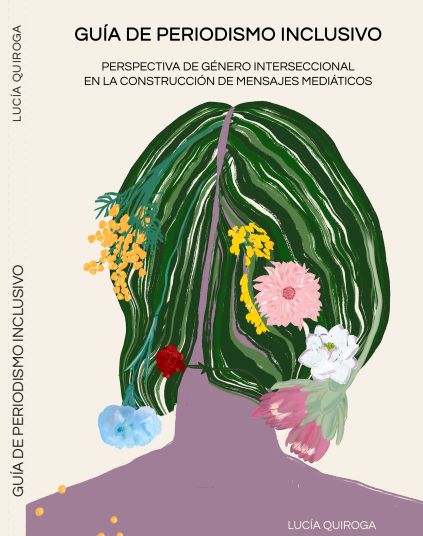
Muy buena noticia, la "Guía de periodismo inclusivo" elaborada por @Luciamquiroga ya se puede descargar. ¡Gracias Lucía por dejarnos en abierto este documento de trabajo esencial!
💻https://t.co/VUeertP0cq
@jagaraviles
📚ERIC HOBSBAWM X8📚
DESCARGA GRATUITA
📕La era de la revolución (1789-1848) https://t.co/efcAOb5mVE
📗La era del capital (1848-1875) https://t.co/0x9C9tjrZr
📙La era del imperio (1875-1914) https://t.co/nDTzw6iCgf
📘Historia del Siglo XX https://t.co/cwbGJ8Fq9B
📕Naciones y nacionalismo desde 1780 https://t.co/VT5A8q5hJk
📗Rebeldes primitivos https://t.co/uUCs4zmuEb
📙Bandidos https://t.co/09NYig2VLe
📘La invención de la tradición https://t.co/EYOznpSBdq
Lectócratas | Lectura Política
📢 Call for Papers is open for #LACEALAMES2026 🌎📊
Submit your original research in economics & econometrics and join a global academic community in Lima 🇵🇪
📅 Nov 12–14, 2026
🗓 Deadline: May 31, 2026
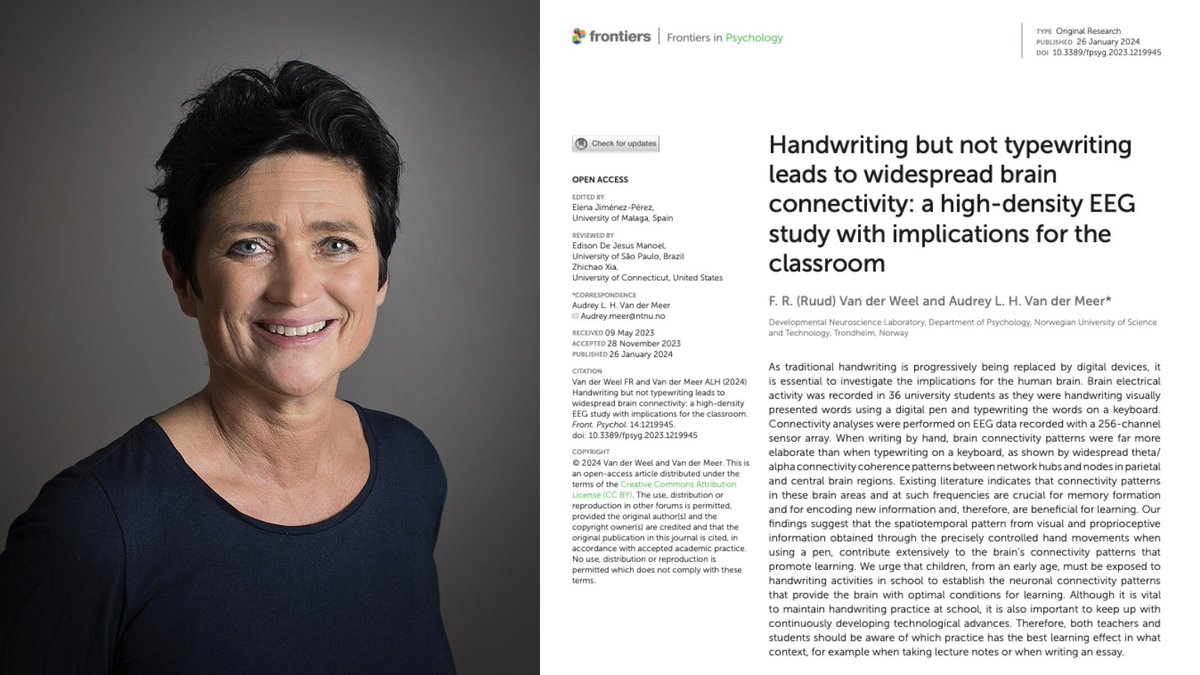
A Norwegian neuroscientist spent 20 years proving that the act of writing by hand changes the human brain in ways typing physically cannot, and almost nobody outside her field has read the paper.
Her name is Audrey van der Meer.
She runs a brain research lab in Trondheim, and the paper that closed the argument was published in 2024 in a journal called Frontiers in Psychology. The finding is brutal enough that it should have changed every classroom on Earth.
The experiment was simple. She recruited 36 university students and put each one in a cap with 256 sensors pressed against their scalp to record brain activity. Words flashed on a screen one at a time.
Sometimes the students wrote the word by hand on a touchscreen using a digital pen, and sometimes they typed the same word on a keyboard. Every neural response was recorded for the full five seconds the word stayed on screen.
Then her team looked at the part of the data most researchers had ignored for years, which is how different parts of the brain were communicating with each other during the task.
When the students wrote by hand, the brain lit up everywhere at once.
The regions responsible for memory, sensory integration, and the encoding of new information were all firing together in a coordinated pattern that spread across the entire cortex. The whole network was awake and connected.
When the same students typed the same word, that pattern collapsed almost completely.
Most of the brain went quiet, and the connections between regions that had been alive seconds earlier were nowhere to be found on the EEG.
Same word, same brain, same person, and two completely different neurological events.
The reason turned out to be something nobody had really paid attention to before her work. Writing by hand is not one motion but a sequence of thousands of tiny micro-movements coordinated with your eyes in real time, where each letter is a different shape that requires the brain to solve a slightly different spatial problem.
Your fingers, wrist, vision, and the parts of your brain that track position in space are all working together to produce one letter, then the next, then the next.
Typing throws all of that away. Every key on a keyboard requires the exact same finger motion regardless of which letter you are pressing, which means the brain has almost nothing to integrate and almost no problem to solve.
Van der Meer said it plainly in her interviews.
Pressing the same key with the same finger over and over does not stimulate the brain in any meaningful way, and she pointed out something that should scare every parent who handed their kid an iPad.
Children who learn to read and write on tablets often cannot tell letters like b and d apart, because they have never physically felt with their bodies what it takes to actually produce those letters on a page.
A decade before her, two researchers at Princeton ran the same fight using a completely different method and ended up at the same answer. Pam Mueller and Daniel Oppenheimer tested 327 students across three experiments, where half took notes on laptops with the internet disabled and half took notes by hand, before testing everyone on what they actually understood from the lectures they had watched.
The handwriting group won by a wide margin on every question that required real understanding rather than surface recall.
The reason was hiding in the transcripts of what the two groups had actually written down.
The laptop students typed almost word for word, capturing more total content but processing almost none of it as they went, while the handwriting students physically could not write fast enough to transcribe a lecture in real time, which forced them to listen carefully, decide what actually mattered, and put it in their own words on the page.
That single act of choosing what to keep was the learning itself, and the keyboard had quietly skipped the choosing and skipped the learning along with it.
Two studies. Two countries. Same answer.
Handwriting makes the brain work. Typing lets it coast.
Every note you have ever typed instead of written went into your brain through a thinner pipe. Every meeting, every book highlight, every idea you captured on your phone instead of on paper was processed at half depth.
You did not forget those things because your memory is bad. You forgot them because typing never woke the part of the brain that would have made them stick.
The fix is the thing your grandmother already knew.
Pick up a pen. Write the thing down. The slower road is the faster one.
Voy a dejarlo claro las carreras académicas no se sostienen por incentivos económicos, sino por lo que Honneth describió muy bien: la esperanza del reconocimiento. Por eso el sistema ha podido normalizar durante años precariedad y sobrecualificación
📚CLÁSICOS DE LA CIENCIA POLÍTICA X5📚
DESCARGA GRATUITA
📕El Príncipe - Nicolás Maquiavelo https://t.co/RqW2CBBPEL
📗Leviatán - Thomas Hobbes https://t.co/SQyOfKFcUX
📙El Contrato Social - Jean-Jacques Rousseau https://t.co/5S5l8tzpyL
📘Segundo Tratado sobre el Gobierno Civil - John Locke https://t.co/bfETPXQxty
📕El político y el científico - Max Weber https://t.co/mqnYMDizsX
Lectócratas - Lectura Política
Interesante enfoque del informe de Finlandia sobre IA en educación
Considera que es un cambio profundo que obliga a replantear qué aprender, el rol del docente y habilidades humanas clave: empatía, juicio crítico,..📷 https://t.co/ptcPKo6CLi #IAenEducacion#EdTech#Finlandia