Your friend is still unaware of $SIBLE?
Tag them here. It's time to get the squad mining!
Who's bringing their first mining buddy?
#SibleAI#SIBLE#SibleNetwork
Sibers, let's see your mining progress!
How much $SIBLE have you mined so far?
Open your Sible App, check your balance, and share your progress with the community in the replies.
Whether you started on day one or joined recently, we'd love to see how far you've come.
Let's see how the Sible community is growing together!
#SibleAI #SIBLE #SibleNetwork
As AI lowers the barrier to building software, reaching users and gaining distribution are becoming increasingly important challenges for developers.
Pi offers an existing distribution network and utility-based ecosystem where developers can connect their applications with more than 60 million Engaged Pioneers, alongside infrastructure for app discovery, user authentication, Pi payments, and other capabilities.
The ecosystem also includes over 300 Mainnet apps, a network of more than 420,000 Nodes, and over 18.1 million fully KYC’d users.
Learn more and attend the Pi Ecosystem Summit on November 17-19, 2026! https://t.co/eCEDvm8RvE
Pi Network is introducing the first-ever Pi Ecosystem Summit, a three-day online event on November 17–19, 2026!
While Pi Day and Pi2Day celebrate progress across the broader Pioneer community and network, the Pi Ecosystem Summit will focus on developers, the Pi platform, and the apps and utilities they build to serve Pioneers and expand Pi's utility.
The Summit will feature new platform announcements, developer tool demos, partner and community app showcases, conversations with developers, and details about an upcoming all-new Pi hackathon.
Developers and Pioneers can explore resources for building on Pi and discover apps and utilities across the ecosystem.
Go to the Pi mining app to learn more!
Whether Pi ultimately succeeds in achieving that vision is something none of us can know today. But the underlying idea is, in my view, genuinely ambitious.
And ambitious ideas come with uncomfortable periods.
If you choose to participate because you believe in a long-term vision, you must also accept that there will be moments of uncertainty, criticism and disappointment. Alternatively, you may simply participate for the rewards, take what you receive and leave when it suits you.
Neither position is inherently right or wrong. They are simply different relationships with the same project.
You are either participating in what you believe could become a long-term revolution, or you are playing a shorter game. The important thing is to understand which one you have chosen.
Sible Labs is very different. We are fundamentally an AI company, building decentralised AI infrastructure for areas such as defence, finance, intelligence and other complex environments. We are not trying to become Pi Network, nor do I believe projects should blindly copy one another.
But after studying Nicolas’s work, I came to understand something valuable in the principle behind it.
Perhaps the most interesting thing he created was not simply a project, an application, or even a token.
It was a long-term thesis: that access to the digital economy should not belong only to those who already possess capital, technical knowledge or privileged access to financial infrastructure.
For anyone interested in building systems around decentralisation, accessibility and individual economic freedom, I think that is a vision worth studying — whether Pi ultimately succeeds or fails.
A few thoughts after TOKEN2049 Singapore, following a long journey and finally making my way back home.
Quite unexpectedly, I met a Product Owner from Pi Network during the event. I should make one thing clear from the beginning: I am not someone who understands Pi Network deeply. I am writing this simply from the perspective of someone relatively new to it, and I would genuinely welcome corrections or different perspectives from those who have followed the project for longer.
I only began looking seriously into Pi Network about a month ago. Nicolas Kokkalis, however, was not a completely unfamiliar name to me.
I first came across Nicolas roughly eight years ago, when I happened to attend a panel where he was presenting StarX, the incubator he was working on at the time. To be quite frank, StarX itself did not leave a particularly strong impression on me. What I did remember was Nicolas. He struck me as someone with an unusually deep understanding of distributed systems — arguably among the stronger people in that field at Stanford.
Later, I briefly had the opportunity to speak with him during a gathering with mutual acquaintances. It was nothing particularly significant, but I remember people describing him as a rather calm and reserved person: someone who rarely made public statements and was far more comfortable with research than publicity.
And that was more or less where the story ended for me. I continued researching AI systems, while he continued on his own path.
Until recently.
As I began exploring the concepts of free mining, decentralised finance and community-owned digital infrastructure, a surprising number of people told me: “You should study what Nicolas built.”
I have never been uncomfortable learning from someone else, regardless of age, background or industry. So I spent about a week studying his project, particularly from the perspective of what lessons might be applicable to the decentralised AI infrastructure we are building.
What I discovered was that the problem was considerably more complicated than I had imagined.
Building technology is difficult. Building technology for millions of people is considerably more difficult. And building something where millions of people attach financial expectations, emotions and personal hopes to that technology is an entirely different matter.
Social media makes this even more complicated.
Perhaps this is also why I understand, to some extent, why Nicolas appears to prefer research to constant public communication. And I respect that.
Recently, he has found himself at the centre of considerable criticism, particularly around the decline in the price of PI. Some people believe that he is deliberately suppressing the token price, or that he should personally be held responsible for its market performance.
I see it somewhat differently.
Before Amazon became what it is today, it went through periods when its survival was genuinely questioned. Tesla went through similarly difficult periods. Had every difficult chapter been reduced entirely to the share price — and had every founder been judged solely by short-term market performance — some of the companies we now consider transformative might never have survived long enough to fulfil their ambitions.
That does not mean founders should be immune from criticism. Nor does it mean price, tokenomics, transparency or execution do not matter. They absolutely do.
But price and vision are not always the same thing.
What I find interesting about Nicolas’s original idea is its ambition: to make digital currency accessible without requiring people to begin with significant capital or pass through the traditional barriers associated with acquiring digital assets, while ultimately pursuing a monetary network that is less dependent on conventional financial intermediaries.
78 blockchains. 78 logos. One directory.
Every chain bringing RWAs onchain, from @ethereum and @solana to @plumenetwork and @StellarOrg.
Find yours at https://t.co/Et0VgKsb61
Pi Network is exploring how stablecoins can support additional utility across the Pi ecosystem while maintaining a distinct, complementary role to Pi.
Read the new blog in the Pi mining app to learn about:
- Pi’s approach to stablecoins
- How stablecoins may help expand participation within the ecosystem
- Why their implementation requires careful design
And how the OUSD partnership can fit into Pi’s broader stablecoin strategy.
Pi Network is partnering with @openstandard, the company powering Open USD (OUSD), a partner-governed stablecoin designed as open infrastructure!
Open Standard brings together more than 200+ partners across payments, finance, technology, and crypto, including Visa, Google, and Stripe.
OUSD is designed with an incentive model focused on supporting ecosystem growth, and Pi will explore rewards programs for Pioneers and broader utility across the Pi ecosystem.
Look forward to more details about this partnership.
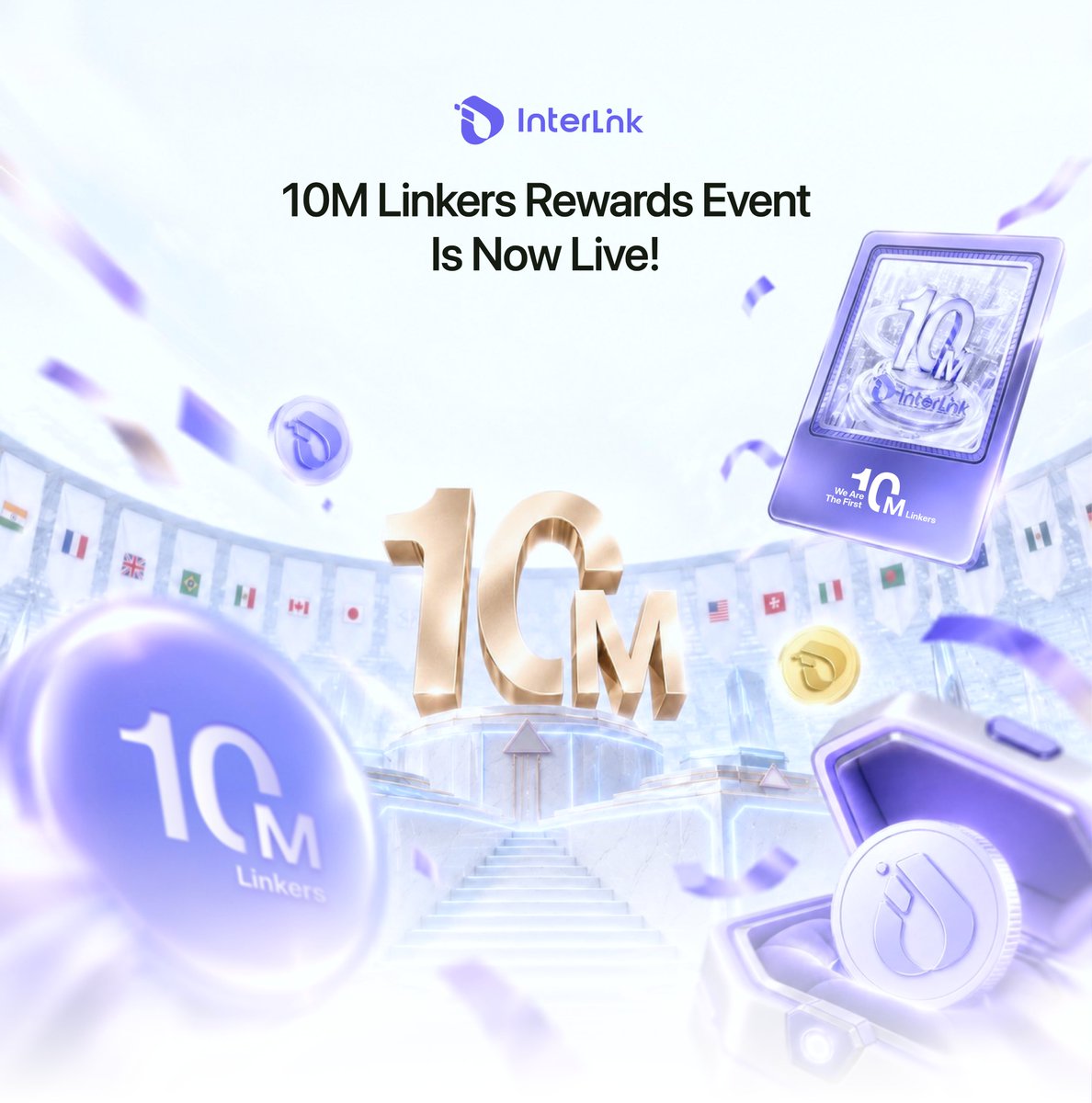
🎁 10M LINKERS REWARDS EVENT IS NOW LIVE!
To thank you for being one of the First 10 Million Linkers, we’ve prepared a special collection of rewards created exclusively for this historic community.
These rewards are more than just gifts. They are a mark of being among the earliest Linkers who joined, contributed, and became part of InterLink’s journey.
Only the First 10M Linkers will have the opportunity to own them.
🏆 WHAT CAN YOU RECEIVE?
Eligible Linkers can receive:
• 💎 1 ITL per eligible user
• ��� Exclusive 10M Linkers NFT
• 🤝 Exclusive InterLink x OKX NFT
• 🎁 Badge First 10M Linkers
🔐 ELIGIBILITY
To participate and claim your rewards, your account must:
• Have completed KYC Step 1
• Have been registered before August 1, 2026
• Hold at least 10,000 ITLG at the time of reward distribution
• Log in or sign up to OKX through InterLink to qualify for the InterLink x OKX NFT
⏳ CLAIM DEADLINE: October 12, 2026 23:59:00 UTC
Make sure to complete your claim before the deadline. Rewards that are not claimed within the event period may no longer be available afterward.
🔗 CLAIM YOUR REWARDS HERE: https://t.co/Mm4ftpZMYS
The First 10 Million will always be part of InterLink’s history.
We Are the First 10M Linkers💜
#InterLink #ITL #ITLG #WeAreTheFirst10M
📢 Toàn bộ Thể lệ chương trình "Đấu trường Tài sản mã hoá"
Học kiến thức về tài sản số, thực hành giao dịch trên SCEX Trading Simulator và cạnh tranh giải thưởng với tổng giá trị hơn 1,6 TỶ VNĐ.
👇 Thread hướng dẫn tham gia:
For the first time, OKX has made Pi available to millions of people in the US through its platform, adding another access point to the Pi ecosystem for US users.
Pi continues to expand its global network of Pioneers and partners, and strengthen ecosystem participation, utility, and real user adoption across the world.
More users. More usage. Stronger network
The Pi Founders are featured speakers at Consensus 2026 in Miami this week.
Chengdiao Fan will speak on Wednesday, May 6 (11:15–11:35 AM EDT, Convergence Stage) on “Aligning Web3, AI, and Blockchain for Utility,” exploring how Pi’s blockchain infrastructure, verified identity, and globally engaged network can support utility‑driven products and AI‑era business models.
Nicolas Kokkalis will join a panel on Thursday, May 7 (10:15–10:45 AM EDT, Convergence Stage) titled “How to Prove You’re Human in an AI World (Without Doxing Yourself),” exploring how the internet’s trust model is breaking as AI systems become capable of creating bots that can generate profiles and interact like real users.
Together, these sessions highlight Pi’s approach to the AI era: supporting utility-driven products and sustainable business models through blockchain, verified identity, and a globally engaged network, while enabling global identity verification and providing authenticity solutions through Pi’s native KYC solution.
See you there, Pioneers!
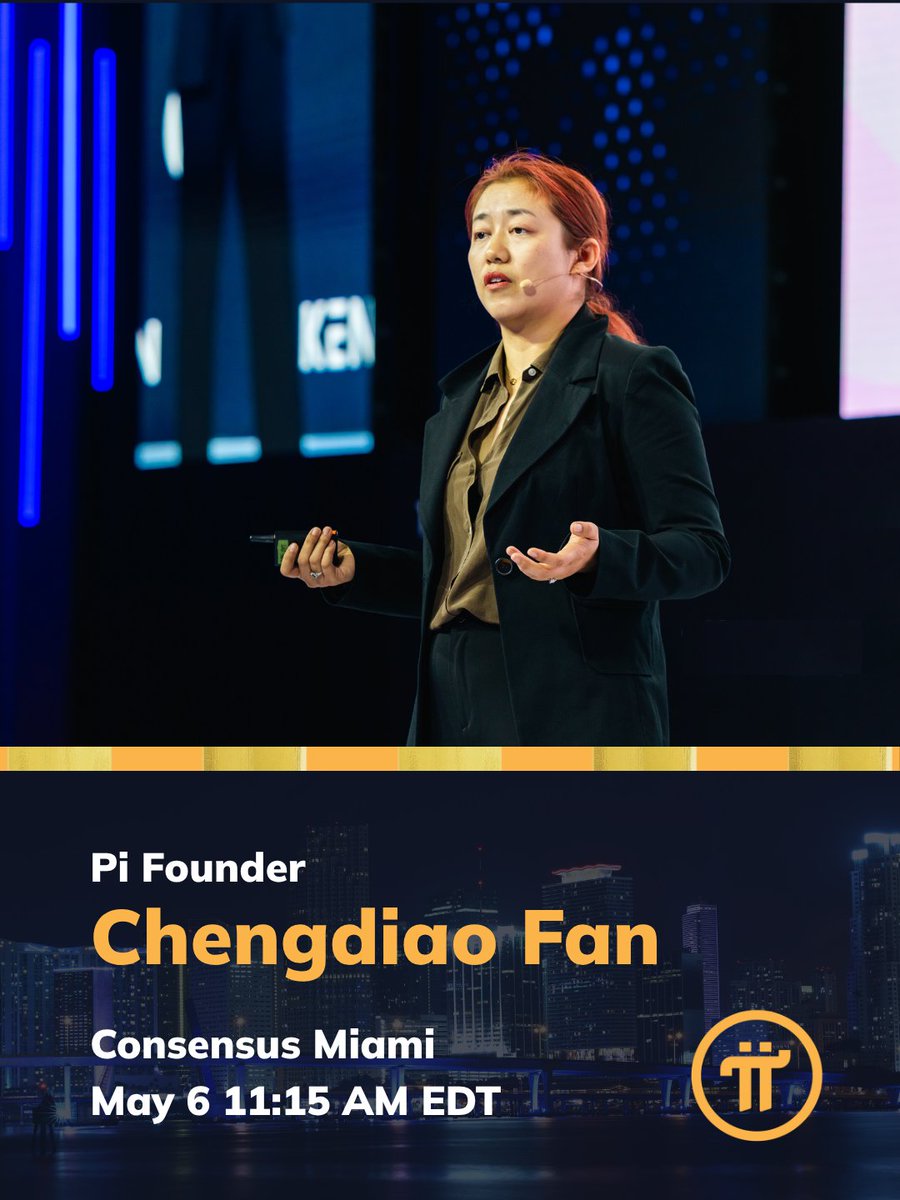
Consensus Miami is getting a slice of Pi!
Pi Founder Chengdiao Fan will speak at Consensus 2026 on Wednesday, May 6, from 11:15–11:35 AM EDT at the Convergence Stage.
As AI dramatically lowers the barriers to building products, competition increasingly centers on authentic data, user acquisition, and trusted human participation.
Chengdiao’s presentation will explore how Pi’s blockchain infrastructure, verified identity, and globally engaged network can support utility‑driven products and AI‑era business models.
The session presents a fresh perspective on crypto tokens not as exits, but as tools for sustainable growth and real‑world adoption.
See you all there!
The Pi Mainnet has successfully upgraded to Protocol 20, laying the foundation for supporting smart contracts. Node operators, please ensure your systems are up to date and stay tuned for instructions regarding the upcoming v21 upgrade.