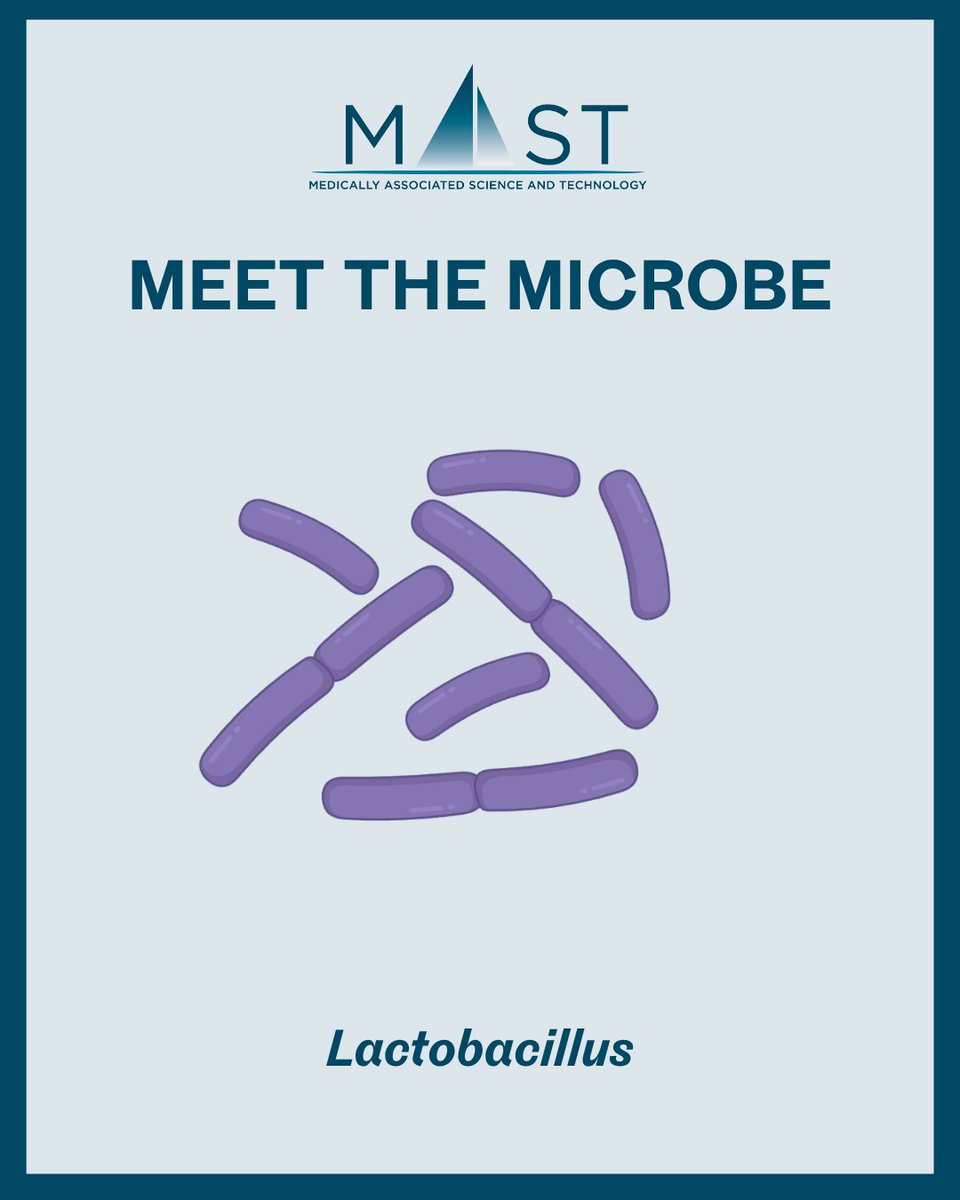
🦠 MEET THE MICROBE: Lactobacillus
You’ve probably seen Lactobacillus on probiotics. But did you know researchers at MAST are studying what happens when these bacteria are found in the small intestine? 👀
🔬 Here’s what makes Lactobacillus interesting:
🥛 You may already know it. Lactobacillus bacteria are commonly found in fermented foods, dairy products, and many probiotics.
🧬 It’s not just one microbe. Lactobacillus is a diverse group of bacteria, and different species can have very different characteristics and effects.
📍 Location matters. MAST research found that Lactobacillus populations in the duodenum showed species-specific associations with overweight and obesity.
⚖️ “Good” and “bad” isn't always that simple. A bacterium commonly considered beneficial doesn't necessarily have the same relationship with health in every part of the body or in every person.
At MAST, we're going beyond stool samples to study the small bowel microbiome and uncover what individual microbes may actually be doing in the places where digestion and nutrient absorption happen.
💬 Did you know that some probiotic bacteria can also be found in the small intestine?
#MeetTheMicrobe #Lactobacillus #Microbiome #GutMicrobiome #SmallBowelMicrobiome #GutHealth #ObesityResearch #Probiotics #MicrobiomeResearch #CedarsSinai #MASTProgram
🦠 MEET THE MICROBE: Desulfovibrio
Some microbes make vitamins. Some break down fiber. And some make a gas that researchers are paying very close attention to. 👀
Meet Desulfovibrio—a group of bacteria that can produce hydrogen sulfide (H₂S) as part of their metabolism.
💨 Why does H₂S matter?
Hydrogen sulfide is naturally produced in the gut and can have important biological effects. But researchers are investigating whether excess H₂S production may contribute to gastrointestinal symptoms and changes in gut function.
🔬 A few things that make Desulfovibrio interesting:
• 🧪 It’s a sulfate-reducing bacterium — it uses sulfur-containing compounds as part of its energy metabolism.
• 💨 It can produce H₂S — the gas responsible for the characteristic “rotten egg” smell at higher concentrations.
• 🦠 It’s normally part of the gut microbiome — having Desulfovibrio doesn't automatically mean something is wrong.
• 🔬 Researchers are investigating its role in intestinal sulfide overproduction (ISO) and how H₂S-producing microbes may relate to digestive symptoms.
At MAST, we're looking beyond simply asking “Which microbes are there?” We're also asking “What are they doing?”—because microbial activity and the compounds microbes produce may be just as important as which microbes are present.
💬 Did you know your gut microbiome can produce hydrogen sulfide?
#MeetTheMicrobe #Desulfovibrio #Microbiome #GutMicrobiome #HydrogenSulfide #H2S #ISO #GutHealth #DigestiveHealth #MicrobiomeResearch #SIBO #CedarsSinai #MASTProgram
🎙️ LATEST EPISODE OF EATING, INTERRUPTED
What happens when the immune system turns against us? 🧬
In the latest episode of Eating, Interrupted, host @CynthiaMcFadden dives into the fascinating world of the immune system—how it works, what happens when it goes off track, and the complex connection between food, the gut, and autoimmune disease.
MAST’s own @MarkPimentelMD joins the conversation to help unpack the science behind the gut and immune system, while the episode also follows Mickey’s journey of rebuilding her life while learning to live with three autoimmune conditions.
🦠 How can what we eat influence the immune system?
🔬 What happens when the immune system goes off track?
🥗 And what can we learn from the growing connection between food, the gut, and immunity?
Tune in for a fascinating conversation that brings together gut health, the immune system, nutrition, and real-life experience.
🎧 Listen to the latest episode of Eating, Interrupted using the link in the comments below.
#MASTProgram #EatingInterrupted #MarkPimentel #GutHealth #AutoimmuneDisease #ImmuneSystem #GutBrainConnection #Microbiome #Nutrition #DigestiveHealth #Gastroenterology #CedarsSinai
🧬 What is hydrogen sulfide doing in the gut?
We know that intestinal sulfide overproduction (ISO) is associated with symptoms like diarrhea and abdominal pain—but what is happening at the cellular level?
New research from the MAST Program is helping uncover the answer.
Using transcriptomics and small bowel samples from the REIMAGINE study, researchers explored how ISO, SIBO, and IMO may affect the way intestinal cells function.
And the results point to something important:
👉 These conditions may not be as biologically similar as we once thought.
The study uncovered distinct changes in host gene expression associated with ISO, including pathways connected to cellular stress and energy production.
But that's only part of the story. 👀
What does elevated hydrogen sulfide actually do to the small bowel? And what can these molecular changes tell us about ISO?
🔬 Read the new study linked in the comments below to find out.
🎥 Video abstract coming soon. Stay tuned.
#MASTProgram #GutMicrobiome #SIBO #IMO #ISO #HydrogenSulfide #GutHealth #MicrobiomeResearch #Gastroenterology #Transcriptomics #CedarsSinai #MedicalResearch
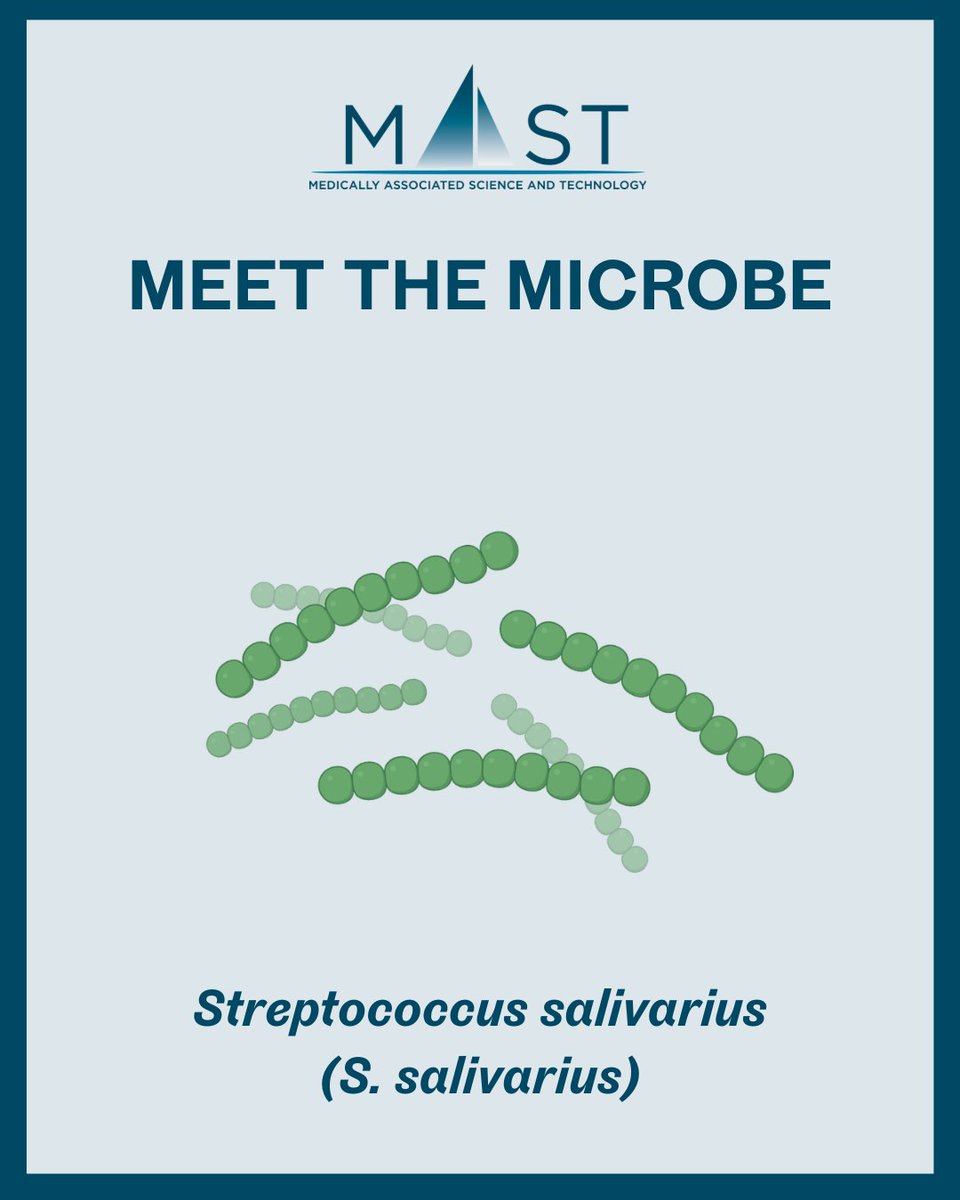
🦠 Meet the Microbe: Streptococcus salivarius
When you hear the word Streptococcus, you might think of illness—but not all Streptococcus species are harmful.
Meet Streptococcus salivarius, one of the first beneficial bacteria to colonize the human body. Found naturally in the mouth and throat, this microbe plays an important role in maintaining a healthy microbial community.
But what happens when it's found somewhere it doesn't belong?
Researchers have identified S. salivarius among the microbes that can become more abundant in the small intestine in people with small intestinal bacterial overgrowth (SIBO). While it's a normal resident of the oral microbiome, its presence in excess in the small bowel may contribute to an altered microbial environment.
🔬 Quick Facts:
🦠 One of the earliest microbes to colonize the mouth after birth
👄 Naturally lives on the tongue, cheeks, and throat
🧬 Helps compete with harmful bacteria in the oral microbiome
🔍 Has been detected in increased amounts in the small intestine of some people with SIBO, where researchers are studying its potential role in digestive symptoms
💬 Did you know that a microbe can be beneficial in one part of the body but problematic in another?
#MeetTheMicrobe #StreptococcusSalivarius #Microbiome #SIBO #SmallBowelMicrobiome #GutHealth #DigestiveHealth #MicrobiomeResearch #CedarsSinai #MASTProgram
This is the small intestine again folks! Work from our team @MASTprogram@CedarsSinai. The human small bowel microbial networks are different in males and females. The most disruptive organism in females is Lactobacillus. Interesting that one of the nodes found in females and not males is Rothia (stay tuned for that one!). Wait till you see this years stuff. #microbiome #overgrowth #REIMAGINE
https://t.co/aNgQ07ysnL
Here is the link to the first episode of the podcast Eating Interrupted hosted by @CynthiaMcFadden where we discuss food allergies, food intolerances and food sensitivities. Stay tuned for more episodes in the near future.
https://t.co/I1Ge2rxjAA
📢 New Publication Alert!
We're excited to share our latest publication in iScience: "Duodenal microbiome profiles exhibit sex-specific differences." 🎉
For years, much of what we've known about the gut microbiome has come from stool samples. Using samples collected directly from the small intestine through our REIMAGINE study, our team examined how the duodenal microbiome differs between males and females—and what those differences could mean for health and disease.
Our findings revealed distinct sex-specific microbial signatures, reinforcing the importance of considering biological sex when studying the small bowel microbiome and developing future microbiome-based diagnostics and therapies. These insights may help explain why certain gastrointestinal and metabolic conditions affect men and women differently, paving the way for more personalized approaches to care.
This work is another step forward in our mission to better understand the small intestine and its role in human health.
📖 Read the full publication through the link in the comments below
#ScientificPublication #Microbiome #GutMicrobiome #SmallBowel #REIMAGINE #PrecisionMedicine #GutHealth #DigestiveHealth #Research #iScience #CedarsSinai #MASTProgram
Just to explain further. This paper (along with our JCG in January) show that hydrogen sulfide may be the most important microbiome gas and huge impact on patients. Hydrogen sulfide in the gut could account for most of what has been historically described for IBS-D. A big deal!
The MAST Program is currently looking for participants in a clinical trial for a new therapy.
If you are a patient with Irritable Bowel Syndrome with Diarrhea (IBS-D), have had a colonoscopy in the last 3 years, and live in the greater LA area, please contact us.
You can find the link to the study in the comments below. Please feel free to fill out the form or give us a call at (310) 423-3792
#MASTProgram #IBS #IBSD #ClinicalTrial
New paper by @AliRezaieMD from our group. Patients with #IBS taking antidepressants have a higher death rate. Not proving cause and effect but very concerning. Also noted with diphenoxylate and loperamide. Multiple cardiovascular signals such as arrhythmia seen.
https://t.co/y2u77OGY4P
April is #IBS awareness month. Let's start with this... I asked ChatGPT to list the top 5 most disrespected diseases in medicine and look at what's #1! This for a disease that affects 45million people in US! Not ok. Retweet this to show everyone how wrong this is.
This study in @UEGJournal is the first to show that microscopic colitis (MC) is associated with molecular and ultrastructural alterations in the brush border of colonocytes.
By comparing patients with lymphocytic colitis (LC) and collagenous colitis (CC) to healthy individuals and those with irritable bowel syndrome (IBS-D), researchers identified a distinct signature of protein and gene dysregulation.
Specifically, patients with CC were found to have significantly shorter and fewer microvilli, while those with LC show a decrease in microvilli density.
These findings suggest that the breakdown of the intestinal epithelial barrier is a primary factor in the development of chronic watery diarrhoea. Notably, treatment with budesonide was shown to partially repair these physical abnormalities in the colon.
This research offers promise of new diagnostic biomarkers and targeted therapies for this condition.
https://t.co/WkPirCMv8h
So excited about new data from our @MASTprogram@CedarsSinai. We are now fully blocking #methane (#IMO) in lab tests. More resources=progress! Love our MAST program team.
After years of hard work we have developed a drug formulation that may benefit IBS-D using a precision microbiome approach. The first patient was enrolled today in our phase IIB study! Stay tuned...
Why do so many apparently healthy people die or get severely ill from infections that would be considered low risk?
For one, we don't have any way of assessing a person's immune system function in the clinic
https://t.co/CshtAxDep9