Abusive boyfriend violently hits a woman in a crowded bar and gets immediate payback from other men who witnessed it.
Swift justice, right?
https://t.co/RXjqzktCwK
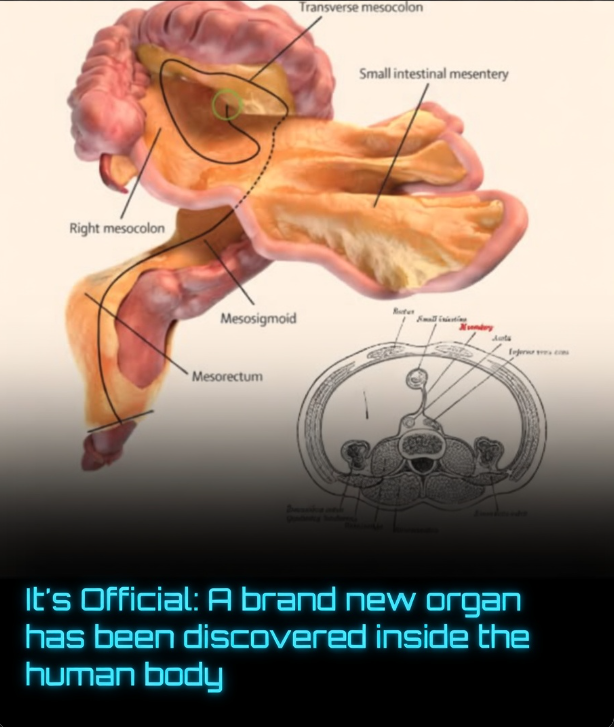
Scientists have officially discovered a brand-new organ in the human body.
The mesentery — a structure long thought to be a collection of fragmented tissues holding the intestines in place — has been reclassified as a single, continuous organ. This landmark discovery, led by researcher J. Calvin Coffey at University Hospital Limerick, has fundamentally changed our understanding of human anatomy.
For centuries, the mesentery was dismissed as insignificant. Now, thanks to detailed research, it is recognized as one unified structure. The finding was so significant that it has already been incorporated into the latest edition of Gray’s Anatomy, the world’s most respected medical textbook.
While the mesentery’s main function is to anchor and support the intestines, scientists believe it plays far more complex roles that are still not fully understood. Its formal recognition has given rise to an entirely new field called mesenteric science. Researchers hope that studying this organ will unlock new insights into digestive diseases, abdominal disorders, and potentially lead to better treatments for millions of patients.
This discovery is a powerful reminder that even today, the human body still holds remarkable secrets waiting to be uncovered.