Orange-peel or pebbly glaze surface: How do you make it on purpose? Do the opposite of what is done when dealing with it as a problem! https://t.co/HTxnBMvQ7M
This crystalline glaze has zero clay yet suspends and brushes really well. The secret is the use of two gums, the order in which you add them and the way in which you mix them in. https://t.co/dtknjHkI2k
How can Chinese Yixing artisans produce impossibly delicate and round teapots without a potter' wheel? A fascinating combination of unusual material properties and highly evolved forming techniques that challenge many assumptions potters have. https://t.co/XV6sDiTYcD
Resolution Achieved! Now I need goodwill, especially if you put their staff under stress. I need your help to get it. Let's fill their office with hundreds of bouquets of flowers. https://t.co/XL8HePBtaf
I am overwhelmed. I really needed all this side-channel support in the last two days of the horrible sorrow we witnessed our friends suffer at the loss of their son in a drowning. You really helped me.
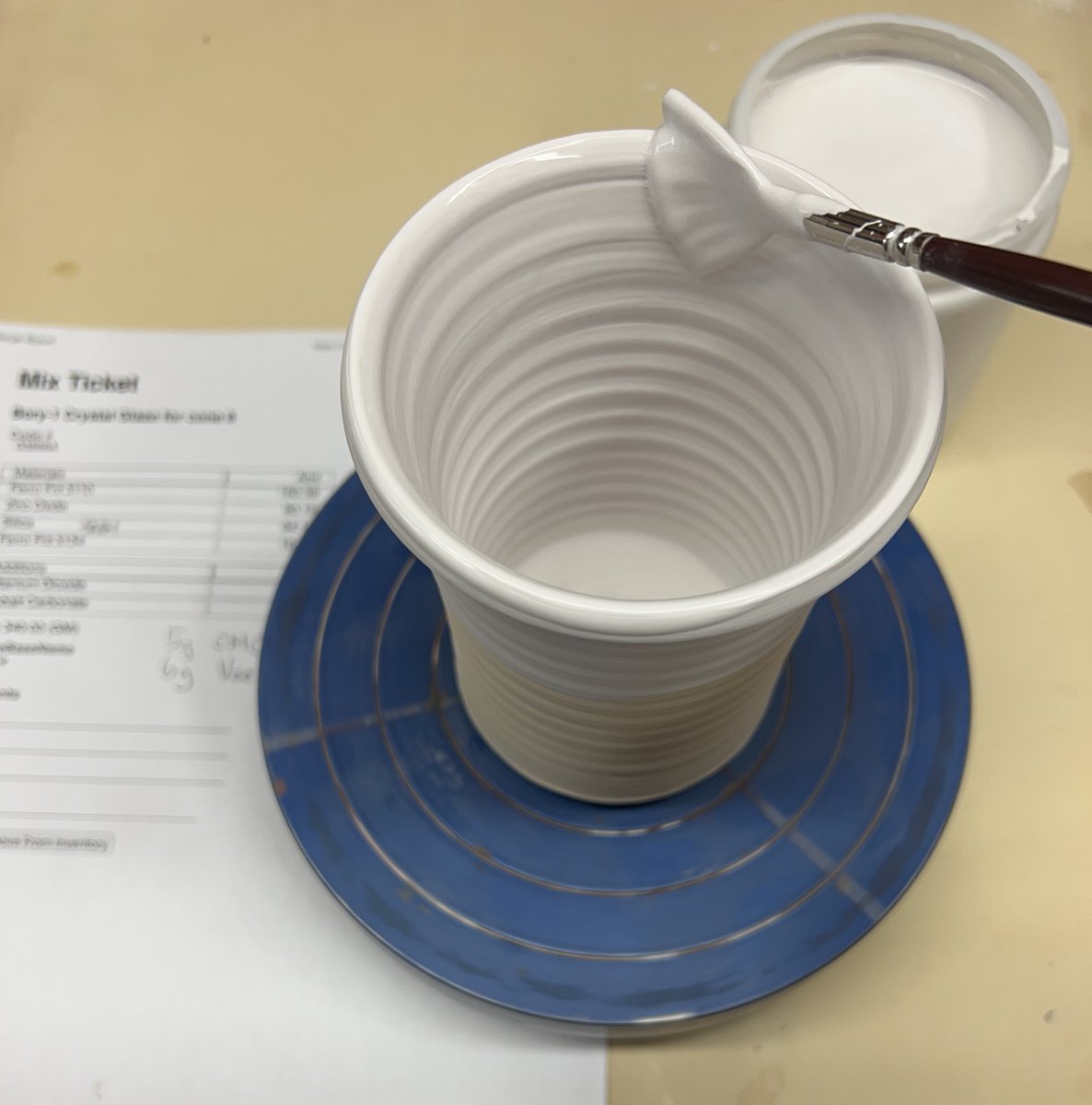
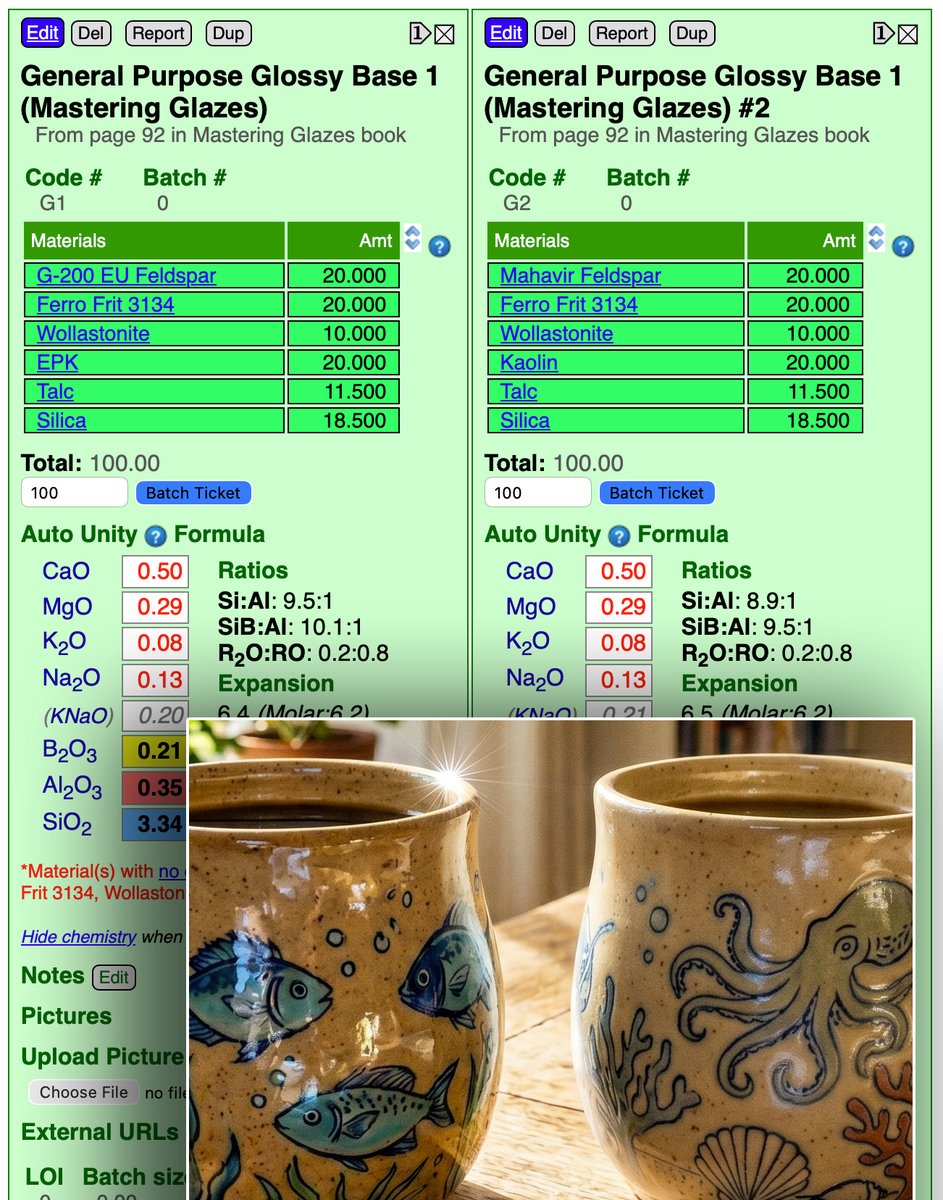
You have 147 glaze recipes. How can you get your head around all of them? Don't even think about glaze chemistry at this stage. It's time to start organized documentation and have a place for ongoing notes and test results. Where? Hint: Insight-live. https://t.co/4Fhob7R1U7
How can a clay body made from rock-like ore produce impossibly delicate Yixing teapots? The answer appears to lie in a fascinating combination of unusual material properties and highly evolved forming techniques. https://t.co/9lDk1yvFiN
Four boron frits with vastly different melting: If you are a potter and use Frit 3134, you need to see this; it could be the key to debubbling your transparent stoneware glaze. https://t.co/aWSkbfOaJB
Two glaze strips with different zircon levels are applied over both a dark body and a white engobe to compare opacity. Simple visual tests like this help find the minimum zircon needed for the desired whiteness—saving cost without sacrificing appearance. https://t.co/s83IGWjjfO
This batch-to-formula calculation was done by Albert E. Holthaus at Modern Art Products Company in Kansas City, MO (during the 1960s). Doing this not only seems quaint today, but suppliers put up roadblocks to doing it. https://t.co/ZQb9ZYBWne
No black-burning clay body can match this DIY black-stained engobe. In color or in price. And in flexibility, because you know the recipe and how to adjust it. https://t.co/9y2n6pOYUj
This cone 6 stoneware glaze is intrinsically more durable and leach resistant than traditional beer bottle glass. With it you can slip cast authentic ceramic bottles. The big one on the left is ceramic, the one on the right is glass. https://t.co/CBcboJ5Y77
Consider the hazards and hassles before choosing a DIY black matte or gloss recipe that has high individual or combined percentages of red iron oxide, manganese dioxide, cobalt or nickel. https://t.co/sYWJ7BzbZQ
Some slip colors are flaking off during drying. But also during bisquing and glaze firing. The reason why indicates a clear path to a solution. https://t.co/IJIkaMveaP
Danny Downsized: He’s being outsourced. He should have seen this coming. They don’t realize what they are losing because his knowledge is buried in a thousand spreadsheets and Word docs. https://t.co/iLcAdAnyqz