John Cochrane, a senior fellow at the Hoover Institution, says that rate cuts will lower inflation only in the short term so long as fiscal policy favors borrowing and spending. https://t.co/ANJFrdaaOH
Financial advisors are facing a barrage of threats from swindlers looking to launder money or establish real credit histories for fake identities. https://t.co/M2MCtImmln
Happy retirees reported spending 280 more hours a year on hobbies, friends, and meaningful activities. See how core pursuits may help shape a fulfilling retirement. https://t.co/NHlbO1YosQ
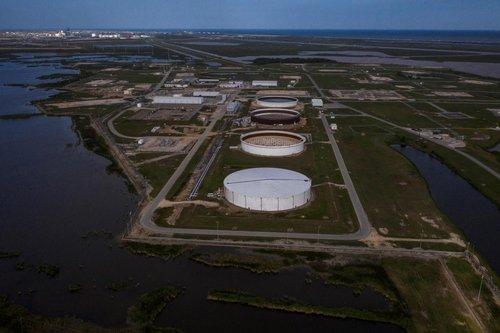
Trump officials say the oil-market disruption is temporary, but Chevron’s Mike Wirth and others warn global supplies are running low. Here's what to expect in the coming weeks. https://t.co/iBjlfW09eK
The world's banana supply faces a severe threat from fungus. Researchers are developing gene-edited, disease-resistant bananas, with some nearing commercial deployment. https://t.co/I2WTl3uwys
OpenAI and Anthropic, in heated competition—with each other and China—are racing toward IPOs, even as they admit they could lose control of their powerful bots. https://t.co/cgkGUcYGg6
Investing in international equities inherently involves a currency decision, often unnoticed by retail investors using unhedged funds. Currency fluctuations can significantly impact returns, sometimes more than the underlying stock https://t.co/Wf4S6WpblY
THE MINSKY MOMENT — When Stability Becomes the Risk
There is an economist whose name rarely makes it into everyday conversations about Wall Street. Perhaps it should.
Hyman Minsky spent much of his career studying an uncomfortable contradiction in capitalism: long periods of financial stability can eventually create the conditions for financial instability.
The idea sounds backward at first. Good markets should make the financial system healthier. Rising asset prices create wealth. Strong economic conditions improve corporate balance sheets. Credit remains available and investors are rewarded for taking risk.
But Minsky was interested in what happens next.
When prosperity lasts long enough, people begin treating favorable conditions not as temporary, but as normal. Investors become more willing to speculate. Businesses become comfortable carrying additional debt. Lenders loosen their standards. Borrowers refinance rather than repay. Rising asset values provide collateral for still more borrowing.
Yesterday's aggressive decision becomes today's conventional wisdom.
And the memory of the previous crisis slowly disappears.
Minsky divided this evolution into three broad stages. In "hedge finance," borrowers generate enough cash to service both principal and interest. In "speculative finance," they can service the debt but increasingly depend on refinancing. In "Ponzi finance," the structure becomes dependent on additional borrowing, refinancing or continuously rising asset prices.
The important point is that there doesn't have to be an obvious crisis while this is developing.
Quite the opposite.
Markets can appear remarkably healthy while financial fragility is quietly accumulating underneath them.
Then something changes.
Interest rates stay higher than expected. Credit becomes more expensive. Corporate earnings disappoint. Liquidity disappears from an overleveraged corner of the market. Or asset prices simply stop rising fast enough to support the assumptions built around them.
Selling begins. Prices decline. Collateral values fall. Credit becomes tighter. Investors who borrowed against rising assets suddenly discover that leverage works just as efficiently in reverse.
That inflection point became known as the "Minsky Moment."
Minsky was not arguing that every bull market must end in catastrophe. Nor does his work provide a clock telling us when the next correction will arrive.
His observation was more useful than a market forecast.
The longer stability persists, the easier it becomes to mistake stability for permanence.
That distinction matters to me as a financial advisor, particularly when working with people approaching or already living in retirement.
During the accumulation years, investment decisions naturally revolve around growth. Time is available. Employment income continues. Contributions continue. Market corrections, unpleasant as they are, can become opportunities.
Retirement changes the equation.
At some point the conversation begins moving away from simply asking, "How much more can I make?" toward a considerably more important question:
"How much of what I have already accumulated still needs to remain exposed to market risk?"
That is not an argument against equities. Markets remain one of the great engines of long-term wealth creation.
It is an argument for recognizing that accumulation and preservation are different financial jobs.
A retiree may be drawing income at precisely the moment markets are declining. There may be less time available for recovery. And the emotional willingness to tolerate a major decline can turn out to be very different from the financial capacity to absorb one.
Rick Rule has a line I have always appreciated:
"Never confuse the inevitable with the imminent."
Another market correction is inevitable. That does not make it imminent.
Trying to predict the exact moment misses the larger point.
Minsky's work wasn't really about predicting crashes. It was about understanding behavior — what prosperity does to our willingness to borrow, speculate and eventually underestimate risk.
Prosperity changes behavior. Stability changes our perception of risk.
And perhaps the most useful time to think about preservation is not after markets remind us what risk looks like, but while everything still feels remarkably comfortable.
For those interested in the economics behind the idea, Minsky's original Financial Instability Hypothesis is available through the Levy Economics Institute:
[Hyman Minsky — The Financial Instability Hypothesis | Levy Economics Institute](https://t.co/bp8HAHjsBH)
THE MINSKY MOMENT — When Stability Becomes the Risk
There is an economist whose name rarely makes it into everyday conversations about Wall Street. Perhaps it should.
Hyman Minsky spent much of his career studying an uncomfortable contradiction in capitalism: long periods of financial stability can eventually create the conditions for financial instability.
The idea sounds backward at first. Good markets should make the financial system healthier. Rising asset prices create wealth. Strong economic conditions improve corporate balance sheets. Credit remains available and investors are rewarded for taking risk.
But Minsky was interested in what happens next.
When prosperity lasts long enough, people begin treating favorable conditions not as temporary, but as normal. Investors become more willing to speculate. Businesses become comfortable carrying additional debt. Lenders loosen their standards. Borrowers refinance rather than repay. Rising asset values provide collateral for still more borrowing.
Yesterday's aggressive decision becomes today's conventional wisdom.
And the memory of the previous crisis slowly disappears.
Minsky divided this evolution into three broad stages. In "hedge finance," borrowers generate enough cash to service both principal and interest. In "speculative finance," they can service the debt but increasingly depend on refinancing. In "Ponzi finance," the structure becomes dependent on additional borrowing, refinancing or continuously rising asset prices.
The important point is that there doesn't have to be an obvious crisis while this is developing.
Quite the opposite.
Markets can appear remarkably healthy while financial fragility is quietly accumulating underneath them.
Then something changes.
Interest rates stay higher than expected. Credit becomes more expensive. Corporate earnings disappoint. Liquidity disappears from an overleveraged corner of the market. Or asset prices simply stop rising fast enough to support the assumptions built around them.
Selling begins. Prices decline. Collateral values fall. Credit becomes tighter. Investors who borrowed against rising assets suddenly discover that leverage works just as efficiently in reverse.
That inflection point became known as the "Minsky Moment."
Minsky was not arguing that every bull market must end in catastrophe. Nor does his work provide a clock telling us when the next correction will arrive.
His observation was more useful than a market forecast.
The longer stability persists, the easier it becomes to mistake stability for permanence.
That distinction matters to me as a financial advisor, particularly when working with people approaching or already living in retirement.
During the accumulation years, investment decisions naturally revolve around growth. Time is available. Employment income continues. Contributions continue. Market corrections, unpleasant as they are, can become opportunities.
Retirement changes the equation.
At some point the conversation begins moving away from simply asking, "How much more can I make?" toward a considerably more important question:
"How much of what I have already accumulated still needs to remain exposed to market risk?"
That is not an argument against equities. Markets remain one of the great engines of long-term wealth creation.
It is an argument for recognizing that accumulation and preservation are different financial jobs.
A retiree may be drawing income at precisely the moment markets are declining. There may be less time available for recovery. And the emotional willingness to tolerate a major decline can turn out to be very different from the financial capacity to absorb one.
Rick Rule has a line I have always appreciated:
"Never confuse the inevitable with the imminent."
Another market correction is inevitable. That does not make it imminent.
Trying to predict the exact moment misses the larger point.
Minsky's work wasn't really about predicting crashes. It was about understanding behavior — what prosperity does to our willingness to borrow, speculate and eventually underestimate risk.
Prosperity changes behavior. Stability changes our perception of risk.
And perhaps the most useful time to think about preservation is not after markets remind us what risk looks like, but while everything still feels remarkably comfortable.
For those interested in the economics behind the idea, Minsky's original Financial Instability Hypothesis is available through the Levy Economics Institute:
[Hyman Minsky — The Financial Instability Hypothesis | Levy Economics Institute](https://t.co/bp8HAHjsBH)
Asset protection is the final line of defense, behind risk management, insurance, and litigation settlement. Focus first on risk and insurance. https://t.co/PScqv9v5hQ
The S&P 500 is in position for a rare fourth year of consecutive annual gains. Risks are rising, New York Times columnist Jeff Sommer says, yet Wall Street is doubling down. https://t.co/zaRQpYSZwV
David Kelly, Chief Global Strategist at JPMorgan Asset Management, joins Scarlet Fu and Tom Keene on "Bloomberg Money." They discuss how biased information influences investor behavior. https://t.co/xaUmlhJn7O


](https://pbs.twimg.com/media/HQhnUh2XQAAnMus.jpg)
](https://pbs.twimg.com/media/HQhnUWhX0AAAneB.jpg)








](https://pbs.twimg.com/media/HQhnU9CXoAAXIOd.jpg)