“I wish it need not have happened in my time,” said Frodo.
“So do I,” said Gandalf, “and so do all who live to see such times. But that is not for them to decide. All we have to decide is what to do with the time that is given us.”
— J.R.R. Tolkien
🆕Special article in press: ESMO (@myesmo) Adaptation of Lines of Systemic Therapy (EnLiST): a consensus framework for standardising the designation of lines of therapy in solid tumours
https://t.co/hkTPfjOhEE
ADCs are rapidly improving the way we treat every type of cancer.
Their potential has been largely unleashed over the past 6 years— yet their technology is the result of a 100-year long, epic journey.
Join @raffcolo & me to uncover 10 milestones in the development of ADCs (🧵):
Vamos, @RafaelNadal!
As you get ready to graduate from tennis, I’ve got a few things to share before I maybe get emotional.
Let’s start with the obvious: you beat me—a lot. More than I managed to beat you. You challenged me in ways no one else could. On clay, it felt like I was stepping into your backyard, and you made me work harder than I ever thought I could just to hold my ground. You made me reimagine my game—even going so far as to change the size of my racquet head, hoping for any edge.
I’m not a very superstitious person, but you took it to the next level. Your whole process. All those rituals. Assembling your water bottles like toy soldiers in formation, fixing your hair, adjusting your underwear... All of it with the highest intensity. Secretly, I kind of loved the whole thing. Because it was so unique—it was so you.
And you know what, Rafa, you made me enjoy the game even more.
OK, maybe not at first. After the 2004 Australian Open, I achieved the #1 ranking for the first time. I thought I was on top of the world. And I was—until two months later, when you walked on the court in Miami in your red sleeveless shirt, showing off those biceps, and you beat me convincingly. All that buzz I’d been hearing about you—about this amazing young player from Mallorca, a generational talent, probably going to win a major someday—it wasn’t just hype.
We were both at the start of our journey and it’s one we ended up taking together. Twenty years later, Rafa, I have to say: What an incredible run you’ve had. Including 14 French Opens—historic! You made Spain proud... you made the whole tennis world proud.
I keep thinking about the memories we’ve shared. Promoting the sport together. Playing that match on half-grass, half-clay. Breaking the all-time attendance record by playing in front of more than 50,000 fans in Cape Town, South Africa. Always cracking each other up. Wearing each other out on the court and then, sometimes, almost literally having to hold each other up during trophy ceremonies.
I’m still grateful you invited me to Mallorca to help launch the Rafa Nadal Academy in 2016. Actually, I kind of invited myself. I knew you were too polite to insist on me being there, but I didn’t want to miss it. You have always been a role model for kids around the world, and Mirka and I are so glad that our children have all trained at your academies. They had a blast and learned so much—like thousands of other young players. Although I always worried my kids would come home playing tennis as lefties.
And then there was London—the Laver Cup in 2022. My final match. It meant everything to me that you were there by my side—not as my rival but as my doubles partner. Sharing the court with you that night, and sharing those tears, will forever be one of the most special moments of my career.
Rafa, I know you’re focused on the last stretch of your epic career. We will talk when it’s done. For now, I just want to congratulate your family and team, who all played a massive role in your success. And I want you to know that your old friend is always cheering for you, and will be cheering just as loud for everything you do next.
Rafa that!
Best always, your fan,
Roger
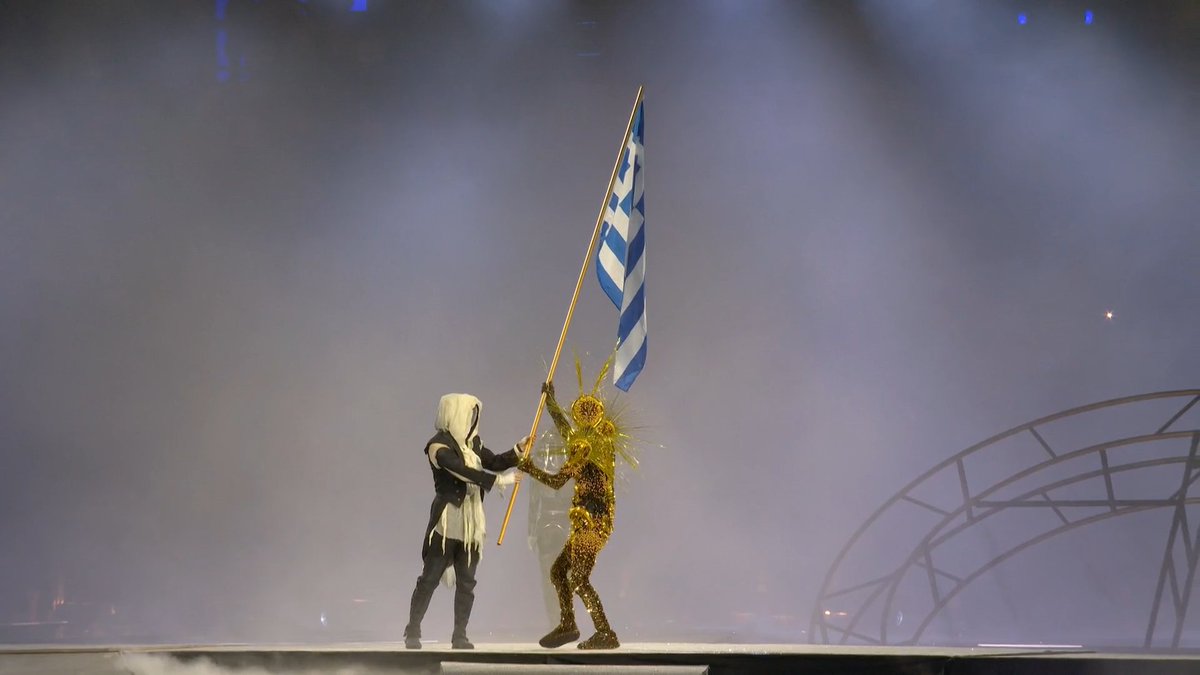
Athens 1896 🇬🇷 to Paris 2024 🇫🇷
It’s always worth remembering Pierre de Coubertin’s vision for the modern Olympic Games and the contribution of Greece.
#Paris2024#ClosingCeremony
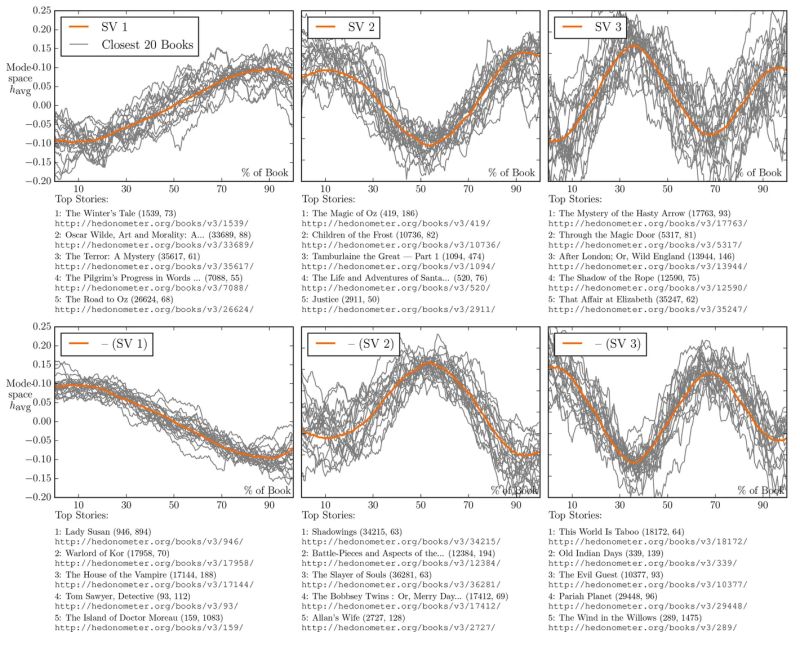
In 2016, researchers at the University of Adelaide tested Kurt Vonnegut's theory that, "There’s no reason why the simple shapes of stories can’t be fed into computers."
They took the emotional arcs of 1300+ novels from Project Gutenberg, turned that into data, used modern tech to analyze the emotional arcs, and then identified 6 patterns seen over and over again in western storytelling.
Here they are:
1. Rags to Riches (rise)
Your classic underdog tale. A humble, hardworking peasant climbs the mountain to pull the sword from the stone.
• Rocky
• King Arthur
• The Pursuit of Happiness
2. Riches to Rags (fall)
Maybe the saddest story of them all. A journey from the highest of highs to the lowest of lows.
• King Lear
• Citizen Kane
• Scarlet Letter
3. Man in a Hole (fall then rise)
A character’s doing fine, gets herself into a huge problem, but figures out how to overcome it. They often end up better than they started.
“You see this story again and again,” Vonnegut says. “People love it, and it is not copyrighted.”
• The Martian
• The Hunger Games
• Shawshank Redemption
4. Icarus (rise then fall)
The hero goes on a meteoric rise up New York (or some other) society, calls everyone “old sport,” and throws the wildest parties in town. Then reality sets in, and he realizes he’s too close to the sun.
• Macbeth
• Great Gatsby
• Death of a Salesman
5. Cinderella (rise then fall then rise)
I’ll leave this description to Vonnegut:
“We’re gonna start way down here. Worse than that, who is so low? It’s a little girl… the shoe fits, and she achieves off-scale happiness.”
• Red Rising
• Slumdog Millionaire
• The Count of Monte Cristo
This is my personal favorite.
6. Oedipus (fall then rise then fall)
Up until the ~70% mark of the story it looks like things are sunshine and rainbows. Walter White goes from high school teacher to king of the drug lords, if you will. Then all goes wrong. The original fall is often not their doing while the final fall is.
• Hamlet
• Gone Girl
• Breaking Bad
My 3 takeaways:
1. Rags to Riches, Oedipus, and Cinderella rank as the three most popular with consumers. AKA, those books sold the most copies.
2. When you think through a story, give it an emotional shape. Literally draw it.
X axis: Time
Y axis: Ill fortune to good fortune
You might be surprised how much it helps you craft your plot (I was shocked).
3. Vonnegut was a damn genius.
18 useful razors and rules:
1. Bragging Razor - If someone brags about their success or happiness, assume it’s half what they claim
If someone downplays their success or happiness, assume it’s double what they claim
2. High Agency Razor - If unsure who to work with, pick the person that has the best chances of breaking you out of a 3rd world prison.
3. The Early-Late Razor - If it's a talking point on Reddit, you might be early. If it's a talking point on LinkedIn, you're definitely late.
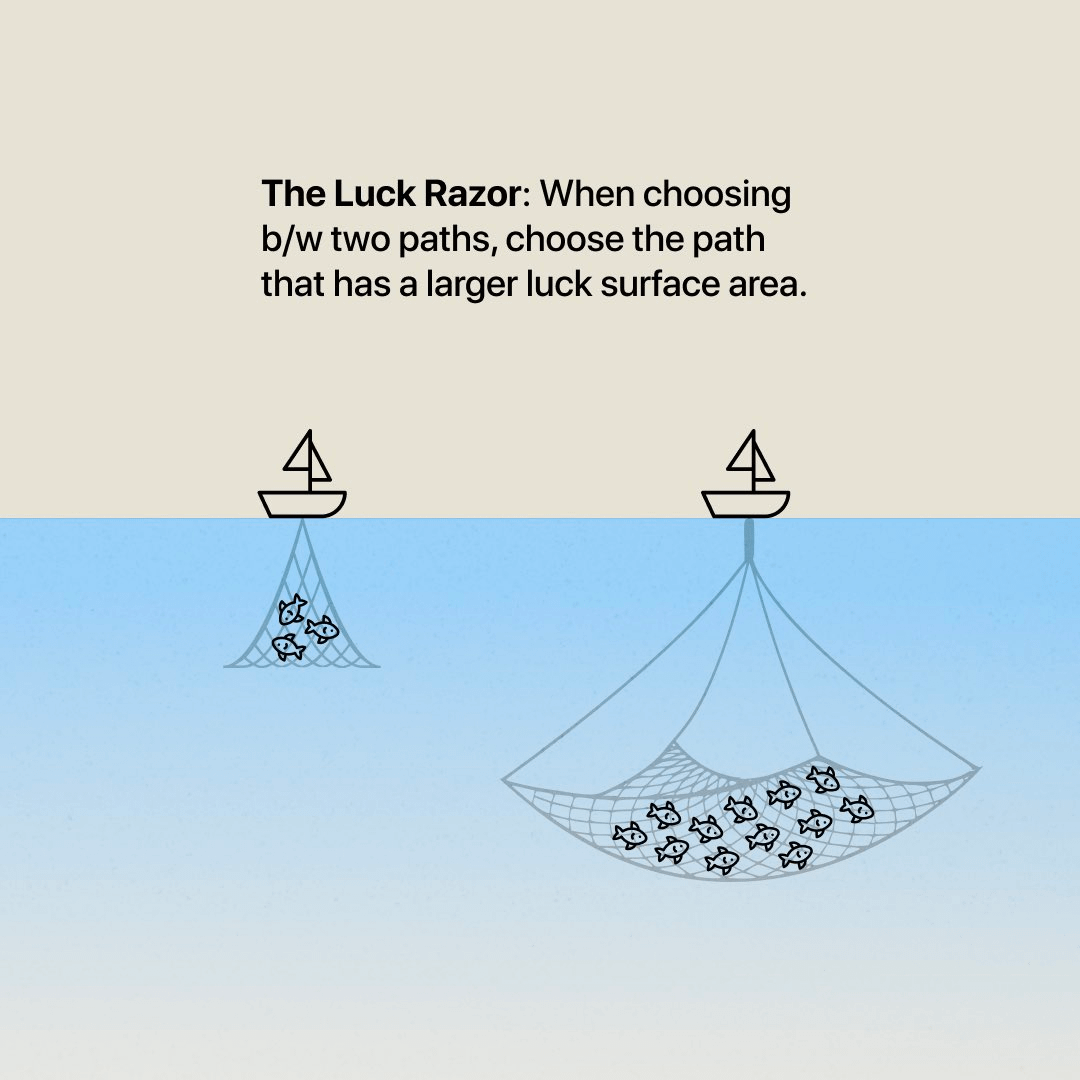
4. Luck Razor - If stuck with 2 equal options, pick the one that feels like it will produce the most luck later down the line.
I used this razor to go for drinks with a stranger rather than watch Netflix. In hindsight, it was the highest ROI decision I've ever made.
5. Buffett's Law - "The value of every business is 100% subject to government interest rates" - Warren Buffett
6. The 6-Figure Razor - If someone brags about "6 figures" -- assume it's closer to $100K than $900K.
7. Parent Rule - Break down the investments your parents made in you: Time, Love, Energy, and Money.
If they are still alive, aim to hit a positive ROI (or at least break even.)
8. Instagram Razor - When you see a photo of an influencer looking attractive on Instagram -- assume there are 99 worse variations of that photo you haven't seen.
They just picked the best one.
9. Narcissism Razor - If worried about people's opinions, remember they are too busy worrying about other people's opinions of them. 99% of the time you're an extra in someone else's movie
10. Everyday Razor - If you go from doing a task weekly to daily, you achieve 7 years of output in 1 year. If you apply a 1% compound interest each time, you achieve 54 years of output in 1 year.
11. Bezos Razor - If unsure what action to pick, let your 90-year-old self on death bed choose it.
12. Creativity Razor - If struggling to think creatively about a subject, transform it:
• Turn a thought into a written idea.
• A written idea into a drawing.
• A drawing into an equation.
• An equation into a conversation.
In the process of transforming it, you begin to spot new creative connections.
13. The Roman Empire Rule - Historians now recognize the Roman Empire fell in 476 - but it wasn't acknowledged by Roman society until many generations later.
If you wait for the media to inform you, you'll either be wrong or too late.
14. Physics Razor - If it doesn't deny the law of physics, then assume it's possible. Do not confuse society's current lack of knowledge -- with this knowledge being impossible to attain.
E.g. The smartphone seems impossible to someone from the 1800s -- but it was possible, they just had a lack of knowledge.
15. Skinner's Law - If procrastinating, you have 2 ways to solve it:
• Make the pain of inaction > Pain of action
• Make the pleasure of action > Pleasure of inaction
16. Network Razor - If you have 2 quality people that would benefit from an intro to one another, always do it.
Networks don't divide as you share them, they multiply.
17. Gell-Mann Razor - Assume every media article contains a % of false information.
Sandbox the article from your worldview until you've:
• Seen primary sources
• Spoken to 3 domain experts
18. Taleb's Surgeon - If presented with two equal candidates for a role, pick the one with the least amount of charisma.
The uncharismatic one has got there despite their lack of charisma. The charismatic one has got there with the aid of their charisma.
-----
Just turned 30 and these are the non-obvious rules that always produced outsized returns when following them -- and outsized downside when neglecting them.
Taken from my newsletter. Link below.
“The Greek language is one of only three, among those now spoken and written anywhere in the world, that can boast a continuous written tradition stretching back for more than three thousand years. The others are Chinese and Hebrew. The collective heroes and heroines of the story told in this book are all those people who have spoken and written the Greek language throughout the long centuries of its recorded evolution.
During that time, Greek was used at first to keep bureaucratic records, then to preserve for posterity the heroic epics, the liad and the Odyssey of Homer, that have been read with wonder by every generation since. It was the language of the world's first fully alphabetic system of writing. It was in Greek that the foundations for modern philosophy and science were laid and, later, that the apostles of Christianity would disseminate the new religion through the New Testament. The original Greek text of the Gospels is still read aloud in Orthodox churches around the world. Evolving as all human speech does over time, Greek in its present-day form is the official language of the Hellenic Republic and one of the two official languages of the Republic of Cyprus.
The Greeks of the title and the pages that follow are to be understood as speakers of the Greek language. The story of these Greek speakers will turn out to be a story about identity— or rather, about identities, in the plural. Greek speakers have been adept, ever since we first get to know them through their earliest writings, at asking questions and interrogating themselves. The answers they have come up with have differed greatly over the centuries, according to cultural changes and changing historical circumstances.
Throughout history, Greeks have created types of societies and political systems very different from one another. If they have continuously inhabited the same southeastern corner of Europe and the eastern Mediterranean, they have also, at different times, put down roots in many different places. Again and again, they have proved resourceful at reinventing themselves. They have fought against different enemies, traded with different partners around the world, worshipped different gods, even called themselves by different names. We call them 'Greeks', and their land 'Greece, in English today because the ancient Romans first encountered a local tribe of Greek speakers whom they called, in Latin, Graeci. In their own language in ancient times, these people were known as 'Hellenes' and their land as 'Hellas', as they have been known once again since the early nineteenth century. But they have also, at different times, been Achaiwoi (Achaeans) and Romaioi or Romioi (pro-nounced Romyí), meaning literally 'Romans.’
This book asks: What can we learn from the accumulated experience of those who have spoken and written this language, during three and a half thousand years, about how identities are created, perpetuated, and modified or reinvented over time? We all rely on perceptions of the past to establish our own identity in the present.
In a world ever more threatened by the clash of mutually exclusive, monolithic identities, we might all do well to reflect, on a more informed basis than we often do, on the ways in which these identities come to be formed and also adapted as the world around us changes. The story of the Greeks, based on their own words, that can be traced all the way back to the earliest period of recorded history, sheds light on this process rather than on any single identity, seemingly fixed and given at any one time.” Preface - The Greeks: A Global History by Roderick Beaton
Over time I’ve tweeted a lot about evidence-based medicine. But oncologists are often in situations with little or no evidence to guide them.
In these situations we go to “first principles”. But what are the first principles? Here’s a thread outlining those I think are key.
Warren Buffet started investing at age 11.
But most parents don't teach their kids about money at all.
10 financial concepts every parent should teach their kids:
1/4 New commentary on the big data paradox, i.e., the phenomenon whereby as the number of patients enrolled in a study *increases*, the probability that the confidence intervals from that study will include the truth *decreases* 👉 https://t.co/yGNPg3yBf2