@KosmidisStathis Τόσα χρόνια δεν έμαθαν απολύτως τίποτα.
Αυτό είναι το τεράστιο ατού της αριστεράς,να δημιουργεί κοινωνικό άλλοθι σε χρόνο ντετέ.Βέβαια,το ότι δεν κυβερνάει και αυτό κάτι σημαίνει.
@PunIntended20 Ολοι ξέρουν ότι ένα τραπέζι και μερικές καρέκλες κάνει την παρανομία λιγότερο παράνομη και με λίγη δόση εντιμότητας της αριστεράς,θα μετατραπεί σε αναγκαίο αγώνα να φύγει το καθεστώς.
Έχει άλλη χάρη νασαι αριστερός
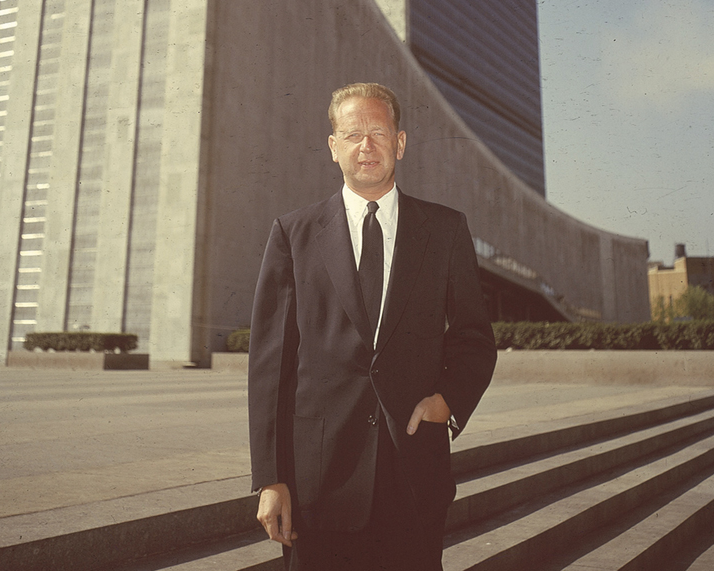
The mysterious death of United Nations Secretary General Dag Hammarskjöld in 1961 has been laid at the feet of nearly every major power of the era.
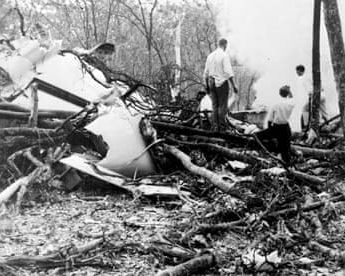
On September 21st, 1961, Hammarskjöld was flying in a Douglass DC-6B along with fifteen others to the town of Ndola for peace talks with Katangan forces, who were rebelling against the Congolese government. His plane crashed in Northern Rhodesia, present-day Zambia. Northern Rhodesian forces quickly sealed off the area. Witnesses later said that they had seen a second airplane that night, firing on Hammarskjold’s lumbering DC-6.
Just days prior to the crash, Operation Morthor had commenced at Hammarskjöld’s direction. Peacekeeping troops clashed with Katangan rebels, and one engagement between Katangan forces and a company of Irish troops became known as the Siege of Jadotville. The UN action there infuriated the Belgian mining companies in the area as well as Britain, the US, and the Soviet Union.
The CIA, MI6, and KGB were all heavily involved in the Congo. Belgian-supported Katangan forces had captured and executed Patrice Lumumba a few months before Hammarskjöld’s fatal voyage, and the CIA had come close to assassinating Lumumba themselves, going so far as to send Dr. Sidney Gottlieb to the Congo with a disguised bioweapon for the job.
In 1998, a Truth and Reconciliation Committee also uncovered possible links to the South African Institute for Maritime Research, a paramilitary organization with a deliberately misleading name. A recruit to the organization in the 1980s claimed that members of the Institute described the Hammarskjöld crash as “one of their greatest successes.”
One of the most likely theories appears to be that a Belgian mercenary pilot named Jan Van Risseghem employed by Katangan forces flew a Fouga Magister and intercepted the DC-6. He may have been attempting to force it to land by firing rounds near the aircraft which inadvertently struck it. New information was coming to light as late as February 2019, but it appears unlikely that the full truth will ever be known about what happened that night.
#rhodesia #unitednations #congo #coldwar #crash
@seriousthreat98@Anthenwtikos Δευτερά τετάρτη Σάββατο προφυλακίζουν αβέρτα κόσμο.Τρίτη πέμπτη παρασκευή αφήνουν αβέρτα κόσμο έξω γιατί είναι παιδιά τους.
Δεν τους πιάνεις από πουθενά.
🚨 BREAKING: US AIR FORCE CLOUD PLATFORM HACKED
Hackers have breached the US Air Force’s Cloud One computing platform, potentially exposing sensitive military, personnel and logistics data, Reuters reports.
The breach has disrupted operations, prompting US Cyber Command to assess the damage.
The hackers’ identities and whether any data was stolen remain unknown.
Source: Reuters.