Reverend Sammy Wainaina: Ruto came out as a guy who has solutions. You use religion to cover yourself as a politician. You even make Christianity look really bad… Clergy have become political brokers.
@NginaKirori#NTVTonight
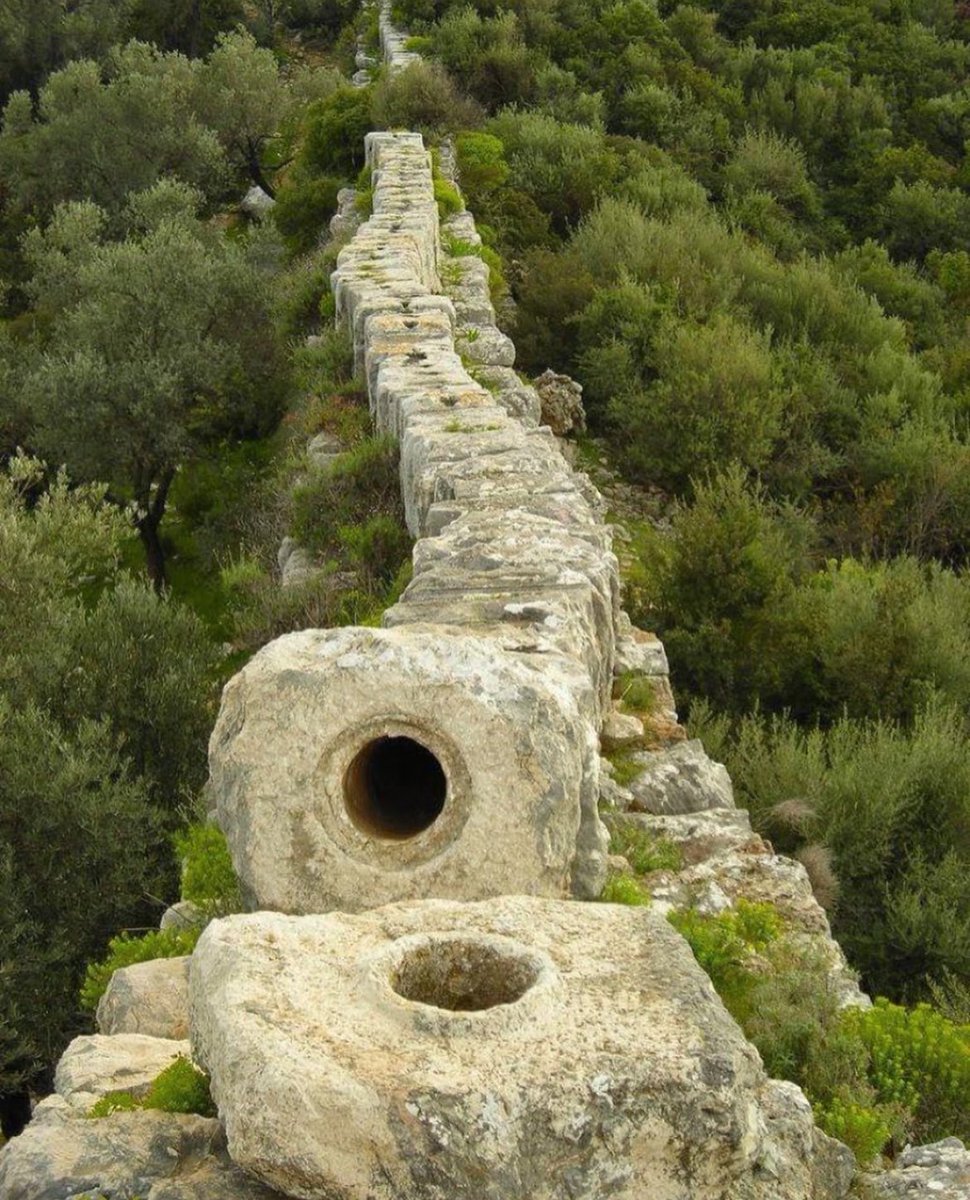
The Ancient Roman aqueduct in modern-day Turkey, dating back thousands of years, is a testament to the incredible engineering and architectural skills of the Roman Empire. These aqueducts were designed to transport fresh water to densely populated areas, and they were a significant improvement over the earlier structures built by civilizations in Egypt and India. The Roman aqueducts were constructed over a period of 500 years, from 312 BC to AD 226, and were funded by both public and private sources. Some of the most famous Roman rulers, such as Augustus, Caligula, and Trajan, commissioned the construction of these aqueducts.
The aqueducts were made up of pipes, tunnels, canals, and bridges, which utilized the natural slope of the land and gravity to channel water from sources like lakes and springs to the cities. Once the water reached the cities, it was used for various purposes, including drinking, irrigation, public fountains, and baths. The capital city of Rome had as many as 11 aqueduct systems, some of which were sourced from as far as 92 km (57 miles) away.
Interestingly, some of these ancient Roman aqueducts are still functional and continue to provide modern-day Rome with water. For example, the Aqua Virgo, an aqueduct built by Agrippa in 19 BC during the reign of Augustus, supplies water to the iconic Trevi Fountain in the heart of Rome. This remarkable feat of engineering demonstrates the enduring legacy of the Roman Empire and its impact on the development of modern infrastructure.
The Ancient Roman aqueduct in modern-day Turkey, dating back thousands of years, is a testament to the incredible engineering and architectural skills of the Roman Empire. These aqueducts were designed to transport fresh water to densely populated areas, and they were a significant improvement over the earlier structures built by civilizations in Egypt and India. The Roman aqueducts were constructed over a period of 500 years, from 312 BC to AD 226, and were funded by both public and private sources. Some of the most famous Roman rulers, such as Augustus, Caligula, and Trajan, commissioned the construction of these aqueducts.
The aqueducts were made up of pipes, tunnels, canals, and bridges, which utilized the natural slope of the land and gravity to channel water from sources like lakes and springs to the cities. Once the water reached the cities, it was used for various purposes, including drinking, irrigation, public fountains, and baths. The capital city of Rome had as many as 11 aqueduct systems, some of which were sourced from as far as 92 km (57 miles) away.
Interestingly, some of these ancient Roman aqueducts are still functional and continue to provide modern-day Rome with water. For example, the Aqua Virgo, an aqueduct built by Agrippa in 19 BC during the reign of Augustus, supplies water to the iconic Trevi Fountain in the heart of Rome. This remarkable feat of engineering demonstrates the enduring legacy of the Roman Empire and its impact on the development of modern infrastructure.
@historyinmemes Cristopher Nolan also bought and crashed a real 747 in Tenet to avoid using CGI...
Hope you enjoyed this behind the scenes footage :)
If yes, consider checking out my profile, I post about anecdotes and curiosities of the 20th century!
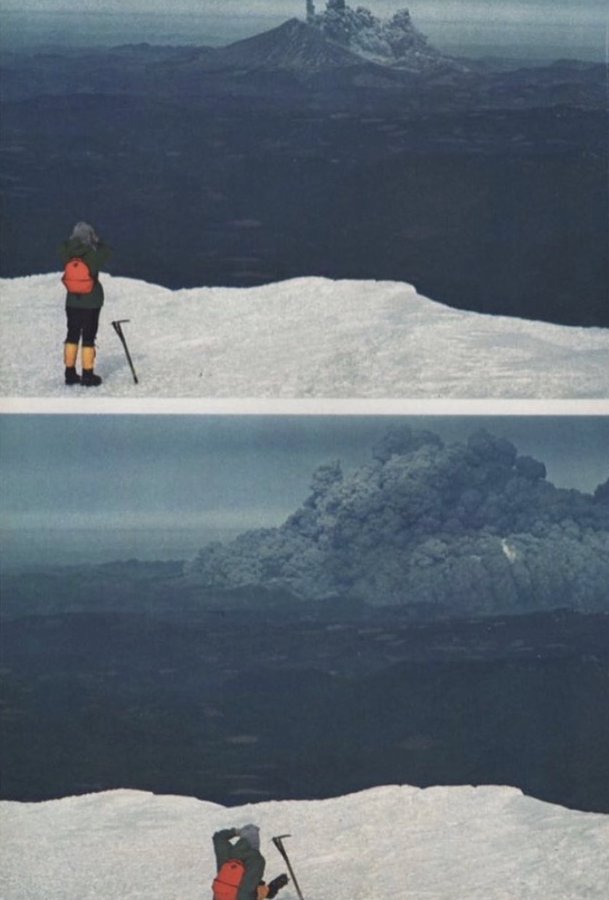
On a clear day in May 1980, a group of hikers on Mt. Adams witnessed a monumental event in natural history. They observed the eruption of Mt. St. Helens, located a mere 33 miles away. This eruption, marked by a massive ash cloud and darkened skies, was the most significant in U.S. history. It led to the loss of over 50 lives and devastated vast areas of land, wiping out numerous animal and plant species.
The photograph, although not providing details about the hikers, captures this dramatic moment in time. The eruption's impact was global, with its ash cloud circling the earth.
Decades later, the region shows signs of recovery. Forestation efforts by the Forest Service, including the planting of ten million trees, have helped revive the landscape. The regrowth of trees and vegetation, alongside the return of various wildlife species, is a testament to nature's resilience in the face of such a catastrophic event.
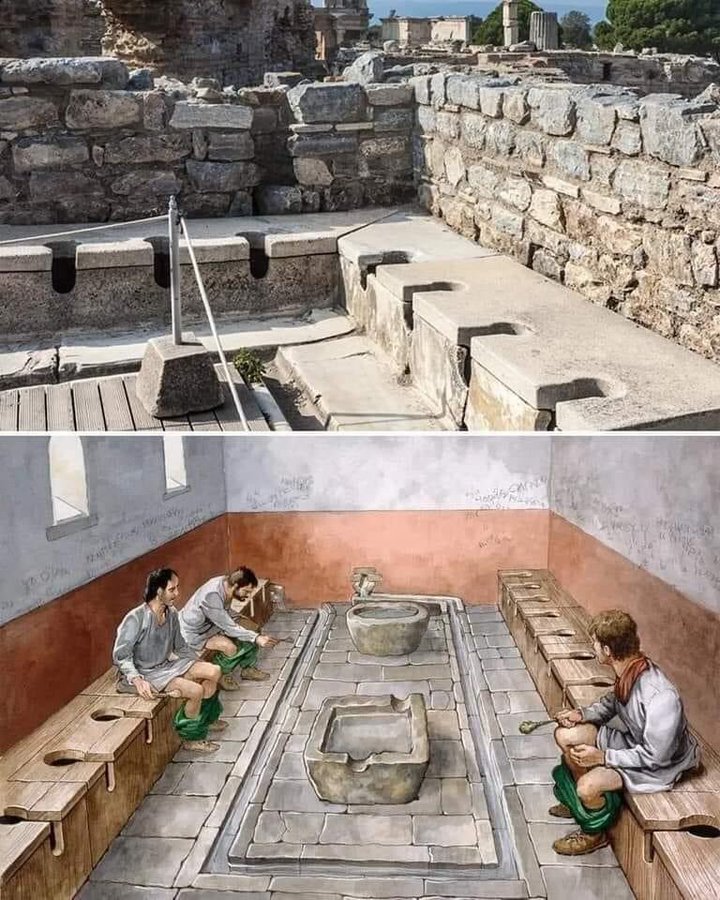
Roman public latrines looked much like their Greek predecessors: rooms lined with stone or wooden bench seats positioned over a sewer.
A tool called a tersorium was “used to clean the buttocks after defecation.” Imagine a loofah, but made of fresh sea sponge, attached to a wooden rod.
𝗕𝗿𝗶𝗲𝗳 𝗛𝗶𝘀𝘁𝗼𝗿𝘆 𝗢𝗳 𝗧𝗵𝗶𝗸𝗮
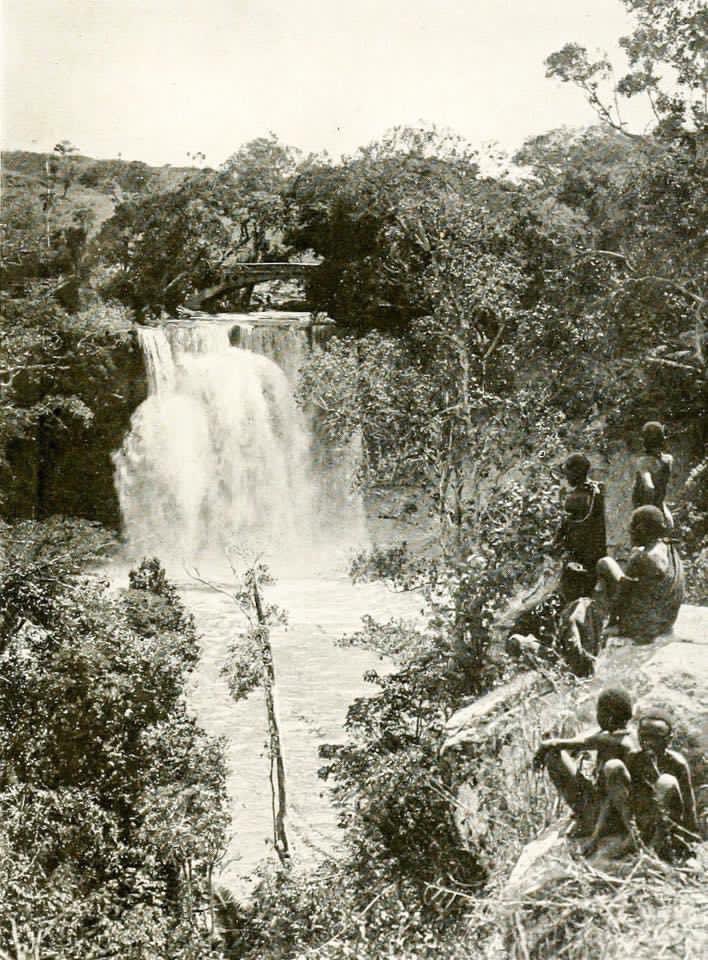
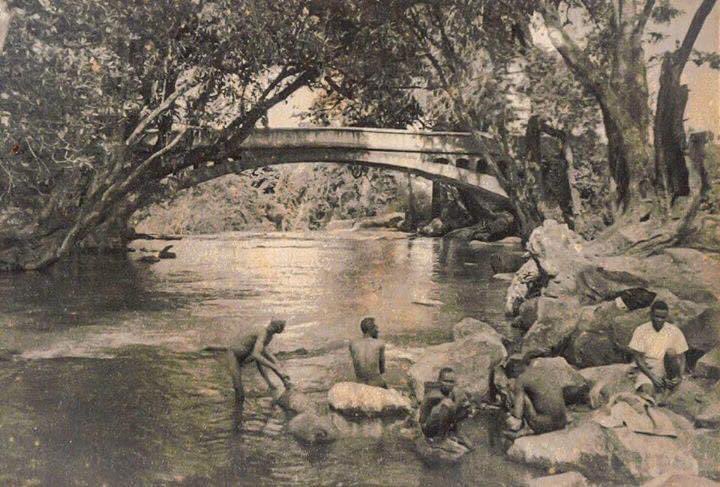
Enclosed are two photos of River Chania - in 1909 and 1945 respectively. - taken near Blue Posts Hotel.
The 1909 photo was taken during the (former US President) Roosevelt expedition.
One account on the formation of the town has it that in the period before 1900, the Maasai and Kikuyu communities that lived here battled fiercely over the area where the pools of water from Rivers Chania and Thika provided ideal grounds for the grazers and farmers, respectively.
The Maasai didn’t really fancy it for grazing but nonetheless came here to graze. They would then get into conflict with the Agîkûyû, who lived higher up and were arable farmers.
The Agïküyü wanted to be somewhere where rainfall was guaranteed and crops were assured.
The many tribesmen that perished were buried there, and these events potentially gave rise to the origin of the town’s name, “Gûthika”, which means “to bury” in Gîkûyû.
Fast forward to 1924 and the name Thika was made official.
Thika would expand to become a major industrial town. Major industries, including Kenya Canners, which later became Del Monte, were set up.
In those early years, everything seemed Asian-owned. Edmunds Butchery perhaps cut a desolate picture as the only European-owned retail store in Thika.
Soon, Thika would become the industrial town - the Birmingham of Kenya, Europeans in Kenya called it.
One of the earliest white settlers in Thika was Elspeth Huxley, who also authored 'The Flame Trees of Thika', a book that chronicled her life and interactions with the Maasai and the Agïküyü from around 1913.
The White Death, the deadliest sniper who ever lived, 1939-1940 Simo Häyhä was a Finnish farmer who took part in hunting and target practice from a young age. In 1939, the Soviet Union invaded Finland.
It began the Winter War or the Russo-Finnish War, and a young Simo Häyhä answered the patriotic call by joining the Finnish army to defend his homeland. Häyhä's home was also close to the border with Russia, which further fuelled his drive to defend his country.
Häyhä demonstrated incredible marksman abilities. He could fire 16 rounds per minute while hitting his target. This was exceptional as his rifle was the bolt action SAKO M/28-30, a Finnish version of the Russian Mosin Nagant.
This rifle only took five bullets using stripper clips. He also used the Suomi KP/-31 submachine gun. Häyhä also showed extraordinary abilities in skiing, which allowed him to travel quickly to new locations with very little noise.
Häyhä had several advantages. He knew his environment and wore white camouflage, making him very difficult to spot in the snow. He would pack snow around his position and would often put snow into his mouth to make the vapour from his breath not visible. The Soviet soldiers did not wear white camouflage and wore khaki uniforms.
Stalin had just purged many Red Army officers during the Great Purge, an event where Stalin killed many officers who served Vladimir Lenin. This was to ensure that they were loyal to Stalin. However, it meant that the Red Army was highly unorganized at the time due to inexperienced leaders.
During his time in the war (which only lasted 5-6 months), Häyhä killed 505 Soviet troops with his rifle. He also killed 200 with his Suomi submachine gun. He did this in less than 100 days. Häyhä achieved the highest amount of sniper kills ever.
The most incredible part is that he did this with iron sights and not with a scope, as the reflections from the sun on the scope could have exposed his position. The Russians feared him so much that they gave him the name "The White Death".
He was shot in the face with an explosive bullet but survived. He died in 2002 at the age of 96. His kill count is a topic of debate.