Why did 2.3.4.4b clade #H5N1 need a long stalk N1, unlike the previous clades H5N1s?
We identified the emergence of 2.3.4.4b #H5 HA with a distinct #glycosylation pattern in its RBD that drove its preferential pairing with long stalk N1 and the emergence of this novel variant.
We showed some time back 2.3.4.4b #H5N1 shows long stalk (full length) N1 (NA) in birds and mammals, unlike previous H5 clades , which preferentially paired with N1 with stalk deletions (short stalk).
Glad to see another study with similar observations
https://t.co/CdmmIRIkzs
How does inflammatory cell death reveal insights about Bat viral tolerance?
🦇 🦇
Check out our interesting discussion.
@sci_questions
@BICS_IISc@iiscbangalore
Inflammatory cells determine tissue damage and inflammation. We attempted to explain how this contributes to viral tolerance in bats🦇 Fantastic working with @sci_questions in this discussion. Superb contribution by @_Subham_Das@Disha__dak@C_Priyansh@Rita_QT
A new study by researchers at IISc offers insights into cell death regulation by viruses like SARS-CoV-2, and how bats and humans respond differently to tricks that such viruses use to manipulate the host’s defense.
https://t.co/9R3r92bkBY
#IIScresearch
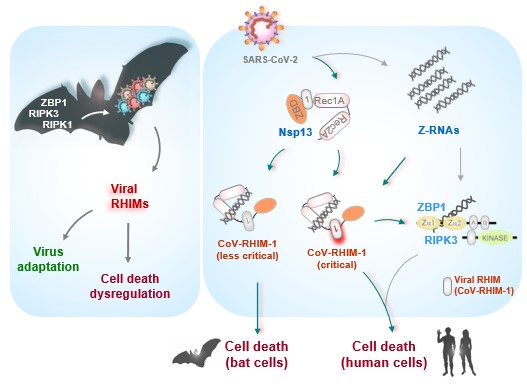
Elated to share our work reporting functional #viralRHIMs in bat-RNA viruses and their regulation of ZBP1-RIPK3-associated cell death, now out on @iScience_CP. Huge thanks to @keshu_VRimmCh for guidance,@Disha__dak,#Ayushi for their efforts.@CellPressNews https://t.co/PX3oHosNme
Reservoir host species (birds and bats) often stay asymptomatic compared to humans during viral infections. Regulation of multimodal cell death pathway (PANoptosis) in bats and birds contributes to their viral tolerance. #Anantika@keshu_VRimmCh
https://t.co/Kam80rXK0K
New study from our lab: Decoding non-human mammalian adaptive signatures of 2.3.4.4b H5N1 to assess its human adaptive potential
https://t.co/CtCJRZRThz
New work: Decoding non-human mammalian adaptive signatures of 2.3.4.4b #H5N1 to assess its human adaptive potential.
We aim to understand the non-human mammal adaptations of panzootic 2.3.4.4b H5N1 and assess the human adaptive potential of 2.3.4.4b H5N1
https://t.co/ycemfv41PJ
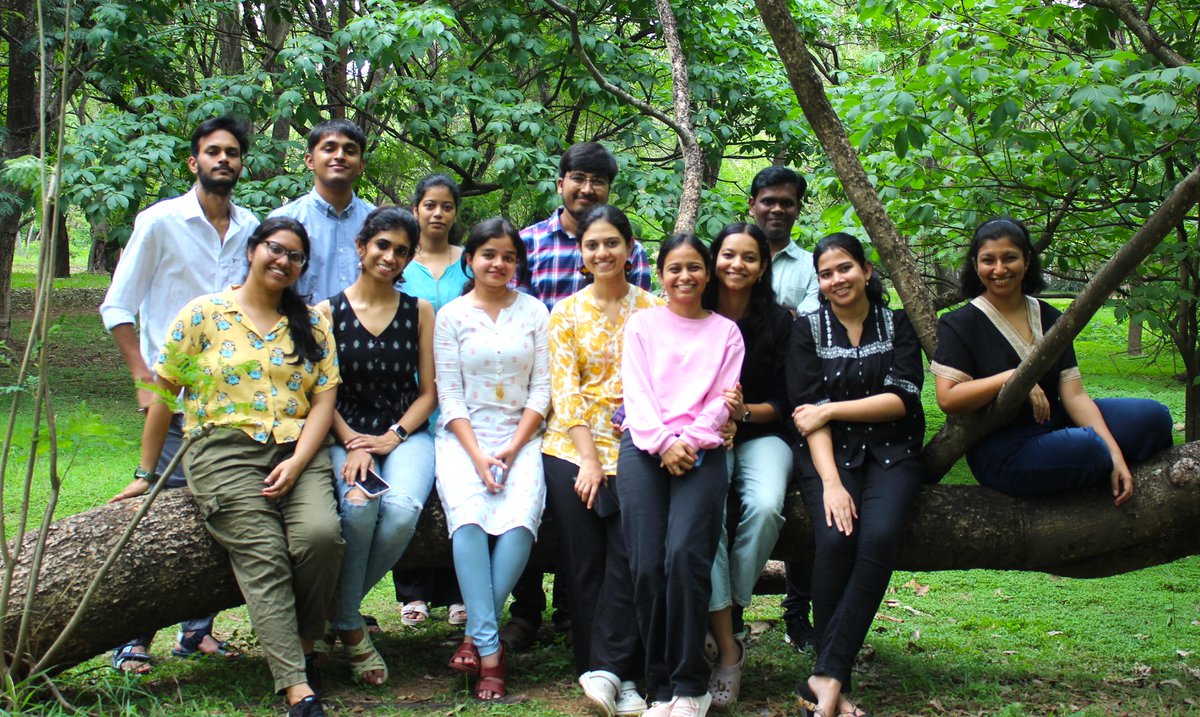
A Green and Bright Day at @iiscbangalore
Our lab picture at IISc.!!
Our group is interested in investigating the Emergence of Pandemic viruses, Reservoir host Biology, Z-RNA sensing and Cell Death.
@BICS_IISc
Our new work attempting 2 important questions:
Why did 2.3.4.4b clade #H5N1 emerge as a highly pathogenic panzootic virus, which has not been achieved by previous viruses?
Is the pairing of avian influenza HA and NA stochastic or molecularly programmed?
https://t.co/mPnb9XEfhj
#IISc#OpenDay.
Come & get to know,, All about bats/birds and how they instruct us about pandemics and cures for human disease.
@iiscbangalore@BICS_IISc
How current H5N1 strain evolved to be deadlier than the earlier strains is speculated.
But, Why the current #H5N1 is deadlier than previous ones is still enigmatic.!
Stay tuned for our study addressing this question that's coming up soon.
https://t.co/tAJfsIvEqV
Our tiny team @keshu_VRimmCh @Subham_das685 in collaboration with @sci_questions working to uncover the secrets of bats, potentially leading to reduced inflammation and disease🦇