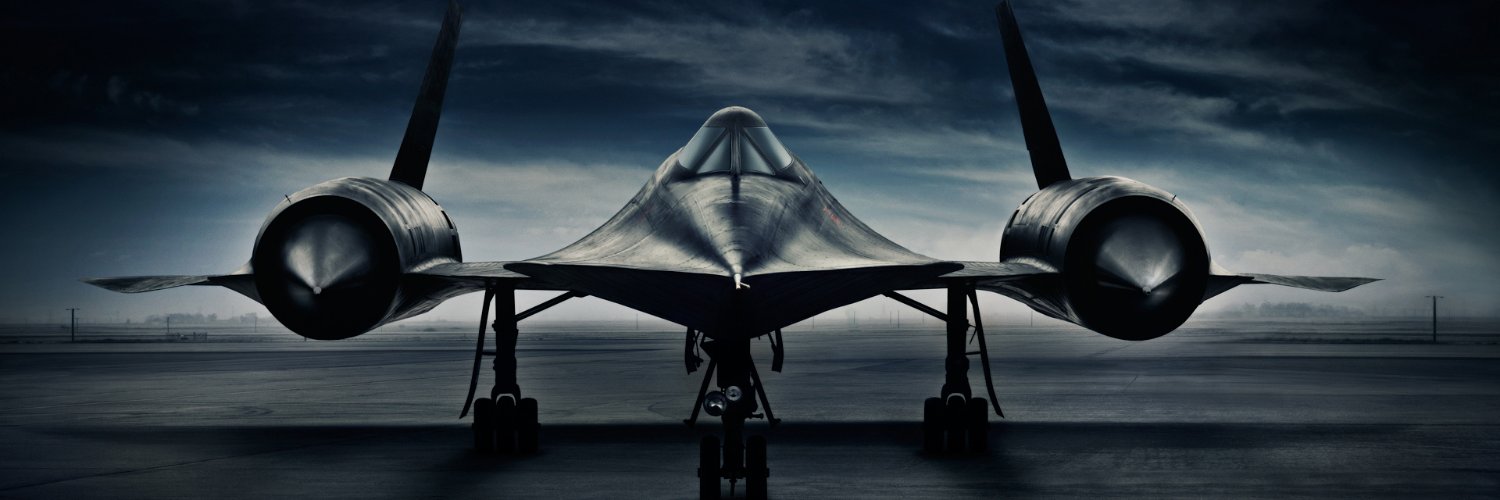
The fastest drone just hit 685 km/h — faster than any manned electric aircraft.
But speed records aren't the interesting part.
In Ukraine, interceptor drones are evolving in weeks instead of years. A $1,000 drone hunting a $25,000 target. Borrowing everything from the FPV racing world.
And in doing so, they're quietly solving the hardest problems in high-speed electric flight — power density, thermal management, autonomous guidance, structural fatigue under repeated high-power cycles.
GPUs were built for gaming. Crypto mining pushed the hardware further. Then the same stack became the foundation for modern AI.
The same pattern may be happening in aviation.
FPV racing built the ecosystem. Interceptor drones are forcing real-world iteration at a pace aerospace has never seen. Ballistic electric flight — aircraft climbing to 80,000 ft, punching past Mach 1, coasting to their destination — may emerge from the same technological base.
Not because interceptors scale directly into passenger aircraft. But because once a drone has to survive repeated missions instead of one, it stops being a munition and starts being a very high-performance electric aircraft.
Full post ( below )
whispers tech is definitely cool
in theory but when it comes to operation ultra distributed propulsion will face major challenges . lillium struggled with a similar concept . the distributed nature leads to complex wiring , maintenance and failure modes. in addition efficiency gains from
embedding are often lost due lower efficiency at lower speeds. in general propulsion has been getting bigger and bigger as can be seen with modern turbofans which are really ducted fans powered by a jet .
🚨 STOL & VTOL will never be the same. Meet JetFoil™, a new form of powered lift!
JetFoil embeds our UltraQuiet™ efficient ducted fans into the leading edges of wings for simple, compact, fast, safe, and silent runway independent operations.
ultra safe personal recreational flight is unlikely to ever be multicopters / pure eVTOL
no lift at all incase of battery / motor failures
no control authority in failures
the long-term prize is not matching airline safety.
it is moving personal flight from the 5-50x driving region toward the 1-5x driving region.
that would be a far bigger breakthrough than a new propulsion system.
very impressive from ehang
https://t.co/pEv4br3mVN
joby and archer will struggle to compete with the VT35 and its successors
ehang has the whole supply chain close to it and keep can iterating all subsystems aggressively
the long-term prize is not matching airline safety.
it is moving personal flight from the 5-50x driving region toward the 1-5x driving region.
that would be a far bigger breakthrough than a new propulsion system.
most personal aircraft innovation focuses on propulsion.
electric.
hybrid.
hydrogen.
but propulsion is not where most fatalities originate.
the larger opportunity may be changing the energy state of the aircraft itself.
lower wing loading.
lower speeds.
lower kinetic energy.
more survivable outcomes after mistakes.
"Top 1%" makes this sound much broader than it is.
From 1981 to 2022, India’s top 1% wealth share went from 12.5% to 40.1%.
But the top 0.1% went from 2.7% to 29.7%.
So the remaining 0.9% of the top 1% only went from 9.8% to 10.4%.
The actual story is the top 0.1% pulling away from everyone else. They are the ones who captured the real upside of market reforms, financialization and asset-price growth.
.@IndiGo6E is always keeping cabin temp too warm , should keep around 21c fuel savings will be significant
"At 35,000 ft the outside air is typically around -50°C. The A320's environmental control system uses hot engine bleed air and then expends energy conditioning it to the desired cabin temperature. A warmer cabin setpoint requires retaining more of that bleed-air heat and increases the temperature difference between cabin and ambient air, leading to greater heat loss through the fuselage.
The fuel savings from a few degrees are small, but the physics favors a cooler cabin, not a warmer one. Passengers can always add a layer; they can't remove excess cabin heat.
Cooler cabin = better comfort for most passengers and slightly better efficiency."
A good initiative: India’s new Ambassador to China @VDoraiswami speaking in Mandarin introduces the Indian Embassy and its services. A snippet of the video that’s up on Chinese social media
It's so hard to achieve improvements in governance these days because you aren't trying to out-think, out-organize the current morons in charge of organizations (common, subtle mistake)—you have to out-think, out-organize the genius founders, the long-dead titans who built them!
The fastest drone just hit 685 km/h — faster than any manned electric aircraft.
But speed records aren't the interesting part.
In Ukraine, interceptor drones are evolving in weeks instead of years. A $1,000 drone hunting a $25,000 target. Borrowing everything from the FPV racing world.
And in doing so, they're quietly solving the hardest problems in high-speed electric flight — power density, thermal management, autonomous guidance, structural fatigue under repeated high-power cycles.
GPUs were built for gaming. Crypto mining pushed the hardware further. Then the same stack became the foundation for modern AI.
The same pattern may be happening in aviation.
FPV racing built the ecosystem. Interceptor drones are forcing real-world iteration at a pace aerospace has never seen. Ballistic electric flight — aircraft climbing to 80,000 ft, punching past Mach 1, coasting to their destination — may emerge from the same technological base.
Not because interceptors scale directly into passenger aircraft. But because once a drone has to survive repeated missions instead of one, it stops being a munition and starts being a very high-performance electric aircraft.
Full post ( below )
the most realistic electric / hybrid aircraft design for todays battery densities
blown wing with distributed propulsion , where distribution is actually useful vs being distributed to reduce torque requirements of motors
clean turbogenerator integration to compensate for todays battery densities
surprised only lat aerospace is competing in this design space vs eVTOL where disk loading is impractical
Electra recently conducted the first urban demonstration of our Ultra Short, landing on the pier at Columbus Street Terminal in Charleston in front of CAPA Airline Leader Summit Americas attendees.
The demo brought Direct Aviation to life, showing what's possible when you can offer air services close to where people live, work and play, without the friction of long drives or traditional commercial air travel.
Read the release here: https://t.co/J7AyMDU3VH