The Digital Transformation: Knowledge, Innovation & Internationalization Strategies. Project Funded by the Spanish Ministry of Science (PID2021-124266OB-I00)
🚨 Due to high demand, I created a new (and much improved) version of the Econ Journal Matchmaker.
New tool here:
https://t.co/kvrQQmo5SG
#EconTwitter Please help spread the word by reposting. 🙏
More details below 👇
This issue includes some nice papers on difference-in-differences. My paper on nonlinear DiD with repeated cross sections is as easy as you think it should be: use logit, fractional logit, Poisson regression and take care in computing the average partial effects.
The Stata command lwdid is now available on SSC -- it implements Lee and Wooldridge (2025) rolling DiD estimators. The methods are described here: https://t.co/ubKnsajjmT
We provide methods similar to, and motivated by, Callaway and Sant'Anna (2021, Journal of Econometrics).
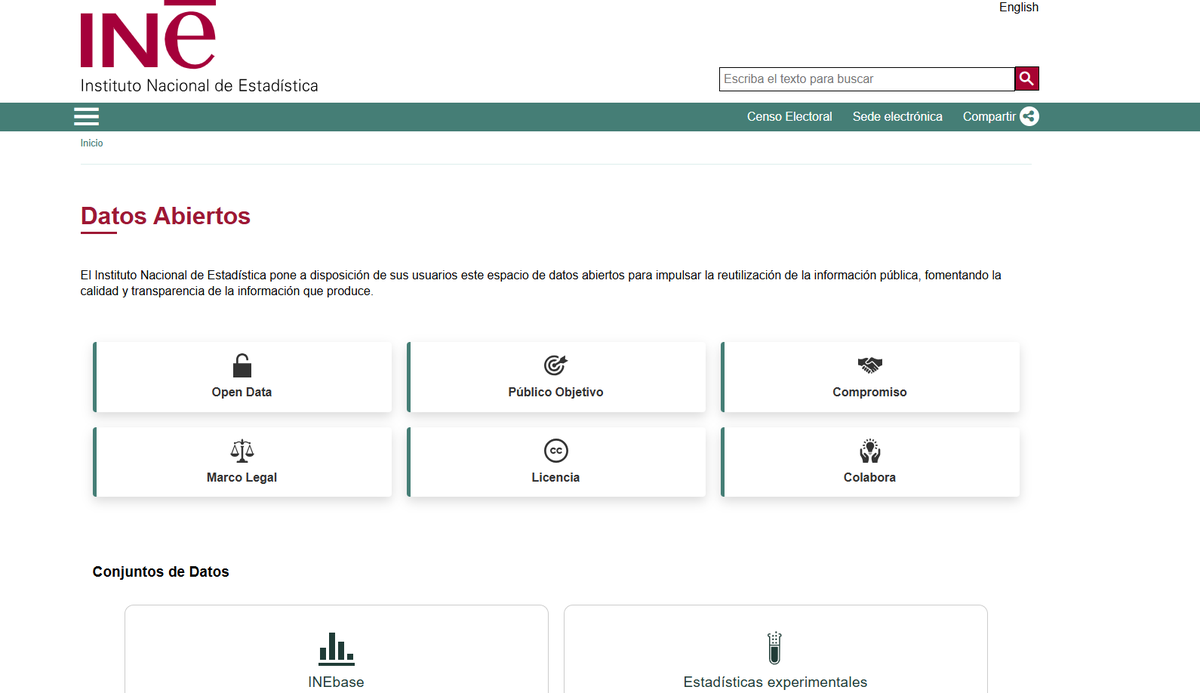
💻El Instituto Nacional de Estadística (@es_INE) lanza su nuevo portal de datos abiertos. Un espacio más accesible, transparente y fácil de usar para impulsar la reutilización de la información pública ➡️ https://t.co/cuE34qmQ8h
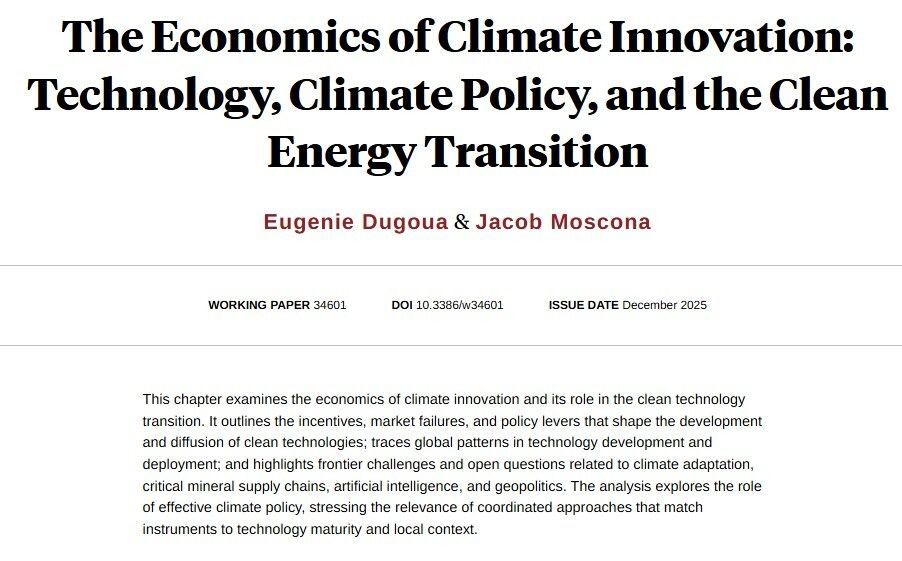
Examining the economics of climate innovation and its role in the clean technology transition and climate adaptation, from @eugeniedugoua and Jacob Moscona https://t.co/j7zLqmEpZc
📢 Join us for the IX DKIIS Workshop on Digital, Knowledge, Innovation & Internationalisation Strategies!
📅 6–7 November 2025
📍 Room 4P18, Facultat d’Economia, Universitat de València
If you’re around, come along and take part in the discussion! #Innovation#DigitalEconomy
What if artificial intelligence is just a “normal” technology? @TheEconomist
Its rise might yet follow the path of previous technological revolutions
https://t.co/qqJwlGVUZ9
🧵 Farming robots are no longer experimental. They're deployed, profitable, and reshaping agriculture.
In orchards, vineyards, vegetable fields, and beyond, they're tackling labor shortages, precision spraying, and chemical reduction at scale.
This is how robotics is quietly becoming the backbone of next-gen agriculture
[Save this thread for later 📌]
Everyone’s talking about @erikbryn, @econ_b & @RuyuChen’s excellent new paper Canaries in the Coal Mine.
It shows entry-level jobs shrinking in AI-exposed occupations.
But wait: earlier studies found AI helps novices most.
So why are entry-level jobs disappearing? (1/n)
.@joshgans has a thoughtful interpretation of our "six facts" about AI and the labor market: AI may be complementing certain workers (the more experienced ones in highly exposed occupations), leading some firms to hire more them relative to those just starting their careers.
I’m happy to announce our new publication! 🎉: University-to-industry knowledge transfers and firms’ resilience during the great recession: evidence for Spanish firms https://t.co/SzVpvjeN3R
EARIE 2025 was great.
Time to say goodbye to beautiful Valencia.
And to congratulate Michele Bisceglia, Chiara Gardenghi and Yuval Lidany for winning the YEEA Awards.
#EARIE2025
https://t.co/eDJBXzhW0J
1/10 Good news on AI could be bad news for Europe's debt.
A boom in AI-driven productivity could end decades of slow growth. But for Europe, this silver lining may hide a fiscal storm cloud. Here’s why.
Great Keynote by @DanielYiXu at #EARIE2025 on Structural Modeling Meets Event Study in Industry Equilibrium: Evidence from Environmental Regulations in China and the US