Uganda doesn't just need affordable capital. It needs a deliberate strategy to stop renting an industry it should own. My latest thoughts in @newvisionwire.
https://t.co/qJs4PppTQR
Dear Minister, @MoWT_Uganda@HonByamukama
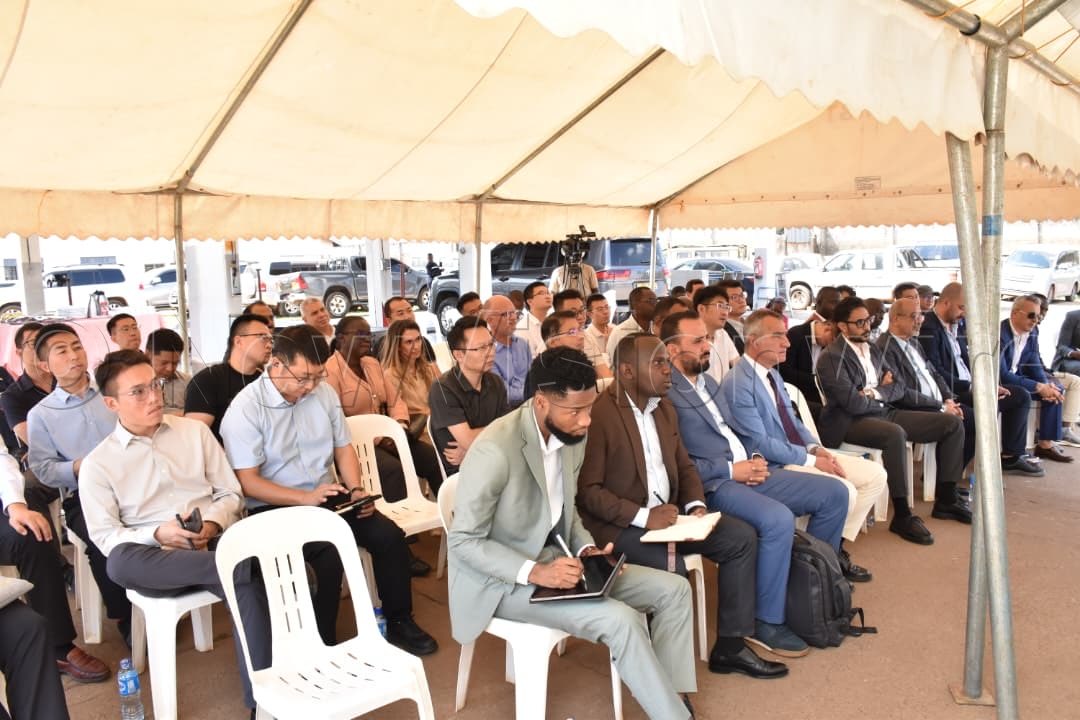
Thank you for convening the contractors. The only small concern is that, looking at the audience, one struggles to identify which country the meeting was intended to build.
We have become remarkably efficient at commissioning roads. We have been less successful at commissioning Ugandan road contractors.
Foreign contractors are not the problem. Every country needs international partners. The puzzle is why, after decades of infrastructure investment, Ugandan contractors still seem to attend these meetings as guests in an industry financed by Ugandan taxpayers.
Perhaps the measure of leadership is not how many kilometres of road are completed, but how many local companies graduate from subcontractors to prime contractors by the end of each project.
Otherwise, we risk celebrating completed roads while quietly renting the experience, the profits, the technology and the next generation of contractors.
The roads remain in Uganda. It would be nice if more of the industry did too.
.WATCH: Vincent Bagiire, PS, Ministry of Foreign Affairs, “We have not had a culture of following through prospects. We attend exhibitions, get business contacts, and fail to engage further. Going forward, if we are to achieve outcomes, we need to follow up aggressively and ensure every opportunity generated by our missions is tracked and converted into results. #ChimpReportsNews @UgandaMFA@Tybisa
Uganda's biggest export is gold.
But, for almost every Ugandan, gold remains one of the most distant industries in the country.
Most citizens have never seen a gold refinery. They do not own mining shares. They do not cut gemstones. They do not manufacture jewellery. They do not certify minerals. They do not trade bullion. They do not finance mining ventures.
Yet gold is now our largest export.
Perhaps the more revealing statistic is not that gold is Uganda's biggest export, but that gold has become Uganda's biggest export while remaining one of the most socially distant industries from the average Ugandan.
That should concern us.
A successful economy is not one where a commodity earns billions of dollars. It is one where millions of citizens participate in the industries built around that commodity.
The real gold economy is much bigger than mining. It includes exploration, engineering, laboratories, refining, certification, skilled cutting, jewellery manufacturing, logistics, finance, insurance, branding, retail and global marketing.
National prosperity comes when citizens participate across that entire value chain, not merely when gold leaves the country.
The challenge before Uganda is therefore bigger than increasing exports. It is bringing Ugandans closer to the industries that generate those exports.
Exports measure revenue. Participation measures prosperity. The two are not always the same.
President @KagutaMuseveni's response to @AndrewMwenda is not merely a political quarrel. It is a useful industrial policy document, written in the language of combat, irritation, memory, and national self-defence. The old man is making one important point: Uganda cannot remain a museum of raw materials.
Gold cannot leave as semi-processed dust while others capture the value. Coffee cannot leave as a poor man’s crop and return as a rich man’s lifestyle. Bananas, milk, steel, vehicles, minerals, herbs, and factories cannot remain jokes in the mouths of commentators who have never built even a wheelbarrow. On that point, I agree with him.
But in my forthcoming book, The Five Levels of Economic Power, I argue that nations do not become powerful simply because they own resources or even because they build a few factories. Real economic power is climbed in stages: Resource Ownership, Productive Control, Technological Command, Market Power, and Institutional Sovereignty.
Museveni’s letter is operating strongly between Level 1 and Level 2. He understands that raw-material export is a trap. He understands that processing matters. He understands that import substitution and export promotion are not slogans, but survival strategies. That is why his examples of gold refineries, coffee growth, dairy expansion, Kiira Motors, fruit processing, banana value addition, and steel are important.
But Uganda must now climb higher. Level 3 is Technological Command. Do we own the technology, the machinery, the standards, the patents, the engineering knowledge, and the research systems behind these industries?
Level 4 is Market Power. Do we control brands, logistics, regional distribution, finance, pricing, certification, and customer trust? Level 5 is Institutional Sovereignty. Do our ministries, universities, procurement systems, banks, standards bodies, and political incentives protect long-term industrial capability beyond speeches, projects, and personalities?
So yes, the President is right to defend industrialization. But the next national conversation must be sharper: not whether Uganda should industrialize, but whether we are building isolated factories or a full economic ladder.
Patriotism is the fire. Production is the first climb. Technology, markets, and institutions are the mountain. That is the real debate Africa must now have.
I have shared the full book summary here:
https://t.co/ys6hIFoRdj
Issue 002 | Rising Damp: The Structural Problem You Keep Repainting
=======
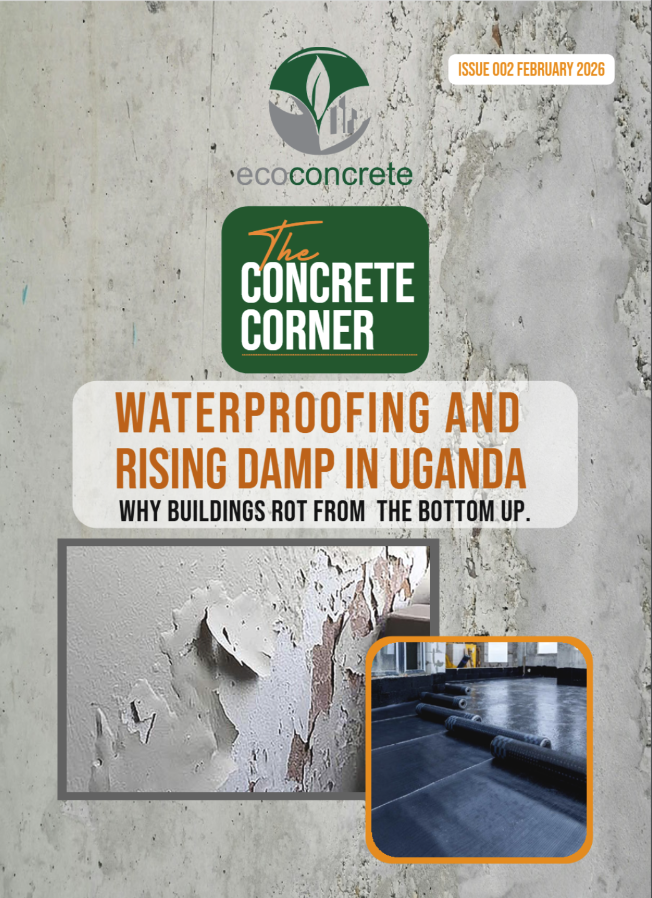
Welcome to Issue 002 of The Concrete Corner – February 2026.
Issue 001 examined how aggressive urban runoff attacks concrete from the outside, accelerating carbonation, surface spalling, and chemical degradation. Issue 002 turns to an equally destructive and far more common threat: the moisture that rises silently from below.
Rising damp is groundwater moving upward through porous masonry and concrete via capillary action. It asks no permission. It respects no finish. It carries dissolved salts that crystallize within pores, blister plaster, peel paint, corrode embedded reinforcement, and weaken mortar bonds over time. The faint tide mark at skirting level, the powdery white deposit along a wall base, the bubbling paint after a wet season; these are not cosmetic defects. They are early evidence of continuous moisture ingress that no amount of repainting will stop, because the capillary pathway remains active beneath the surface.
Rising damp is not a theoretical risk. It is a daily construction reality. Yet it persists largely because it is misdiagnosed, under-detailed at design stage, and poorly executed on site. The result is recurring repairs, declining durability, and buildings that cost far more to maintain than they should.
This issue addresses rising damp systematically: its mechanisms, the design and site failures that allow it to take hold, and the interventions; chemical, structural, and procedural; that can stop it permanently. We also examine binder selection, admixtures, and curing practices that reduce porosity from the outset, making moisture management a core durability requirement rather than a remedial afterthought.
For engineers, contractors, supervisors, and building owners: the tools to prevent rising damp are well established. This issue puts them in your hands.
Download a copy here:
https://t.co/p7DllSkhoJ
self-sufficient and socially conscious leaders.Youth between the ages of 15 to 30 are the initiative's target demographic. Vulnerable youth who are at risk of exploitation, teen pregnancy, or child marriage are
given priority under the program.