‼️ 🇱🇹 Lithuania Initiates Repeal of Constitutional Ban on Deploying Nuclear Weapons
The political leadership of Lithuania has supported the repeal of Article 137 of the Constitution, which prohibits the deployment of weapons of mass destruction and foreign military bases. President G. Nausėda, Prime Minister-designate M. Sinkevičius, Defense Minister R. Kaunas, and Seimas Speaker Juozas Olekas have advocated for the constitutional amendment. Adopting the amendments requires 94 votes in two separate votes with an interval of at least three months.
Defense Minister R. Kaunas reported on closed-door negotiations with the US regarding the potential deployment of American nuclear weapons in Lithuania. The talks are taking place against the backdrop of a reduction in the US military presence in Europe and plans to withdraw about a thousand American troops from Lithuania.
President G. Nausėda stated that the deployment of allied nuclear weapons could serve as a deterrent.
Video is made Grok AI
‼️🇺🇲🇷🇺🇵🇱 BIG | Russia is preparing for a large-scale military provocation, which could take place against Poland or one of the Baltic states.
The US has warned Poland that the Russian Federation is preparing an armed provocation in the coming months, The Telegraph and the Polish publication Onet report, citing intelligence services.
Russia's target could be Poland's critical infrastructure via missiles and drones, or Russian soldiers might cross the border into NATO territory.
Washington has already sent several warnings to Warsaw about this plot, sources close to Polish President Karol Nawrocki told the Polish news outlet Onet, which, along with The Telegraph, is owned by Axel Springer and is part of its Global Reporters Network. The purpose of the Russian provocation would be to escalate tensions and force Western allies to halt aid to Ukraine. This could begin in a few months.
Polish security service sources also do not rule out a more conventional attack, such as a small-scale ground incursion by Russian soldiers onto NATO's eastern flank. According to Onet's security service sources, provocation scenarios could include drone attacks on critical infrastructure like power plants, or simulated airstrikes, forcing Poland to activate its air defense systems.
A Polish intelligence source stated that in the most extreme scenario, a "hybrid attack in the border region" could occur. According to the same source, an armed incursion involving Russian or Belarusian soldiers is possible. This could be presented by Russia as an accidental crossing into Polish territory due to a GPS malfunction, or as a suspicious rescue mission to retrieve a damaged helicopter. Polish sources told Onet that Russia hopes that in such a situation, instead of opening fire on Russian or Belarusian soldiers, the US would pressure Poland to negotiate with Russia or Belarus rather than respond with force. A scenario in which the Russians leave Poland as a result of these negotiations, rather than through military coercion, would be seen as a victory from Moscow's perspective.
During such negotiations, in exchange for withdrawing troops from Poland, Russia's main demand could even be the termination of Western support for Ukraine.
"The US systematically provides information to Poland about new Russian plans for a conventional attack on NATO's eastern flank, from which Poland is by no means excluded," said a source close to the Polish President.
A second source, an ambassador of one of Poland's NATO allies, also confirmed that a provocation in the Baltic states and Poland is a serious risk. This information was confirmed by a third source within the Polish Ministry of Defense. A fourth security source from the Baltic states confirmed to The Telegraph that such plans are indeed being discussed in Moscow. Following this, Russia might attempt to claim that the provocation was carried out by Ukraine.
Any ground attack by Russia could be launched either from Kaliningrad—Russia's exclave north of Poland where nuclear weapons are stationed—or from the east, via Belarusian territory. Such methods are Russia's only realistic way to stage a provocation. Because its forces are bogged down in Ukraine, it lacks the resources to wage a full-scale war against NATO allies.
Although Poland remains a committed security ally of Ukraine, relations have become strained in recent months due to differing views on World War II-era history and the competitive agricultural industries of the two countries. There are fears that Moscow will attempt to widen this rift even further. In the worst-case scenario for NATO, Russia's goal would be to undermine Polish sovereignty, portray NATO as a "paper tiger" (demonstrate its helplessness), and force the cessation of Western support for Ukraine—all without triggering a conventional war with the alliance.
Video is made Grok AI
@YourAnonNews@AmoneyResists Europe did this experience. By billionaires backed fascism first, than after very terrible and expensive defeat of it, socialism (communism) came. Very long, very dangerous, very expensive. Modesty suits the wealthier. Otherwise they may loose everything, sometime life too..
“Prezident Pavel účastí na summitu NATO v Ankaře poškodí Českou republiku v zahraničí.” Prohlásil pan premiér.
Tak třeba ve Francii pana premiéra vyšetřují za podvody a pan prezident tam dostal Řád čestné legie.
Tak nevím no.
Zdála se to teoretická otázka, ale už je to tady:
Pomůže Babiš Polsku v případě napadení Ruskem??
Rusko plánuje napadnout Polsko, varovaly USA. https://t.co/gH6541XFQh
Systém funguje na principu **evaporativního chlazení** – voda se rychle odpařuje, odebírá teplo z okolního vzduchu a povrchů (stejně jako pot z kůže).
### Jak je to efektivní? Co říkají analýzy a studie
Neexistuje zatím mnoho dlouhodobých peer-reviewed studií přímo na tyto vysokopodlažní střešní systémy (jsou relativně nové v tomto měřítku a virální teprve teď), ale princip je dobře prozkoumaný a existují relevantní studie na podobné mlžicí/spray systémy v městském prostředí (ulice, parky, výstavy, zelené střechy + mlha). Shrnuji klíčové výstupy:
**Teplotní efekt (venkovní prostředí a ulice/pod domy):**
- Běžně uváděné (z čínských reportáží a videí z Yuncheng/Shanxi): snížení povrchové teploty střech o **5–8 °C** během minut, teploty vzduchu v okolí/dvorech o **3–6 °C** při venkovních teplotách kolem 35–38 °C.
- Vědecké studie na mlžicí systémy (např. Xi’an, Čína): snížení okolní teploty vzduchu o **2,4–4,9 °C**, relativní vlhkost stoupá o 17+ %.
- CFD simulace mlhy ve „street canyonu“ (ulice mezi budovami): až **~4,6 °C** snížení u chodců (výška 1,5 m) při vhodném průtoku a výšce trysek. Efekt je silnější po větru (downstream).
- Systematické review mlžicích systémů venku: až **8 °C** nebo více v ideálních podmínkách (horko + sucho).
Efekt na **ulicích a dvorech pod domy** tedy existuje – mlha z vysokých střech se částečně dostane dolů a vytváří lokální chladnější zóny v komplexu. Není to ale rovnoměrné (závisí na větru, proudění mezi budovami) a efekt slábne s výškou a vzdáleností.
**Efekt na byty uvnitř domů:**
- Přímé měření chybí, ale logicky a nepřímo:
- Chlazení střechy snižuje přísun tepla do nejvyšších pater (snížení teploty povrchu střechy o 5–12 °C v některých studiích na zelené střechy + mlhu).
- Chlazení okolního vzduchu snižuje tepelný zisk přes stěny a okna.
- Výsledkem může být nižší potřeba klimatizace nebo lepší komfort při větrání okny.
- Studie na bytových domech (např. Osaka, Japonsko – rooftop spraying) ukazují úspory energie a snížení městského tepelného toku. Není to ale náhrada za AC v extrémním horku – spíš doplněk.
**Další reálné parametry:**
- **Energie**: Výrazně nižší spotřeba než klimatizace (jen čerpadla a vysokotlaké trysky, žádný kompresor/chladivo). Některé zdroje mluví o 25–30 % úspor energie v komplexu.
- **Voda**: Největší otázka. Systém spotřebovává vodu, která se odpaří. V suchých oblastech Číny (jako Shanxi) to budí kritiku („plýtvání vodou“). Zastánci tvrdí, že celkově může šetřit vodu oproti AC (která často používá vodu v chladicích věžích elektráren) a s chytrým řízením (senzory teploty/vlhkosti) se dá spotřeba optimalizovat. Přesná čísla pro tyto systémy nejsou veřejně detailně k dispozici.
- **Omezení**:
- Nejlepší v **horkém suchém** počasí (velký rozdíl mezi suchou a mokrou teplotou). V humidním prostředí (jako často v Česku v létě) je efekt menší, vlhkost stoupá a může to být nepříjemné (hůř se odpařuje pot).
- Závislost na větru, údržba trysek, kvalita vody (minerály, bakterie – riziko Legionelly při špatné údržbě).
- Neřeší extrémní indoor komfort v uzavřených bytech.
### Shrnutí – je to efektivní řešení?
Ano, **v lokálním měřítku a správných podmínkách** funguje – dokáže reálně snížit teplotu venku o několik °C a pomoci s chlazením budov i ulic/dvorů pod nimi. Je to chytrý, relativně nízkonákladový doplněk k pasivním opatřením (izolace, zelené střechy, stínění). Není to však zázračné řešení, které nahradí klimatizaci v horkých bytech, a má jasné limity (voda, vlhkost, lokální efekt).
V EU/Česku by to mohlo mít smysl spíš v omezeném měřítku (veřejné prostory, nádvoří, specifické budovy) než masově na střechách paneláků – kvůli vodě, regulacím a humidnějšímu klimatu. Čína to používá jako rychlou reakci na vedra v husté zástavbě.
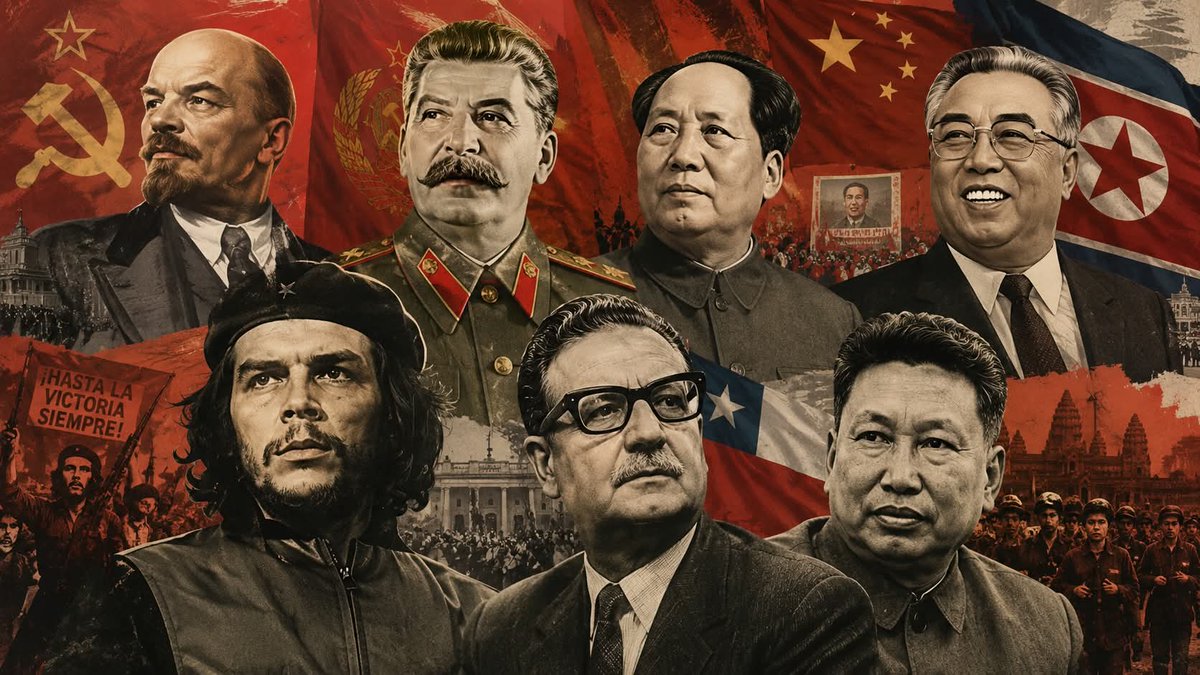
After the communists came to power in Russia in 1917, they said: "Your capitalism is flawed. We care about the working people, while you're doing everything wrong."
What followed was civil war, famine, political repression, and food ration cards.
When the communists came to power in China, they told the Soviet communists: "Your socialism is the wrong kind. We'll build the right socialism."
Then came civil war, executions, political repression, and food rationing.
The communists in Korea looked at all this and said: "Your socialism is wrong. Self-reliance is what really matters!" They started a war, followed by repression and, of course, food ration cards.
Watching all of this, Che Guevara declared: "Self-reliance? That's not real socialism! Revolution must be exported. The workers will support us, and communists from other countries will help."
Chilean communist Salvador Allende embraced that vision, and food rationing was introduced in Chile. The policy proved deeply unpopular, contributing to military unrest. A coup followed, along with repression, executions, and nearly twenty years of military dictatorship.
Seeing all this, Cambodian communist Pol Pot concluded: "Why bother with socialism? Let's build communism directly." He abolished education, healthcare, social institutions, and money, sealed the country's borders, oversaw the deaths of roughly one-third of the population, and, naturally, introduced food ration cards.
Today, many leftists argue: "None of those were real socialism. They all got it wrong. But when we come to power, we'll build the correct kind of socialism—the socialism it's supposed to be. A truly socialist socialism. Everything will be done for the benefit of working people."
So the question remains: Is there such a thing as "true socialism," or is it ultimately a utopian ideal?