Track and field athletes want to run fast, jump high, and throw far. I’m a varsity coach at a small Christian school, and I want this for our athletes too. I even want them to win.
This may sound strange, but I hope other schools want to win against us too.
I don’t say this because rivalry draws out better performances, though often it does. I want to coach in a way that cultivates intensity because our effort to win is part of what it means to glorify God in athletics.
Trying to win, however, is only part of glorifying God in sports. And not the biggest part either.
Whether coaches have full-time jobs in athletics or are parent volunteers, they have a wonderful opportunity to cultivate Christian maturity.
A coach can help an athlete rejoice with her teammate even though that teammate beat her in a close race. He can draw out respect for opponents, encouraging harmony with those an athlete is competing against. A coach can cultivate an athlete’s identity in Christ such that she could win the state championship and not become haughty, or tear an ACL and not be devastated.
We could simply call these lessons “coaching,” but this kind of coaching is an opportunity to cultivate what Augustine called “rightly ordered loves.”
𝗗𝗶𝘀𝗼𝗿𝗱𝗲𝗿𝗲𝗱 𝗟𝗼𝘃𝗲𝘀
In Making Sense of God, Tim Keller said this about rightly ordered loves:
𝘈𝘶𝘨𝘶𝘴𝘵𝘪𝘯𝘦 𝘵𝘢𝘶𝘨𝘩𝘵 𝘵𝘩𝘢𝘵 𝘸𝘦 𝘢𝘳𝘦 𝘮𝘰𝘴𝘵 𝘧𝘶𝘯𝘥𝘢𝘮𝘦𝘯𝘵𝘢𝘭𝘭𝘺 𝘴𝘩𝘢𝘱𝘦𝘥 𝘯𝘰𝘵 𝘢𝘴 𝘮𝘶𝘤𝘩 𝘣𝘺 𝘸𝘩𝘢𝘵 𝘸𝘦 𝘣𝘦𝘭𝘪𝘦𝘷𝘦, 𝘰𝘳 𝘵𝘩𝘪𝘯𝘬, 𝘰𝘳 𝘦𝘷𝘦𝘯 𝘥𝘰, 𝘣𝘶𝘵 𝘣𝘺 𝘸𝘩𝘢𝘵 𝘸𝘦 𝘭𝘰𝘷𝘦. . . . 𝘏𝘦 𝘢𝘭𝘴𝘰 𝘰𝘣𝘴𝘦𝘳𝘷𝘦𝘥 𝘵𝘩𝘢𝘵 𝘵𝘩𝘦 𝘩𝘦𝘢𝘳𝘵’𝘴 𝘭𝘰𝘷𝘦𝘴 𝘩𝘢𝘷𝘦 𝘢𝘯 𝘰𝘳𝘥𝘦𝘳 𝘵𝘰 𝘵𝘩𝘦𝘮, 𝘢𝘯𝘥 𝘵𝘩𝘢𝘵 𝘸𝘦 𝘰𝘧𝘵𝘦𝘯 𝘭𝘰𝘷𝘦 𝘭𝘦𝘴𝘴 𝘪𝘮𝘱𝘰𝘳𝘵𝘢𝘯𝘵 𝘵𝘩𝘪𝘯𝘨𝘴 𝘮𝘰𝘳𝘦 𝘢𝘯𝘥 𝘵𝘩𝘦 𝘮𝘰𝘳𝘦 𝘪𝘮𝘱𝘰𝘳𝘵𝘢𝘯𝘵 𝘵𝘩𝘪𝘯𝘨𝘴 𝘭𝘦𝘴𝘴. 𝘛𝘩𝘦𝘳𝘦𝘧𝘰𝘳𝘦, 𝘵𝘩𝘦 𝘶𝘯𝘩𝘢𝘱𝘱𝘪𝘯𝘦𝘴𝘴 𝘢𝘯𝘥 𝘥𝘪𝘴𝘰𝘳𝘥𝘦𝘳 𝘰𝘧 𝘰𝘶𝘳 𝘭𝘪𝘷𝘦𝘴 𝘢𝘳𝘦 𝘤𝘢𝘶𝘴𝘦𝘥 𝘣𝘺 𝘵𝘩𝘦 𝘥𝘪𝘴𝘰𝘳𝘥𝘦𝘳 𝘰𝘧 𝘰𝘶𝘳 𝘭𝘰𝘷𝘦𝘴.
Though at the time I wouldn’t have had this language of disordered loves, in college I experienced what Keller describes. “Unhappiness,” however, may not be a strong enough word. My disordered loves had depressing consequences.
I competed as a decathlete for a Division I university. I “walked on” and didn’t receive a scholarship, but over my years of competing in college, I did have exceptional teammates, including three Olympians. Their exceptional skill always challenged me to improve—and it caused me crushing anxiety. I’d stress out before every competition and even began to feel this way about key practices.
My self-worth would yo-yo. If I did well in a competition, I’d feel like life was worth living. But if I did poorly—or even failed to improve—I wondered, What’s the point of it all? I loved training and athletic success far too much, and God far too little. My loves were disordered.
Amid this despair, Jesus drew me back to himself. He used Christian coaches, teammates, and mentors to show me the beauty of the gospel and how to rightly order my loves for God, sports, and everything else.
𝗥𝗶𝗴𝗵𝘁𝗹𝘆 𝗢𝗿𝗱𝗲𝗿𝗲𝗱 𝗟𝗼𝘃𝗲𝘀
The notion of rightly ordered loves is helpful for athletes because it pushes in several directions at once. Our various loves fall into place when they are done out of ultimate love for God—with thanksgiving for his good gift of athletics, submission to his will for the outcome of our games, and a desire to please him in all our attitudes and conduct. In this way, Christian coaches can help athletes learn to love sports and even to love winning—but only as much as winning should be loved.
Last spring, one of our athletes added five inches to our school high jump record, and I certainly cheered loudly. When I walk into the gym, I smile at the championship banners earned by teams I’ve helped coach. Paul spoke of physical training as having “some value” (1 Tim. 4:8). Behind these records and banners lies a ton of training, discipline, perseverance, teamwork, character development, and a ton of joy—all valuable. But as a Christian, I’m wary of times when excellence is loved too much. For Paul to say physical training has some value implies there are also limits to its value. Physical training can’t forgive our sins, be our savior, or give us ultimate purpose in this life and the life to come—the very things Paul says hope in Christ and training in godliness can give (1 Tim. 4:7, 9–10).
We know we’re asking too much from sports and winning when we are devastated not merely disappointed after a loss, when we struggle to shake the hands of our opponents after a game, when we regularly sacrifice time with God and gathering on the Lord’s Day in order to practice or compete, or when we feel envy toward teammates who excel beyond us rather than thanksgiving.
As a coach, I don’t pit effort and excellence against sportsmanship and character. This dichotomy is unnecessary. Instead, I help the students on the teams I coach understand that when we love God most, there’s room for both playing hard and playing fair. Indeed, we love our competitors best when we grow in our ability to do both.
𝗕𝘂𝘁 𝗛𝗼𝘄?
Parents know that often “more is caught than taught.” The same goes for coaching. Athletes learn more from reading their coach’s countenance after a big win or loss than they do from what the coach says in the locker room. Coaches, we can undermine our lessons about the necessity of both hard work and rest if all we do is grind. We should consider what it communicates if we discipline athletes with extra sprints for missing free throws but not for being selfish teammates.
To help athletes rightly order their loves, we must first rightly order our own. We should pursue accountability from others, which means regular check-ins with other coaches, our athletic director, and other godly Christians who see us coach.
There are many ways to go about cultivating rightly ordered loves among a team. My college coach led a time called “Monday mindset” where he talked about virtue in sports and how to become a great teammate. Without saying it, these weekly meetings established a culture where it was clear there was more to sport than winning. Similarly, my wife begins her varsity basketball practices with a discussion question that help the girls on her team consider their hearts as they play. And when teams name captains, coaches should consider players with high character and not just the most skilled athletes.
Some of the best progress is made through one-on-one conversations (or confrontations) with athletes. By addressing rather than ignoring an athlete’s tantrum or apathy, I’ve been able to uncover and help them see some of their disordered loves that lay beneath their behavior.
𝗟𝗲𝘀𝘀𝗼𝗻𝘀 𝗳𝗼𝗿 𝗔𝗹𝗹 𝗼𝗳 𝗟𝗶𝗳𝗲
An exceedingly small number of athletes will make a living by playing sports. But the lessons learned on the field aren’t lost when competitions end. When an athlete learns to love sports and God in proper proportion, it carries over to the rest of life. The best employees, citizens, business leaders, husbands and wives, parents, friends, and church members have rightly ordered loves.
I’m thankful for all the opportunities in the past that the Lord gave me to play sports. I also thank God for the opportunity in the present to coach sports in a way that cultivates love for God and love for others. The young men and women on our teams need practice at this, and so do I.
(“Christian Coach, Help Athletes Cultivate Rightly Ordered Loves” by Benjamin Vrbicek. Original article: https://t.co/QI68ZoiDNS)
Do we pass that cross unheeding
Breathing no repentant vow,
Tho' we see Thee wounded, bleeding
See Thy thorn encircled brow?
Yet Thy sinless death hath bought us
Life eternal, peace and rest:
Only what Thy grace hath taught us
Calms the sinner's stormy breast.
#TLH145
The Lord Is My Shepherd…But What Does That Mean?
We all know the opening words of Psalm 23, “The LORD is my shepherd,” but what exactly does that mean? Someone who cares for us? Yes. Someone who leads, guards, and feeds us? Yes.
But is there more? Also yes.
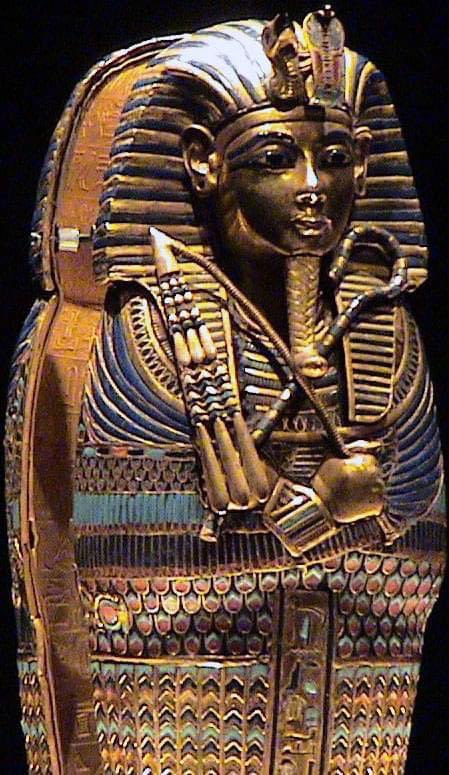
In the ancient history of Near East, and on into Greek and Roman times, both gods and kings were described as shepherds who were to care for their people. The Mesopotamian man of legend, Gilgamesh, who ruled the city of Uruk, was called a shepherd. The great Babylonian king, Hammurabi, famous for the law code named after him, was called a shepherd. Assyrian and Egyptian rulers were called also shepherds. Indeed, in Egypt, the shepherd’s crook, traced back to the god Osiris, was used as the symbol of kings and princes. You can see this crook, for instance, on King Tut’s coffin (see attached picture).
The Hebrews, like their cultural counterparts, also employed the image of a shepherd to describe their leaders. Psalm 77 describes Moses and Aaron as the under-shepherds of Yahweh, who led Israel “like a flock” (v. 20). Without a leader after the death of Moses, the Israelites would have been “like sheep without a shepherd” (Num. 27:17; cf. 1 Kings 22:17). The Lord said to David, “You will shepherd my people Israel” (2 Sam. 5:2). And Ezekiel castigates the religious leaders of the day for being shepherds, but the worst kind: those who only care for themselves (34:1ff).
Most significantly, Yahweh himself is described as the shepherd of his people. In the exodus from Egypt, “he led forth his own people like sheep, and guided them in the wilderness like a flock” (Ps. 78:52). And in the greater messianic exodus, God says, “I myself shall gather the remnant of my flock from all the countries where I have driven them” (Jer. 23:3). Likewise, when Ezekiel prophesies this worldwide exodus, the Lord says, “I myself will search for my sheep and seek them out” (34:11). What’s more, he says, “I will set over them one shepherd, my servant David, and he will feed them” (34:23). (The name "David" here refers to the messianic Son of David).
With all this in mind, it colors our understanding of the Lord being our shepherd in Psalm 23. The sheep are in a dangerous place: they walk through “the valley of the shadow of death” and they are in “the presence of…enemies” (vs. 4-5). Much like Israel was in Egypt, so the sheep of Psalm 23 are in a place of darkness, danger, and evil. They—we!—need the Lord to feed and guide us, to restore and bring us back. Bring us where? To the “house of Yahweh” (v. 6), to his royal residence in Jerusalem.
The Lord is our Shepherd-King who rescues us from exile, feeds us in the wilderness of danger, guides us on our journey, and brings us back to his holy temple.
All this he does in the Good Shepherd, King Jesus, our "David" who lays down his life for us. He rescues us from our own Egypts of darkness and danger; feeds us at his table and gives us drink in his church; chases after us with goodness and mercy; and brings us into himself, his body, which is the new and everlasting temple of God.
@birdchadlouis It is also the day "you were brought through the fire." According to Tolkien, this marks the day of the destruction of the ring. And using the early calendars, marks this date as the very first Easter held by some in the Medieval Church.
@dgoold Absolutely, especially when coming at it from the basis of empathy, grit, self-control, integrity, and embracing diversity. But also, historical context of the start of the civil rights movement, and how far we have come in society towards realizing equality.
In technology today one of my students commented that "posting online is not seen by many strangers." If you see this, please like or retweet so I can show my students the (3-day) impact of posting online when we are back on Tuesday. Thank you! #teachertwitter