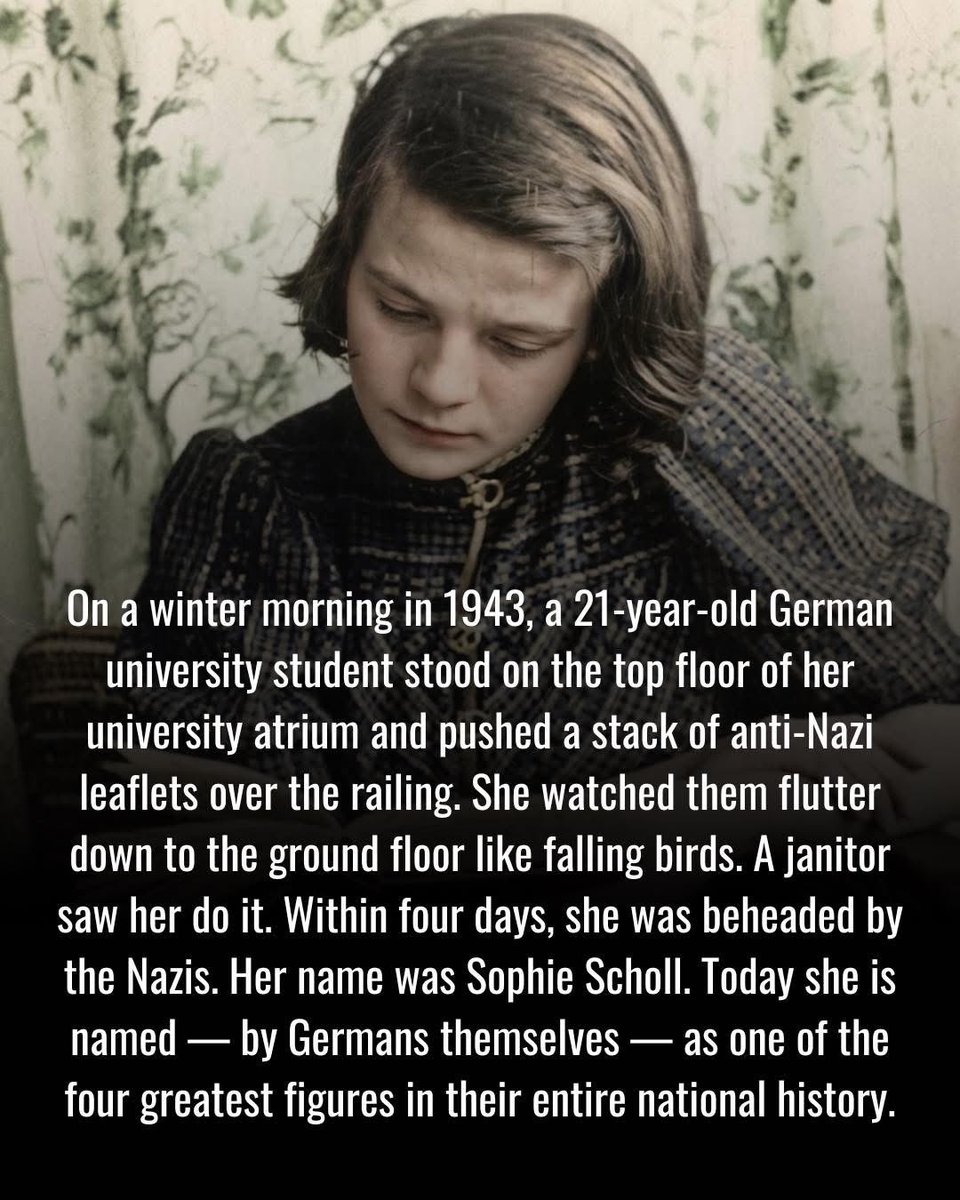
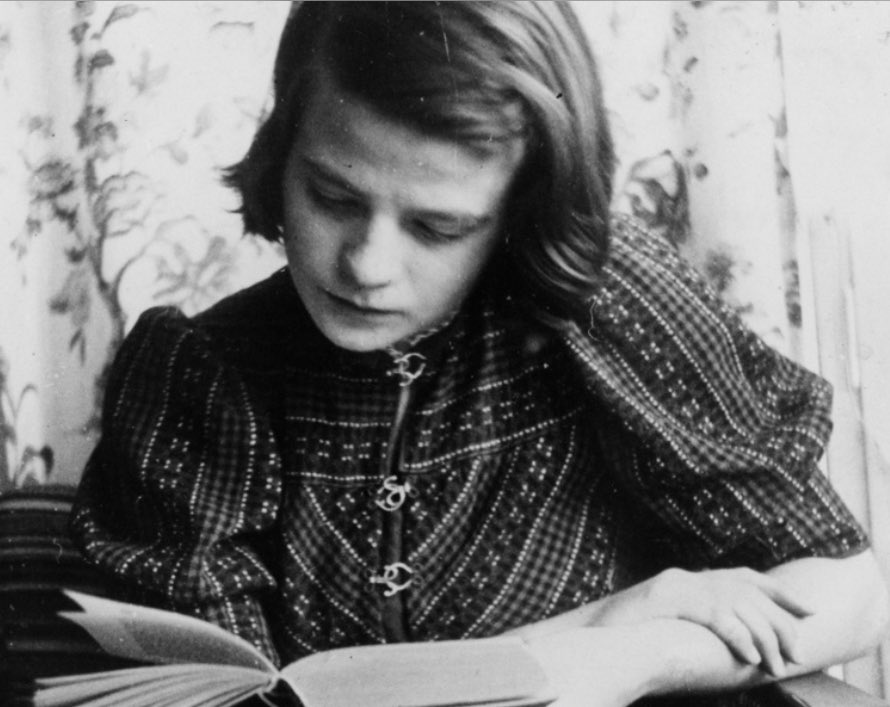
On the morning of February 22, 1943, 21-year-old Sophie Scholl stood in a Munich courtroom. Arrested four days earlier, she had endured 17 hours of interrogation and a broken leg. When the judge asked if she had anything to say, she replied:
“What we said and wrote is what many people are thinking. They just don’t dare say it out loud.”
Three hours later, she was beheaded by guillotine.
Sophie was a biology and philosophy student at the University of Munich. Her “crime” was distributing leaflets with her brother Hans and a small circle of friends known as the White Rose.
Born in 1921 into a Lutheran family in Forchtenberg, Sophie grew up with a father who openly opposed the Nazis—he was later imprisoned for calling Hitler “a scourge of God.” Like many German youths, she initially joined the League of German Girls at age 12. Her father’s quiet insistence on truth pulled her away. By 15 she had quit the Hitler Youth; by 18 she despised the regime.
In 1942, while studying in Munich, Sophie learned her brother Hans—a former medic who had witnessed mass executions on the Eastern Front—had co-founded the White Rose with friends including Alexander Schmorell, Willi Graf, Christoph Probst, and Professor Kurt Huber. Their weapons were a typewriter and a hand-cranked mimeograph machine.
Over roughly a year they produced six leaflets in elegant, impassioned prose—quoting the Bible, German philosophers, and Greek poets—calling on ordinary Germans to resist the evil being committed in their name. “Hitler’s mouth is a foul-smelling maw,” one declared. “Every word that comes from it is a lie.”
Sophie insisted on joining despite the mortal danger. She bought paper and stamps in small quantities across the city, typed, mimeographed, and helped distribute hundreds of leaflets by mail and by hand.
On February 18, 1943, Sophie and Hans took the sixth leaflet to the university. They left stacks in corridors and stairwells. In a final act of defiance, Sophie pushed a pile from the top of the atrium and watched the pages flutter down like falling birds. A janitor saw her, locked the doors, and called the Gestapo.
Arrested immediately along with Christoph Probst, the three endured brutal interrogation. Sophie refused to betray others.
On February 22, before the infamous Nazi judge Roland Freisler, all three were sentenced to death in a show trial lasting about three hours. The sentence was carried out that same afternoon—bypassing the usual 99-day appeal window.
Sophie walked calmly to the guillotine. Her last words: “Such a fine sunny day, and I have to go. But what does my death matter if through us thousands of people are awakened and stirred to action?”
Hans shouted “Long live freedom!” before the blade fell. Christoph, a father of three, was executed minutes later.
The Nazis executed the rest of the core group in the following months. But they could not kill the idea.
The sixth leaflet was smuggled out of Germany, reached Britain, and was reprinted by the millions. In the summer of 1943, RAF bombers dropped copies over German cities—the very words Sophie had died for now raining from the sky.
Today, a square at the University of Munich bears the name Geschwister-Scholl-Platz.
In a 2003 poll, Germans ranked Sophie the fourth greatest figure in their nation’s history—above Bismarck, Einstein, and Goethe.
She was twenty-one years old. She distributed pieces of paper. And in a moment when silence was safer, she chose to speak—and proved that courage, even when crushed by a guillotine, can still echo across decades.
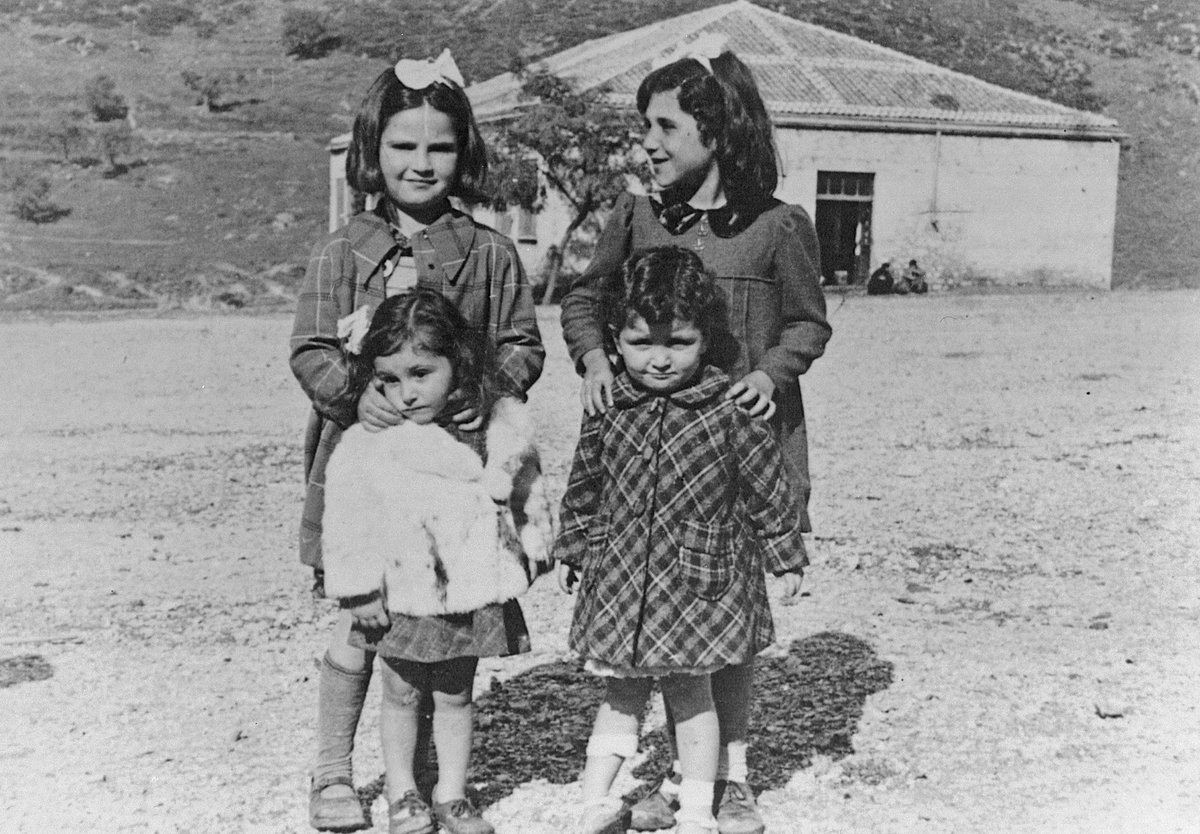
Four young Greek-Jewish cousins (Graciella Raphael, Graciella Cohen, Eni Cohen, and Ninetta Matsas) visit their grandparents in Delvine, Albania.
Only Ninetta survived the Holocaust. The others were deported from Greece to #Auschwitz, where they perished.
#WomenInTheHolocaust
1942. Paris. A peine 16 ans et des parents emprisonnés : pas de quoi la dissuader de résister. Le 17 février, c'est donc dans son lycée que la police vient la chercher. A son tour de connaître la prison. Puis Auschwitz où elle meurt, à 17 ans, le 25 avril 1943. Claudine Guérin
On the night of April 26–27, 1943 Witold Pilecki escaped from Auschwitz concentration camp.
He had voluntarily entered the camp in 1940 to build a resistance network and report on German crimes to the Allies. After nearly 3 years, he broke out with two fellow prisoners - bringing first-hand reports of German crimes to the outside world.
Her grandmother was walking into a gas chamber.
She turned around and looked at her 14-year-old granddaughter one last time.
And she said four words:
"Live and survive."
Flora Klein was born in 1925 in a small Hungarian village called Jánd. She grew up in a close family. She attended beauty school. She was, by all accounts, an ordinary girl living an ordinary life.
Then 1944 came.
The Nazis occupied Hungary. Soldiers arrived in her village. Flora was 14 years old when she watched her family being taken apart in front of her. Her grandmother and great-grandmother were led away together — to the gas chambers at Auschwitz.
Before they went, her grandmother turned back and gave her that directive.
Live and survive.
Flora was deported. She passed through three concentration camps in the final terrible months of the war — Ravensbrück, then the Venusberg subcamp of Flossenbürg, then Mauthausen. Three camps. Thousands of kilometers. Months of horror that most people cannot imagine and that Flora herself rarely spoke about afterward.
She survived, in part, because of beauty school.
The commandant's wife noticed her skills — hairdressing, makeup — and kept her close. That small, strange thread of usefulness, in a place built for murder, kept Flora Klein breathing while millions around her were killed.
She was the only member of her family to survive.
On May 5, 1945, American troops liberated Mauthausen.
Flora Klein walked out. She was 19 years old. She had nothing except her life and a dead woman's four words.
She kept moving.
She married a carpenter named Jechiel Weitz. In 1947, they immigrated to Israel. And on August 25, 1949, in Haifa, she gave birth to a son.
She named him Chaim.
In Hebrew, Chaim means life.
She did not choose that name by accident.
The marriage didn't last. Her husband left when Chaim was around six years old.
Flora packed up what she could carry and, in 1958, brought her 8-year-old son to New York City. He had never seen a television. He had never seen anything like America.
She cleaned houses to support them.
She raised him in a small apartment, in a city that didn't know her name, with no money and no safety net. She never talked about the camps. Her son has said she seemed to file it away — not because it didn't matter, but because survival required forward motion. She hid her pain behind quiet dignity. She just kept going.
Every day above ground is good, she always told him.
Her son — the boy she had named Life — grew up to become Gene Simmons.
Co-founder of KISS. One of the most theatrical, commercially relentless rock bands in history. The fire breathing. The platform boots. The face paint. Sold over 100 million albums. Commanded arenas on every continent.
Gene has said openly, many times, that all of it traces back to her.
The drive. The refusal to quit. The understanding that being alive is not something you take for granted — it is something you earn and use and do not waste.
A woman who cleaned houses in New York so her son could eat. A survivor who never asked for recognition. A mother who taught everything by example and almost nothing by words.
In 2017, Yad Vashem — Israel's Holocaust memorial and museum — presented a Legacy Award in her honor. She was in her nineties by then. Gene accepted it on her behalf.
Flora Klein died in December 2018 in the United States. She was 93 years old.
She had survived three concentration camps. She had rebuilt her life from zero — twice, in two countries. She had raised a son alone in a foreign city with no resources. She had watched that son become a global icon. And she had spent her final decades as what she had always been: a woman who kept going.
Because someone who loved her had told her to.
The grandmother's last words became the family's creed.
The son's Hebrew name carried them forward.
And every night Gene Simmons stood on a stage breathing fire in front of tens of thousands of people — somewhere in that spectacle was the quiet echo of a 14-year-old girl in Hungary, watching her grandmother disappear, and choosing, against everything, to live.
She did.
Flora Klein. 1925–2018.
Her grandmother said: "Live and survive."
She made sure those words outlasted everything.
Sophie Scholl, a young German student, became one of the bravest heroines of WW2.
She risked everything to distribute anti-Nazi leaflets calling for freedom and an end to tyranny.
Arrested by the Gestapo, she was tried and executed by guillotine on 22 February 1943, just 21 years old.
Spring, 1942 | German occupiers imposed the Jewish badge in the Netherlands in the spring of 1942. They did so as a prelude to deporting Jews to ghettos and killing centers in German-occupied eastern Europe.
📷 Jewish couple hiding in a club in #Amsterdam.
25 April 1911 | A Dutch Jewish woman Elisabeth Carolina de Vries-Gersons was born in Tiel.
In February 1943 she was deported to #Auschwitz together with her daughter Rosa Henriette. They were murdered in a gas chamber after selection.
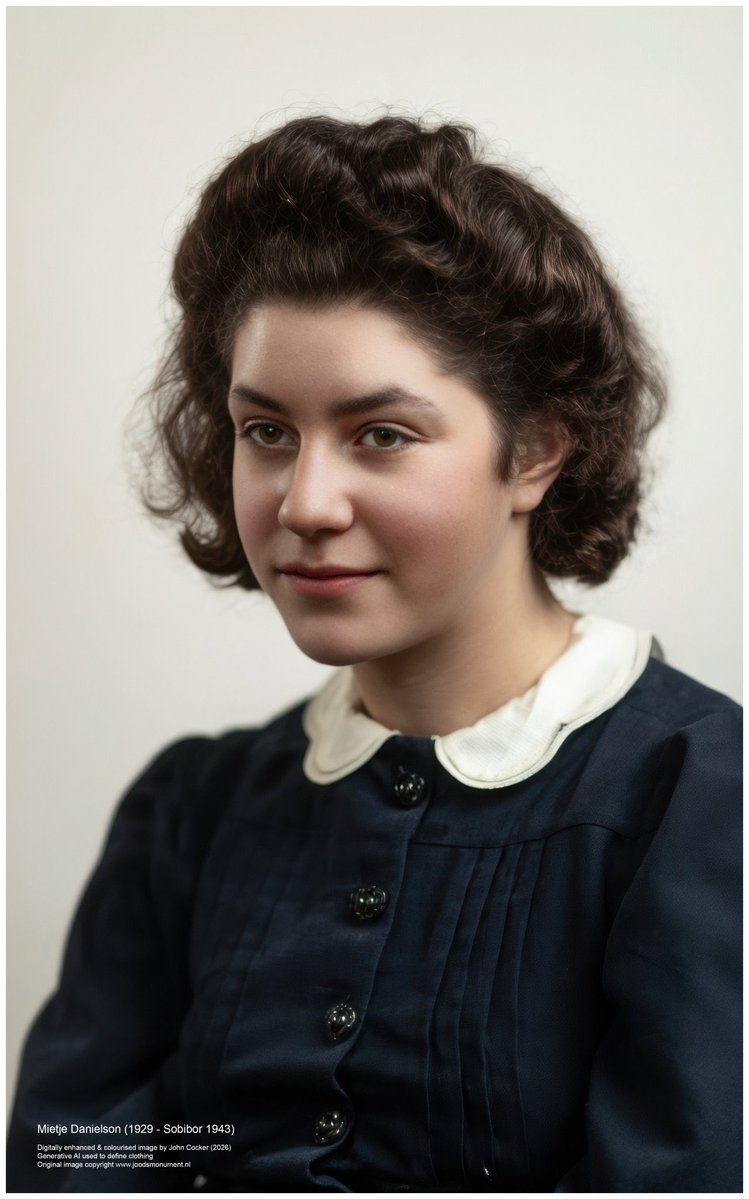
On this day in 1943, a 15 year old Dutch Jewish girl arrived at the Sobibor extermination camp with her parents.
While her sibling survived the Holocaust — she and her parents didn’t — her name was Mietje Danielson.
Mietje is a Dutch name originating as a diminutive of a form of Maria.
May her memory be a blessing 🎗️
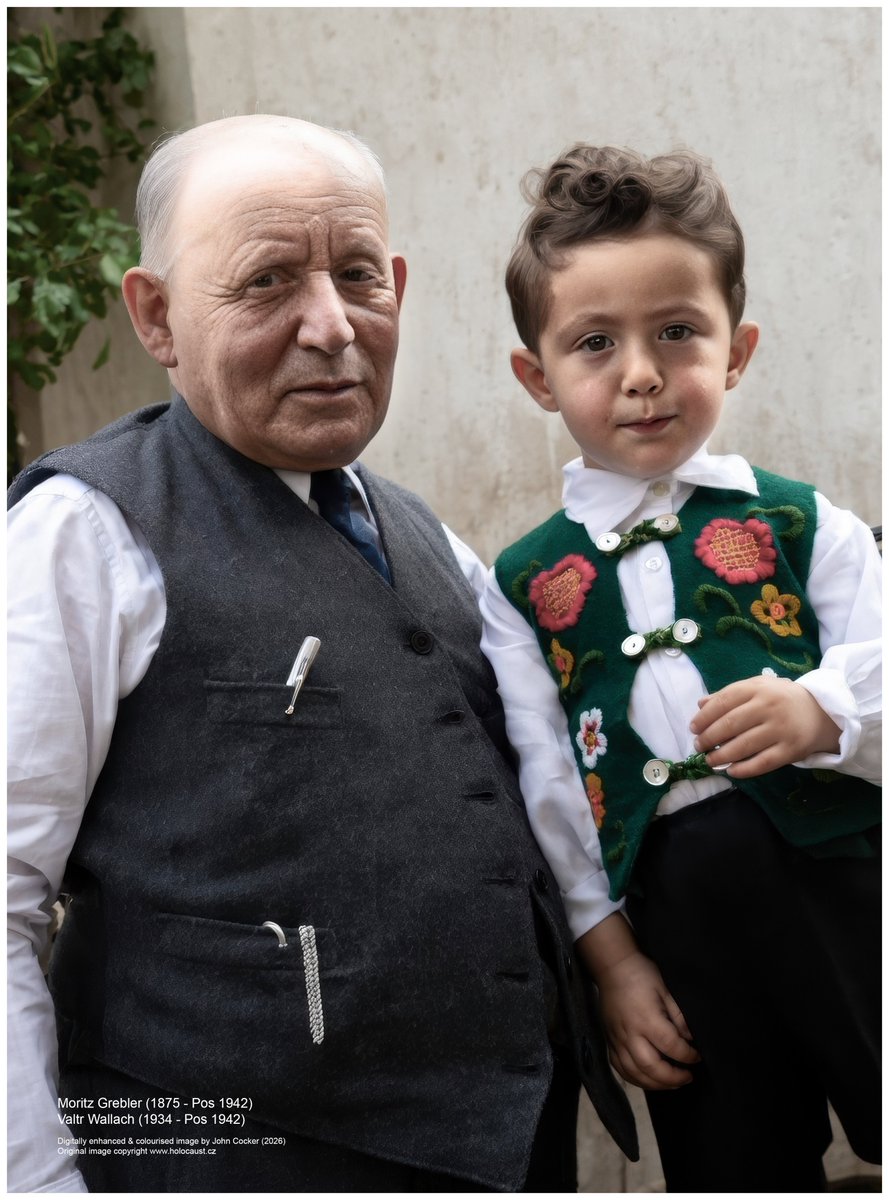
On this day in 1934, a Czech Jewish boy was born. On the 22 May 1942 he was deported to Theresienstadt with his parents and grandparents and on the 25 May 1942 to the Lublin Ghetto with his parents. They all perished in the Shoah. His name was Valtr Wallach
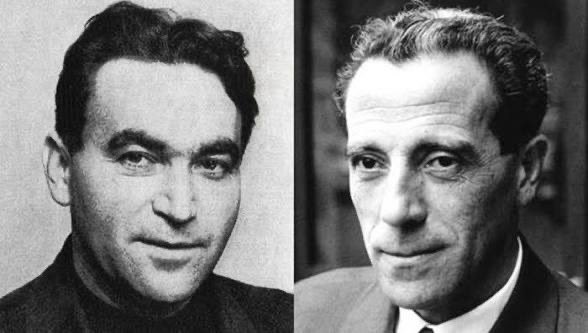
82 years ago today, two young men crawled out of a woodpile in occupied Poland and began walking — straight into the unknown.
One was just 19. The other, 26.
For two endless years they had endured the unimaginable inside Auschwitz — the worst place on earth. They had seen selections, gas chambers, and crematoria running day and night. They had counted the trains, the souls, the murdered.
And they refused to stay silent.
Their names were Rudolf Vrba and Alfréd Wetzler.
Vrba had stood on the Judenrampe for months, watching train after train arrive, memorizing the horror no one outside was supposed to know. Wetzler had worked in the mortuary, witnessing the machinery of industrial murder up close.
In early 1944, they learned the Nazis were preparing for the slaughter of nearly 800,000 Hungarian Jews. New rails, new killing facilities — everything was being scaled up for mass murder on an unthinkable scale.
They could not wait any longer.
On April 7, 1944, they slipped into a hidden cavity inside a massive woodpile, surrounded by petrol-soaked tobacco to confuse the dogs. They lay there for three terrifying days and nights as SS guards and search parties hunted them. On the evening of April 10 — exactly 82 years ago — they finally emerged and began their journey.
They walked 80 miles over eleven harrowing nights through hostile territory. Moving only in darkness, hiding by day, crossing rivers, guided by stars, sustained by the quiet bravery of Slovak peasants who risked everything to help them.
On April 21 they reached Slovakia. There, they dictated the first detailed eyewitness report of Auschwitz — 33 pages of precise, devastating truth: layouts of the gas chambers, capacities of the crematoria, transport-by-transport death counts. They estimated 1.75 million Jews had already been murdered.
The Vrba-Wetzler Report reached the Vatican, Allied intelligence, and Jewish leaders. But it sat for weeks while the world hesitated.
Then, in June 1944, it broke into the Swiss press. Public outrage followed. Roosevelt, Churchill, the Swedish king, and the Red Cross applied pressure. On July 9, Hungarian Regent Miklós Horthy ordered the deportations stopped.
Because of their courage, the remaining 200,000 Jews of Budapest were spared deportation. Those lives were saved.
Vrba and Wetzler risked everything because they believed the truth still mattered — that if the world only knew, it would act.
They were right.
Their report became one of the most important documents of the 20th century, entered into evidence at Nuremberg. It stands as eternal proof that two ordinary young men, armed only with memory and unbreakable will, can pierce the darkness and change history.
Never forget the price they paid to speak.
Never again should the world look away.
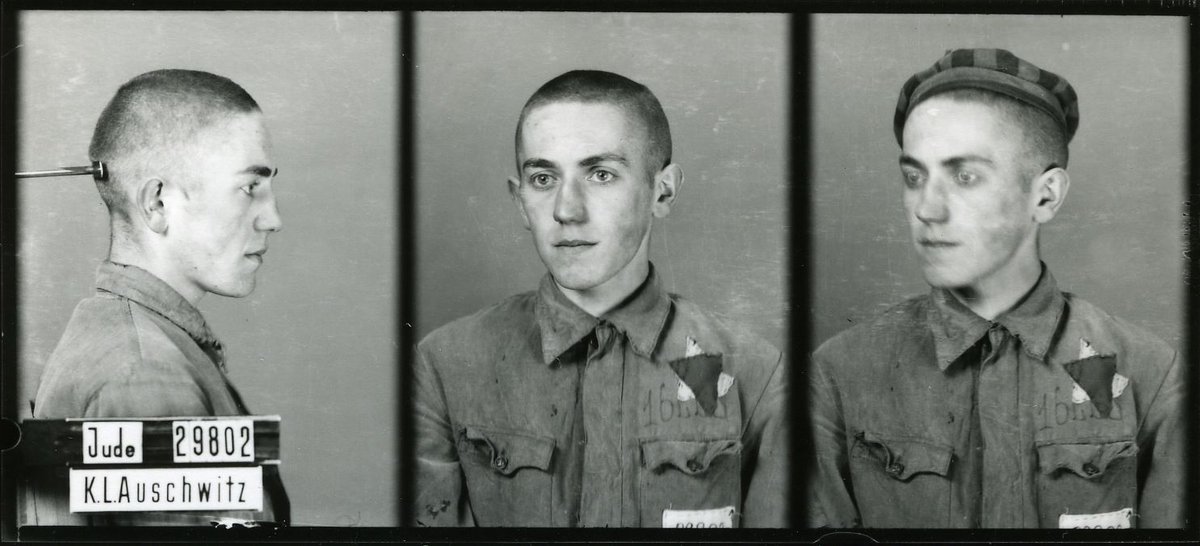
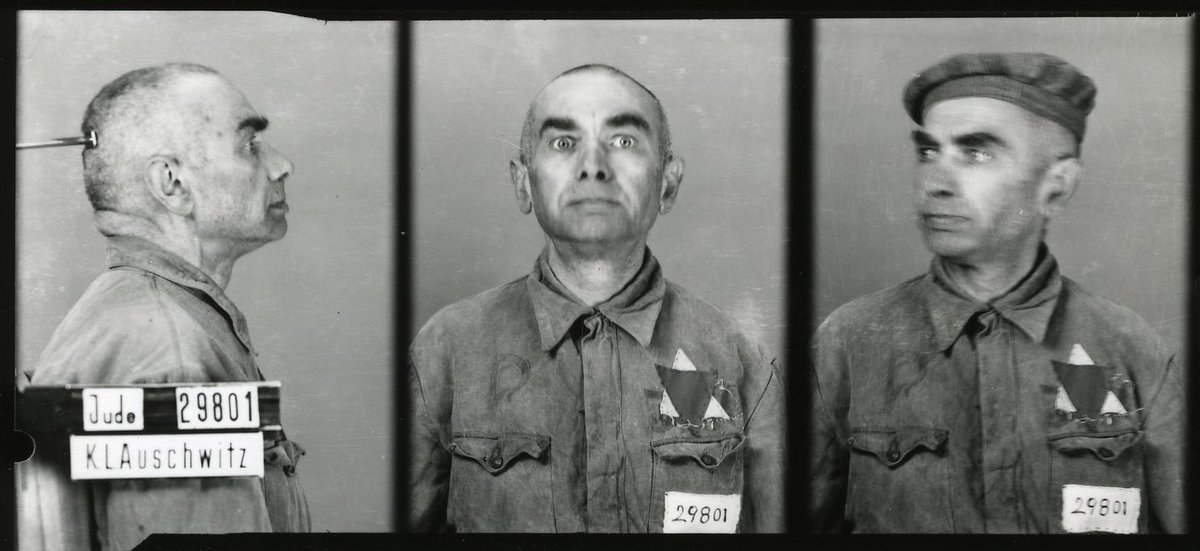
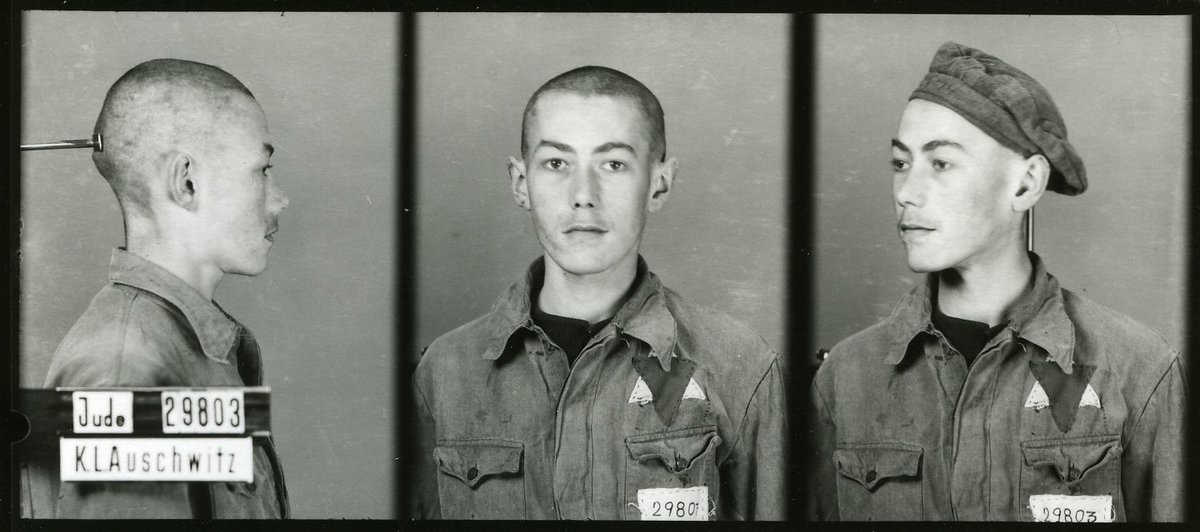
April 17, 1942 | A transport of 58 Poles sent by Sipo und SD from Cracow arrive at #Auschwitz. 8 of them are registered as #Jews - all of them perished in the camp. Among them, Norbert Głuszecki and his two sons Rudolf and Seweryn.