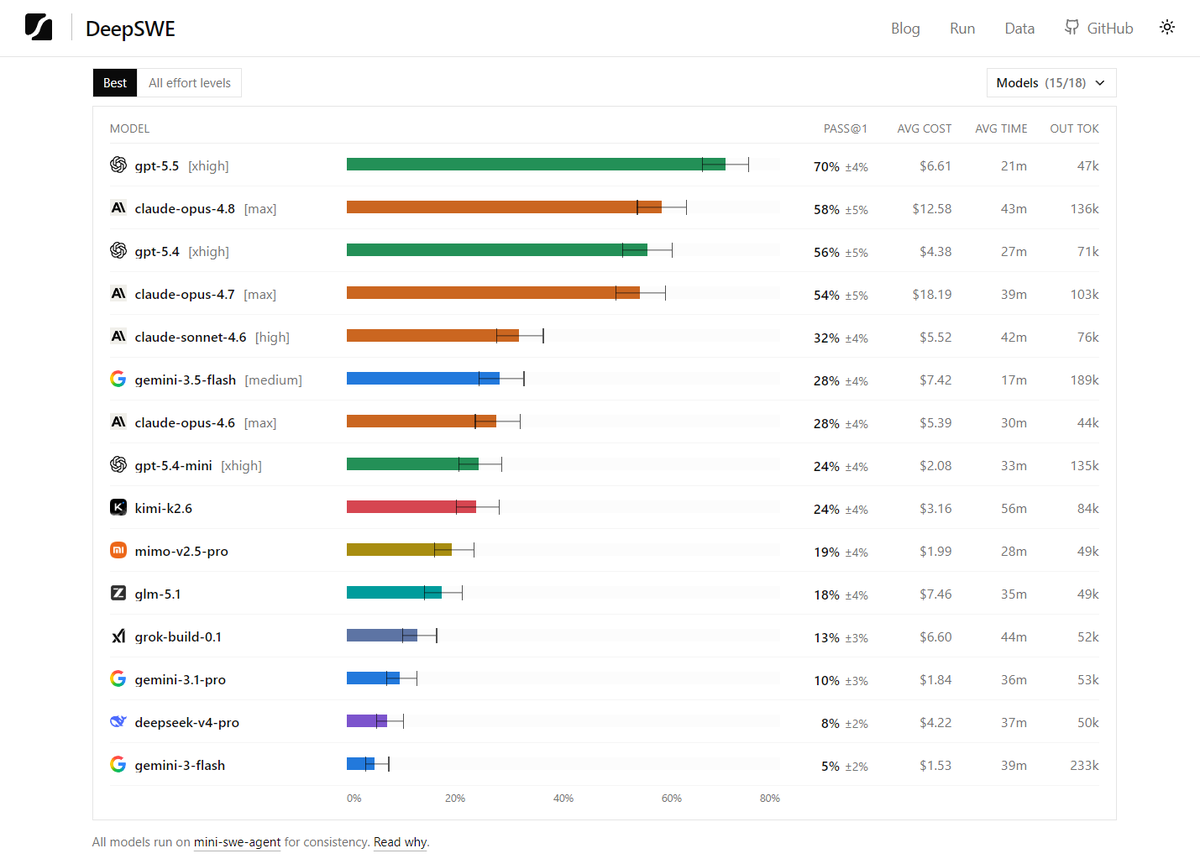
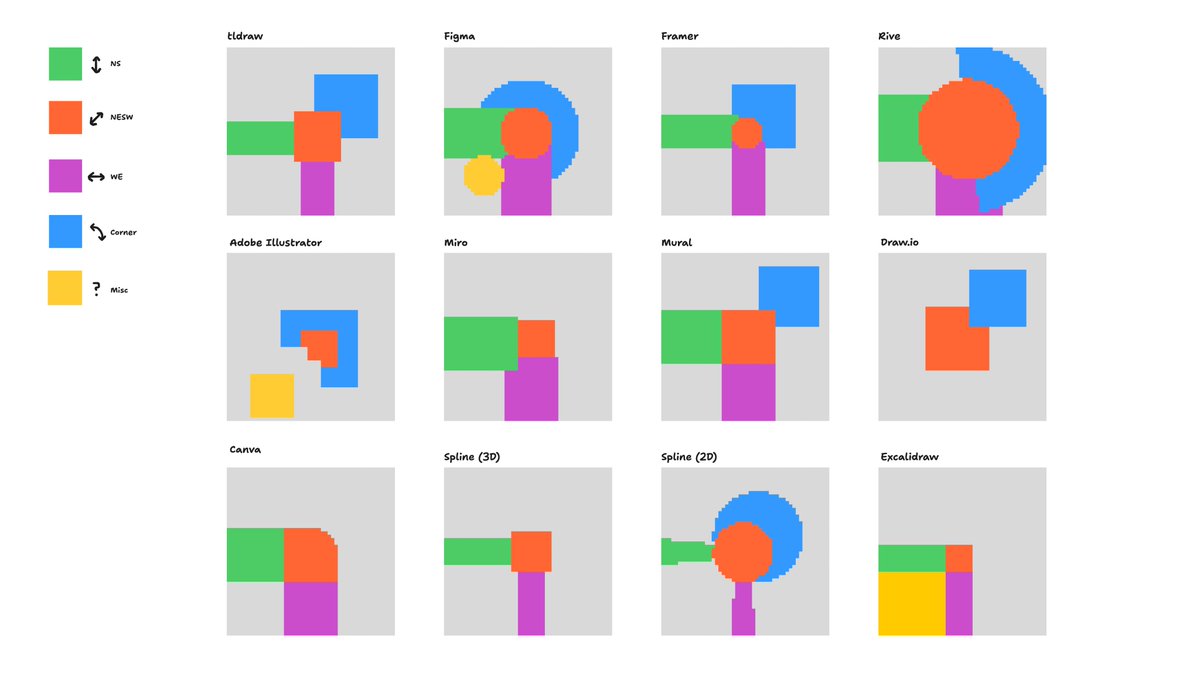
One bench's trash is another bench's treasure.
I do like Opus so far, and GPT 5.5 was letting me down lately.
Always a good idea to run the same prompts in both models and compare the blind spots of each.
I was curious about how design apps differ in their edge / corner / rotate hit areas, so I wrote a script to move my mouse in a 50x50 grid and track what the cursor was.
@mrazator@harfbuzz Pretty much, but with nicer, more generic API (and more browser-faithful line breaks - what I'm hearing).
It works on Node fine with a polyfill (but then so do we).
Other than that, your implem is nailing it too :).
hi, btw! 👋
@seflless Would it have a avoidance relationship, or just anything that happens to overlap?
The issue with non-rectangular text avoidance in canvas apps is the editing stage. Either you have massive layout shift, or you need to implement canvas-based editor.
My dear front-end developers (and anyone who’s interested in the future of interfaces):
I have crawled through depths of hell to bring you, for the foreseeable years, one of the more important foundational pieces of UI engineering (if not in implementation then certainly at least in concept):
Fast, accurate and comprehensive userland text measurement algorithm in pure TypeScript, usable for laying out entire web pages without CSS, bypassing DOM measurements and reflow
your physics textbook is not boring anymore
Hooke's Law with live text reflow around an actual bouncing simulation. 60fps. zero layout thrashing.
@_chenglou what have you unleashed
My dear front-end developers (and anyone who’s interested in the future of interfaces):
I have crawled through depths of hell to bring you, for the foreseeable years, one of the more important foundational pieces of UI engineering (if not in implementation then certainly at least in concept):
Fast, accurate and comprehensive userland text measurement algorithm in pure TypeScript, usable for laying out entire web pages without CSS, bypassing DOM measurements and reflow