In a new commentary, Taylar Rajic and Matt Pearl argue that spectrum policy is increasingly becoming AI policy. As AI systems move into applications like drones, and industrial automation, the race for 6G and mid-band spectrum will shape U.S. competition.
https://t.co/Nbo0YLamNr
During her speech at the #CTIASummit, @ariellerothNTIA announced that NTIA is launching https://t.co/AOOnJAsua4—an easy-to-navigate website that brings together all of NTIA’s spectrum resources for industry, policymakers, and the public. Check it out now! https://t.co/MR0NyKp9bY
Dr. Ethan Klein, US CTO and WH OSTP associate director, discusses efforts from the administration to support AI deployment at scale at #CTIAsummit.
Requires energy, infrastructure, and a uniform national framework. "Need to be able to free up spectrum" as a part of that effort.
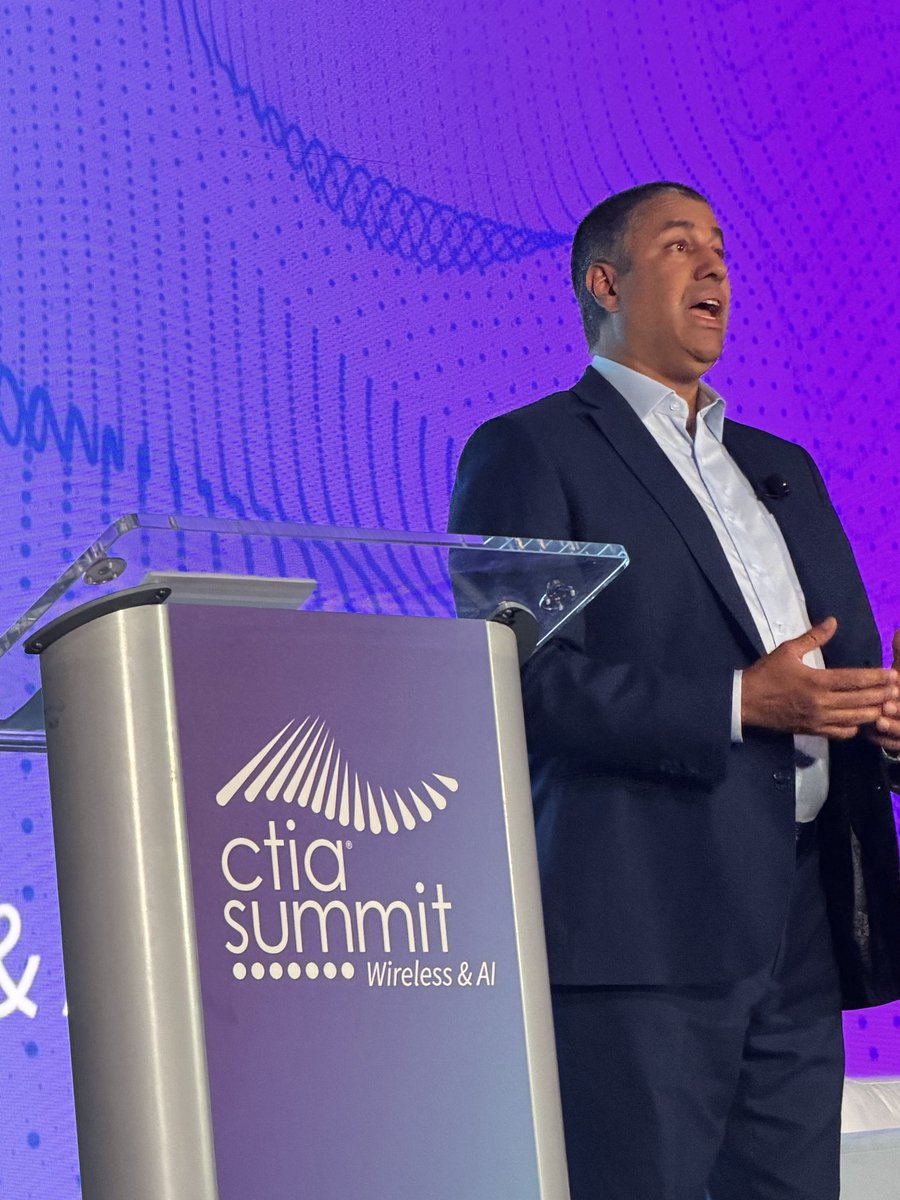
This afternoon, I took the stage at @CTIA’s annual #CTIASummit to discuss the convergence of wireless and AI, and what it means for America's innovation leadership. The key points I made are below.
1. AI and wireless are no longer separate conversations. They're the same story. We're migrating from generative to agentic to physical AI: from queries to decision-making to AI-enabled devices taking action in the real world.
2. AI isn't just more data. It's a different kind of traffic entirely. It's real-time and two-way, with a huge spike in uplink. It's unpredictable, and it requires reliability, ultra-low latency, and security.
3. AI-driven traffic is projected to grow 3x faster than other kinds. If we don't keep pace, Accenture estimates the bottleneck could be a $1.4 trillion drag on the U.S. economy.
4. How do we avoid this bottleneck? Part of the answer, ironically, is AI itself. Your next smartphone will be AI-native. Some compute will shift to the network edge. Some will remain in distributed data centers. The network is the connective tissue holding it all together.
5. And then there's 6G. It isn't just a faster 5G: it's built with AI to dynamically allocate spectrum, anticipate congestion, and sense the physical environment. The network itself becomes intelligent. And in turn, 6G will empower future AI development.
6. This future is within reach, but we have to reach for it. That means larger, contiguous blocks of mid-band spectrum. It means more infrastructure: towers, small cells, fiber, edge compute. And it means a single, consistent, national approach for a national challenge, not a patchwork of 50 different regulatory frameworks.
When history looks back at this moment, I'm confident we'll be able to say that the United States didn't just lead in AI. It built the next-generation networks that made that leadership possible. 🇺🇸
Here for the #ctiasummit. @AjitPai kicking us off discussing the role of wireless infrastructure in supporting next generation technologies like AI/AR/VR.
At #CTIAsummit Arielle Roth provides an update on key NTIA efforts to reallocate 2.7 GHz, 4 GHz, and 7 GHz bands for commercial use and announces https://t.co/IORYBywwSI site that will provide ongoing updates on spectrum pipeline implementation.
At #CTIAsummit Verizon Business CEO Kyle Malady points to recent @CTIA report on affordability and the tremendous value wireless service offers.
https://t.co/8MrF2w4s0l
The two largest sources of infrastructure investment in America's economy – wireless and AI – are converging to power the next generation of innovation. Read more: https://t.co/tNCLcNnGzq.
Wireless is providing more data, better service, and faster speeds for consumers. Hear from our President and CEO @AjitPai on the key findings from our Wireless Affordability Tracker. Read more: https://t.co/D6wvdy6w4k
We are proud to announce that @KurtSchaubach will be the association’s next SVP & Chief Technology Officer. More in the press release: https://t.co/Lk5VzDE4pz.
Terrific comments by @RepFedorchak this morning on the importance of spectrum, infrastructure/permitting reform, and energy to enable wireless innovation and enhance America's global leadership in communications technologies! Appreciate her leadership in Congress on these issues.
Data from the Bureau of Labor Statistics shows telecommunications is the largest source of consumer price relief in US household budgets. Washington must protect the framework that produced these results or risk disrupting it.
Read more on Light Reading: https://t.co/jX4c2udTma
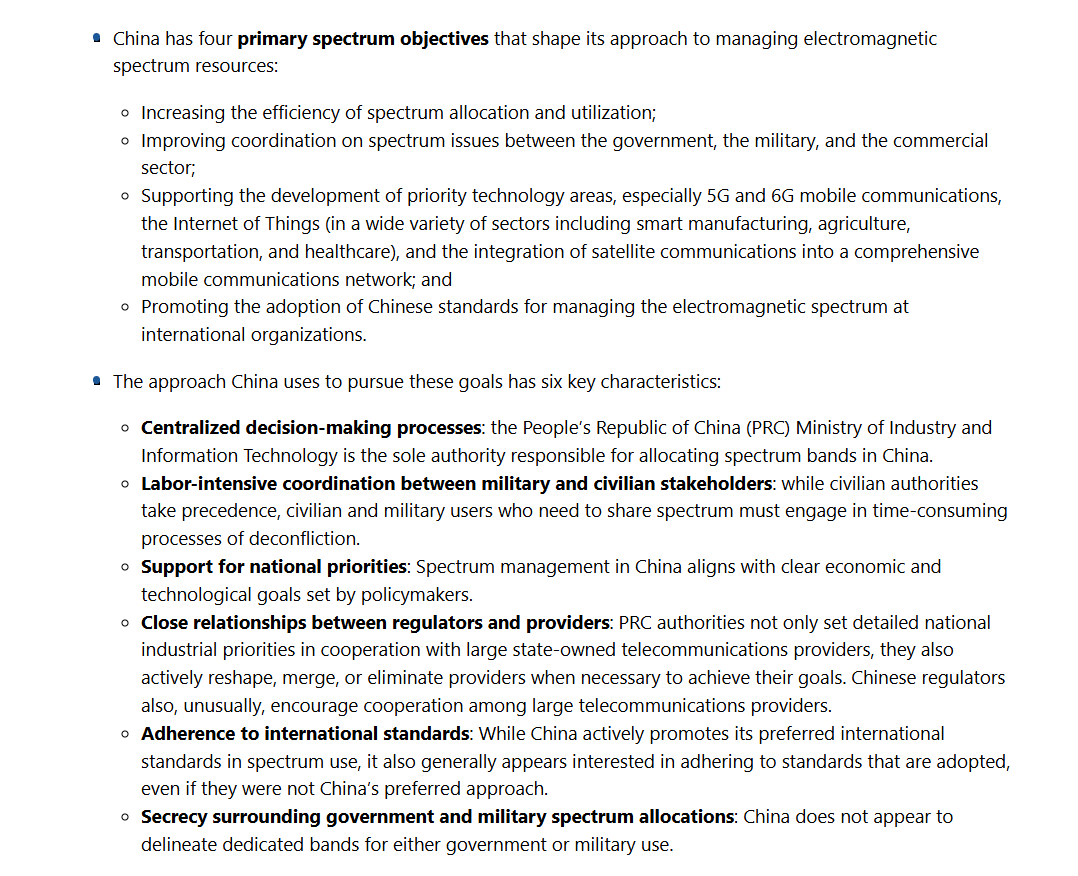
ICYMI: the bipartisan @USCC_GOV issued a report noting China's determination to lead in wireless technology and spectrum management. "One key advantage ... is speed: it issued 5G licenses ... within months of the international 5G standard being finalized." https://t.co/DdGerOfhZY
If America and our global partners don’t lead in 6G, others will—and that puts our economic and national security at risk.
Thank you, @POLITICOLive & @StevenOverly for hosting—& for the opportunity to announce a 6G Call to Action to strengthen allied leadership & coordination.
Ahead of WRC-27, VP, Regulatory Affairs Michael Mullinix underscores the importance of building global consensus around future commercial use of the 7/8 GHz and 4 GHz bands in latest blog. More: https://t.co/4Qo76VBc2C
New @USCC_GOV report: The U.S. auction-based spectrum system is more flexible and efficient than China's — market dynamics drive innovation in ways Beijing's top-down model can't match. To reclaim America’s wireless leadership, we need to double down on our advantages and move quickly to auction more licensed spectrum. https://t.co/42MdkOptDF
"Creeping proceduralism" has become a significant threat to democratic governance as people lose faith and governments lose legitimacy from an inability to act. Many causes, but one key problem is the ability of small groups to block things a majority of voters want
Discussing our new report examining the benefits of U.S. policies emphasizing competition and uniform, nation-wide regulations: US wireless companies invest over 2.5 times more than European counterparts.
https://t.co/Cg8f2f3BVw
CTIA CEO @AjitPai explains, "if you have networks that have been under-invested in, or if you don't have enough spectrum, or if you don't have a framework that incentivizes innovation, you're going to be more of a follower than a leader in AI."
https://t.co/JXcVdBsbzQ