New paper, Evgeniya Shmeleva
"Manipulation of biological systems by self-defecting and foreign agents"
https://t.co/ldREm0rHrP
"Biological systems maintain structure and function through hierarchical control, redundancy and surveillance across scales. These same features create leverage points for agents that establish a persistent presence in host systems, including foreign agents such as pathogens, parasites, trophoblasts and gall-inducing insects, and self-defecting agents such as cancer. This review synthesises evidence across immunology, developmental biology, neuroscience, oncology and ecology to treat manipulation as a staged control problem in which local access is converted into distributed effects through shared signalling and feedback loops across scales. We outline a six-step framework in which manipulators establish access, interfere with boundary and identity checks, exploit transient plasticity to reset homeostatic constraints, redirect immune, endocrine and neural communication, remodel host structure through developmental programmes, and stabilise altered states through niche construction and epigenetic remodelling. The framework separates mechanisms required for initiation from those required for maintenance and long-term persistence. We illustrate this framework through four case studies: trophoblast invasion in pregnancy, tumour progression, parasitoid manipulation by Cotesia congregata, and plant galls. The synthesis highlights recurrent vulnerabilities in boundaries, shared signalling and plasticity windows, and motivates stage-specific experiments that test whether candidate mechanisms drive entry, sustain the manipulated state, or increase resistance to reversal. The same logic can help organise thinking about complex pathology in which altered states are maintained by distributed feedback."
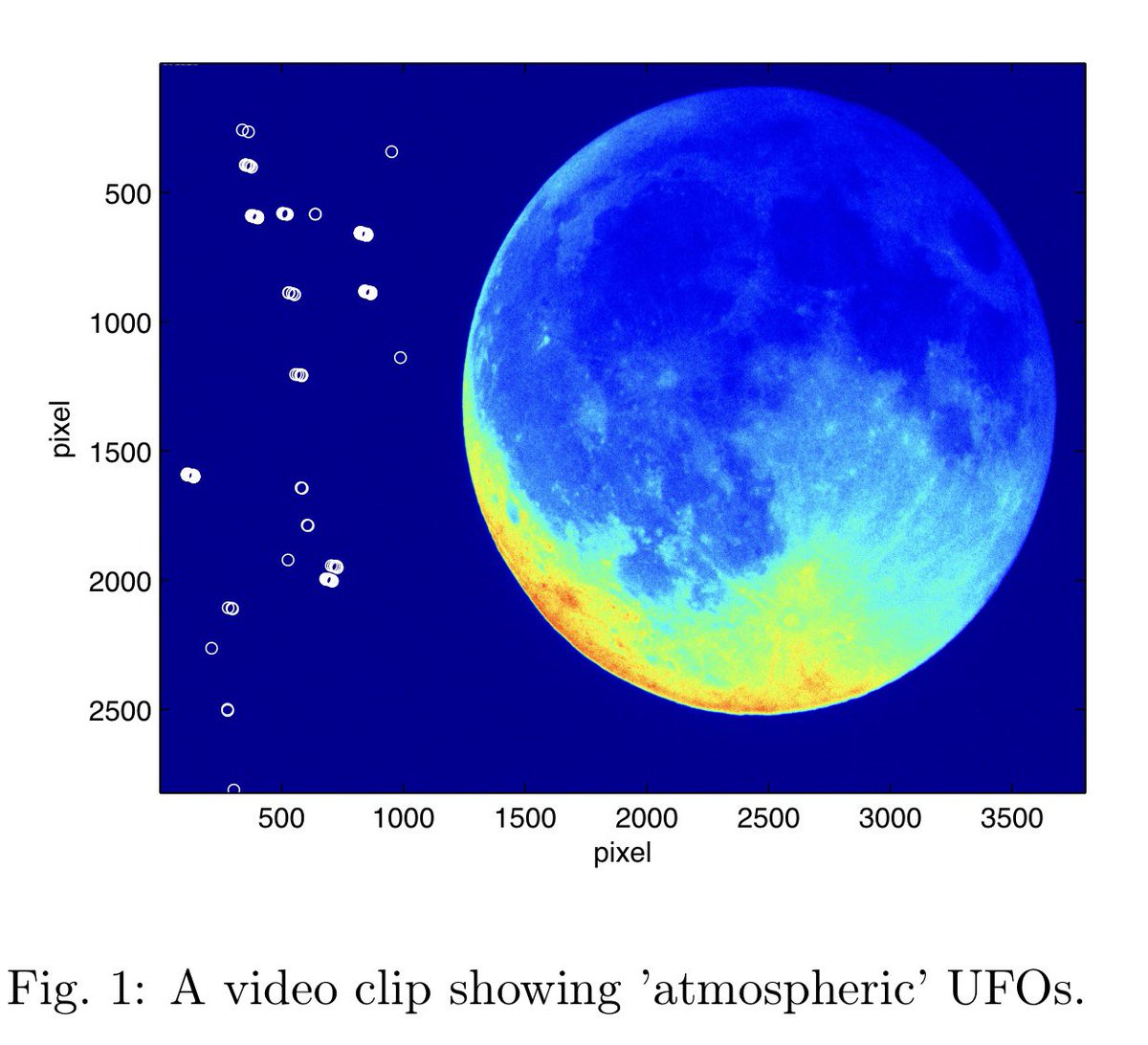
A Detailed Review of “UFO Dynamics on the Moon” Paper.
Main Astronomical Observatory, National Academy of Sciences of Ukraine
This 2026 preprint (DOI: 10.13140/RG.2.2.13866.79042; also available via the observatory’s site) presents high-speed telescopic video observations of anomalous objects in the vicinity of and apparently associated with the Moon. The authors classify the objects into two broad categories—“atmospheric” (appearing stationary relative to the lunar disc) and “continental” (moving across or near the lunar surface)—and argue that the data point toward technologically advanced craft for which the Moon functions as a base. The work is observational, photometric, and interpretive rather than purely theoretical, and it builds on earlier related papers by the same team.
Observational Setup and Methods
Observations were obtained primarily on 7 September 2025 (with additional data from 16 August 2025) using an Intes-Alter M603 telescope equipped with an ASI 294 Pro camera at a site in Vinarivka, southern Kyiv region. Data were recorded at 0.05 s cadence (20 Hz sampling) in video mode via SharpCap, followed by standard astronomical calibration (bias/offset, dark, flat-field). Processing was performed in MATLAB. The authors emphasize low-contrast detection (often ≤10 %, sometimes ~3–5 %), the use of false-color rendering to enhance visibility, frame alignment to remove lunar motion and tracking residuals, and a “phase discrimination” Fourier technique to isolate genuine brightness variations from atmospheric transparency changes and tracking errors. The global lunar light curve is used as a reference interference signal so that common harmonics can be rejected.
More than 20 distinct objects appear across the frames. The authors carefully distinguish objects that remain fixed relative to the Moon (moving in lockstep with it) from those that traverse the disc.
Atmospheric (Anchored) Objects
These remain positionally stable to roughly one pixel (~0.75 arcsec) over sequences of 100 frames. They exhibit short flashes lasting 100–500 ms with amplitudes of approximately one magnitude. Fourier analysis of the light curves reveals a fundamental frequency plus harmonics (overtones) in the few-hertz range; the spectra are characteristic of pulsed rather than purely sinusoidal processes. In several cases, objects separated by tens to hundreds of kilometers show statistically significant (95 % confidence) correlated brightness changes. Size estimates, derived from reflected-sunlight assumptions and comparison with lunar surface brightness, range from a few hundred meters (if albedo ≈ 1) to roughly 1.8 km (if albedo is lunar-like, ~0.064). The objects are described as low-contrast and effectively camouflaged against the lunar background.
Continental Objects: Discs and Toroids
Disc-shaped objects are reported with diameters of approximately 25–40 km. They display low-amplitude (~1 %) brightness fluctuations at frequencies of a few hertz (notably 3.0, 4.5, and 6.0 Hz). Toroidal (doughnut-shaped) objects are estimated at ~36 km across. One well-analyzed example shows translational speeds up to ~11 km/s. Rotation is inferred from the apparent motion of bright surface features: a period of ~180 s yields a centrifugal acceleration of ~2200 cm s⁻²—roughly twice terrestrial surface gravity. The authors interpret this as artificial gravity generated by rotation. Albedo estimates for the toroids are low (~0.061), close to the Moon’s, and residual intensities in RGB channels are consistent across colors, suggesting the objects absorb rather than emit strongly and are therefore difficult to detect optically. Reconstructed images after careful processing show clear disc and toroidal morphologies. Synchronous brightness modulation is again reported among spatially separated objects.
1 of 2
When you realize that the voice in your head, your incessant compulsive thinking, is not who you are, then you have begun to awaken. A new dimension of consciousness has arisen, which we could call awareness, presence, or wakefulness.
Eckhart Tolle
Be bored. Spend your mornings without phone. Drink coffee in silence. Go for walks without music. Stare at a wall. Look out the window. Just sit in silence listening to your breath. No TV. No books. No scrolling. No entertainment. Do nothing. Just exist without worrying about "what to do next". We have normalized overconsumption. You can't focus because you never let yourself be bored. Your brain never gets a break. Boredom is the cure.
James Clear on taking the first step:
“Many situations in life are similar to going on a hike: the view changes once you start walking. You don't need all the answers right now. New paths will reveal themselves if you have the courage to get started.”
reason to protect your attention:
the amount of control you have over your attention sets the ceiling on how much control you'll ever have over your life.
you aren't lacking ambition or vision. you're letting other people spend your building materials. where your attention goes is what your life becomes.
Underrated truth: No matter where you are in life, there is still so much to look forward to. People you haven’t met. Places you haven’t seen. Ideas you haven’t discovered. Versions of yourself you haven’t become. Believe the world has more in store for you, and it will.
“I am losing precious days. I am degenerating into a machine for making money. I am learning nothing in this trivial world of men. I must break away and get out into the mountains to learn the news.”
— John Muir
You are not your thoughts. You are the observer of your thoughts. Most people don't know this. They believe every thought that passes through their brain. They identify with the noise. The first step of transformation is learning to watch your thoughts without becoming them.
Through all the ages poets and artists have often been prophets, because their work, or the material for it, comes to them from the same depths of the collective unconscious in which the major transformations of a particular era are in process of creation.~Marie-Louise von Franz
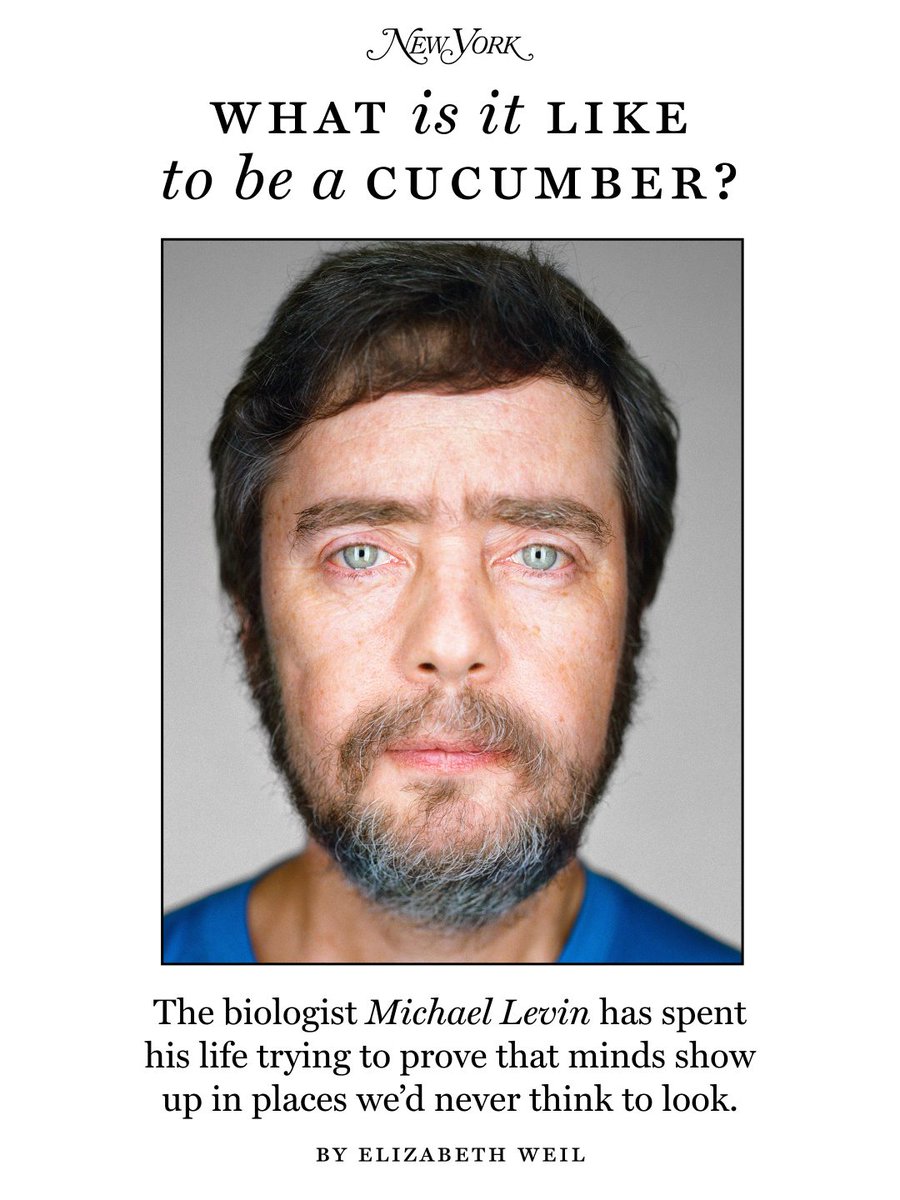
Michael Levin did not expect to reach middle age and still be making a living as a biology professor. He figured his life trajectory would likely involve getting kicked out of the academy, as the academy is fond of people asking narrow questions, not boundary-crashing, precariously close-to-woo-sounding paradigmatic thinkers whose ideas strain the limits of language. Yet the opposite has happened — he’s become a foremost expert in his field, and to many, a cult hero.
Levin has been releasing his ideas slowly his entire adult life. Five years ago, he was at 50 percent. Now he’s at 80 percent. A big jump came last year when Levin published a preprint paper called “Ingressing Minds.” In it, he argues that intelligence comes from a nonphysical realm and flows (“ingresses”) into bodies. That nonphysical realm, he says, is where mathematical ideas like pi and e reside. We already accept there is some stuff in that realm. Why would we assume there is not more?
Critics accuse Levin of all kinds of teleological crimes — making unfalsifiable claims, using words in ways that render those words meaningless. Levin is unfazed. His true retort is his wet lab. There, at the bench, he’s working to prove his metaphysics by running old-school (in a way) biological experiments. He studies flatworms with two heads. Frogs with eyes on their stomachs. Little round creatures called xenobots, synthesized from frog skin cells. They swim like tiny Pac-Men. They do not exist in nature.
Elizabeth Weil spends time with the biologist who argues that your body has many minds: https://t.co/TaeRjReQLi
Your attention is hijacked the moment you wake up.
What you find important (what you care about) even what you believe is being co-authored by systems optimized not for truth or wisdom...but for engagement and profit.
You are embedded in a vast informational environment that overwhelms your inherited systems of sense-making (bombarded by competing claims on your attention, your identity, and your value structure) absorbing the judgments, values, and perspectives of a collective cognitive apparatus that is not under your conscious control.
And there is more:
When you used to ask “What should I do?” or “What does this mean?”, you might have turned to an elder, a pastor, a sacred text.
Now you might ask an AI.
AI is now mediating your agency...sometimes before you even reflect on it.
Someday in future people (especially the younger ones) will surely ask this question-Who am I if AI can outperform me at many tasks? It will be their self enquiry, that will be the beginning of spiritual awakening in them. I don’t know when, but will happen for sure.