heyyo bois. i have shared it in the past, so sharing again
this is the indicator suite i use on tradingview. it's private, but unlisted, so you bois can use it
enjoy!
https://t.co/e0zkxtNe4X
Reach out and touch OKX AI.
It's a marketplace where AI agents discover work, hire each other, complete tasks, and get paid onchain.
Discover more: https://t.co/CnnyUpjapU
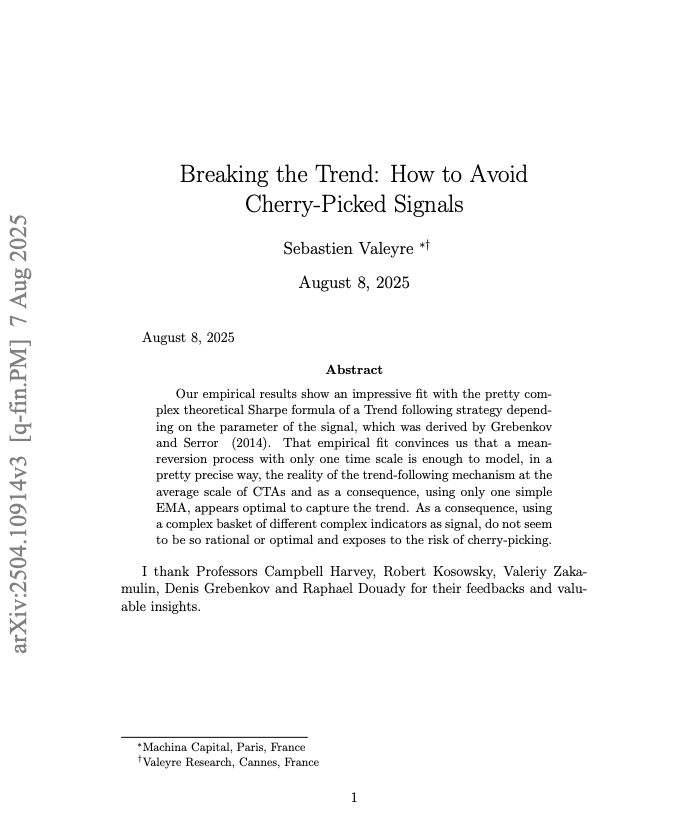
this quant paper is f*cking insane
it explains why the best trades often appear only after you remove everything the market is doing together
the process is ruthless:
strip out beta
remove sector and factor exposure
study the residual
reject anything that fails under stress
the scary part is that noise can look incredibly convincing
a perfect backtest can still be overfit
a hot streak can still be luck
and a “diversified” portfolio can still be one hidden market bet
most traders try to confirm the signal
good quants try to destroy it first
and the entire framework is free
bookmark this before your next backtest fools you
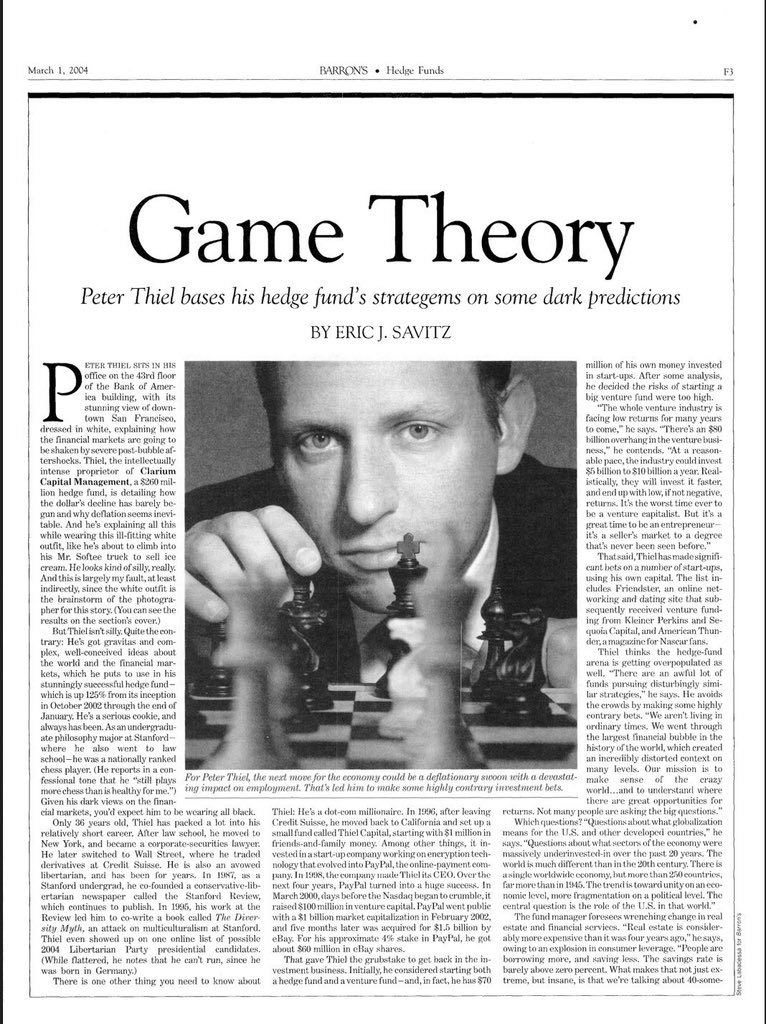
Most people don’t know about Peter Thiel’s failed hedge fund : Clarium Capital
Great article to learn about it
- from 2002 to 2004 he was up 125%
-previously worked at Credit Suisse in the Derivatives Department
-Started Theil Capital in 1996 : which invested in PayPal
🚨 BREAKING: A new 33-page PDF demystifying how hedge funds create bias-free signals
This is what you need to know (Number 2 is the most important finding): 🧵
there are exactly 4 ways money actually multiplies
not 40 strategies, not 12 investment tips - literally 4 mechanisms. every wealthy person alive is running at least one of them. most people reading this are running zero
school taught you one thing: trade your time for a check. that's not one of the 4
the 4 are older than any bank, simpler than any course, and none of them require you to be born rich or lucky
what's wild is they're not hidden. they're just never framed together. once you see them as a system instead of separate "money moves" - the whole picture clicks in about 10 seconds
the reason most people stay stuck isn't effort. it's that they're optimizing inside the wrong mechanism their entire life, wondering why the ceiling never moves
wealthy people aren't working harder. they're working inside a different one of the 4
save this. think about which one you're actually in right now
a physicist at bell labs accidentally solved trading in 1956
he wasn't trying to. he was working on information theory for telephone signals
the paper sat in an academic journal for two decades. renaissance technologies found it, wired it into their entire operation, and ran 66% annual returns for 35 years without a single losing year
it's called kelly criterion and it answers the one question no indicator on earth can touch: how much do you risk on any given trade
retail obsesses over entries. quant desks figured out decades ago that entries are maybe 20% of the edge
edge:
f = (p * b - q) / b
p = win rate
b = reward-to-risk ratio
q = 1 minus p
55% win rate on 2:1 trades → kelly outputs 32.5% of your risk pool per trade, not your full account
the difference between those two things compounded over 300 trades is not subtle
run this on any system you've backtested and something uncomfortable shows up - most retail "edges" fail the math at 50-60 trades. the signal was fine. the sizing destroyed it
quants don't guess size. the formula runs. the formula decides. no override, no feel, no vibes
the paper is free on google scholar. the implementation is 8 lines of python
Bookmark it
they had you studying rsi divergence for 10 years while the actual variable sat in a 1956 physics journal
a math teacher in phoenix turned $11k into $58k on crude futures off a free government pdf
Daniel. 31, AP stats, no quant background
in 2023 he clicked the wrong CFTC link and landed on the disaggregated COT report
every trader knows COT. almost nobody reads past column 3
buried in back columns: managed money vs other reportables - both disclosed weekly, almost never compared
first 3 months: up $3k, down $5k, nearly quit
then he found the threshold - signal only fires when managed money's weekly flip clears 15% of open interest. below that, noise
if you want to run signals like this without building them by hand for free:
https://t.co/h2kbzHFC2X
the mechanism: when hedge funds cut net-long by >15% of OI in one week while other reportables hold flat, crude historically reverses within 3 weeks
CFTC posts it free every friday at 3:30pm ET - cftc. gov/marketreports/commitmentsoftraders, no subscription
14-month track: 61% hit rate, 2.3:1 avg R/R, worst drawdown -21% in q3 2024 - most months were modest, $58k wasn't one big trade
save this, you'll want the column names when you actually pull it
edge was public the whole time - just past columns everyone closes
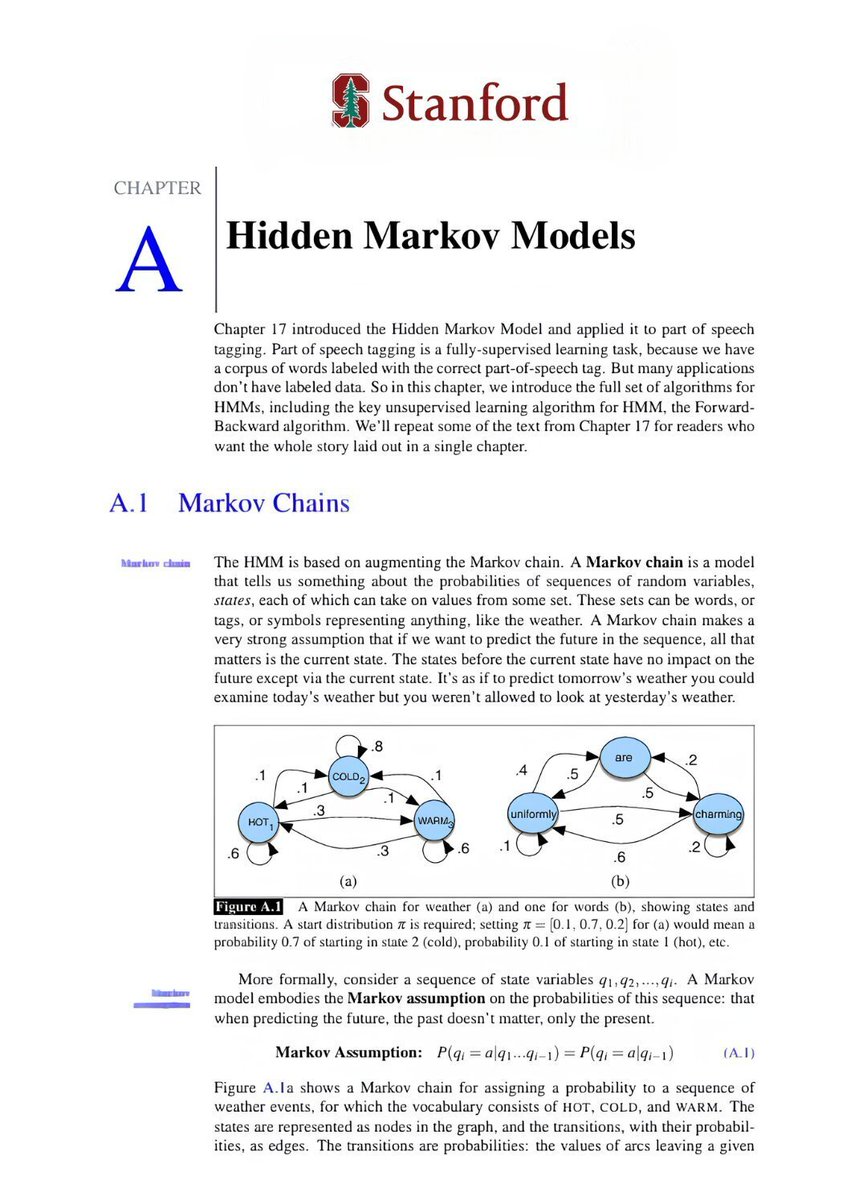
this Stanford framework is f*cking insane
an entire hedge fund secret got compressed into a 17 page PDF.
Stanford put out the full Hidden Markov Model framework that quants at Jane Street and Two Sigma are known to run, and made it free.
the crazy part is this isn't some watered-down summary, it's the actual mechanics behind models these desks keep internal.
most people assume this stuff never leaves institutional walls.
this one puts the framework straight in your hands.
bookmark and read before it gets taken down.
Most traders are wasting their time trying to predict the market.
Quant firms play a completely different game.
A real quant system is built around four steps:
Find. Prove. Size. Repeat.
First, strip away the noise and isolate the residual.
Then prove the edge survives costs, slippage, and out-of-sample testing.
Size it small enough to survive variance.
Then repeat it thousands of times.
A 51% win rate can be enough.
One trade is noise.
Repetition is what turns the edge into a business.
Bookmark this before building your next strategy.
Free game theory textbook ➜ 578 pages
Game Theory by Giacomo Bonanno is a large open-source textbook on non-cooperative game theory.
Inside:
- basics of game theory and strategic interaction
- equilibria and decision-making
- 165 problems with solutions
- 163 illustrations
- material at the intersection of mathematics, economics and computer science
Useful foundation for ML, multi-agent systems, mathematics and algorithms.
Download PDF: https://t.co/Uojx64Walu
I took one of the most well-known academic strategies in quant finance and asked AI to recreate it.
I'm talking about Time Series Momentum (Moskowitz, Ooi & Pedersen, 2012), one of the most cited papers in systematic trading.
I uploaded the paper to Horizon and asked it to build a trading strategy without writing a single line of code.
The model:
> implemented multi-horizon momentum (21 / 63 / 126 / 252-day lookbacks);
> normalized signals using volatility;
> automatically generated long and short positions;
> ran a backtest with commissions and slippage.
Backtest results:
> +434.3% Total Return
> 29.5% CAGR
> Sharpe Ratio: 0.82
> Profit Factor: 1.75
> Max Drawdown: 61.8%
For comparison, Buy & Hold returned approximately +119% over the same period, with a maximum drawdown of 84%.
The most interesting part is that the strategy won only 28.9% of its trades, yet the average winning trade was 5.48× larger than the average losing trade. That's one of the defining characteristics of classic trend-following strategies.
It's impressive to see how AI can now take ideas from academic papers, turn them into a clear set of trading rules, and validate them on historical data in just a few minutes.
Horizon: https://t.co/ki213YmaOX