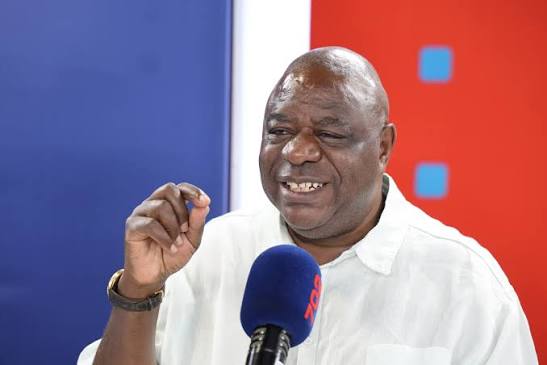
Matamandanda has passed away … aaah 😦. Firstly, they will make you an ambassador to get rid of you. If you continue to be a threat, then they will take you out. Trust this Zvigananda Cabal at your own peril! RIP Ambassador Matemadanda🙏🏽
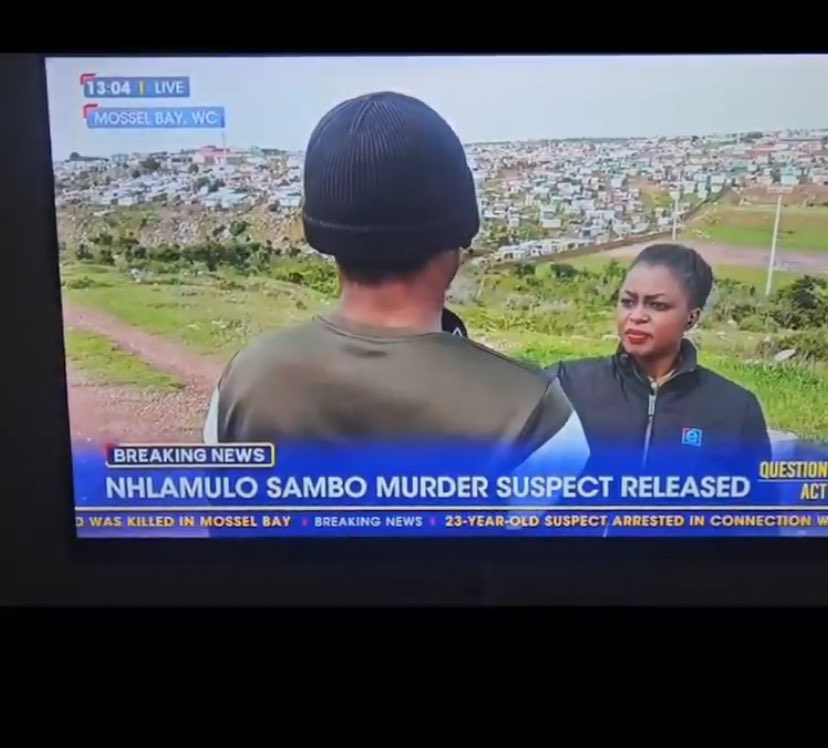
A mother said her son was killed because he was Tsonga. The world doubted her. Grief + suspicion is a cruel combination.
Now new reports say: He was attacked by a mob. He ran into a shack for shelter. He took his last breath there. The owner allegedly called for help with others. The suspect has been released.
If the police narrative was wrong, then we owe that mother more than an apology. We owe her the truth. Full truth. No spin.
Nhlamulo was not a statistic. He was a son. He spoke Tsonga. He ran for his life. He died for being a Tsonga.
Whether he was killed by hate for his language, his origin, or his presence — the result is the same: A mother buries her child.
South Africa, we cannot keep burying our sons and calling it “crime”. When a man is chased because of how he speaks, that is xenophobia. And xenophobia is a fire we all get burned by.
To Gogo Sambo: Your tears were not lies. A mother’s voice matters. We see you. We stand with you.
To Nhlamulo: Lala ngoxolo mfo. May your name force this country to look in the mirror.
Justice is not revenge. Justice is truth + accountability.
#JusticeForNhlamuloSambo #StopXenophobia #Amandla @Mzanziawake
🔹 The people of Redcliffe have taken MP July Moyo over his intentions to stay in Parliament beyond 2028 without consulting them! Find the link below 🔗 👇🏾
https://t.co/ljpZNePMM3
President Mahama says that all of you will be given two special allowances: one for transportation to wherever you leave or your hometowns, and a special resettlement package to help you put your lives back on track.
_ Foreign Affairs Minister, Hon. Samuel Okudzeto Ablakwa, addressing the evacuated Ghanaians from South Africa._
Africa Day: How can we celebrate unity while hunting each other?
As Africa marks another year of liberation and unity, South Africa’s hostility toward fellow African migrants lays bare a deeper continental crisis - one of failed governance, broken solidarity, and a founding dream at risk of collapse, writes Mbhazima Shilowa.
Monday was Africa Day.
This day is not just a celebration of liberation history. It is a test of whether Africans still believe in one another when economic hardship, failed governance and social anger collide.
Observed annually on 25 May, Africa Day marks the founding of the Organisation of African Unity (OAU) in 1963 - the body that later evolved into the African Union (AU).
It was born at a time when much of Africa was emerging from the brutality of colonialism, racial subjugation, and foreign domination.
Across the continent, newly independent states sought to reclaim not only political freedom, but also African dignity, identity, and self-determination.
For generations, Africa had been spoken about largely through the language of conquest, extraction, slavery, war and poverty. Africa Day became a declaration that Africans would define themselves, govern themselves and shape their own future.
That vision mattered deeply.
The spirit of solidarity
From Ghana becoming the first sub-Saharan African country to gain independence in 1957, to liberation struggles in Southern Africa decades later, the continent produced extraordinary stories of sacrifice, courage and solidarity.
African nations stood with one another in moments of struggle, often despite their own poverty and instability, and in the case of Southern Africa, raids by the apartheid regime that resulted in death of citizens such as those in Mozambique, Lesotho, Botswana, Zambia, Angola and Zimbabwe.
It was this spirit of Pan-African solidarity that sustained liberation movements, including South Africa’s own fight against apartheid.
Today, much has changed. Africa has produced some of the fastest-growing economies in the world. Its cities are expanding rapidly. Its young population represents enormous human potential. African innovation, entrepreneurship, music, literature, sport, and technology increasingly shape global culture and discourse.
Across many countries, democratic institutions - though imperfect - have taken root where authoritarian rule once prevailed.
Yet Africa Day also demands honesty.
Alongside the progress, there remain stubborn and painful realities - poverty, unemployment, inequality, corruption, weak institutions, political instability, violent conflict and poor governance.
Part of Africa’s tragedy is that continental accountability mechanisms, including the much-vaunted African Union’s peer review mechanisms, have too often lacked the political courage and consistency required to hold failing governments accountable before instability, poverty and migration crises spiral out of control.
Thus, millions of Africans continue to migrate - legally and illegally - not because they reject their countries, but because they are searching for safety, economic opportunities and dignity.
Economic migration within Africa is therefore not an accident, but the human face of governance failure.
Nowhere are the tensions arising from these realities more visible than in South Africa.
Uncomfortable contradictions
Every Africa Day arrives carrying another uncomfortable contradiction. While South Africans celebrate African unity and liberation history, many African migrants in the country continue to live under suspicion, hostility and, at times, violence.
That contradiction should trouble all of us.
South Africa owes a profound historical debt to the African continent. From Zambia to Tanzania, from Nigeria to Angola and many others, African nations opened their doors to South African exiles during apartheid. They provided shelter, education, military training, diplomatic support and political solidarity when our own country rejected many of its people.
But acknowledging that history should not mean dismissing the frustrations of ordinary South Africans. Those frustrations are real.
South Africa faces severe pressures from rising unemployment, deepening inequality, poor service delivery, organised crime, corruption and growing public perceptions that the state has lost control of immigration systems and border management, which are prone to corruption. Communities and citizens feel abandoned by institutions meant to protect them.
There are legitimate concerns around illegal immigration, abuse of asylum systems and failures of enforcement. Every sovereign country has both the right and the responsibility to regulate who enters its borders and under what conditions. No serious society can function without credible immigration systems and effective law enforcement.
Government must therefore act decisively, but lawfully. That means strengthening border management and ensuring that those entering the country comply with immigration processes. It means confronting corruption within immigration and law enforcement systems themselves. It means dealing firmly with criminal syndicates involved in human and drug trafficking, document fraud, and organised crime. It also means implementing and enforcing laws intended to protect vulnerable local enterprises and workers.
Crossing a line
But equally, crime must be confronted irrespective the perpetrators. A criminal remains a criminal, whether South African or a foreign national. Entire communities cannot be criminalised because individuals commit offences. This is where South Africa risks crossing a dangerous line.
Many of those leading anti-immigrant campaigns insist their anger is directed only at “illegal immigrants.” Yet the violence and intimidation frequently target all African and Asian migrants indiscriminately. Zimbabweans, Ethiopians, Somalis, Nigerians, Pakistanis and Bangladeshis often become collective targets regardless of their legal status.
Mobs shouldn’t be allowed to conduct immigration verification. Once a society normalises targeting people based on nationality, language, accent, or appearance, it unleashes forces that quickly become irrational and uncontrollable.
Some voices also argue, correctly, that South African exiles during apartheid generally respected the laws of the countries that hosted them. That point deserves acknowledgement. But there is another important truth often ignored. Those countries maintained law and order through functioning state institutions. Immigration laws and public order regulations were enforced by governments and law enforcement agencies, not by vigilante groups deciding for themselves who belongs and who does not.
That distinction matters profoundly.
When citizens lose confidence in the state’s ability to enforce the law fairly and consistently, vigilantism inevitably emerges. But vigilantism never remains disciplined for long. It mutates into intimidation, criminality and collective punishment.
South Africa must therefore resist two dangerous extremes simultaneously. The first is the denialism that refuses to acknowledge failures in governance, immigration control, and crime prevention. The second is the politics of scapegoating migrants for every social and economic problem confronting society. Both positions ultimately deepen division without solving the underlying crisis.
The need for introspection
Africa Day should therefore not only be about celebration. It should also be about introspection. It should force African leaders to confront why so many citizens continue to flee hopelessness at home. It should compel governments to build capable institutions, create economic opportunity, secure borders lawfully and restore public trust in the rule of law.
It should remind ordinary Africans of something equally important - that our shared future on this continent cannot be built through hatred of one another.
South Africa must protect its sovereignty, enforce its laws, and secure its borders. But it must do so constitutionally, rationally and humanely.
Because the moment Africans begin hunting fellow Africans in the streets, the dream that gave birth to Africa Day itself begins to unravel.
Mbhazima Shilowa is the former premier of Gauteng and former general-secretary of Cosatu.
His Twitter/X handle is @Enghumbhini