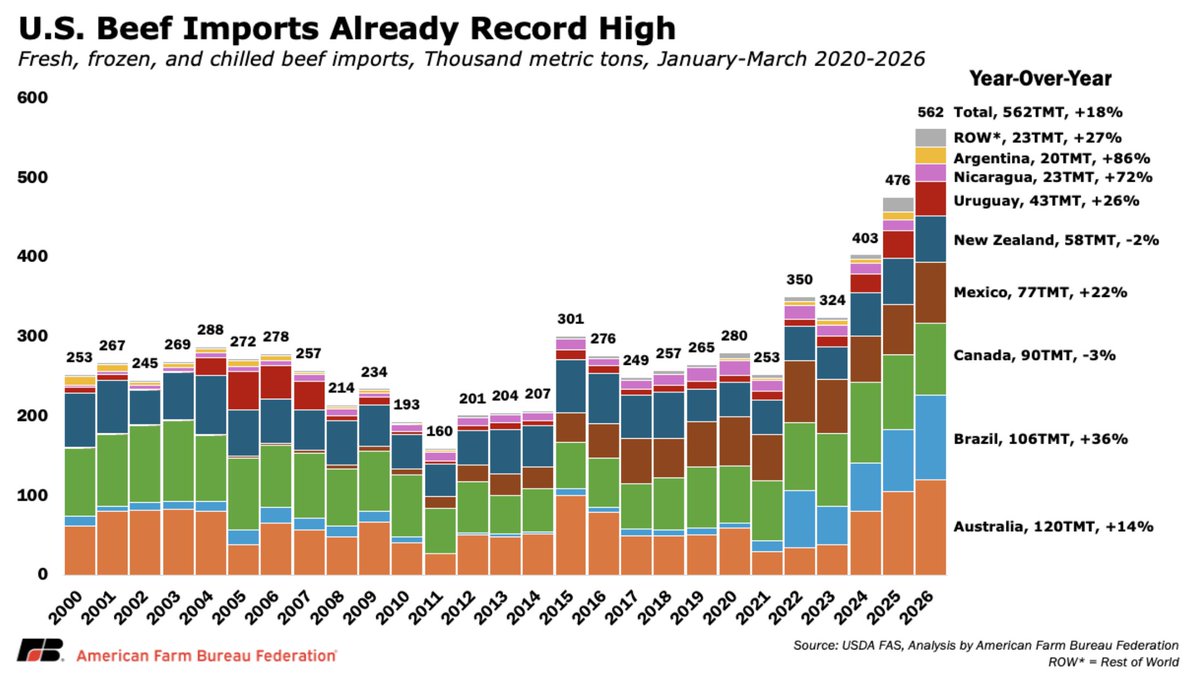
We're getting ready to go talk #fertilizer in the Senate, but all eyes are on a proposed 200-day pause to the TRQ on #beef. @FarmBureau knows this would threaten the investment needed to rebuild 🇺🇸 #cattle herd. #oatt#AgTwitter@DMUNCH912 https://t.co/C0NrFIgPgd
🗺️ Map of the drought duration by county. Drought conditions and weak snowpack are gripping Western #agriculture. @FarmBureau's Danny Munch (@DMUNCH912) and Shelby Hagenauer review Western #snowpack and #drought issues impacting farmers and ranchers. #Plant26#oatt#agtwitter 👇👇https://t.co/D88MjydDuJ
🥬 Higher labor and compliance costs tied to each acre.
🍎 Immense up-front capital investments that don’t disappear in bad years.
🍓 Perishable products with limited ability to wait out weak markets.
🌰 Fewer risk-management tools to cushion price or revenue shocks.. and more
Different crops. Same economic reality: costs are rising faster than returns. Compliance costs, for example, rose from about $106 per acre to more than $1,600 per acre for California lettuce growers, now over 12% of total production costs, up from roughly 1% a decade ago.
Specialty crops are higher-value per acre, but they also come with much higher costs. When margins turn negative, the losses accelerate into the thousands per acre. What contributes to this?
An economist with the American Farm Bureau Federation says the looming #port strike could have severe consequences for the U.S. ag industry, with as much as $1.4 billion in #ag#trade disrupted each week a strike is in place.
https://t.co/XC78wgsG21
“Citrus production in the United States [is a] pretty dire situation right now,” Daniel Munch, economist at the American Farm Bureau Federation, told CNBC. “When you have a lack of supply that’s unable to meet demand, prices for consumers shoot up.” https://t.co/tE7FSNtTdh
"As of the week of Sept. 11, rates have ticked up to over 900% of their underlying tariff, reflecting the impact of water levels on transportation costs." @DMUNCH912
https://t.co/DbvvjnMyA9
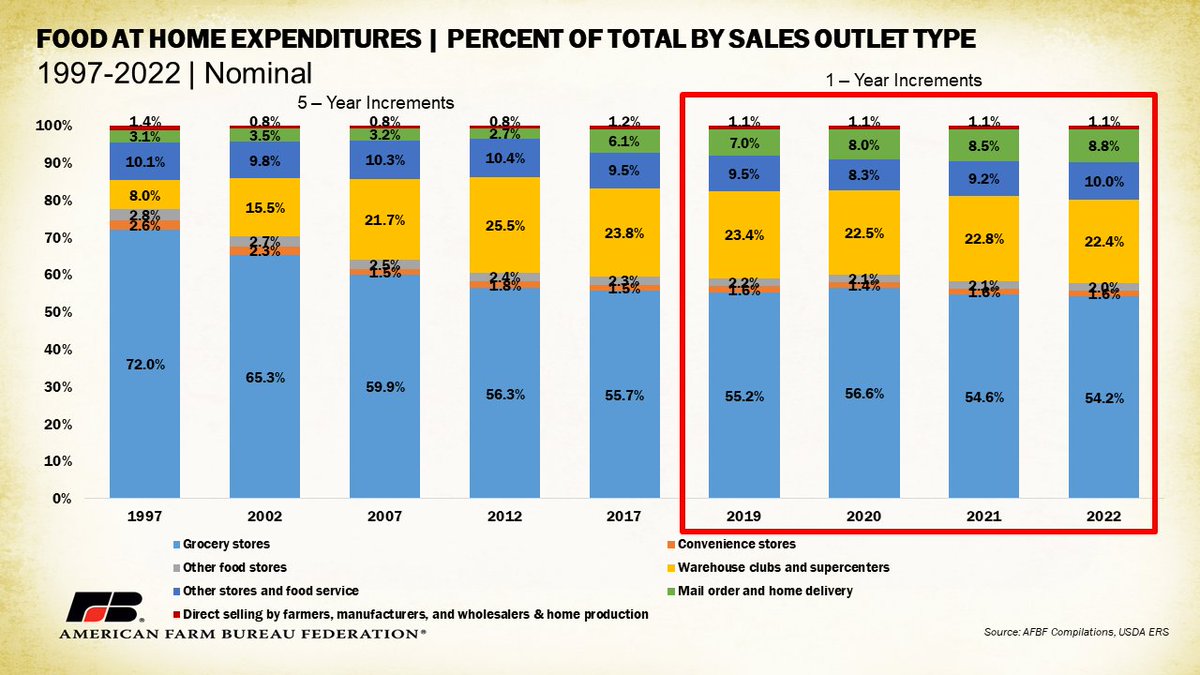
"Much of the decline in grocery store market share for at home spending has been the growth of warehouse clubs and supercenters and home delivery."
https://t.co/IQwKtUgaNQ
"In 1997, grocery stores accounted for 72% of food at home expenditures. In 2022, grocery stores took up only 54.2% of at home food spending."
Read the latest from @dmunch912
https://t.co/IQwKtUgaNQ
Fate of #milk pricing updates now in @USDA’s hands. Hear more about some of the differences and what @FarmBureau is proposing in our interview with @DMUNCH912@brownfield#agnews https://t.co/hQNWP1MRj8
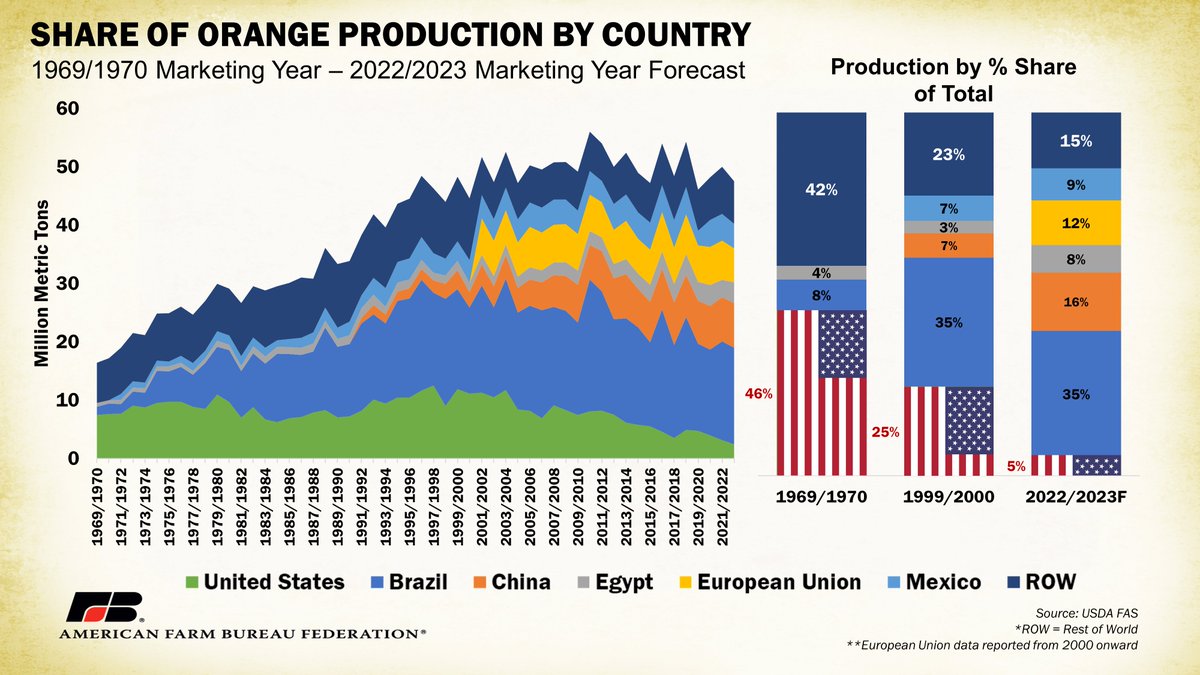
"Since 2000, total domestic production of oranges has dropped 80%, from 300 million boxes to a projected 62 million in 2023." Read the latest from @dmunch912 🍊 https://t.co/IZpfw32khE
"The decline in citrus production in the United States has diminished the country’s longtime role as a leader in global market share. In 1970, the U.S. produced nearly 50% of the world’s oranges. This number dropped to 25% by 2000 and sits at an expected 5% for 2023." @DMUNCH912
"Two-thirds of dairy manufacturing plants did not participate in a survey that will potentially be used to inform binding minimum pricing requirements for farmers." Read the latest from: @dmunch912 https://t.co/Sh4PqgssAM
61% of respondents still report liquidating livestock because of drought conditions.
Read more about AFBF's Fall 2022 Drought Survey results in @DMUNCH912's latest Market Intel.
https://t.co/rneKyvBiBk
.@FarmBureau economist Danny Munch offers his thoughts on recent rail & shipping disruptions, the current trade landscape & upcoming Farm Bill discussions.
Our new edition of 𝙏𝙝𝙚 𝙎𝙥𝙤𝙠𝙚𝙨𝙢𝙖𝙣 𝙎𝙥𝙚𝙖𝙠𝙨 podcast ⬇️
https://t.co/TQpkVLjBce @DMUNCH912#AgTwitter
"@UConn 4-H really fast-tracked my career in agricultural policy. The program got me into agriculture and that’s driven my entire life,” says CAHNR alum Danny Munch.
https://t.co/FC2zGF2LqQ @UConnAlumni@UConnExtension@FarmBureau@DMUNCH912