Those who do not know history are doomed to repeat it.
In 1964, the United States destroyed Brazilian democracy.
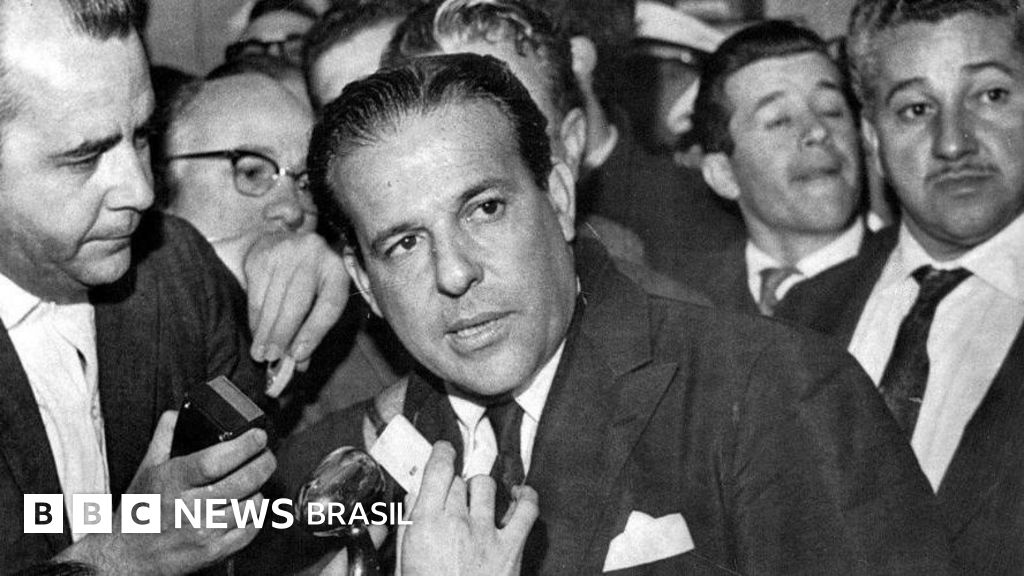
João Goulart was the democratically elected president. His crime was a reform agenda:
Eradicate illiteracy. Let the poor and the illiterate vote. Force multinationals to reinvest their profits inside Brazil. And redistribute land from the hereditary landlords to the rural poor.
Schools. Ballots. Land.
Washington called it communism.
JFK's first secretly taped Oval Office meeting — ever — was about Brazil. On that tape he asked: "What kind of liaison do we have with the military?"
A year later: "We've got to do something about Brazil."
Then: "Do you see a situation where we might find it desirable to intervene militarily ourselves?"
He ordered American aid strangled to "put the screws" on Goulart. Robert Kennedy flew to Brasília to deliver the ultimatum in person, telling Goulart he could not criticize the United States "and at the same time get 250 million dollars from the United States. He can't have it both ways."
American aid was never assistance. It was a leash.
The CIA poured millions into opposition parties, newspapers, labor unions and landowner groups. Ambassador Lincoln Gordon drew up contingency plans with "a heavy emphasis on armed intervention."
And here is the part that tells you this was never about security.
During the Cuban Missile Crisis, Goulart served as a secret back channel between Kennedy and Castro, helping prevent nuclear war.
Washington overthrew him anyway.
JFK was assassinated before he could act. Johnson did not hesitate.
Three days before the coup, National Security Advisor McGeorge Bundy said: "We should not be worrying that the military will react; we should be worrying that the military will not react."
And in the same meeting: "We don't want to watch Brazil dribble down the drain while we stand around waiting for the next election."
On March 31, 1964, Johnson gave the order: "I think we ought to take every step that we can, be prepared to do everything that we need to do."
The Pentagon launched Operation Brother Sam. The aircraft carrier USS Forrestal, six destroyers, and fuel tankers steamed toward Santos to resupply the coup.
Goulart fled to Uruguay. Washington recognized the junta within 48 hours. The aid resumed like clockwork.
Over 21 years the dictatorship killed or disappeared 434 people, tortured roughly 20,000, and drove tens of thousands into exile.
Brazil did not hold another presidential election for 25 years.
Now look at 2026.
The hereditary landlord class that Washington armed in 1964 is the same landlord class that funded the Bolsonaro dynasty.
Lula wants Brazil's rare earths kept out of Pentagon supply chains. He wants Petrobras to stay public. He wants BRICS to break the dollar's chokehold.
So the empire sent the same weapons, updated.
Fifty percent tariffs instead of a naval task force. Meta censorship instead of CIA cash. AI disinformation instead of paid newspapers.
In 1964 they won. In 2026, 64 million Brazilians voted anyway.
The empire never changed its mind about who owns Latin America.
Latin America simply stopped asking permission.
@gastly00@printsminions Trump não vai fazer mta coisa. O congresso deles como está, ele já está com dificuldades de financiamentos, se ele perder o congresso, perde verba, e acabou pro laranjao. Ele parou de atacar o Irã pq não liberam verbas mais.
Lisez bien.
S'agissant du clan familial #Bolsonaro on ne va pas me la faire à l'envers, ça suffit les conneries.
Puisque personne ne le fait, je vais moi vous faire un petit récapitulatif sur le profil pour poser le contexte dans les esprits.
CHRONOLOGIE JUDICIAIRE (2014–2026)
2014 — Jair : propos contre Maria do Rosário, suivis de procédures civiles et pénales.
2017 — Jair : condamné à indemniser Maria do Rosário pour préjudice moral.
2018 — Flávio et Fabrício Queiroz : début de l'affaire « rachadinha », soupçons de détournement de salaires et de blanchiment.
2020 — Flávio, Queiroz et 15 autres personnes : dénonciation pénale dans l'affaire des salaires.
2020 — Jair : enquête sur des soupçons d'ingérence dans la Police fédérale.
2021 — Jair, Flávio, Eduardo, Carlos et plusieurs ministres : recommandations de poursuites de la commission sénatoriale sur la gestion de la pandémie.
2022 — Flávio : accusation « rachadinha » rejetée après annulation de preuves.
2023 — Jair : déclaré inéligible pour huit ans dans deux affaires d'abus de pouvoir électoral.
2023 — Jair et son entourage : enquêtes sur les bijoux saoudiens et leur vente présumée.
2023 — Enquêtes sur la tentative de coup d'État et les attaques du 8 janvier.
2023 — Ouverture du dossier de surveillance clandestine « Abin paralela ».
2024 — Jair : mis en cause par la police pour falsification présumée de certificats de vaccination.
2024 — Jair et 11 proches : mis en cause par la police dans l'affaire des bijoux.
2024 — Jair Renan : poursuivi pour faux documents et blanchiment présumé.
2025 — Jair : condamné à 27 ans et 3 mois de prison pour la tentative de coup d'État.
2025 — Braga Netto, Heleno, Torres, Garnier, Ramagem, Nogueira, Mauro Cid et d'autres : condamnations dans les quatre procès du coup d'État.
2025 — Bilan du STF : 29 condamnations et 2 acquittements dans ces quatre procédures.
2025 — Jair : condamné au civil à payer 1 million de reais pour des propos racistes.
2025 — Carlos : mis en cause par la Police fédérale dans l'affaire « Abin paralela ».
2025 — Carla Zambelli, alliée politique : condamnée à 10 ans pour piratage informatique et à 5 ans et 3 mois dans une affaire d'arme.
2025 — Jair : réouverture de l'enquête pour ingérence présumée dans la Police fédérale.
2026 — Carlos : réouverture de l'enquête « rachadinha », portant sur au moins 1,7 million de reais de détournements présumés. Ana Cristina Siqueira Valle, ex-épouse de Jair, figure parmi les personnes examinées.
2026 — Eduardo : condamnation définitive à 4 ans et 2 mois pour coercition judiciaire. Mandat de prison délivré.
2026 — Eduardo : autre condamnation, à 1 an de détention pour diffamation de Tabata Amaral, susceptible de recours.
2026 — Flávio : deux enquêtes sur des soupçons de blanchiment, de flux financiers internationaux et le financement du film « Dark Horse ».
2026 — Mário Frias et des producteurs de « Dark Horse » : enquête sur des soupçons de détournement de fonds publics, fraude et blanchiment.
2026 — Flávio : passeports annulés et interdiction de quitter le Brésil. Départ vers les États-Unis rapporté par la presse ; la Police fédérale enquête sur le non-respect des mesures judiciaires.
Vous imaginez si on avait des dirigeants politiques comme ça en France?...