We have released a new version of GraphMB (0.2.0) it includes new VAE and GNN models. Check this paper for more details: https://t.co/VrshHO7Dhb and the new version can be installed with pip: pip install grapmb more details: https://t.co/ltxz7P3wlK
Delighted to see @naturemethods has chosen 'long-read sequencing' as their method of the year, a refection of the amazing community work. Long native #nanopore sequencing reads simplify assembly, can span repetitive genomic regions & identify SVs: https://t.co/8vl6xO7lqK 1/n
Abundant species in a metagenome sample are not guaranteed to be easier to assemble. In our @lh3lh3 new preprint (https://t.co/5BdoEzC28o ), we proposed k-mer based and 16S rRNA based methods to measure metagenome assembly completeness. We also proposed a new algorithm (1/2)
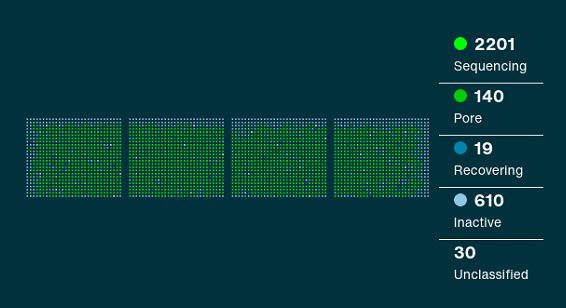
Another @nanopore P2 solo run at @DNASense. We are sequencing four metagenomes with the latest V14 kit chemistry (R10.4.1). The P2 solo is connected to a dedicated Linux Ubuntu 20.04 LTS setup with live-basecalling enabled. Everything is running smoothly. (1/3)
DNA was extracted, purified, prepped, and sequenced in one go. This combination of ease, flexibility, scale, and turn-around time is unprecedented…and awesome! Again, big thanks go to @nanopore and @james_l_platt for allowing us to participate in the P2 solo dev/EA. (2/3)
Back in July, we used the P2 + R10.4.1 for metagenome sequencing (5-600 gigabases). The overall raw yield was 120-ish gigabases pr. R10.4.1. Struggled with a few EA software bugs but seems to be running more smoothly now. Big thanks to @james_l_platt and @nanopore support (3/3).
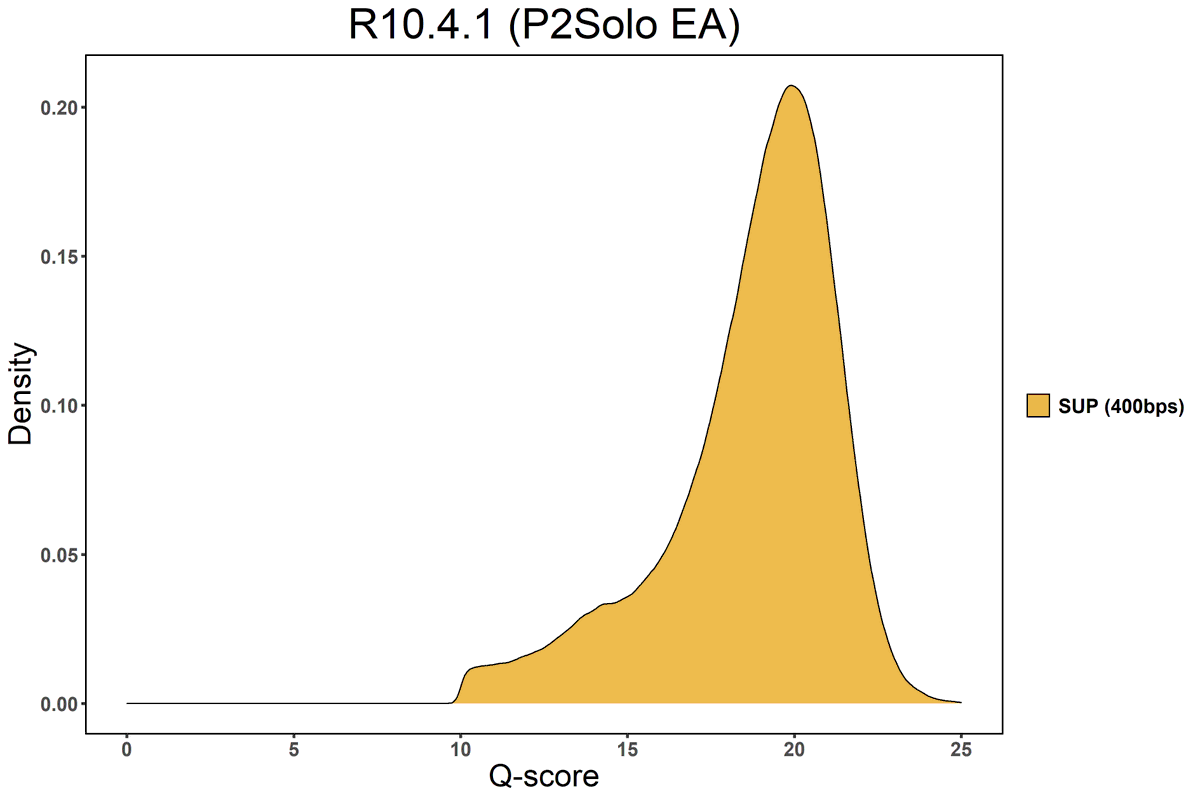
We used the @nanopore P2Solo EA device to capture some eukaryotic genomes on the R10.4.1 flow cell. Impressed by the dual-EA results – massive amounts of high-quality long-read (simplex) data (1/3).
@DNASense is hosting another course in Oxford @nanopore sequencing (22-24 September 2021). Register for the course if you wish to acquire all the essential skills. This year @MadsAlbertsen85 will present his work on SARS-CoV-2 sequencing. More details at https://t.co/esWfagjxY3.
@DNASense is hosting another course in Oxford @nanopore sequencing (22-24 September 2021). Register for the course if you wish to acquire all the essential skills. This year @MadsAlbertsen85 will present his work on SARS-CoV-2 sequencing. More details at https://t.co/esWfagjxY3.
We just did a quick spin of the new @nanopore Bonito v 0.3 and see nice improvements on raw read accuracies! Mode around 98% on PCR amplified whole genome E coli (Credits to Mantas, not on twitter...). Looking forward to checking the impact on consensus error-rate!
Registration deadline for DNASense’s course in Oxford Nanopore DNA sequencing is 3 Feb. A few seats are still available, so please remember to register with our Nanopore expert Rasmus D. Wollenberg if you would like to attend. https://t.co/bQjEyQhqxD
@DNASense has implemented the patterned UMI approach for high-accuracy, long-read amplicon sequencing using @Nanopore. Join our upcoming course to learn more about Nanopore sequencing with UMIs... Further details from [email protected] or at (https://t.co/bQjEyQhqxD)
@DNASense course in Oxford @nanopore sequencing is on again 17-19 Feb 2020. Learn how to do long-read sequencing, data processing and high-accuracy long-read amplicon sequencing using unique molecular identifiers (UMI). Further details at https://t.co/32APQMC04N - deadline 3 Feb.
2A Pharma (2A), the Danish Technological Institute (DTI) and DNASense are developing a first-in-class cancer vaccine. First milestone reached and very encouraged about the project’s progress…
https://t.co/H4dXVzMbfS
#DNAsense#cancerimmunotherapy
DNASense qualifies for the Børsen Gazelle 2019 prize! A big thanks to clients, collaborators and staff for making this recognition possible… https://t.co/69SHRCAun5
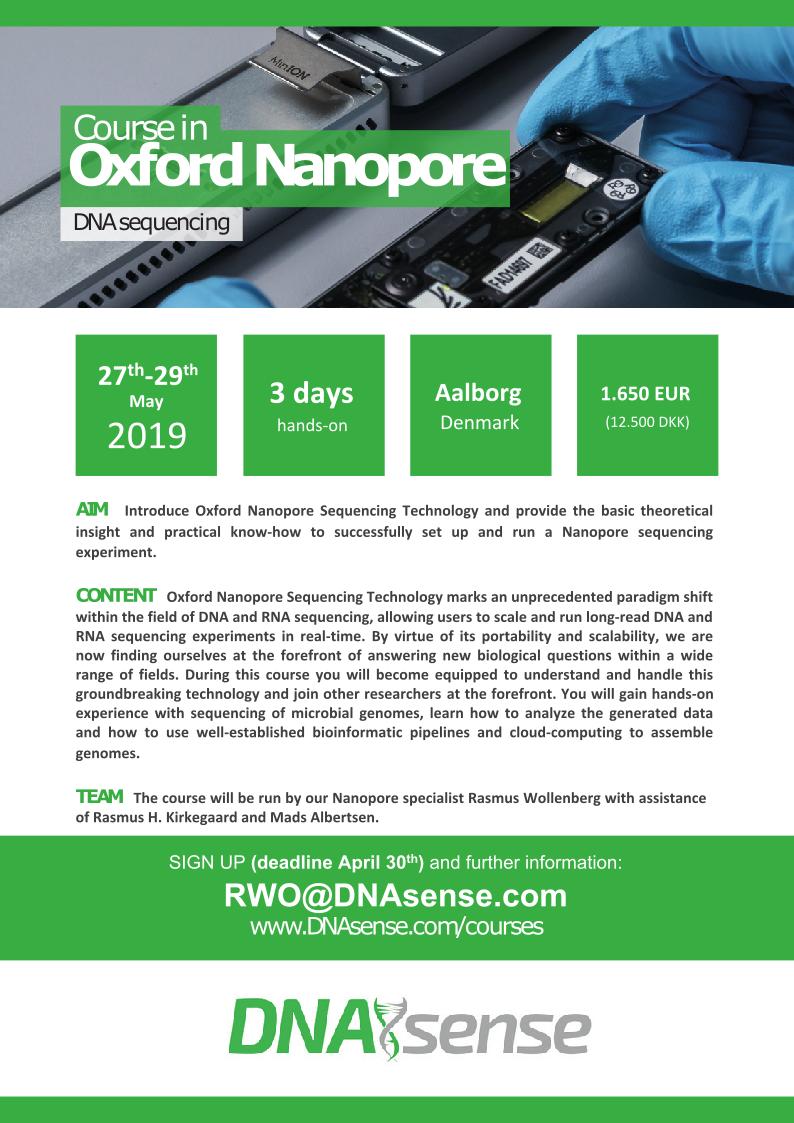
Want to get the the hands-on learning experience for doing @nanopore DNA sequencing and data analysis? Join our workshop May 27th-29th. Sign up at [email protected] or visit https://t.co/lIxdp7YUQC to read more. We look forward to see you! #DNAseq#bioinformatics