Save Soil: 100 Days That Moved the World, now the No. 1 bestseller on Amazon in the Environment and Nature category, is a powerful compilation of volunteer experiences by Radhe Jaggi capturing what unfolded along the Save Soil journey by @SadhguruJV.
Pre-order now: https://t.co/pCX5IyIQc0
#SaveSoil
Before there is art, there is attention.
In our latest interview on Save Soil News, land artist James Brunt shares how slowing down, noticing what’s under our feet, and working with natural materials reshapes how we relate to soil and the world around us.
This is not only about art or aesthetics. It’s about attention, curiosity, and how simple, grounded practices can shift our everyday experience of the earth.
Read the full conversation now on Save Soil News.
Link: https://t.co/3PvqGT6Bzs 🌱
#SaveSoil
CM @SukhuSukhvinder Ji Unveils 'Miracle of Mind' Mental Wellbeing Initiative in Himachal Pradesh
The initiative, led by the HP Home Guards & Civil Defence Department under ADG Mrs. @SatwantAtwal, is expected to improve the lives of 2–3 lakh people in one year.
This marks a significant step towards a mentally healthier and addiction-free Himachal Pradesh.
Time to spill the tea on carbon sequestration! Researchers used a novel method to measure how different kinds of soil have different capacities to absorb carbon.
Action Now: https://t.co/z6MmqLY2lE
#SaveSoil
Can our relationship with the media and storytelling shift from doom and gloom to a more positive outlook when it comes to informing people about the current state of the world’s soil?
We wanted to know for ourselves so we sat down with filmmaker Colin Ramsay – creator of the massively successful documentary “Six Inches of Soil” – to hear his thoughts on what role the media plays in the fight for reclaiming our soils health and also the journey he went through before, during and after the making of the film.
Read the full interview - https://t.co/2YRRriCZZc
#SaveSoil #ConsciousPlanet
💧🌱 Soil is nature’s foundation. When alive, it nurtures, sustains, and protects all life.
But when neglected, this balance breaks—bringing challenges we all feel.
👉 Restoring soil isn’t just about the Earth, it’s about securing our future together.
#SaveSoil#WaterSecurity #ConsciousPlanet
What happens to the invisible world beneath our feet when concrete takes over?
As cities expand and green spaces shrink, the microscopic communities in urban soil are undergoing dramatic transformations. While bacteria adapt quickly to city life—becoming 79 to 85 percent more similar across different urban areas and favoring generalist species—fungi tell a different story, with 83 percent maintaining their specialized habitat preferences even in concrete jungles.
Despite urbanization's pressures, these tiny organisms continue their essential work of breaking down organic matter and cycling nutrients that keep urban ecosystems functioning. However, their resilience has limits.
The key to thriving cities lies in urban planning that supports microbial diversity through native plantings, soil enhancement, and thoughtfully designed green spaces. When we care for the life beneath our cities, we build truly sustainable urban futures.
Action Now: https://t.co/uVnQCIZ3pr
#SaveSoil
Zhang, X., Zhang, Q., Wang, X., Zhang, X., Tang, Y., Wang, Y., Zhao, X., & Xu, Z. (2025). Soil organic carbon and nitrogen stocks in abandoned croplands across the Tibetan Plateau. The Innovation Geoscience, 5(2), 100105. https://t.co/ycgkJVYfi0
You might not see it — but you’re probably consuming it.
With microplastics leaching into the soil, it wouldn't be surprising if the fruits and vegetables we eat contain plastic.
This World Environment Day, be a part of the solution for soil and human health and swap some of your plastics with eco-friendly materials.
Action Now: https://t.co/uVnQCIZBeZ
#SaveSoil #BeatPlasticPollution
Congratulations & Blessings to every one of these 160 women who are joyfully doing what is most needed on the planet today. Their Actions must be amplified and reinforced with urgency through global policymaking to #SaveSoil.
Thanks @SadhguruJV
Did you know your kitchen choices impact both your health and soil health? Every plastic utensil we use eventually breaks down into microplastics that find their way into soil, food, and ultimately, our bodies.
The solution is simpler than you think. By switching to traditional materials like bamboo, wood, or steel, we're not just choosing safer cooking tools—we're choosing a healthier future for soil. While natural materials return to the earth harmlessly, plastic persists, accumulating in our environment and our bodies.
Making this simple swap in your kitchen creates a ripple effect that benefits both personal and planetary wellbeing. Small changes in our daily choices can make a world of difference.
Let's cook up a healthier future—for soil and ourselves.
Action Now: https://t.co/uVnQCIZBeZ
#SaveSoil #BeatPlasticPollution
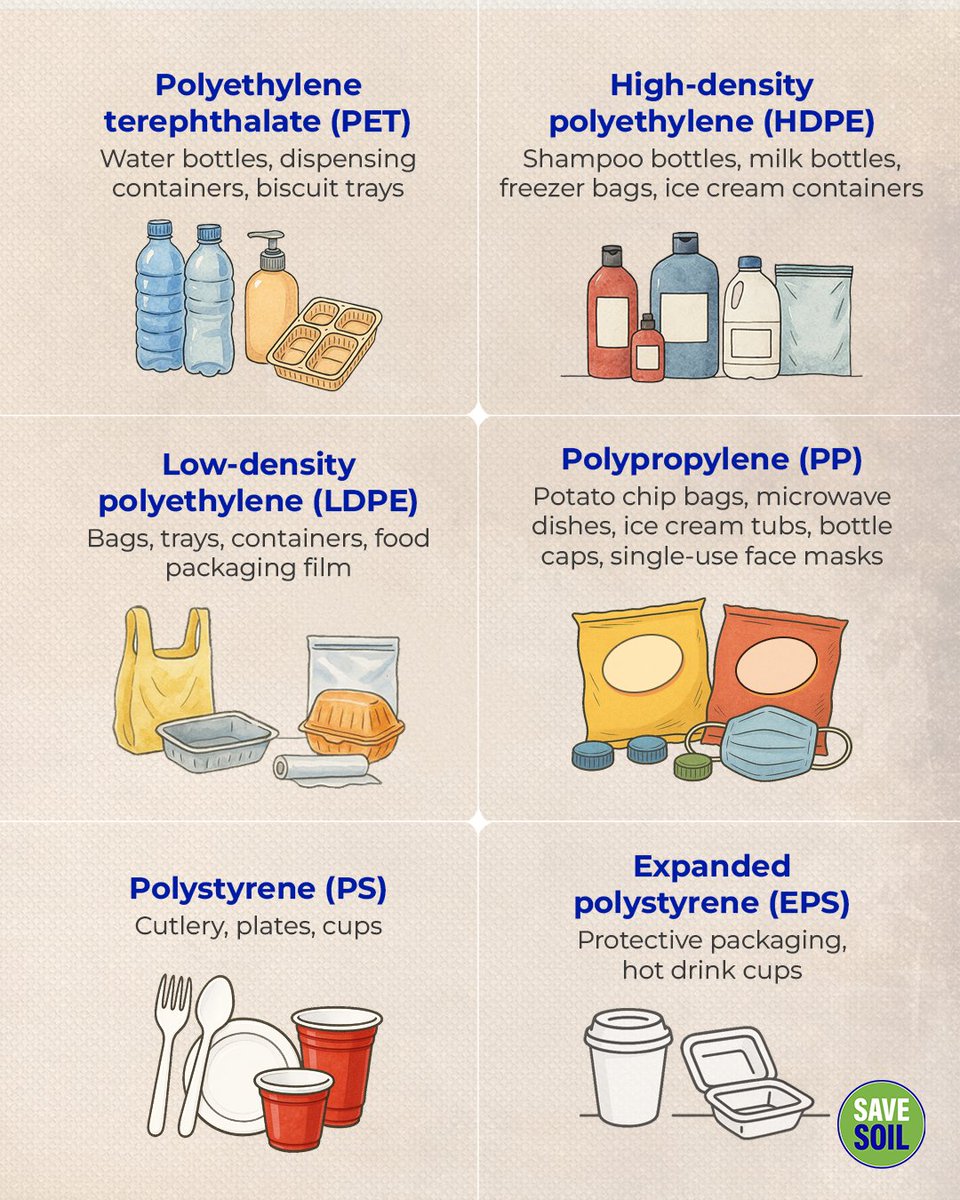
This World Environment Day, let's make conscious choices that protect our planet's health. By refusing single-use plastics, typical examples of which are shown above, we're not just reducing waste—we're safeguarding soil, oceans, and the countless life forms that depend on them.
Small changes create big impacts. Whether it's carrying a reusable water bottle, bringing your own shopping bags, or saying no to disposable cutlery, every action counts in our journey toward a plastic-conscious world.
Let's make choices that our soil, our planet, and our future generations will thank us for.
Action Now: https://t.co/uVnQCIZ3pr
#SaveSoil #BeatPlasticPollution
When plastic ends up in soil, it doesn’t just pollute — it confuses, disrupts, and displaces life below ground.
Microplastics are now found in soil across the world. They alter microbial activity, interfere with the food web, and threaten the delicate balance that supports all plant life, and in turn, all of us.
This World Environment Day, be a part of the solution and choose eco-friendly materials like paper straws and biodegradable packaging over harmful plastic.
Action Now: https://t.co/uVnQCIZBeZ
#SaveSoil #BeatPlasticPollution
Plastics don’t just end up in oceans — they seep into our soil, threatening the very land we grow our food on. But innovation is on the horizon— from protein-based films to algae 3D prints and microbe-made plastics, new materials are emerging that nourish the Earth instead of polluting it.
🌱 This World Environment Day, let’s choose what heals, not what hurts.
Action Now: https://t.co/uVnQCIZ3pr
#SaveSoil #BeatPlasticPollution
Meet Baby Bottle — the newest addition to a very, very long-lived family.
From Grandma Grocery Bag to Uncle Snack Wrapper, plastic items produced decades ago probably still exist, either sitting in landfills, drifting through oceans, or breaking down into microplastics in our soil.
While some plastics do get recycled, a vast majority don’t. Many end up right under our feet — where they leach into the soil, disrupt microbial life, and impact the very foundation of our food system.
This World Environment Day, try swapping out some of your plastic with eco-friendly items like paper bags or steel bottles and be part of the solution that heals the Earth and the soil.
Action now: https://t.co/uVnQCIZBeZ
#SaveSoil #BeatPlasticPollution
Plastic pollution doesn’t have to end in landfills—or our food.
Researchers are now turning plastic waste into useful products like surfactants used in soap and cleaners.
That means less plastic in dumps, less leaching into soil, and fewer microplastics in your vegetables.
Action Now: https://t.co/uVnQCIZ3pr
#SaveSoil #BeatPlasticPollution