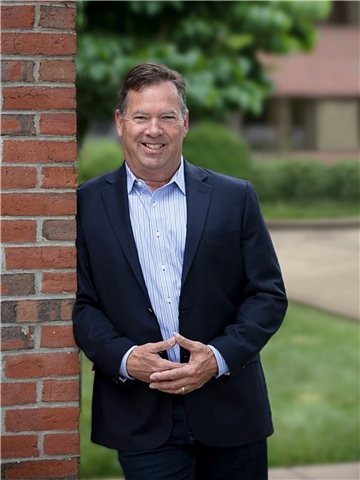
I'm replacing the people who taught me this business.
The attorneys and brokers who shaped how I think about liquor licenses are retiring.
They gave me years of knowledge about navigating regulations, building trust with licensing boards, and structuring deals that actually close.
But I'm not standing still.
I've brought in new mentors to keep me sharp.
An AI mentor to help me understand how technology can streamline licensing processes.
A money mentor to make smarter financial decisions as the business scales.
A marketing mentor to position myself as the go-to expert in liquor licensing.
I'm even thinking about forming a small advisory board.
The business I'm building today isn't the same one my early mentors helped me start.
The problems are different, the scale is different, and the tools are different.
So my mentors need to be different too.
Growth means staying uncomfortable.
It means admitting what you don't know and finding people who do.
That's how I keep delivering certainty to clients even as the licensing landscape shifts.
Most liquor store owners who contact me don't end up working with me.
That's not because I turn away business for no reason.
It's because I only take on deals that fit specific criteria.
When a liquor store owner reaches out, my analyst team reviews the opportunity carefully.
We ask ourselves: Is this a brokerage project? A buyer search? An acquisition? A referral? Or a strategic move?
Then we dig deeper.
Do I have a buyer in place? Is this a license I can repurpose somewhere else? Could this fit into a bigger puzzle?
More often than not, the answer is no.
When the deal doesn't fit my criteria, I refer them out to another broker who can serve them well and the client gets help from someone better suited for their situation.
But when the right opportunity shows up, I step in and execute.
Every owner gets first-class service.
They get educated, given options, and matched with the right solution.
This approach reflects one of my core values: Integrity.
I tell the truth, even when it means sending business elsewhere.
Clients and partners know they can count on me to do what I say.
About 30% of my business doesn't exist until I go create it.
Most weeks, I'll get calls split evenly between buyers and sellers.
About 70% of the time, I already have license inventory ready to market.
The other 30%, I have to go source the license myself.
For national chains that need a specific location, I'll create a search project and start knocking on doors.
When it's an off-premise license, the first thing I do is figure out who's the biggest player in town that could use it.
Could be a supermarket, a Target, a gas station chain.
They'll pay the most for it.
An independent operator won't pay what a Fresh Market will.
I've worked with liquor license sellers since 2001, and I see the same 2 patterns destroy deals:
First type: sellers who have no idea what their license is worth.
Second type: sellers who heard someone got $600,000 five years ago and think that's their number.
They remember the one time someone rushed and overpaid. Not the actual market value.
I had a seller recently who wanted top dollar for a Boston license.
Then Boston added more licenses to the marketplace, and prices dropped.
I told them to sell earlier. They didn't listen.
Now they're stuck waiting for the market to come back up.
Sometimes it takes 6 months for sellers to accept reality.
The market always proves the real value. It just takes time.
Buyers make the opposite mistake. They wait because the price feels high, then watch it climb even higher as their opening date gets closer.
Timing and realistic value expectations kill more deals than anything else.
@dunkindonuts I’m Siri g in the drive rebought and 3 cars pull in ahead of me cause they placed an online order. #soannoying. Let the preorder, but bring them inside. Going to lose it if 1 more car tries to cut the line
I never wanted to build a business that owned me.
Most people grind for years thinking success means being busy all the time.
We decided to build the opposite with Liquor License Advisor.
Our business reflects our 4 core values:
- Simplicity
- Freedom
- Integrity
- Family first
Family first means the business exists to support life, not consume it.
Work should fuel freedom and connection.
My days are spent doing what I love most.
Solving complex liquor license problems.
Closing meaningful deals.
Deepening relationships with landlords, attorneys, and strategic partners.
I feel calm, confident, and fully energized in my role.
Not stressed. Not overwhelmed.
That's what happens when you design a business around your values instead of chasing what everyone else thinks success should look like.
It works for me, for my team, and for my family.
My team knows they're doing important work and love coming to work each day.
My clients feel cared for, supported, and thrilled they chose me.
I'm grounded, optimistic, and clear that I've built something enduring and trustworthy.
That's the business I wanted.
And that's the business I have.
Everyone on our team takes full ownership of their role.
They know their outcomes.
They know the standard they're holding themselves to.
Our culture is straightforward, respectful, and collaborative.
Here's how the structure works:
My COO drives operations with precision and keeps every team and function aligned to my goals.
My EA/PA keeps me organized, protects my time, and makes sure priorities get executed without distraction.
The Client Concierge Team delivers white-glove client service through our Client Delivery System.
The Marketing and Lead Generation Team nurtures relationships and maintains consistent referrals and deal flow.
The Brokerage Team handles transactions with speed and accuracy.
The Admin and Finance Team makes sure compliance, numbers, and paperwork are tight and reliable.
My IT function keeps systems and technology sharp and future-ready.
And trained AI coordinates transactions, monitors progress, and automates routine steps.
This lets my team focus on the human side of deals while technology keeps everything moving smoothly.
Everyone's been trained not just in operations and sales but also in communication and client care.
They know how to show up powerfully for clients and for each other.
Our team handles liquor license transactions across the US.
Every jurisdiction has its own rules and timelines.
Without systems, that gets messy fast.
Automation is the heartbeat of how we run the business.
Every transaction gets tracked.
Every client touchpoint gets mapped.
Every deadline gets monitored.
AI coordinates transactions and automates routine steps.
This frees us up to focus on the human side of deals.
Solving complex puzzles.
Building relationships with landlords and attorneys.
Technology handles the repetitive work so we can do what actually matters.
That's how you remove clutter and chaos in a business that spans multiple states and regulations.
The Massachusetts liquor license quota system is more restrictive than you think.
Massachusetts Law places a restriction commonly referred to as a quota on the number of licenses a city or town can issue.
The quota is based on the municipality's population from the most recent Federal census.
For on-premise licenses, each city or town may grant one Section 12 license for every 1,000 people, with a minimum of 14.
One wine and malt license may be granted for every 5,000 people, with a minimum of 5.
For off-premise Section 15 licenses, each city or town may issue one all alcoholic license for every 5,000 people, with a minimum of 2.
One wine and malt license may be granted for every 5,000 people, with a minimum of 5.
This is why off-premise licenses for liquor stores are so much more valuable than restaurant licenses.
The formula creates fewer liquor store licenses than restaurant licenses.
If you're buying or selling in Massachusetts, understanding these numbers isn't optional.
Before I help anyone buy a liquor license, I run through a simple checklist.
Do you have site control? Is your lease locked in? Is your financing in place?
If the answer to any of these is no, we're not ready to move forward yet.
Here's why this matters for liquor licensing specifically:
By the time someone comes to me for a license, the funding needs to be done. The lease needs to be complete. We don’t want any landlord issues hanging over us.
That's the whole point of focusing exclusively on licenses instead of full business brokerage. The transaction is cleaner. Faster. No complications from real estate or financing falling through mid-process.
I also ask one more question during discovery: “Have you tried to buy a license before? If yes, what happened?”
If a deal fell apart previously, I need to know why. I don't want history repeating itself.
The license transfer itself takes 270 days in Massachusetts.
That's long enough without adding preventable delays from incomplete groundwork.
So many sellers have zero idea what their liquor license is actually worth.
If somebody was in a time crunch and had to overpay to get a license, that's the number they focus on. Not the true market value.
I had a client recently who wanted top dollar for their license. But here's what changed:
Cities and towns in Massachusetts have been increasing the number of licenses for restaurants to support mixed-use retail projects.
With a continuous increase in licenses, your existing license decreases in value. Basic supply and demand economics.
In Massachusetts right now, there's an abundance of licenses available. Prices are coming down from $600,000. I told a client the other day to price at $500,000 to be front of the line.
If you're planning to sell your license at some point, consider selling sooner rather than later.
Sometimes it takes time for the market to prove it to sellers. They might not have been ready to take a lower number six months ago.
But after the market shows them they need to act now, they tend to soften up a little bit.
I've worked on 7 liquor license placements in the last couple of years using the supermarket model.
Here's how the licensing works:
In Massachusetts, supermarket chains can only hold 9 licenses total, no matter how many locations they have.
Even if you're a big chain with dozens of supermarket locations across the state, the law caps you at 9.
So when a chain has additional supermarkets beyond their 9-license cap and wants liquor available to customers, the licensing gets creative.
We lease the space out inside the store. Then we license that space to someone else who operates it.
The license stays separate from the supermarket's count because it's held by a different operator.
From a licensing perspective, this model solves the 9-license cap problem while still getting liquor into more supermarket locations.
The foot traffic makes these licenses valuable. 3,500 to 4,000 customers walk by every week doing their shopping.
Management loves it because they're offering liquor without using up one of their precious 9 licenses.
And the license holder loves it because they're operating in a high-traffic location without the overhead of a standalone store.
This is what happens when you understand the licensing constraints and build around them instead of fighting them.
Something I firmly believe about our business:
If our fee is bigger than the value we create, we don't deserve your business.
And that’s how we view every liquor license transaction.
So what's the value we bring?
Speed of sale and getting you the best price the market can justify.
Whether it's securing a license quickly, staying on top of attorneys to make sure things happen fast, or finding the best price, we bring value so the fee is a non-issue.
That's the only way this works long-term and why our clients will continuously choose us over competitors.
I work with 6 types of clients in the liquor licensing world.
- Multi-unit restaurant and retail operators
- Corporate executives overseeing strategic exits
- In-house legal and general counsel teams
- Licensing and compliance directors
- Attorneys specializing in beverage law.
- And private equity and corporate development teams
Each one faces the same core problem: the liquor license process is complicated, time-consuming, and full of risk.
For restaurant operators, a delayed license means a delayed opening.
For executives managing exits, it means capital tied up and deals at risk.
For legal teams, it means chasing brokers for updates when their executives ask questions.
For licensing directors, it means navigating 50 different state regulations.
For attorneys, it means coordinating with brokers who don't understand the regulatory process.
And for private equity teams, it means uncertainty in their portfolio company transactions.
We built Liquor License Advisor to solve this for all of them.
One firm. One process. One standard of service.
We help businesses navigate the complex world of liquor licensing with clarity, confidence, and speed.
We work with restaurant groups, national retailers, landlords, liquor store owners, and their advisors.
Our job is to help them buy, sell, and optimize liquor licenses across the country.
The liquor licensing process is complicated.
Every state has different regulations.
A single mistake can delay an entire project.
That's where we come in.
I've spent 25 years building relationships with attorneys, regulators, and decision makers nationwide.
I've transferred over 2,000 licenses.
I know how to move deals forward without surprises.
Clarity means knowing exactly where your license stands at every step.
Confidence means working with someone who delivers on what they promise.
Speed means tight timelines and systems that keep deals moving.
That's what we do at Liquor License Advisor.
I've built my reputation on three things.
Simplifying the process.
Delivering white-glove service.
And getting deals done, even when they're complex, high-stakes, or time-sensitive.
If it involves a liquor license, I know how to handle it.
The liquor licensing world is complicated by design.
Every jurisdiction has different rules.
One mistake can delay an entire project.
Most brokers make it harder than it needs to be.
They leave clients chasing them for updates.
They don't communicate proactively.
They create stress instead of certainty.
I do the opposite.
I simplify by building systems that remove chaos.
Clear timelines. Automated tracking. Proactive communication at every step.
We deliver white-glove service by designing the experience around how clients should feel: supported, informed, and confident.
And our team gets deals done by staying close to the attorneys, regulators, and partners who move transactions forward.
After 25 years and over 2,000 licenses transferred, I know how to anticipate problems before they happen.
That's my standard.