BREAKING: UK waives some Russian oil sanctions, allowing imports of diesel and jet fuel processed in third countries from Russian crude
(most likely supply chain: imports of Indian refined products produced by processing Russian crude).
https://t.co/eYy8YOXLZf
Europe’s solar boom is running into a new problem: too much power. Prices are going negative, grids are overwhelmed, and energy is going to waste. https://t.co/36tjlYM8Nj
Norway approves the re-development of three North Sea oil-and-gas fields that were closed ~30 years ago.
After redeveloping, the fields will pump gas and light oil. The gas will be sent to Germany and the light oil to (irony of the ironies) the UK. https://t.co/Kdnv7RgxGP
Er is een akkoord bereikt met ENGIE om de voorwaarden te bepalen en de nodige studies op te starten voor een volledige overname van het Belgische nucleaire park. In afwachting daarvan worden alle ontmantelingsactiviteiten per direct stopgezet.
Deze regering kiest voor zekere, betaalbare en duurzame energie. Met minder afhankelijkheid van fossiele import en meer controle over onze eigen voorziening.
———
Un accord a été conclu avec ENGIE afin de définir les conditions et de lancer les études nécessaires en vue d’une reprise complète du parc nucléaire belge. D'ici là, toutes les activités de démantèlement sont suspendues avec effet immédiat.
Ce gouvernement fait le choix d'une énergie sûre, abordable et durable, avec moins de dépendance aux importations fossiles et plus de contrôle sur notre propre approvisionnement.
Alors que l’Europe veut sécuriser son énergie, Bruxelles s'évertue à rendre ses fournisseurs plus chers et moins disponibles. C’est toute l’ambiguïté de la nouvelle réglementation méthane : une bonne intention climatique basée sur un autosabotage réglementaire. Entrée en vigueur le 4 août 2024, la nouvelle réglementation sur le méthane part ainsi d’une bonne intention : réduire les fuites dans la chaîne fossile.
Très bien. Personne ne défend les fuites, le torchage ou l’opacité des chaînes gazières... Mais l’UE ne se contente pas de dire : « réduisez vos émissions chez nous », à partir de 2027 elle demande aussi aux importateurs européens de documenter les émissions liées aux combustibles fossiles importés.
▶️ La réglementation fonctionne ainsi comme un passeport climatique imposé aux combustibles fossiles importés.
Pour entrer sur le marché européen, le gaz devra de plus en plus prouver d’où il vient, combien de méthane il a laissé fuir, selon quelle méthode, et avec quelle vérification.
Si l’importateur ne fournit pas les informations exigées, il doit justifier son incapacité. En cas de manquement, des sanctions financières pourront s’appliquer.
- Une étude Wood Mackenzie évoque jusqu’à 43 % des importations européennes de gaz et 87 % des importations de pétrole brut potentiellement à risque de non-conformité en 2027.
- Le raffinage européen serait particulièrement vulnérable, faute de bruts conformes disponibles et adaptés aux configurations existantes des raffineries. La contrainte sur les bruts conformes pourrait réduire fortement le débit des raffineries européennes, avec un scénario extrême évoquant une chute d’environ 50 % entre 2027 et 2030.
- Et si certains fournisseurs ne peuvent pas documenter leurs émissions selon les standards demandés, ou s’ils jugent l’Europe trop risquée juridiquement, ils peuvent réduire leur exposition au marché européen, demander des primes, ou simplement vendre ailleurs.
Bruxelles a donc choisi sa méthode favorite : transformer un objectif raisonnable en labyrinthe administratif, avec formulaires, audits, incertitudes méthodologiques, clauses contractuelles à réécrire, et sanctions pouvant aller jusqu’à 20 % du chiffre d’affaires mondial.
▶️ Concrètement, ce surcoût réglementaire peut se traduire par des factures de gaz plus élevées, une électricité plus chère dans les pays où le gaz fixe souvent le prix marginal, des carburants plus coûteux si le raffinage européen est affecté, et des coûts industriels accrus, ensuite répercutés dans les biens.
Le consommateur ne paiera pas la réglementation en lisant son nom sur la facture, il la paiera dans le prix final de l’énergie, des produits et de la compétitivité perdue.
▶️ La Commission semble néanmoins avoir compris qu’il y avait un léger problème. Elle envisage désormais des « flexibilités ». Le mot est révélateur. Il signifie que Bruxelles reconnaît le risque, mais préfère, pour l’instant, aménager le règlement plutôt que l’ouvrir vraiment. Ces flexibilités pourraient consister à accorder + de temps, à accepter certains changements de méthodes, à tolérer des données imparfaites…
Mais une flexibilité administrative n’est pas une sécurité juridique. Si l’Europe devient un client + compliqué, + coûteux et + risqué que les autres, elle ne sera pas privée d’énergie, elle devra simplement la payer + cher.
⏯️ L’Europe a déjà appris, avec le gaz russe, qu’une dépendance énergétique mal pensée se paie cher.
Il serait regrettable qu’elle tire de cette crise une conclusion aussi étrange que de remplacer la dépendance géopolitique par un nouvel autosabordage réglementaire. On peut réduire les émissions de méthane sans décourager les fournisseurs...
Encore faudrait-il préférer l’efficacité à la posture…
https://t.co/3cuiQYAQsT
https://t.co/tr2pSfQDvN
The EU’s Methane Regulation risks triggering another energy crisis. To avoid it, Brussels needs a regulatory environment that encourages, not discourages, suppliers. Europe cannot regulate its way to energy security. Half measures and "flexibilities" won't cut it. The EU must fix the regulation's core defects or risk driving away its most dependable suppliers — decreasing energy supplies while increasing energy costs. American LNG is reliable, low-emission, and ready to scale. The U.S. stands ready to provide the reliable energy Europe needs.
My op-ed in @ftbrussels ↓
https://t.co/0Cvs2yLbmR
⚠️ According to a Wood Mackenzie study, the #EUMethaneRegulation could drive EU #gasoline and #diesel prices up by 24% and 16%, respectively, due to insufficient volumes of compliant crude.
Energy policy choices matter for consumers and #competitiveness.
More: https://t.co/5k2nHp7dlV
Ed Miliband unveils move to delink UK gas and electricity prices
via @FT
https://t.co/5S0O6elIFw
[Disaccoppiamento in salsa british 🇬🇧: in sostanza si vogliono forzare impianti a fonti #rinnovabili esistenti a sottoscrivere CfD... 🤷♂️]
L’ idea che si possa sostituire completamente il gas nella produzione dell’elettricità che già produciamo e inoltre fare fronte ai nuovi consumi elettrici ( auto elettriche, pompe di calore, condizionatori, e soprattutto data center ) solo con pannelli solari e pale eoliche , fonti poco dense, con potenze limitate e fabbisogno enorme di un territorio limitato e sensibile, è semplicemente priva di buon senso . Non c’è bisogno di tanti studi . Basta il buon senso.
In leaked (as usual) doc, 🇪🇺 still refuses to think about domestic oil&gas production; the focus is on "homegrown clean energy".
For ☢️the only recommendations are "optimisation" and "avoid premature retirement".
This will not deliver abundant, cheap & decarbonised energy. 😡
We have signed a €500 million agreement with @EIB to support the Sannazzaro biorefinery project. Leveraging on existing infrastructure, this will enable #Enilive to expand HVO #biofuels and SAF production.
https://t.co/gjj3BXPPM1
I urge coordinated EU action: share information, monitor risks, avoid measures that disrupt markets, delay non-essential refinery maintenance, and promote demand-saving & biofuels to ease pressure.
Acting together is essential.
🔗https://t.co/f20JhDhLqX
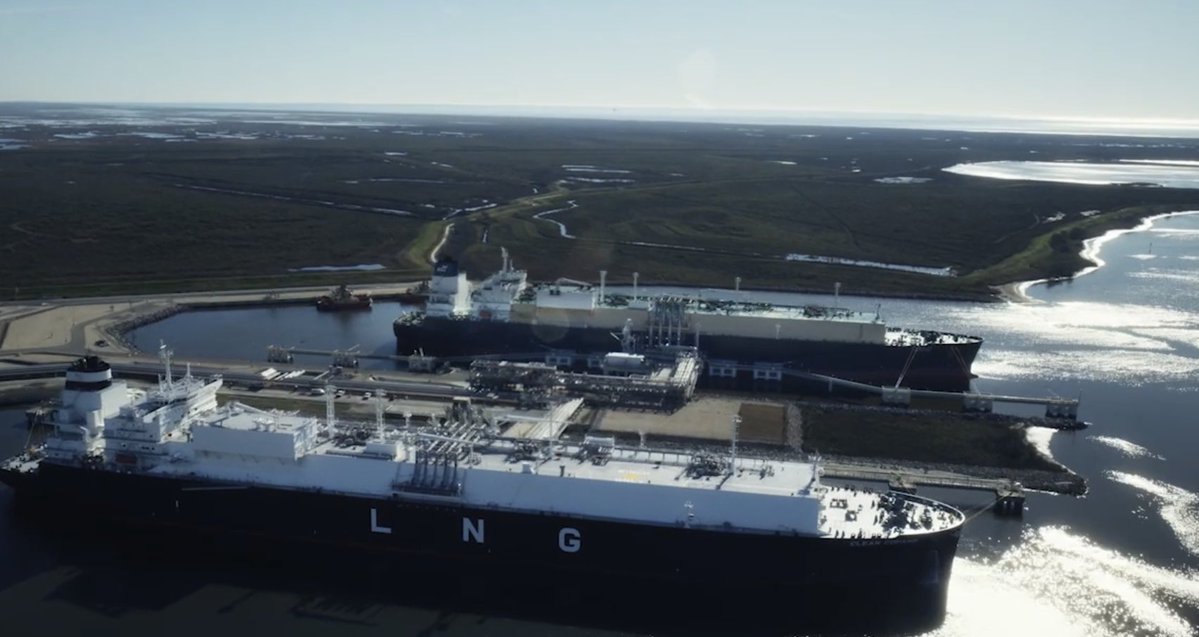
Golden Pass LNG, QatarEnergy’s largest investment in the United States, marks historic milestone with first LNG production
Golden Pass LNG, a joint venture between QatarEnergy and ExxonMobil, has marked a major milestone towards full operations of its LNG production and export facilities by achieving first LNG production from the first of 3 LNG trains comprising the 18 million tons per annum project.
First LNG sets the stage for Golden Pass LNG to deliver its first cargo from its facilities located in Sabine Pass, Texas, by achieving sustained liquefaction operations, and meeting its commercial and strategic objectives.
Commenting on this occasion, His Excellency Mr. Saad Sherida Al-Kaabi, the Minister of State for Energy Affairs, the President and CEO of QatarEnergy, said: “First LNG is of a particular importance for one of the largest single investment decisions in U.S. LNG history. The operational phase and market entry of Golden Pass LNG will come at an important time when global energy security ranks very high on energy agendas worldwide. We look forward to the safe and successful start of export operations.”
His Excellency Minister Al-Kaabi said: “Golden Pass LNG is part of a wider QatarEnergy strategy for international investments that we have been planning over the past decade. It also represents a significant part of the plans announced by QatarEnergy in 2018 to invest 20 billion dollars in the U.S. energy sector. We are now seeing the first fruits of this far-sighted strategy with the start of Golden Pass LNG, which will play an important role in supporting global energy security and a fair and balanced access to cleaner energy.”
Concluding his remarks, H.E. the Minister said: “I would like to thank the U.S. regulators for their effective cooperation, which has helped lead to this moment. I also would like to thank our strategic partner, ExxonMobil, with whom we continue to work closely to implement this and other projects around the world. Finally, I would like to voice gratitude to the management and all employees at Golden Pass LNG as well as the teams at QatarEnergy and ExxonMobil for their dedication and commitment, which are key to helping deliver on our energy commitment.”
Golden Pass LNG is a partnership between QatarEnergy (70%) and ExxonMobil (30%). The two companies had announced their final investment decision of more than 10 billion dollars for developing the Golden Pass LNG export project in February 2019.
Global LNG exports from the project are expected to begin in the second quarter of 2026.
#QatarEnergy #YourEnergyTransitionPartner #Qatar
In case you missed it: A new industry-based study by Wood Mackenzie released on March 9 shows that the EU #Methane#Emissions Regulation (EUMR) could put up to 43% of EU gas imports and 87% of crude oil imports at risk from 2027 - via @NEGlobalMedia: https://t.co/wYjKwVCfuV
QatarEnergy declares Force Majeure
Further to the announcement by QatarEnergy to stop production of liquefied natural gas (LNG) and associated products, QatarEnergy has declared Force Majeure to its affected buyers.
QatarEnergy values its relationships with all of its stakeholders and will continue to communicate the latest available information.
#QatarEnergy #Qatar