美国10月非���就业报告将于11月6日(周五)美东时间上午8:30、美西时间凌晨5:30公布。
美股大幅震荡后,再迎关键考验!
市场预期新增就业6.5万人,高于9月的2.9万人;失业率预计维持4.2%,平均时薪环比增长0.3%。
三种可能:
① 就业强劲:降息预期降温,科技股承压。
② 温和增长:经济保持韧性,美股有望企稳。
③ 就业恶化:降息预期升温,衰退担忧加剧。
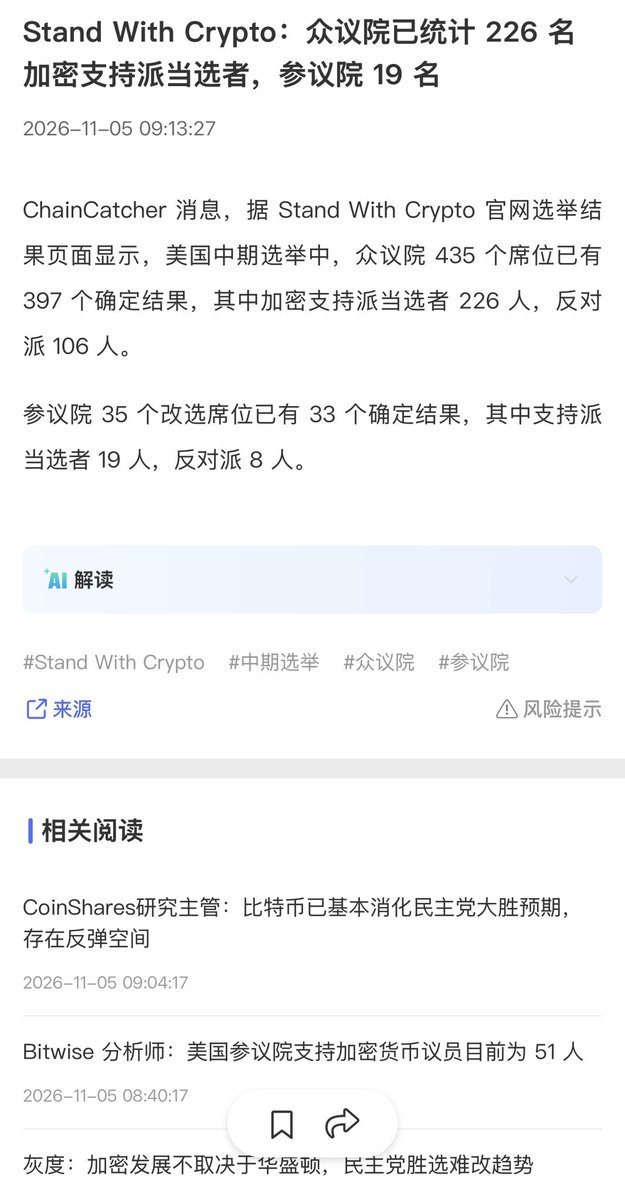
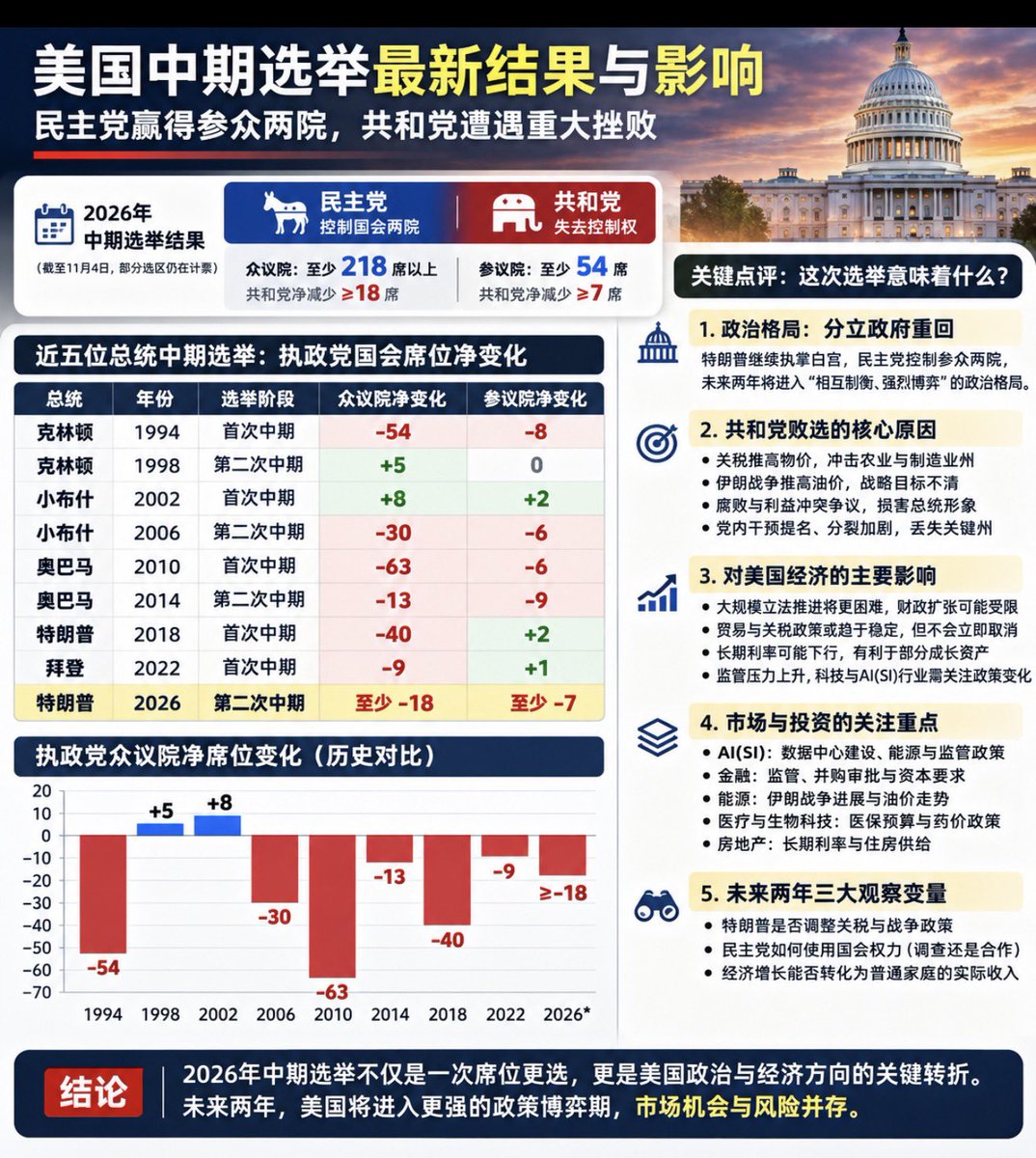
中期选举改变政治格局,非农数据将进一步影响美联储利率预期。
AI(SI)、半导体及高估值科技股,可能迎来新一轮剧烈波动。
Americans must be scratching their heads right now:
Republicans and Trump go to war with Iran
➡️ Oil prices surge, inflation rises
➡️ Cost of living skyrockets
➡️ Voters get angry and vote Democrat
➡️ Democrats push to restrict advanced AI development
➡️ Wall Street fears an AI crackdown
➡️ Tech stocks plunge, 401(k) retirement savings shrink
➡️ Living costs stay high, retirement savings take another hit.
Americans voted hoping life would get better. Instead, they may end up worrying about gas prices today and their retirement accounts tomorrow.
The ultimate American political irony: trying to make life affordable today while risking the economic growth of tomorrow.
Can Democrats Control Congress—and America Still Walk Away From SpaceX?
Following the 2026 midterm elections, Tesla and SpaceX shares plunged as investors reassessed the political risks facing Elon Musk’s business empire.
But the real question is: How much can politics actually change economic and strategic realities?
According to Bloomberg Government, SpaceX secured approximately $5.9 billion in defense contract obligations during the first three quarters of fiscal 2026, more than triple the $1.8 billion recorded for all of fiscal 2025. Much of that growth came from Trump’s Golden Dome missile defense initiative.
SpaceX is now deeply embedded in America’s national security infrastructure. NASA crew transportation, military satellite launches, and Starshield communications are capabilities that cannot easily be replaced overnight.
Democrats may oppose Musk politically, but replacing SpaceX is an entirely different challenge.
The real risk is not necessarily existing contracts. It is future funding.
Congress controls appropriations and can reduce funding for programs such as Golden Dome, increase oversight, and reshape spending priorities. Existing contracts have legal protections, but they are not immune to termination.
Two additional risks deserve attention.
First, tighter data center regulations in Texas could slow SpaceX’s AI computing ambitions, particularly through electricity constraints, water requirements, and construction approvals.
Second, a potential Tesla–SpaceX merger could face greater regulatory scrutiny and political resistance. Congressional Democrats cannot directly veto such a transaction, but they can intensify investigations and oversight.
These concerns are legitimate.
However, political risk and fundamental business value are not the same thing.
SpaceX’s long-term competitive advantages lie in reusable rockets, satellite communications, defense infrastructure, and potentially space-based computing.
Tesla’s future depends more heavily on the commercial success of autonomous driving, robotics, and energy storage.
Valuation is another matter entirely.
At an estimated $1.83 trillion market capitalization and roughly $32 billion in trailing revenue, SpaceX would trade at approximately 57 times sales—a valuation that already assumes extraordinary future growth. These figures are estimates, not independently verified current financial results.
My view: Democratic control of Congress may slow SpaceX’s government contract growth, but it is unlikely to eliminate the company’s strategic importance anytime soon.
Still, being difficult to replace does not mean being impossible to overvalue.
Over the next five to ten years, the investment returns of Musk’s companies will depend less on political affiliations or temporary market panic than on their ability to convert technological leadership into sustainable revenue, earnings, and free cash flow.
Markets can sell stocks over politics. But political disagreements cannot magically create replacement technologies.
Democrats Control Congress: Which Sectors Benefit, Which Face Pressure?
November 4, 2026 | U.S. Midterm Election Analysis
Core View: Democratic control of Congress could reshape sector valuations rather than trigger a broad selloff. AI(SI) growth remains strong, but regulation, energy, and financing costs may pressure margins. Clean energy and healthcare could benefit from policy expectations.
1. What Changes in Washington?
Democrats can lead investigations, hearings, and budget negotiations. However, Trump retains veto power, and most Senate legislation faces a 60-vote procedural threshold.
Regulatory scrutiny may increase before major legislation changes.
2. AI(SI): Profitability Takes Priority
Big Tech — MSFT, GOOG, META: Antitrust, copyright, privacy, and AI safety oversight could raise compliance costs and pressure valuations.
Semiconductors — NVDA, AMD: Computing demand remains the growth driver. Export restrictions have bipartisan support; orders, competitiveness, and cash flow determine long-term value.
Data Centers — CRWV, APLD, IREN, CORZ: Electricity, water, permitting, and financing costs could squeeze margins despite rising AI demand.
Key Shift: Investors may increasingly reward returns on AI investment rather than spending growth.
3. Clean Energy: Potential Support
FSLR, ENPH, and RUN could benefit from stronger clean-energy expectations, although new subsidies face presidential approval.
Interest rates and project economics remain critical. AI electricity demand could also support nuclear power and grid infrastructure, benefiting companies such as NEE, GEV, and ETN.
4. Healthcare and Life Sciences
Hospitals — HCA, UHS: Broader insurance coverage could improve reimbursement.
Insurers — UNH, CNC, MOH: Membership growth may face tighter payment oversight.
Pharma — LLY, MRK, PFE: Drug-pricing regulation remains a risk.
Life Sciences — RVTY, AZTA, ILMN, TWST, TXG: Research funding and laboratory demand remain central.
MRNA, DNA, and TEM depend on commercialization, clinical progress, and cash management.
5. Other Sectors
Financials — JPM, BAC, GS: Tighter oversight possible; rates and credit conditions remain decisive.
Crypto — COIN, MSTR: Regulatory uncertainty persists; Bitcoin remains liquidity-sensitive.
Defense — LMT, RTX, NOC: Budget scrutiny may increase, but national security retains bipartisan support.
Energy — XOM, CVX, COP: Environmental pressure could rise; oil prices and production remain fundamental.
Private Prisons — GEO, CXW: Immigration policy creates direct contract risks.
6. Investment Outlook: Next 6–12 Months
Political changes affect companies through three channels:
Policy-dependent businesses: Subsidies, healthcare payments, and government contracts influence earnings.
Capital-intensive industries: Data centers face energy, financing, and permitting pressures.
Global technology leaders: Innovation, profitability, and valuations remain the primary long-term drivers.
Conclusion
Democratic congressional control may redistribute sector risk premiums rather than determine the overall market direction.
Within AI(SI), chipmakers must sustain orders, platforms must monetize technology, and data centers must generate returns after energy and financing costs.
The next investment cycle may reward companies converting AI spending into sustainable profits and free cash flow—not simply those expanding fastest.
Politics shapes valuations. Earnings and cash generation drive long-term returns.
Policy scenario analysis as of November 4, 2026. For investment research purposes only.