Check out our latest paper on the Universal Spatial Audio Transcoder (USAT).
We tackle the conversion & decoding of spatial audio formats, based on psycho-acoustic principles. USAT method adapts to any input/output format & speaker layout.
Paper: https://t.co/BDm0N6IYXN
I almost fully agree with @geoffreyhinton's interview, though I think AI's chance of surpassing human intelligence in the next 20 years is much lower than 50%.
However, regardless of whether the probability is 50% or 0.1%, the risk exists and needs to be studied and prevented.
“There is a 50-50 chance AI will get more intelligent than humans in the next 20 years. We’ve never had to deal with things more intelligent than us. And we should be very uncertain about what it will look like.”
~ Geoffrey Hinton
Here are some usecases:
- Ambisonics decoding to arbitrary irregular layouts
- Transcoding multichannel to Ambisonics
- Decoding multichannel to arbitrary irregular layout.
- Decoding object-based formats to arbitrary irregular layouts
-...
Check out our latest paper on the Universal Spatial Audio Transcoder (USAT).
We tackle the conversion & decoding of spatial audio formats, based on psycho-acoustic principles. USAT method adapts to any input/output format & speaker layout.
Paper: https://t.co/BDm0N6IYXN
We relased the open-source implementation of USAT on GitHub.
Check out the code to optimize audio conversion for various formats and speaker layouts based on the optimization of a cost function with psycho-acoustic grounds.
Check it out: https://t.co/5zxflmPUXf
@serrjoa I very much enjoyed the high level abstractions of Keras 1 on top of Tensorflow/Theano at the time.
Don't like neither Lighting nor Keras 2.x because the wat they mix high and low level code in ways they are not easily distinguishible.
Willing to try Keras 3 (multi model again)
Happy to share results of the Dolby Barcelona Scientific Paper Award 2023! This year, we were impressed by the quality of submissions, so we recognized not only the main winner but also present a runner-up prize. Both winning papers delve into the realm of AI in sound.
Happy to share results of the Dolby Barcelona Scientific Paper Award 2023! This year, we were impressed by the quality of submissions, so we recognized not only the main winner but also present a runner-up prize. Both winning papers delve into the realm of AI in sound.
Pablo's paper investigates using transformer models for music representation learning in supervised settings. Pablo and his coauthors show that it is possible to obtain better performance than with convolutional models trained in the same data.
Code -> https://t.co/zyZWoXMmw8
(1/2)
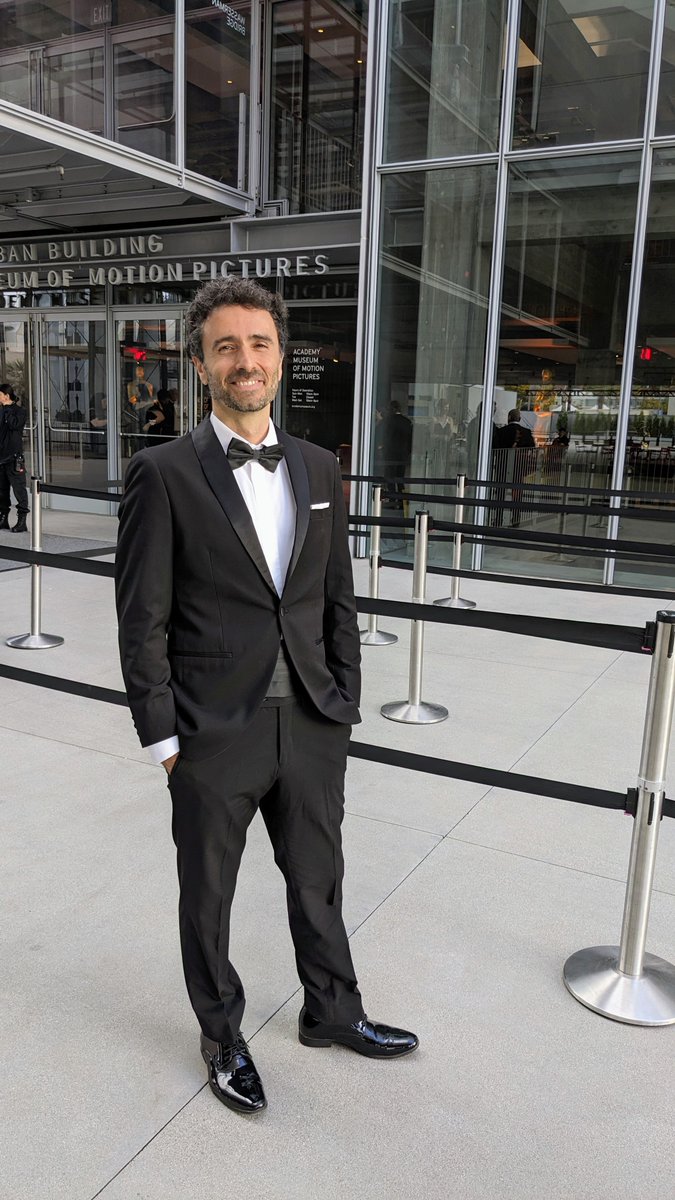
We've won an Oscar!!
Dolby Atmos has received the Academy Plaque for Scientific & Technical Achievements, the highest award short of an Oscar statuette, by the Academy of Motion Picture Arts & Science.
https://t.co/K0wt8pMyT2
Reminder that the deadline for the submission to the Paper Award is 15th Jan (Monday next week). Make sure to submit your entry before the cutoff date!
In Dolby Barcelona we're thrilled to announce our annual award 🏆 for the best scientific paper in sound-related areas. Deadline: 15th Jan 2024.
Check out the rules and info:
https://t.co/mrnGwA4uOy