𝙁𝙧𝙤𝙢 𝙂𝙋𝙐𝙨 𝙩𝙤 𝙃𝙪𝙢𝙖𝙣 𝘾𝙪𝙧𝙞𝙤𝙨𝙞𝙩𝙮: 𝙏𝙝𝙚 𝙎𝙤𝙘𝙞𝙖𝙡 𝙄𝙢𝙥𝙖𝙘𝙩 𝙤𝙛 𝙖 𝙁𝙪𝙡𝙡𝙮 𝘿𝙚𝙘𝙚𝙣𝙩𝙧𝙖𝙡𝙞𝙯𝙚𝙙 𝙏𝙧𝙖𝙞𝙣𝙞𝙣𝙜 𝙉𝙚𝙩𝙬𝙤𝙧𝙠
Sometimes I stop and think about how wild it is that the future of AI might not be shaped by giant server farms but by thousands of curious people scattered around the world each running a tiny piece of the training process. And that’s exactly what @gensynai is enabling.
A fully decentralized training network isn’t just a technical achievement. It changes who gets to participate in building AI. Suddenly, it’s not only researchers with massive budgets or companies with entire GPU clusters; it’s students, hobbyists, indie builders, small labs or anyone who wants to contribute.
This shift matters. It means new voices, new ideas and new perspectives can influence how models grow. It means the barriers between “people who build AI” and “people who just use it” start to fade. It turns compute from a gatekeeper into a bridge.
When GPUs meet human curiosity, something powerful happens: collective intelligence becomes possible. Gensyn’s network shows that innovation doesn’t have to come from a single center, it can emerge from thousands of hands, hearts and minds working together.
Decentralization isn’t only about hardware.
It’s about people.
And that might be the most transformative part of all.
#gensyn #decentralizedAI #opensourceAI
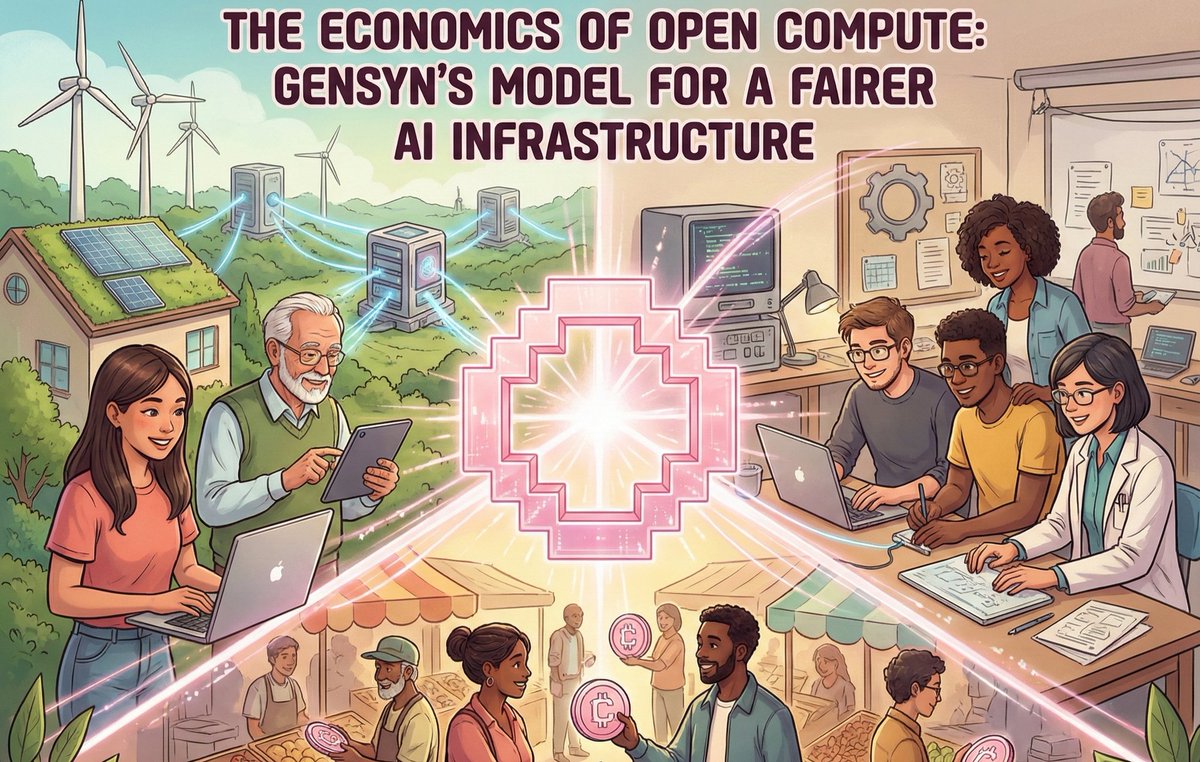
𝙏𝙝𝙚 𝙀𝙘𝙤𝙣𝙤𝙢𝙞𝙘𝙨 𝙤𝙛 𝙊𝙥𝙚𝙣 𝘾𝙤𝙢𝙥𝙪𝙩𝙚: 𝙂𝙚𝙣𝙨𝙮𝙣’𝙨 𝙈𝙤𝙙𝙚𝙡 𝙛𝙤𝙧 𝙖 𝙁𝙖𝙞𝙧𝙚𝙧 𝘼𝙄 𝙄𝙣𝙛𝙧𝙖𝙨𝙩𝙧𝙪𝙘𝙩𝙪𝙧𝙚
Sometimes the AI world feels like it’s drifting toward a future where only a few giant companies can afford to train powerful models. And honestly, that future doesn’t sit right with many of us. That’s why Gensyn’s vision of an open, permissionless compute economy feels so refreshing, it gives the ecosystem a chance to breathe again.
@gensynai flips the economics of AI. Instead of compute being locked behind paywalls, NDAs and massive budgets, it becomes something anyone can contribute to and benefit from. If you have hardware, you can earn. If you’re building models, you can train affordably without begging big cloud providers for access. It’s a win for researchers, indie builders and entire new communities that have been priced out for years.
The magic comes from decentralization:
nodes compete to provide compute, pricing becomes transparent and efficiency actually matters. No hidden margins. No artificial scarcity. Just a network where the best performing hardware wins work and the whole system stays honest through cryptographic verification.
It’s not just an economic model, it’s a shift in mindset. AI shouldn’t be a luxury. Compute shouldn’t be a privilege. And progress shouldn’t belong to only those who can pay for it.
Gensyn is pushing us toward an AI future that feels fair, open and genuinely shared. And honestly? It’s about time.
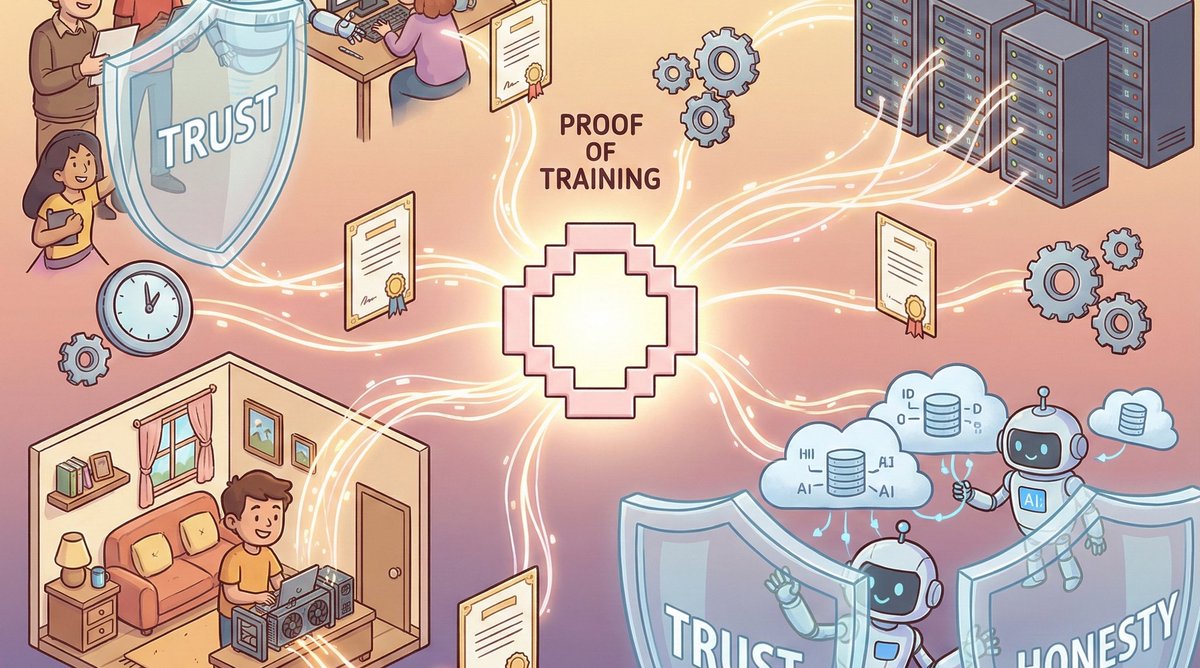
𝙋𝙧𝙤𝙤𝙛 𝙤𝙛 𝙏𝙧𝙖𝙞𝙣𝙞𝙣𝙜: 𝙏𝙝𝙚 𝙄𝙣𝙫𝙞𝙨𝙞𝙗𝙡𝙚 𝘽𝙖𝙘𝙠𝙗𝙤𝙣𝙚 𝙏𝙝𝙖𝙩 𝙈𝙖𝙠𝙚𝙨 𝘿𝙚𝙘𝙚𝙣𝙩𝙧𝙖𝙡𝙞𝙯𝙚𝙙 𝘼𝙄 𝙏𝙧𝙪𝙨𝙩𝙖𝙗𝙡𝙚
When people talk about decentralized AI, they usually focus on compute, incentives or networks. But the real magic the thing that quietly holds everything together is Proof of Training. It’s like the heartbeat you don’t notice but absolutely rely on.
In a world where thousands of unknown machines train pieces of a model, PoT is what lets us trust the process. It verifies that the training actually happened, that the work wasn’t faked and that every contributor earned their rewards honestly. No smoke, no mirrors just transparent, cryptographic truth.
What I love about PoT is how “human” its purpose feels. It’s not just about math or security; it’s about fairness. It ensures small contributors stand equal with big ones… that your GPU in a tiny apartment matters just as much as a high end cluster. It’s the foundation that lets decentralized AI feel like a real community rather than a chaotic free for all.
As networks like @gensynai grow, PoT becomes even more important. It builds trust between strangers, keeps the ecosystem honest and ensures every bit of compute no matter where it comes from can be proven, validated and valued.
PoT isn’t just a protocol.
It’s the quiet guardian making decentralized AI possible, reliable and worth believing in.
Sometimes it feels like we talk about compute as if it’s some distant, invisible force… but with @gensynai , it becomes something you can feel shared, open and built together. At its core, Gensyn isn’t just about cheaper or faster training. It’s about redefining what “accessible compute” means for everyone.
By turning idle hardware across the world into a coordinated training network, Gensyn gives researchers, builders and small teams the kind of compute power that used to belong only to big labs. It creates a sense of fairness in a space that’s often anything but fair.
What makes it even more inspiring is the cultural shift behind it: a belief that intelligence shouldn’t be gated by whoever owns the largest cluster but by whoever has the courage to create. In that sense, Gensyn feels less like infrastructure and more like a quiet rebellion a reminder that open systems still have a chance to win.
𝐓𝐡𝐞 𝐀𝐞𝐬𝐭𝐡𝐞𝐭𝐢𝐜𝐬 𝐨𝐟 𝐋𝐚𝐭𝐞𝐧𝐜𝐲
Latency is something we’ve all felt that tiny pause before a message sends, the brief hesitation in a video call, the small moment of waiting that reminds us the digital world isn’t as “instant” as we like to believe. And honestly, there’s something strangely human about that.
We usually think latency is a problem to solve. But sometimes, that little pause creates its own rhythm. It slows us down just enough to notice things we’d normally rush past. It adds texture to our interactions a small breath, a moment of anticipation, a reminder that behind every system, there’s movement, distance and complexity.
These delays can feel annoying, sure but they also make the experience feel a bit more real. A bit more alive. Like the digital world has its own heartbeat, its own pace, its own imperfections.
Maybe latency isn’t just a technical issue after all.
Maybe it’s the soft, quiet moment that teaches us to wait and reminds us that even in a world built on speed, meaning often hides in the spaces between.
𝗔𝗹𝗴𝗼𝗿𝗶𝘁𝗵𝗺𝗶𝗰 𝗪𝗶𝗹𝗱𝗹𝗶𝗳𝗲
It’s strangely comforting to realize that not everything in the digital world behaves like a cold, predictable machine. Sometimes, algorithms feel almost… alive. They wander through a network, try things out, stumble, adapt and grow. It’s imperfect, a bit chaotic and honestly, it feels closer to human life than we expect.
In a distributed ecosystem like @gensynai , this “digital wildlife” becomes even more noticeable. Algorithms spread across countless devices each with its own limits and quirks and they evolve as they go. No central entity scripts their journey. Instead, they learn from tiny interactions, adjust to new environments and occasionally develop behaviors no one ever planned for. It’s a quiet kind of emergence that feels a little magical.
And maybe that’s why this idea touches us. It reminds us that intelligence doesn’t always appear polished or intentional. Sometimes it grows organically, like a wild plant finding sunlight between stones. In these algorithmic landscapes, we’re not just building technology, we’re witnessing the birth of a new kind of ecosystem, one that feels unexpectedly alive and deeply connected to the chaos and beauty of the natural world.
𝐏𝐚𝐫𝐭𝐧𝐞𝐫𝐬𝐡𝐢𝐩𝐬 & 𝐈𝐧𝐭𝐞𝐠𝐫𝐚𝐭𝐢𝐨𝐧𝐬
What makes a network truly strong isn’t just the technology behind it. It’s the people, teams and shared values that push it forward. That’s exactly what we’re seeing within @billions_ntwk . As the ecosystem expands, it’s forming thoughtful partnerships that feel more like collective progress than simple integrations.
Synaps delivers trusted verification, Verax strengthens onchain credibility, Telefónica Tech brings enterprise level identity expertise and Disco. xyz adds rich reputation infrastructure. Each partner covers a different angle of the identity landscape and together they form a foundation that’s both resilient and deeply user centric.
These collaborations matter because they create a digital environment where privacy isn’t sacrificed for convenience and where identity becomes something you control, not something that controls you. They make the Web3 experience smoother, safer and more human.
And the best part? This momentum is just beginning. With every new integration, Billions Network isn’t simply expanding its ecosystem, it’s quietly shaping a future where trust travels with you wherever you go and where your digital identity finally works for you, not against you.
@Billions_TR
𝗕𝗶𝗼 𝗦𝘆𝗻𝗰𝗲𝗱 𝗖𝗼𝗺𝗽𝘂𝘁𝗲
Sometimes I think about how much energy we carry without even noticing it, the warmth in our hands, the rhythm of our steps, the tiny pulses that keep us alive. What if our technology could tap into that gentle, everyday energy instead of constantly relying on massive power sources?
That’s the heart of bio synced compute. Devices that take a little warmth from your skin or charge themselves as you walk or adjust their processing based on your heartbeat. It feels almost poetic: tech that doesn’t fight nature but grows closer to us.
In a world shaped by networks like @gensynai , this idea becomes even more meaningful. Imagine tiny compute nodes powered partly by people going about their day, creating systems that are lighter on the planet and more connected to human life. Not cold machines, but small companions that work in harmony with the energy we already have.
It’s a future where intelligence isn’t just efficient; it’s human, warm and quietly sustainable.
𝗖𝗼𝗺𝗽𝘂𝘁𝗲 𝗮𝘀 𝗮 𝗣𝘂𝗯𝗹𝗶𝗰 𝗨𝘁𝗶𝗹𝗶𝘁𝘆
It’s easy to forget how much modern life quietly leans on compute. We flip on a light, unlock our phones, message a friend, send a file, ask an AI a question and behind every tiny moment, there’s a device doing work for us. Compute has become the invisible backbone of our days, woven into routines the same way electricity or running water once did.
But while we all depend on it, not everyone gets equal access. Some communities have powerful machines and fast infrastructure. Others make do with aging devices or limited connectivity. The creativity is there, the curiosity is there but the resources aren’t always shared fairly.
That’s why the idea of compute as a public utility feels so human. It’s not just a technical shift. It’s a social one. A belief that the tools we depend on shouldn’t be luxuries but shared foundations.
@gensynai moves toward this future by distributing compute across everyday devices, turning a global network of people into a collective power source. No gates, no privilege, just participation.
When compute becomes a common good, something beautiful happens. We don’t just get stronger models. We get a world where more people can learn, build, create and dream without limits.