One of the most interesting findings of the recent NEJM study:
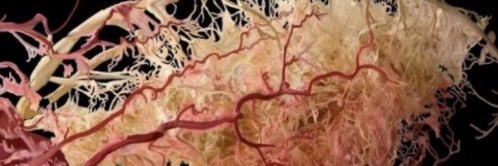
Heart Disease doesn´t start... in the heart (!)
In younger people plaque is first seen in peripheral territories (like the legs) and only later in life does it spread to the heart
🫀 Which stress agent is best for perfusion CMR in patients with HFrEF?
A new quantitative perfusion CMR study compared adenosine and dobutamine in patients with heart failure with reduced ejection fraction (HFrEF), revealing important differences in their ability to induce myocardial hyperaemia.
🔍 Key findings:
✅ Adenosine produced significantly higher myocardial blood flow and myocardial perfusion reserve (MPR) than dobutamine in patients with HFrEF.
✅ This was true despite dobutamine causing a greater increase in heart rate and blood pressure, highlighting that haemodynamic response does not necessarily reflect myocardial hyperaemia.
✅ These findings suggest that adenosine may be the more reliable stress agent for perfusion CMR in patients with HFrEF, although further studies are needed to determine whether this translates into improved detection of myocardial ischaemia.
💡 An important reminder that physiological myocardial perfusion and peripheral haemodynamic responses are not always the same, and choosing the appropriate stress agent may influence CMR assessment in heart failure.
📖 Read the full article: https://t.co/rU6gFmzBTb
#CardioX #CMR #StressCMR #HeartFailure #HFrEF #PerfusionCMR #CardiacMRI #Cardiology #CardiacImaging #MedTwitter #OpenScience
The "wait and see" approach to very-high-risk atherosclerotic disease is getting harder to defend. Real-world OPTIMUS–CLASS data: PCSK9 inhibitor antibody therapy in patients with no prior ischaemic event was associated with fewer major cardiovascular events and lower mortality. Read more in #EHJ.
https://t.co/MAh95JMFa6
#PCSK9 #atherosclerosis #cardiotwitter @ESC_Journals@escardio
🫀🔥 Is atrial disease… already metabolic before it becomes electrical?
A new study using CMR + FDG-PET reveals a hidden layer of atrial disease 👇
✨ Key findings:
📉 Higher atrial FDG uptake → lower LA strain
📈 Higher FDG uptake → larger LA volume
🔗 Strong correlations (see scatter plots on pages 6–7) between:
👉 metabolism (SUV, aTBR)
👉 function (strain)
👉 structure (LAVi)
⚠️ These associations persist independent of AF or sarcoidosis
💡 Big message:
👉 Atrial myopathy is not just structural or electrical
👉 It has a metabolic substrate
🚨 Even more interesting:
Patients with AF = higher FDG uptake + worse strain
Suggesting metabolism may precede clinical arrhythmia
🎯 Clinical insight:
We might be looking at a new early marker of atrial disease
→ before AF develops
→ before irreversible remodeling
🎶 “The atrium doesn’t just remodel… it rewires its metabolism.”
📄 Read the full paper:
👉
🔗 DOI: 10.1093/ehjimp/qyag037
#Cardiology #AtrialFibrillation #CMR #FDGPET #CardiacImaging #AtrialMyopathy #PrecisionMedicine #CardioTwitter #HeartResearch #Metabolism 🧠💓
Meta-analysis indicates #Prasugrel provides optimal balance of efficacy and safety for patients after #PCI, with lower major adverse cardiovascular events and stent thrombosis compared with ticagrelor and clopidogrel. https://t.co/IT5wEVgub5
BATMAN was associated with high technical success and effectiveness in preventing #LVOT obstruction and appeared to be safe in ViR and ViV procedures. Adverse events were higher in ViMAC. https://t.co/GooSIkbKxz #JACCINT#TMVR
🚑 Can handheld ultrasound replace routine echocardiography in hospital wards?
https://t.co/U12oY5REJr
A recent study explores the role of handheld ultrasound devices (HUDs) in cardiology consultations outside cardiology departments — and the results are impressive.
🔍 Key findings:
In 85% of patients, the clinical question was answered directly at the bedside using a handheld device
Excellent diagnostic agreement with standard echocardiography for:
LV and RV function
Pericardial effusion
Volume status (IVC)
Slightly lower accuracy for valvular disease, mainly in grading severity
A HUD-first strategy reduced costs by 74%
💡 Why this matters:
Traditional echocardiography requires patient transport, time, and resources. This study shows that focused bedside imaging by trained cardiologists can:
Speed up decision-making
Improve workflow efficiency
Reduce unnecessary full echocardiograms
Lower healthcare costs significantly
⚠️ Important caveat:
HUDs are not a replacement for full echocardiography—especially for complex valvular assessment—but a powerful first-line triage tool when used by experienced operators.
📌 Take-home message:
A structured “HUD-first” approach could transform consultative cardiology, bringing accurate, fast, and cost-effective cardiac assessment directly to the patient’s bedside.
According to this #JACCINT study, the risk for SCD varies across different stenosis sites in the coronary artery tree. Left main and RCA stenoses were associated with the greatest SCD risk, with vessel-specific risk modified by revascularization strategy. https://t.co/J0DE8GG9f2
Exercise Intensity Terminology is a bit of a mess 😵💫
Our attempt to try & summarise some of the different approaches, and make some recommendations going forward, has finally been published in both MSSE: https://t.co/iHdsdK4Mhx & JSaMS: https://t.co/ONLEM5g8U8.
Much of dementia—perhaps half—could be prevented or substantially delayed with attention to 14 modifiable risk factors
@TheLancet Commission 2024 report https://t.co/wsphtAfk77
New inclusion of cholesterol and vision loss as risk factors
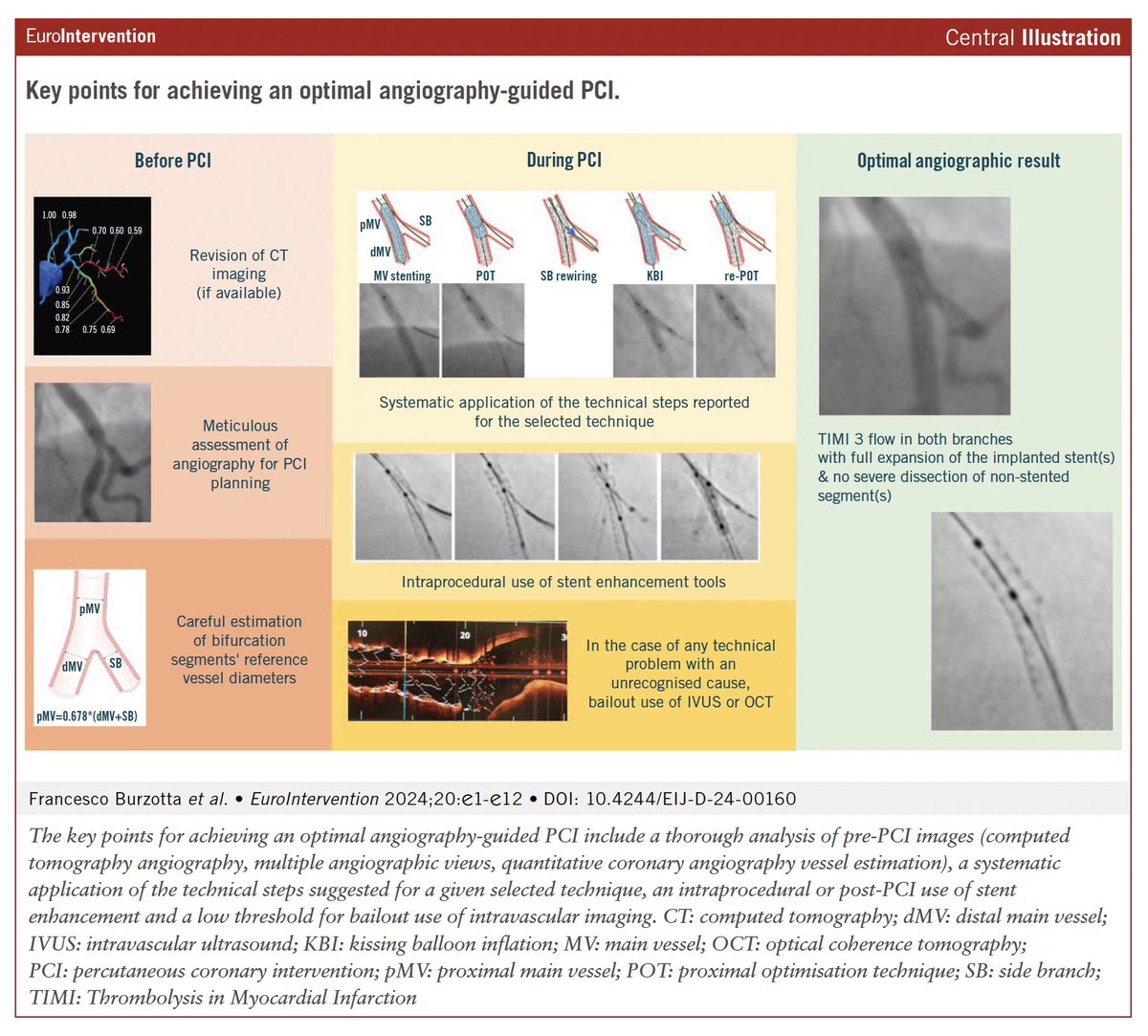
In the 18th Expert Consensus Document, now available in the Journal, the European Bifurcation Club (EBC) reviews and describes a series of tips and tricks which can help to optimize angiography-guided PCI for coronary bifurcation lesions.
These include:
- A thorough analysis of pre-PCI images (computed tomography angiography, multiple angiographic views, quantitative coronary angiography vessel estimation).
- A systematic application of the technical steps suggested for a given selected technique.
- The intraprocedural or post-PCI use of stent enhancement.
- A low threshold for bailout use of intravascular imaging.
Access the article:
https://t.co/iHfrRubWuN
Everything we have learned so far about the revascularization of non-culprit lesions in patients with acute myocardial infarction and multivessel disease... in 1 minute.