Ever wonder if we can learn anything meaningful from the ancient world?believe it or not, countless hours with broken pottery and unique artifacts can show that community bonds, even today, remain at the core of human resilience #archaeology#tedx#ted https://t.co/BGRrWmuIAD
🤍 Happy Thanksgiving, fam! 🤍
We’re so thankful for all of you! To show our appreciation, we’re giving away 3 Chum Chums today!
To enter:
🙏 Like & Retweet
🙏 Tag a friend
🙏 Share something you're thankful for
We’ll announce the winners in 24 hours! 💙
You won't want to miss this course with Dr. George Bey @millsapscollege - Students discover the heritage and cultures of Mexico and may even want to take a trip to Yucatan as a result! https://t.co/0LndlKRCks
Check out Digital Media: Anthropology Going Viral - new course offerings from Millsaps College, Sociology and Anthropology, in Spring 2025. Don’t miss out— this course will equip you with the tools to navigate and shape the ever-evolving digital landscape.
🦇DC Comics Giveaway🦇
In celebration of 2,000 followers, we're giving away a 9.8 CGC graded copy of the SOLD OUT (1st print) Absolutely Batman #1 comic
To Enter:
1) Like & Retweet
2) Follow @FanableApp
Tag a friend for extra chances!
📚 Congratulations to maritime archaeologist Dr. Michael Brennan for his new book entitled 𝘛𝘩𝘳𝘦𝘢𝘵𝘴 𝘵𝘰 𝘖𝘶𝘳 𝘖𝘤𝘦𝘢𝘯 𝘏𝘦𝘳𝘪𝘵𝘢𝘨𝘦: 𝘗𝘰𝘵𝘦𝘯𝘵𝘪𝘢𝘭𝘭𝘺 𝘗𝘰𝘭𝘭𝘶𝘵𝘪𝘯𝘨 𝘞𝘳𝘦𝘤𝘬𝘴!
Dive deeper 👉 https://t.co/JZQ3qCBPbZ
The volume will be online #OpenAccess in June.
#MaritimeArchaeology #Shipwrecks
SEARCH is in Orlando for #SAMEJETC2024. Visit us at Booth 334 to learn about our unparalleled experience supporting our US military service branches.
📅 May 14-16
📍 Orlando, FL
➡️ https://t.co/TjlPzuQKIx
#SAMEJETC2024#CulturalResources@SAME_National
Newly published article for Ancient Mesoamerica available on Cambridge Core!
Mesoamerican mantic names as an etymological source of Mixtec vocabulary | Ancient Mesoamerica | Cambridge Core - https://t.co/OFYHF4MjPq
SEARCH is heading to #SAMEJETC2024. Join us at Booth 334 to learn about our decades of experience providing cultural resource support to every US military service branch.
📅 May 14-16
📍 Orlando, FL
➡️ https://t.co/TjlPzuQKIx
#CulturalResources@SAME_National
Egyptian Pharaoh Ramesses II was issued a passport 3000 years after his death in order for his Mummy to fly to Paris :
Ramesses II (d. 1213 BC), is often regarded as the greatest, most celebrated, and most powerful pharaoh of the New Kingdom. His successors and later Egyptians called him the “Great Ancestor”. Ramses II was originally buried in a grand tomb in the Valley of the Kings. He was subsequently moved many times by priests who feared looters. He spent as little as three days in some places, and the priests recorded their actions on wrappings on his body. Despite his resplendent wealth and power in life, finally his body was later moved to a royal cache, with the passage of time his sarcophagus was lost to history, it was re-discovered in 1881, in a deteriorating condition and is now on display in the Museum of Egyptian Antiquities. It was his poor condition that prompted Egyptian authorities to seek help preserving him in the mid-1970s. They found their experts in France and reluctantly decided to transport the 3000 year-old mummy to Paris.
In 1976, his remains were issued an Egyptian passport (nearly 3000 years after his death) so that he could be transported to Paris for an irradiated treatment to prevent a fungoid growth.
In 1975, Maurice Bucaille, a French doctor studying his remains said that the mummy was threatened by fungus and needed urgent treatment to prevent total decay. French laws dictated that entry and transportation through the country required a valid passport. To comply with local laws, the Egyptian government issued a passport to the Pharaoh. Seemingly, the first mummy to receive one. His occupation was listed as "King (deceased)."
The government didn’t want him to get a passport for publicity, but believed it would afford them legal protections to ensure his safe return. As countless artifacts and mummies have been plundered and stolen from Egypt and museums in Europe didn’t always respect Egyptian claims.
The New York Times reported on Sept. 27, 1976 that the French military aircraft that brought Ramesses' remains from the Cairo museum was greeted by the Garde Republicaine, France's equivalent of a U.S. Marine honor guard - “The mummy was greeted by the Secretary of State for Universities, Alice Saunter‐Seite, and an army detachment. Ramses II, who ruled Egypt for 67 years, received special treatment at Le Bourget Airport.” It was then taken to the Paris Ethnological Museum for inspection by Professor Pierre-Fernand Ceccaldi, the chief forensic scientist at the Criminal Identification Laboratory of Paris.
During the examination, Cecaldi noted that the “Hair, astonishingly preserved, showed some complementary data, especially about pigmentation: Ramses II was a ginger-haired ‘cymnotriche leucoderma'” (meaning he was a fair-skinned person with wavy ginger hair). He is 5ft '7 inches tall, they found battle wounds, arthritis and tooth abscess.
Also that “in ancient Egypt people with red hair were associated with deity Set, the slayer of Osiris, and the name of Ramesses II’s father, Seti I, means “follower of Seth” said Cecaldi. The examination also revealed evidence of previous wounds, fractures, and arthritis which would have left Ramesses with a hunched back in the later years of his life.
In 2007, it was discovered that small tufts of the Pharaoh’s hair were stolen during the 1976 preservation work (published by the BBC). A Frenchman named Jean-Michel Diebolt, said he had inherited the hair from his late father, a researcher from the team who analysed the mummy. Deibolt had tried to sell the hair through an online auction for 2000 euros (£1360), but was quickly apprehended by French authorities.
📷 : An artist’s creation of the passport – Image is for representative purposes – The actual passport is not publicly available
#archaeohistories
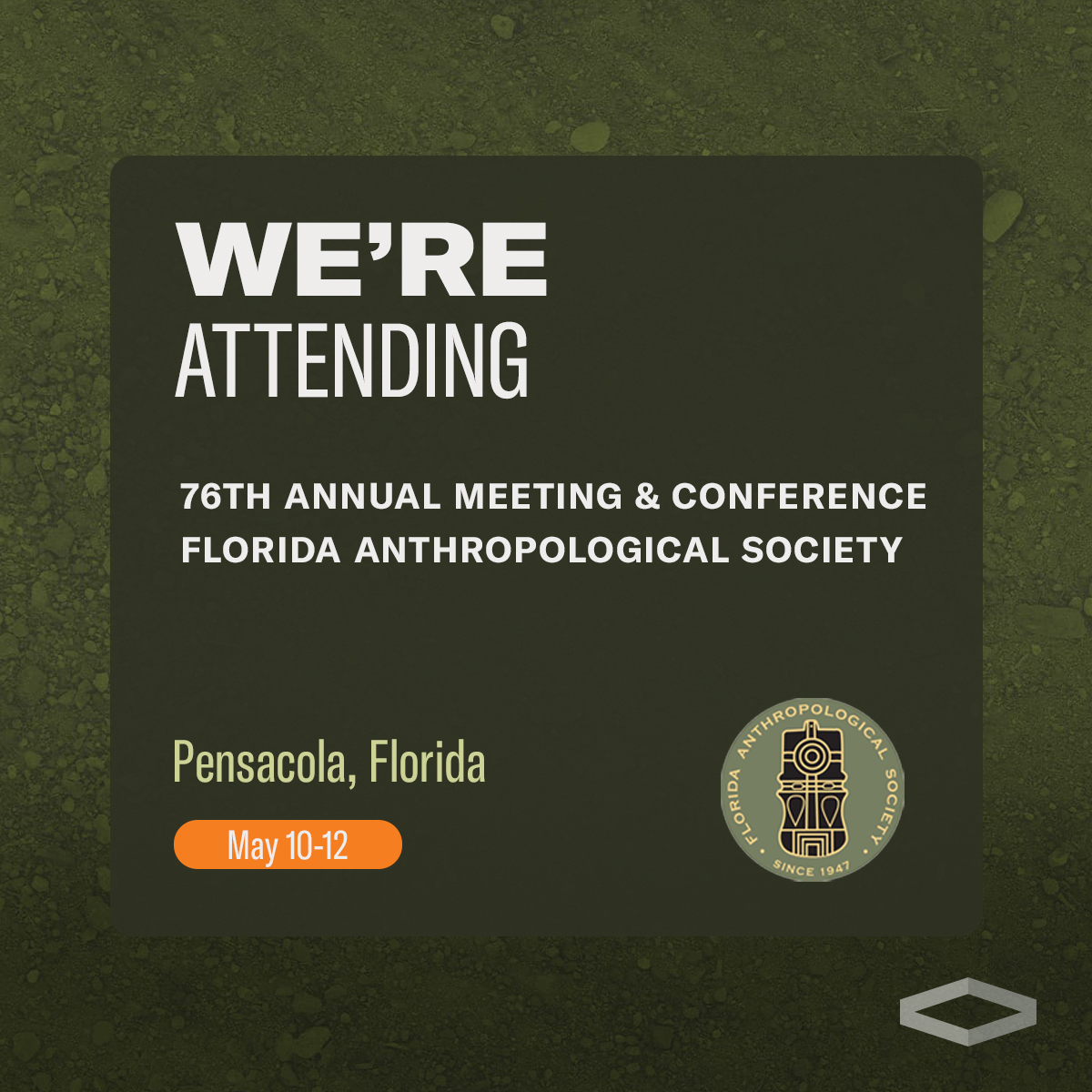
SEARCH heads to Pensacola for the 76th Annual Meeting of the Florida Anthropological Society. We look forward to learning about new research, rekindling with colleagues, and meeting new faces.
📅 May 10-12
📍 Pensacola, FL
➡️ https://t.co/4AGnq5v7pU
#CulturalResources #Archaeology #Florida
@UWF
An incredible find from the Templo Mayor in 2023 that continues to captivate.
Magical Mesoamerican Relics - Archaeology Magazine https://t.co/oWdW2hJGtA
The latest episode of @MyFDOT’s “Florida in Motion” features the 19th-century shipwreck we helped unearth beneath historic #StAugustine.
👉 https://t.co/cNoPGASWNo (⏱️ 6:10)
Follow @SEARCH_Inc for project updates.
#Shipwreck#FDOT