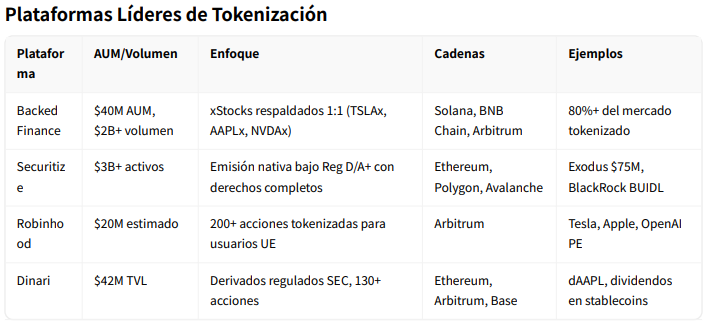
La tokenización de acciones está cambiando cómo invertimos.
¿Qué significa? Convertir una acción real (Apple, Tesla, etc.) en un token digital en blockchain.
Así de simple
Se lanza la V4 de AAVE.
Voy a intentar explicar los cambios según he entendido:
-1º Ahora se podrán crear módulos separados (llamados spokes) donde se podrán utilizar todo tipo de tokens para pedir préstamos.
Al igual que pasa en Morpho, esto quiere decir que podrás poner tu liquidez en AAVE "normal" y ya está o usarla en uno de estos spokes para conseguir una rentabilidad extra. Habrá spokes más seguros o menos seguros. Por ejemplo puedes decidir que tu liquidez sea prestada a usuarios normales de AAVE que dejen ETH de colateral pero también a usuarios que se están apalancando con tokens menos "seguros" como podrían ser stablecoins de todo tipo, tokens sintéticos de Bitcoin, etc.
Si usáis Morpho habréis visto los vaults en los que puedes ver a qué riesgos expones tu capital. Pues aquí será algo parecido.
Esto es interesante no solo porque podrás ganar algo más de rentabilidad. Sino porque se podrán crear muchos nuevos mercados que se aprovechen de la liquidez de AAVE. Por ejemplo plataformas como Pendle o Spectra podrán armar spokes con sus PTs para que la gente se apalanque en ciertos tokens.
(Casi) todas las canciones censuradas y prohibidas por la dictadura cívico-militar argentina entre 1976 y 1983.
A 50 años: memoria, verdad y justicia.
https://t.co/LcKZzkSBf7
🚨 ALERTA: Nueva estafa contra usuarios de Trezor por CARTA 📩
Envían cartas “oficiales” con un QR para una supuesta verificación urgente. La web es falsa y te pide tu frase semilla.
NUNCA compartas tus 12/24 palabras. ❌
💸 Funding & Liquidity
@AviciMoney closed a $3.5M strategic round with 90% slated for community return via futarchy governance and launched 175% APR liquidity mining for $AVICI on Solana DEX @byreal_io
⚡ Merger Launch
@DromosLabs will merge Aerodrome ($476M TVL) and Velodrome ($39M TVL) into a single cross-chain DEX, Aero, set for Q2 2026 mainnet launch with a unified token and integrated MetaDEX 03 stack.
🌐 Exchange Listing
@opencampus_xyz saw $EDU token spot trading launched on Kraken for U.S. users on Nov 13, followed by a R3ACH NTWRK collaboration announcement on Nov 17 that drove Binance and Kraken volume up 25% to $14.0M in an hour.
📢 Shutdown
@DappRadar co-founders announced the platform's shutdown after seven years, ceasing coverage of 90+ blockchains and delegating RADAR token decisions to its DAO due to an unsustainable market.
🚀 Token Launch
@USDai_Official launched public minting for USDAI and sUSDAI on 17 Nov 2025, announced a five-day Coinbase integration rollout, and confirmed an undisclosed investment from Coinbase Ventures.
📢 Market Analysis
The Kobeissi Letter highlighted a 41-day, $1.1 trillion crypto market decline attributed to leverage-driven liquidations and reported a 0.80 Bitcoin–Nasdaq correlation, the highest since 2022.
⚡ Feature Launch
@circle reported $73.7 billion USDC in circulation with 66% Q3 revenue growth, received a double analyst upgrade and raised price target to $100 by JPMorgan, and launched StableFX along with a regional Partner Stablecoins program.
⚡ Feature Launch
@aave launched its 'Save & Earn' iOS app on November 17, 2025, connecting to over 12,000 U.S. banks and debit cards, offering up to 9% APY and $1 million in balance protection, while governance debates a $50 million annual buy-back proposal.
What Happened
• 4 Nov 2025 – “Part I” Tokenomics Proposal released.
– CEO Alex Gluchowski published “From Governance to Utility: ZK Token Proposal,” outlining a value-capture flywheel.
– Two planned revenue streams:
1. On-chain interoperability fees generated by rollup activity.
2. Off-chain enterprise licensing of zkSync’s zero-knowledge technology.
– Revenues would fund staking rewards, ecosystem grants and a buy-back-and-burn program, reducing circulating supply.
– Specific parameters (fee levels, burn cadence) to be set by community votes in later “Part II/III” proposals.
• Staking pilot green-lit. Community passed TPP-12, enabling an initial staking module that will route a share of fees to ZK stakers once the new model is active.
Why It Matters
Economic utility. Tying token value to real network revenue counters criticism that ZK lacked intrinsic demand beyond governance.
Competitive positioning. The move mirrors fee-sharing models from rivals (e.g., Arbitrum’s future ARB staking), intensifying the Layer-2 tokenomics arms race.
Community governance in focus. Future votes will decide revenue split, burn rates and staking yields—setting an important precedent for holder influence.
What’s Next
• “Part II” of the tokenomics roadmap (detailing concrete fee percentages and burn mechanics) is expected later this quarter.
• Developers aim to ship the first revenue-backed staking rewards in Q1 2026, pending security audits.
• Investors will watch whether sustained fee generation can keep price momentum once the initial hype subsides.
⚡ Tokenomics Upgrade
@zksync unveiled a new tokenomics proposal transforming the ZK token into a revenue-backed utility asset with on-chain fee sharing, enterprise licensing, and a buy-back-and-burn mechanism, with staking rewards and burn parameters to be set by community vote.